
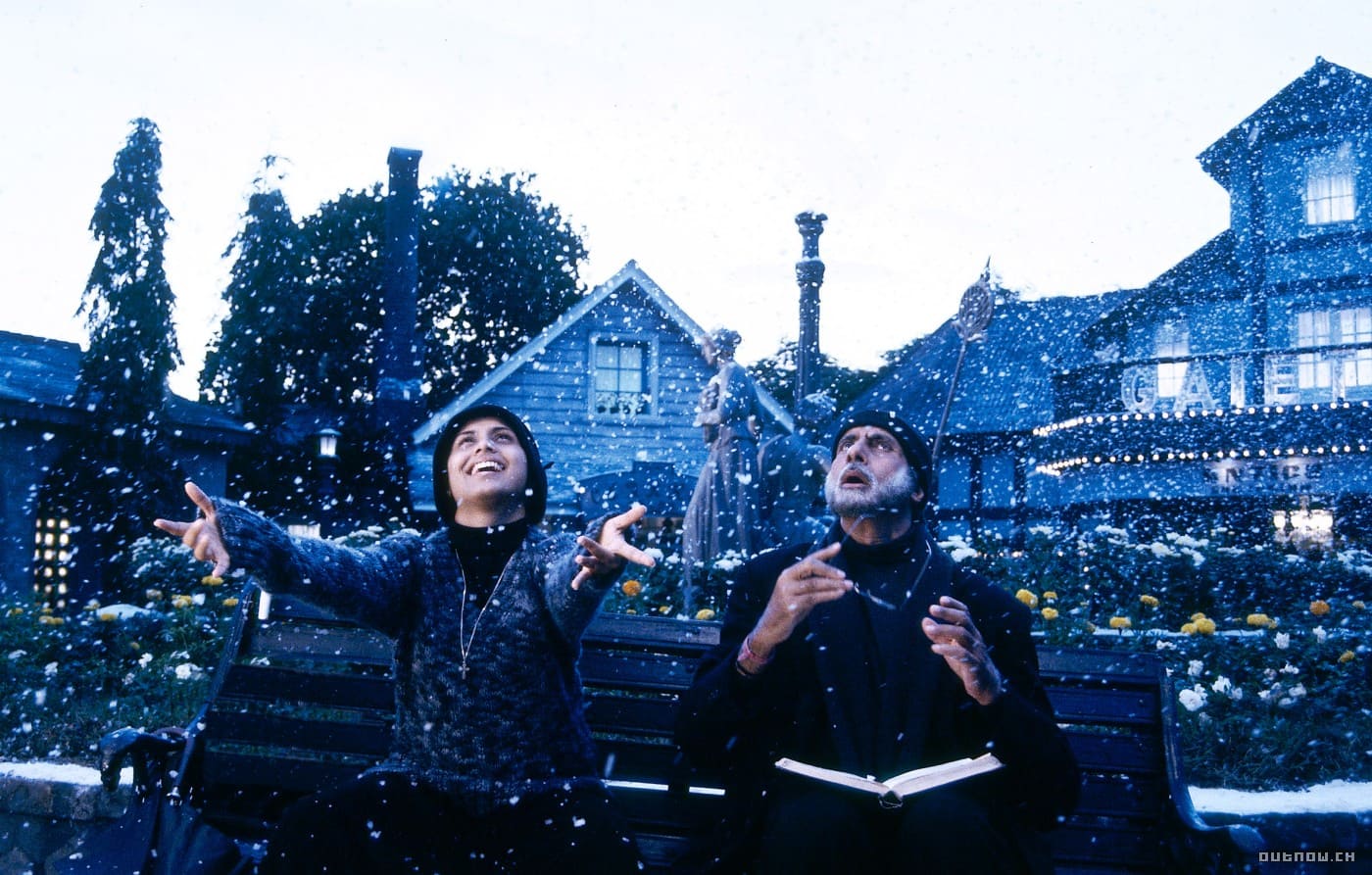
Sanjay Leela Bhansali | 2hr 4min
This review was requested by Clementine. Find out how to commission review of a film of your choice here.

Deprived at birth of two vital senses, Michelle McNally lives in darkness. Unable to see, she is the victim of cruel pranks growing up. Unable to hear, she cannot make sense of basic social interactions. She was “left incomplete by God,” her older self narrates, writing from a far more settled future than her past. These typed words are her only connection to an otherwise inaccessible world, and they are not to be taken for granted in Black. After all, she owes this precious ability to that extraordinary “magician” from many years ago who entered her home, taught her how to listen, and gave her a voice.
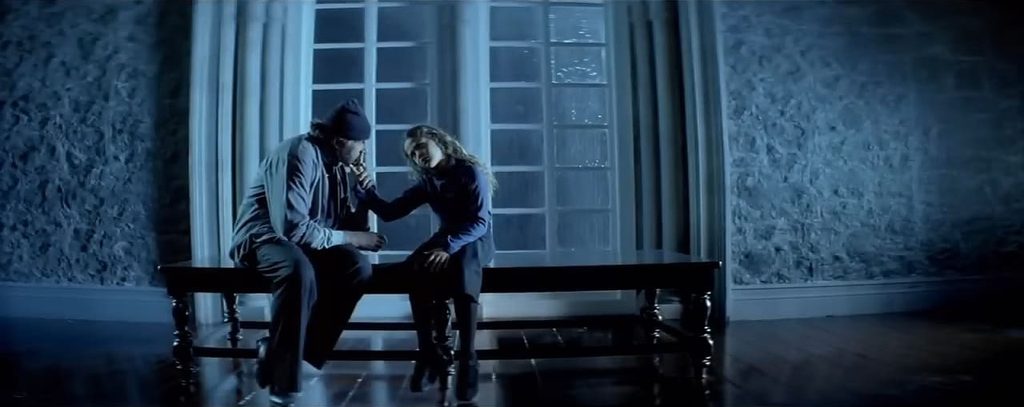
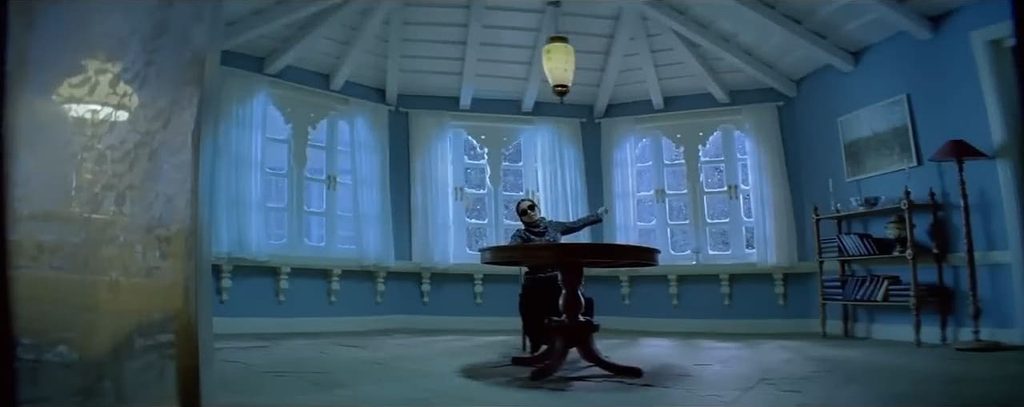
Black is inspired by the life of deafblind author Helen Keller in only the loosest sense, taking enormous creative liberties with the historical relationship between the activist and her teacher, Anne Sullivan. Of course, Hindi cinema has never been particularly concerned with historical restraint, and although this melodrama does not possess the musical extravagance of a Bollywood film, director Sanjay Leela Bhansali keeps its flamboyance alive. Michelle comes from a relatively well-off family after all, growing up in a home of arches, balconies, and warm, ambient light filtering in through windows. The present-day timeline appears almost sterile in comparison, cast in pale blue and stark white palettes, though not without purpose. As Michelle grows in independence and confidence, her ageing mentor Debraj gradually succumbs to Alzheimer’s disease, disappearing into the darkness he once worked so tirelessly to dispel.
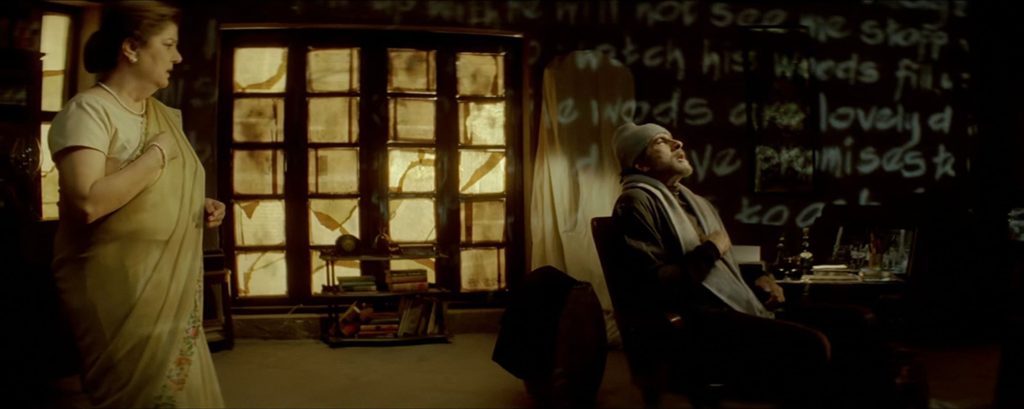
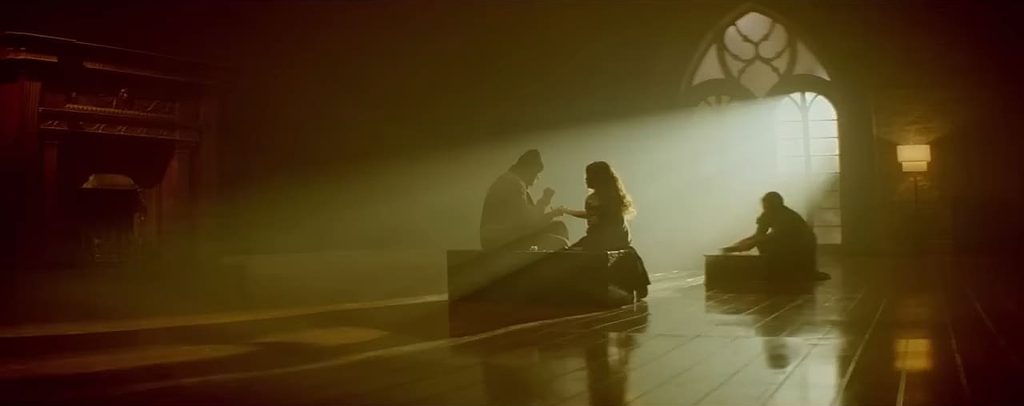
This student-teacher relationship becomes the dramatic crux of Black, held together by Hindi cinema legends Amitabh Bachchan and Rani Mukerji, each unearthing the thorny complexities beneath the overt sentimentality. Michelle may consider Debraj her saviour, yet his abrasive temperament and alcoholism complicates this idealised image, and Bachchan does not temper the severity of his early teaching methods. Nevertheless, he may very well be the only adult in her life to genuinely believe in her potential. With the first act of the film dedicated to these high-pressure lessons and a 20-day window to teach her a single word, Bachchan deftly balances his gruff intensity with a scarce yet sincere tenderness.
Even throughout the extended flashback however, Michelle’s voiceover continues to speak from the relative calm of the present, typing out treasured memories from her desk. Quite notably, her fluent speech is only ever confined to this narration, revealing the depth of an intellect that can only find expression in the written word. When Mukerji isn’t pushing the physicality of Michelle’s disability a little too far, she often brings disarming vulnerability to her insecurity, and exceptional conviction to her curiosity. Together, Bachchan and Mukerji form a partnership of incredible persistence, equally inspiring each other to overcome their own limitations.
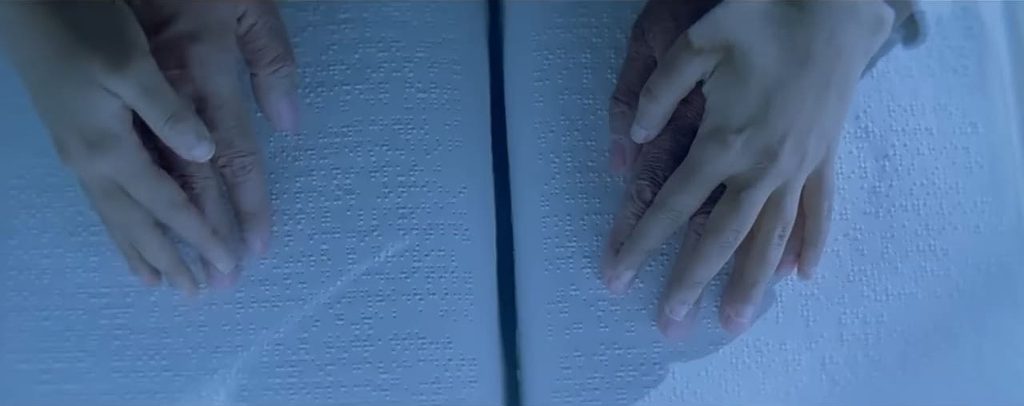
Still, across decades of this intimate relationship, tensions inevitably surface. Michelle’s stubborn independence sharpens after her acceptance into university, pushing Debraj to a fiercely violent breaking point, while her emerging sexuality muddies her feelings towards the only man she has ever been truly close to. Devoted as he may be, he cannot fill every void in her lonely life, and Bhansali mourns the dignity both lose in a single, uncomfortable kiss.
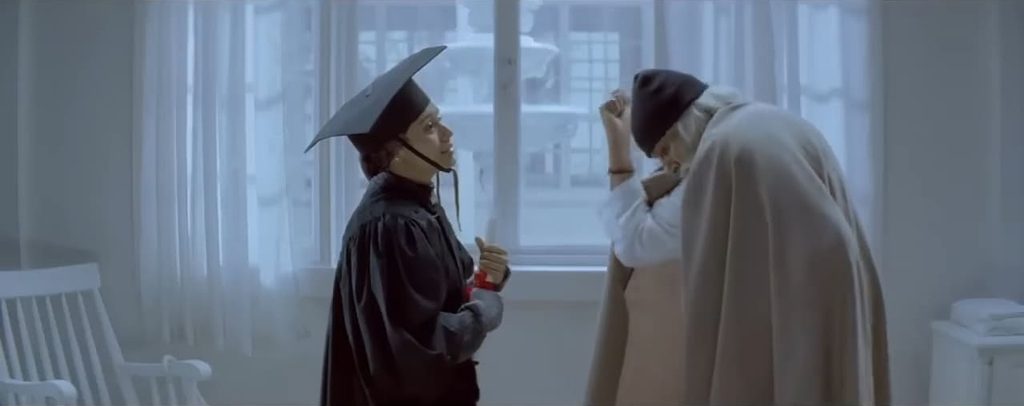
Black may signify the all-consuming void that Michelle has lived in for decades, yet this resilient academic is not one to cower from it. Having made her way through years of tertiary education, she has befriended that darkness, reclaiming black as the colour of achievement, knowledge, and the graduation robes she decides her ailing mentor must be the first to see her wear. It is a touching tribute to the man who guided her into the light, and as Black comes full circle with the student returning that gift, the darkness which once separated them becomes the unifying foundation of their profound, reciprocated devotion.
Black is currently streaming on Netflix.
Have a film you’d like me to write about next? Request a review here.