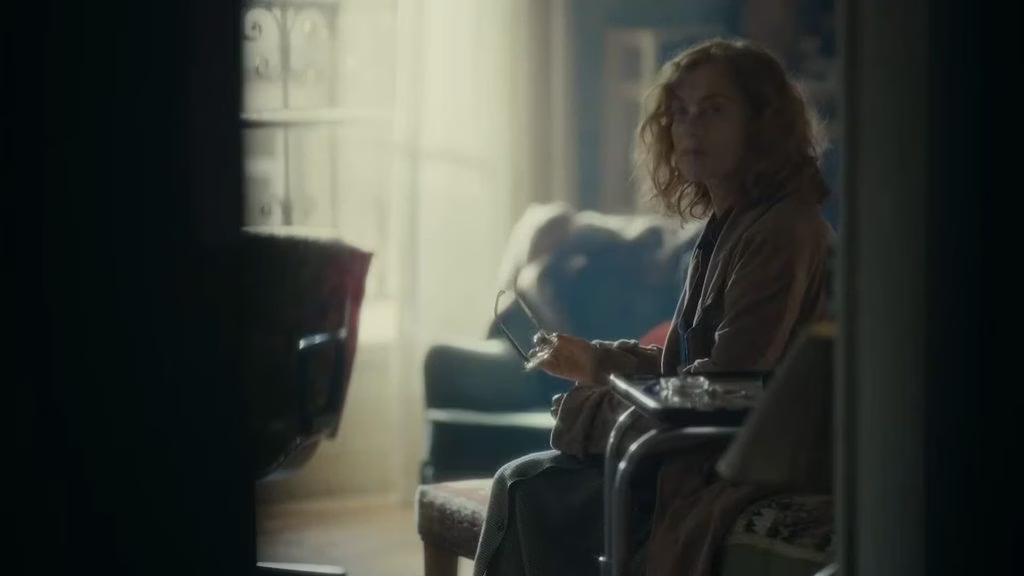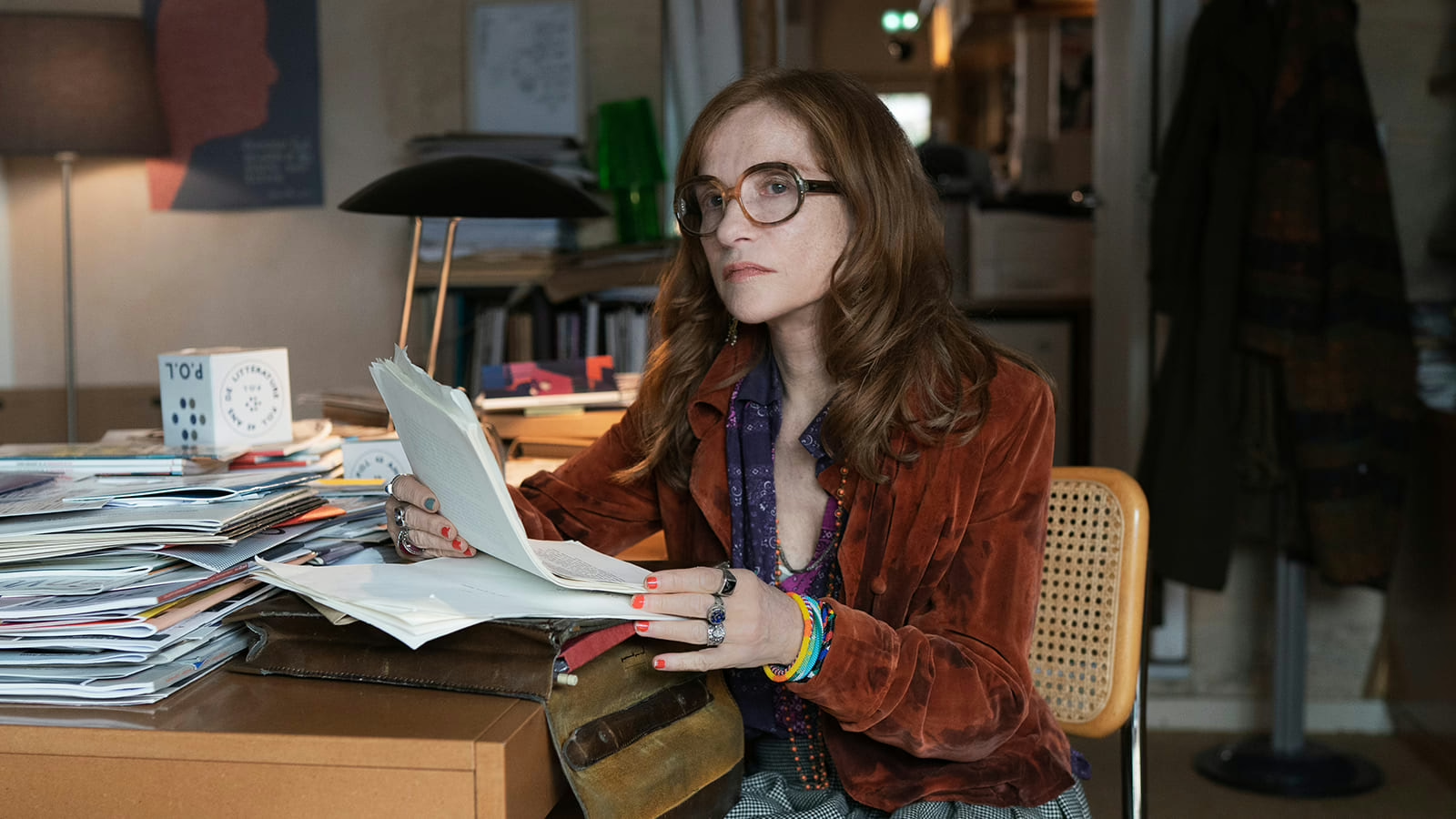
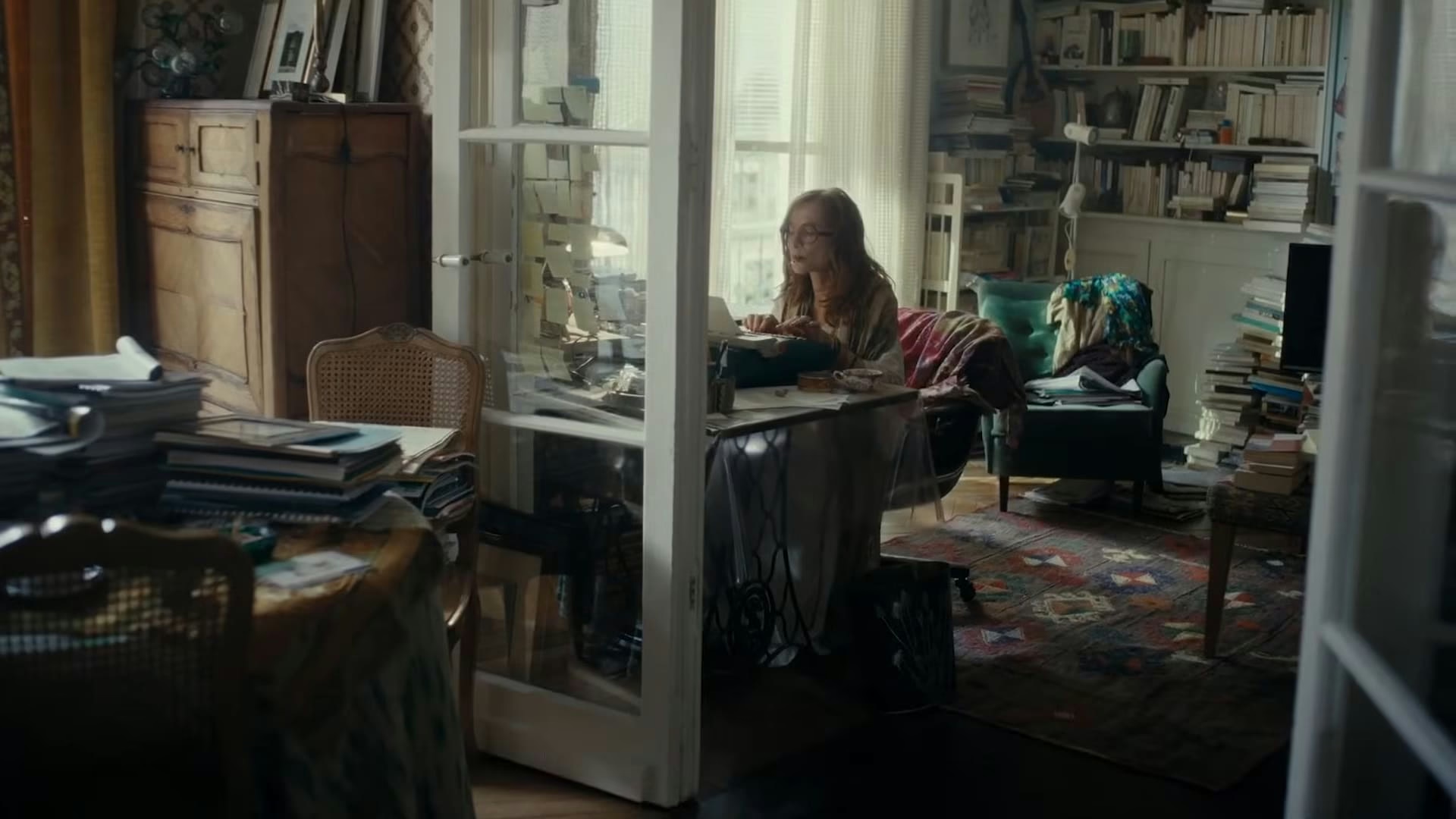
Surveillance is never an innocent endeavour in Parallel Tales, and the moment it is translated into art, reality begins bending in response. Sylvie’s novel may not be particularly impressive, though it is certainly no exception to the rule here, particularly when her cleaner Adam becomes curiously fixated on the story. Across the street, three foley artists have transformed the apartment where she was born into a recording studio, inadvertently becoming the inspiration for her melodrama. Two of them may be in love in this fictional world, yet the affair Anna conducts behind Christophe’s back with the much older Pierre produces a love triangle, inevitably ending in emotional ruin and murder. When Sylvie’s work falls into the hands of their real-life counterparts however, the distinction between observer and participant begins to blur, confronting Nita, Théo, and Nico with distorted versions of themselves refracted through a stranger’s gaze.
For a filmmaker so deeply rooted in social realism, this is a surprisingly elaborate premise, as Asghar Farhadi trades out the domestic pressures of Iran for the layered intrigues of Paris. Unfortunately, it is also far less tightly controlled, overstretching its plot and revisiting the same plot points as secrets are repeatedly circulated among various characters. There is a more economical version of Parallel Tales that is at least 30 minutes shorter, yet Farhadi evidently cannot resist paying homage to Krzysztof Kieslowski’s interconnected narratives of coincidence, even if his own film lacks the same metaphysical lightness.
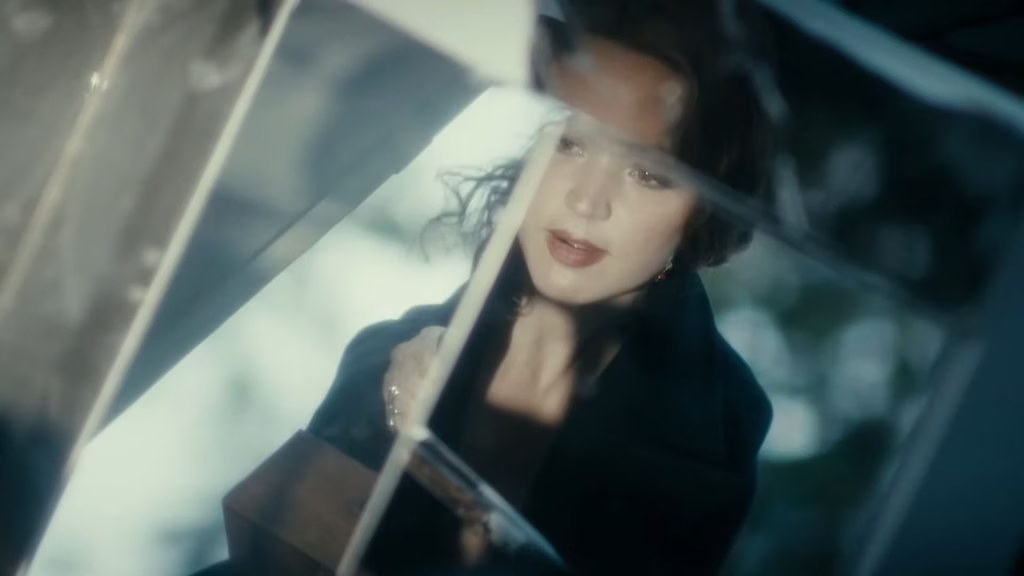
After all, not only does Parallel Tales loosely adapt the Polish director’s preoccupations with voyeuristic predicaments from Dekalog: Six, but it also echoes the character doubling of The Double Life of Veronique and further employs his long-time composer, Zbigniew Preisner. The lives of strangers are helplessly entangled in the close quarters of modern society, compressed into apartment blocks that maintain a thin illusion of privacy, so it becomes almost inevitable that each grows self-conscious of how they are perceived. Farhadi may not achieve Kieslowski’s formal elegance, yet the web he weaves of misconstrued identities nevertheless becomes a fascinating study in their malleability, reshaped by the reflexive awareness of being observed.
Before we properly meet Nita, Théo, or Nico however, Parallel Tales first traces Sylvie’s conceptions of them, interweaving her life with the fiction she constructs. Farhadi purposefully disorients us here, framing her sensationalist story as adjacent to reality, and revealing it as a creative means of processing her own family history. Anna and Théo were her parents’ names after all, while Pierre stands in for the man her mother had an affair with, triggering flashbacks that arrive in the present and refuse to release Sylvie from childhood traumas. That Farhadi drops this structural experimentation after the first act makes for a relatively uneven narrative, though from here on, Parallel Tales shifts away from invention and begins unravelling its escalating consequences.
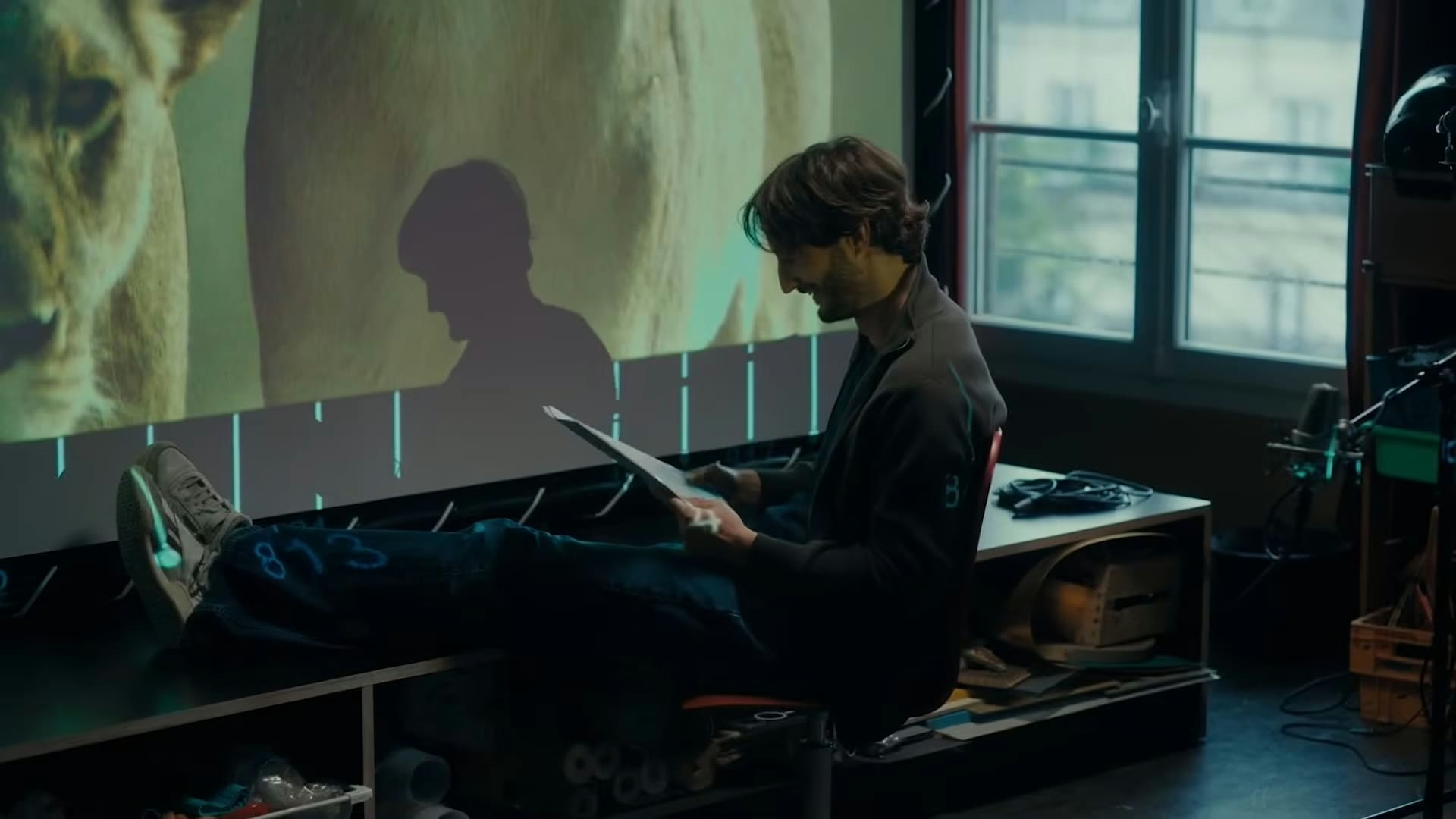
Adam is evidently the primary catalyst here, quickly becoming infatuated with Nita after reading Sylvie’s manuscript, and proceeding to circulate it as if it were his own. “I’m not the girl in your story,” Nita insists, exasperated by his persistent stalking, though Théo and Nico are far more intrigued by the implications of how they have been reimagined on the page. What did this stranger see in their interactions which inspired such an elaborate conjecture, they wonder. Is Nita secretly sleeping with one of them? Is there possibly some spark of romance in this group? Unaware that this projection has more to do with Sylvia’s family then their own dynamics, speculation proliferates among the foley artists, and suspicion fuels further voyeurism.
On multiple levels, this notion of imposing dramatised interpretations over reality reverberates throughout Parallel Tales, extending even to its foley artists whose very craft manufactures aural illusions. Even Adam himself is essentially performing an identity of his own, fraudulently passing himself off as a writer to compensate for his own insecurities, and Farhadi effectively mines the dramatic irony of these misreadings for both suspense and humour.
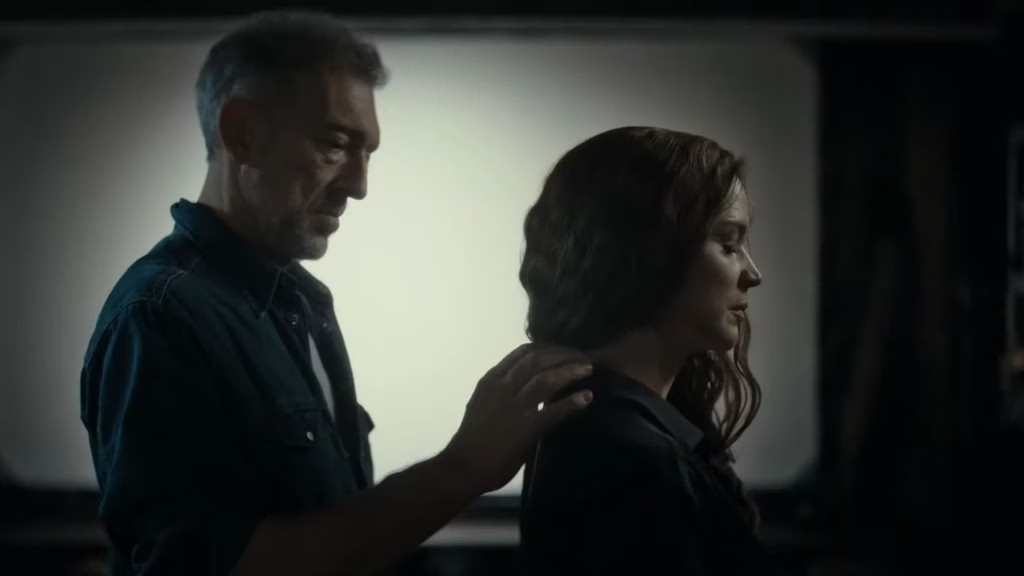
There’s no doubt that his cast are responsible for carrying these emotional subtleties too, with French cinema icons Vincent Cassel, Isabelle Huppert, and Catherine Deneuve each navigating the fictions they are presented with, or which are alternatively thrust upon them. Few characters are immune to imposed narratives, as even the blank slate of a total stranger is subconsciously inscribed with assumptions in Parallel Tales, exposing the ethical tension inherent in the act of observation. There is no such thing as true objectivity, according to Farhadi. For these entangled, unwitting characters, to perceive is to intervene in unknown affairs – and conversely, to be perceived is to be continually rewritten by others.
Parallel Tales is not yet available to view in Australia.