
Christopher Nolan | 2hr 53min

Zeus’ law is simple in its logic, yet deeply consequential to host and guest alike. In Ancient Greece, hospitality is an ethical obligation, binding both parties as equals under the same roof. Any stranger could be a god in disguise, it warns – while those who honour it shall be rewarded with favour, those who abuse this sacred bond invite divine retribution. It is the edict that Odysseus presumptuously invokes when he enters the Cyclops’ cave and indulges in its cheese, as well as the law that the witch Circe violates in cursing his entire crew. Meanwhile back home on Ithaca, it maintains an uneasy peace between his wife and the unwelcome suitors seeking her hand in marriage, each hoping to fill the power vacuum its absent king has left behind.
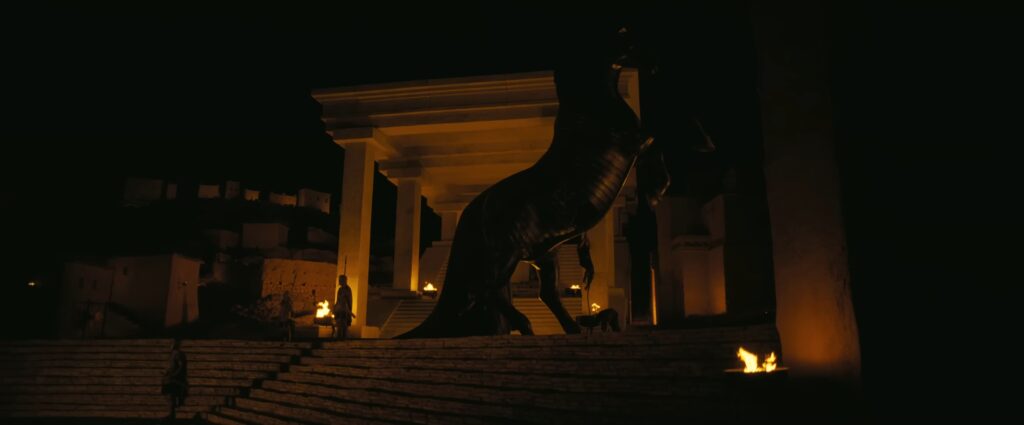
Affirmations and desecrations of Zeus’ law thread together many character arcs throughout The Odyssey, yet perhaps its most serious transgression is the very catalyst for this epic journey. Seeking an end to the decade-long Trojan War, it was Odysseus who conceived the cunning plan of hiding Greek soldiers within a giant, wooden horse, presenting it as a gift, and then emerging to slaughter the city in a single night. His greatest victory is also his deepest shame, and in the years it takes him to return home, Christopher Nolan frames each trial along the way as a mythic, god-inflicted penance he cannot outrun.
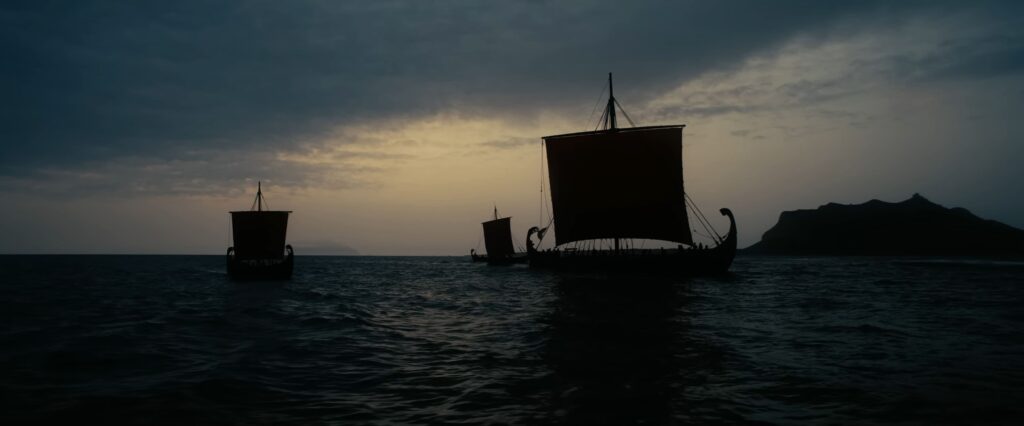
Among humanity’s oldest legends, Homer’s Odyssey has shaped storytelling traditions for thousands of years, yet few filmmakers have attempted to adapt the material without filtering it through other genres and settings. It is an insurmountable, unimaginable task for less creative minds, yet as Hollywood’s reigning master of intellectual spectacle, it is also one that Christopher Nolan is uniquely suited to. This is not to say that The Odyssey falls in line with his science fiction or historical dramas, as gods, monsters, and magic take centre stage here, yet the epic poem’s layered structure has long been woven into his previous tales of men finding their way home.
Nolan is evidently not the only storyteller here either – through various characters’ attempts to piece together scattered recollections, oral tradition is revealed as the raw material from which a culture’s mythology is built. While Odysseus’ account largely unfolds during his time on the nymph Calypso’s island, nested flashbacks deftly draw in other perspectives from his travels, organising years of wandering into a structure that never buckles under its vast scope. Although the opening twenty minutes leans a little too hard into exposition, it effectively anchors us in his wife Penelope and his son Telemachus’ agonising wait back home, setting the emotional stakes before Odysseus even appears onscreen. Despite his twenty-year absence, his legacy remains strong on Ithaca – physically embodied in his ageing dog, and kept alive in stories told by devoted family members, loyal retainers, fellow commanders, and treacherous enemies.
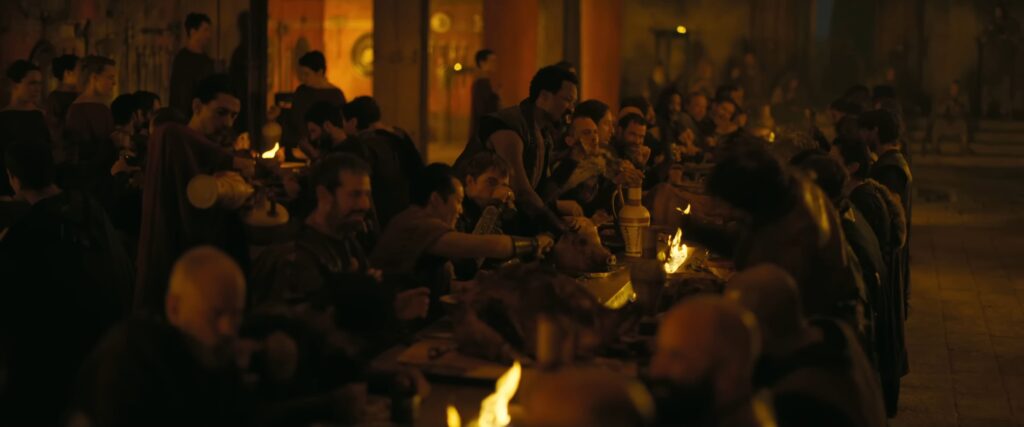
Of course, Nolan’s parallel editing is crucial in striking a balance between these twin narratives and their respective tangents, though the mechanical discipline which drove films such as Dunkirk and Inception gives way to far more impressionistic rhythms here. Where memories don’t quite settle into full stories, he instead weaves them in as fragmented cutaways, fashioning symbolically loaded motifs out of decapitated statue heads, visions of Athena, and the Trojan Horse itself. Although his editing somewhat falters in combat scenes that become difficult to track, these isolated incidents are minor blemishes within The Odyssey’s expansive, episodic structure, held together by character testimony more than linear progression.
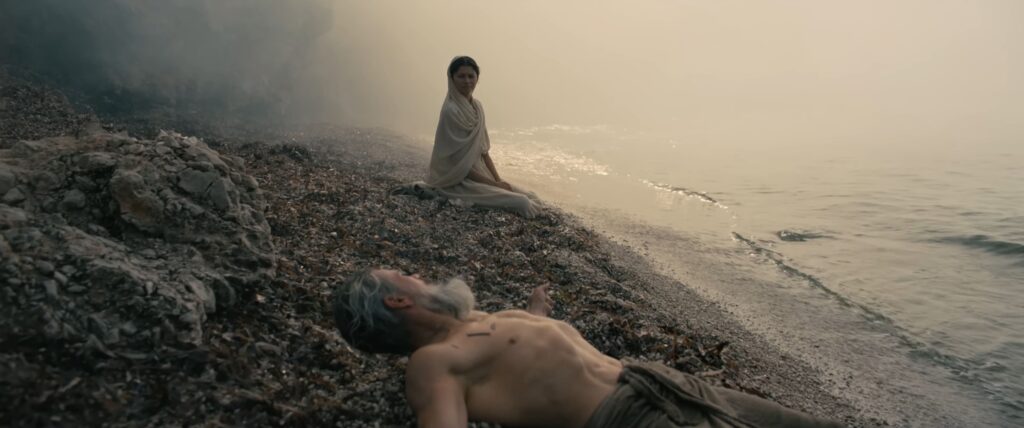
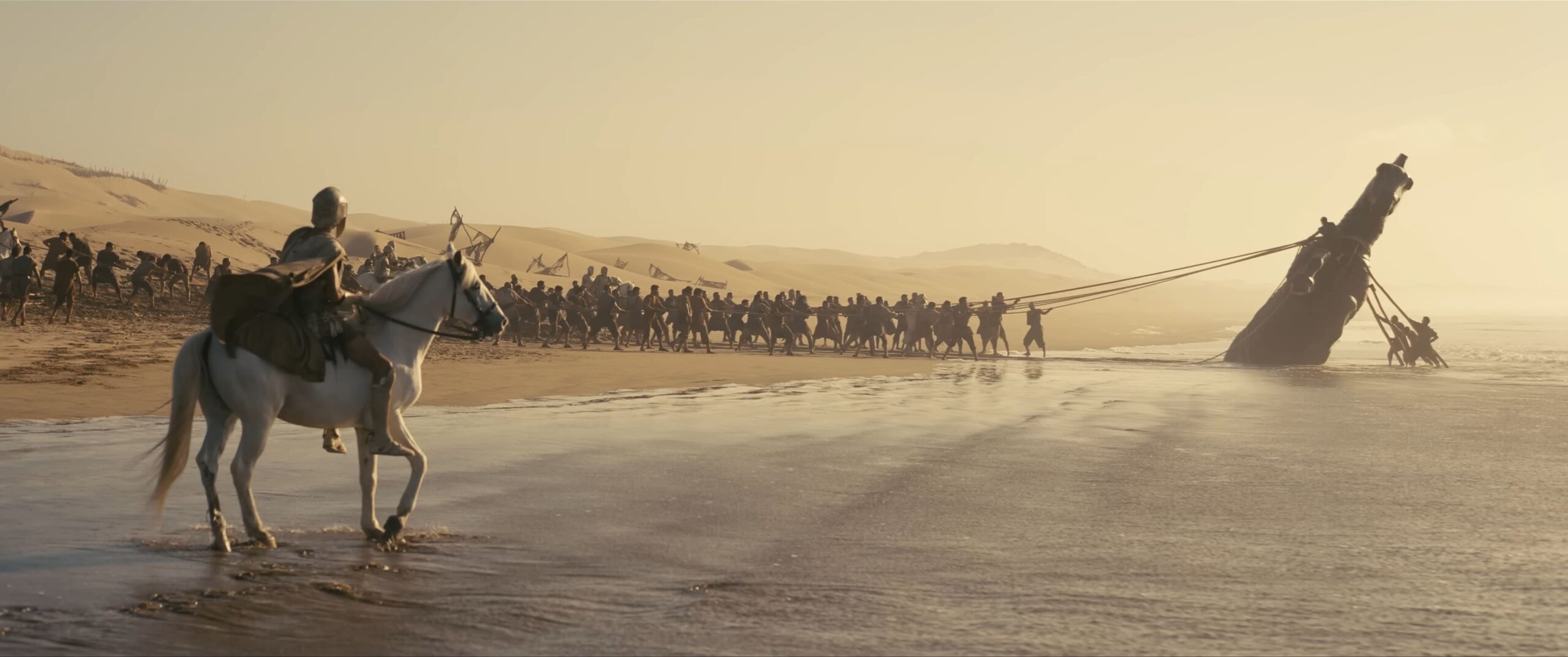
Visually too, Nolan fully capitalises on the pristine clarity of IMAX technology, composing breathtaking long shots across seas, battlefields, and beaches that capture the archaic immensity of the ancient world. The weight of Odysseus’ journey home is viscerally felt in the film’s scale, and even more so in its practical effects, realising the fearsome Laestrygonian giants through forced perspective and constructing the lumbering cyclops as a grotesque, 60-foot puppet. No doubt the most disturbing sequence though emerges during the visit to Circe’s island, where Nolan intercuts Odysseus’ hunt with his men’s ravenous feast, and drives both narrative threads towards a grim discovery. Rather than simply casting a spell, Circe appears to mould and reshape flesh with her bare hands, and Nolan’s prosthetics render the body horror in tactile, stomach-turning detail.
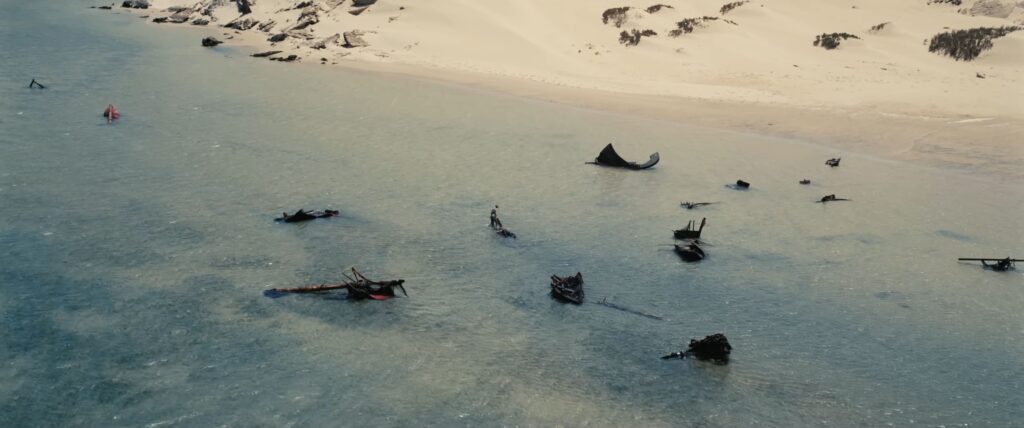
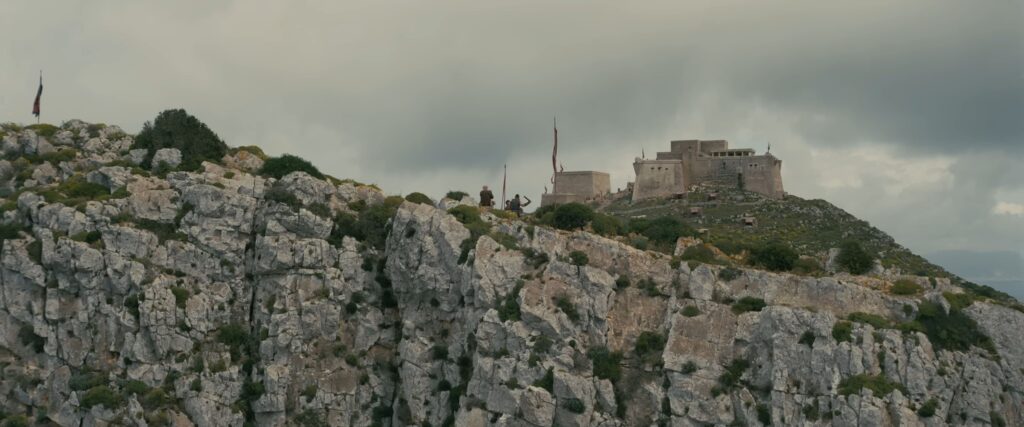
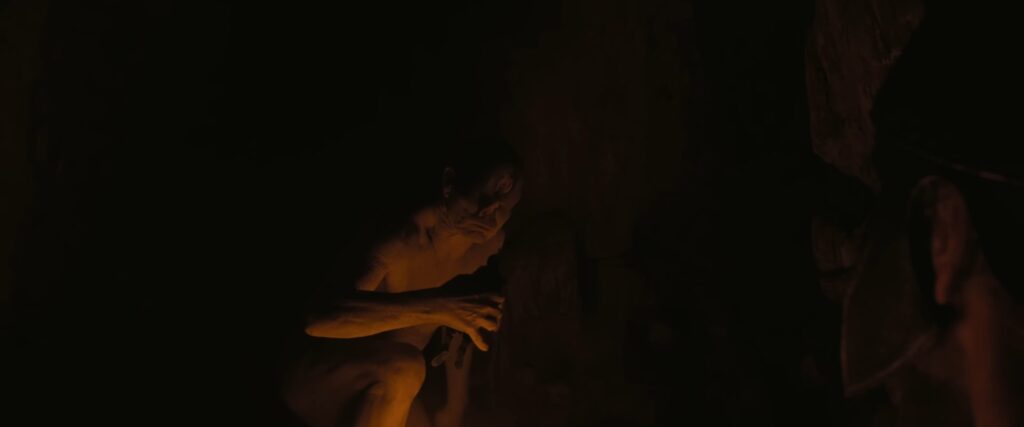
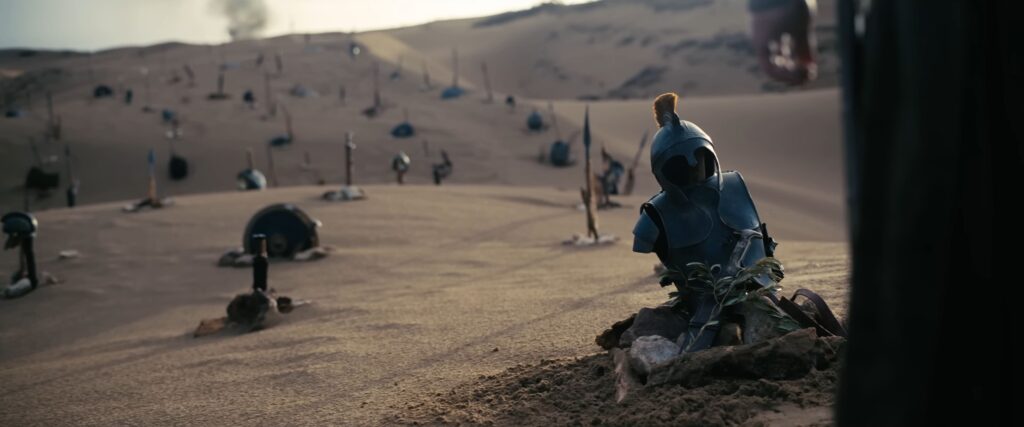
Just as this adaptation of The Odyssey favours grounded textures over excessive CGI, it stands to reason that it also leaves the Greek gods largely unseen, though this does not diminish their dramatic impact. Their presence is felt in cosmic and elemental forces far beyond Odysseus’ control, responding with a karmic sense of justice when he maims Poseidon’s son and his men eat the cattle of Helios. Upon entering the underworld too, we immediately sense the desolation of Hades in its ethereal, ashen wasteland, though it is the emergence of Odysseus’ fallen soldiers from the soil like reanimated corpses which proves most haunting. Death has not softened their bitterness – instead, they aim it like daggers at their former commander who callously orchestrated their sacrifices, and consequently become the harshest judges of his legacy.
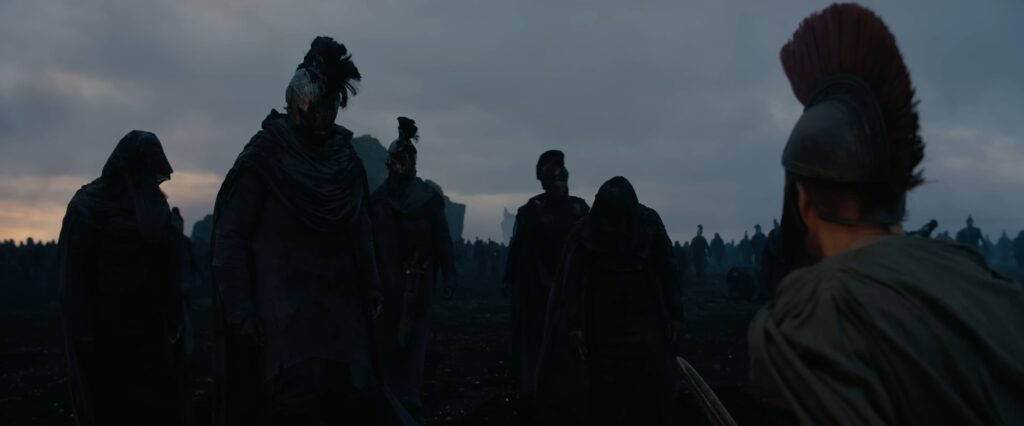
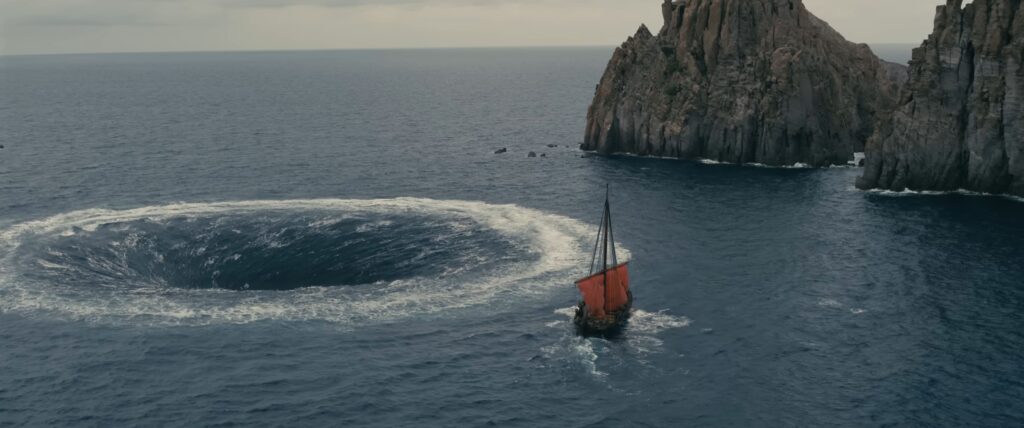
Under Nolan’s vision, this is the unifying framework through which The Odyssey’s episodes formally coalesce, each forcing Odysseus to reckon anew with the atrocities he committed in war and the trauma that has followed him since. After all, combat never truly ends in the minds of veterans, but rather splinters their shame into many smaller battles that keep them from ever truly returning home. When the gods force him to choose between the monsters Charybdis and Scylla, he ultimately picks the path that costs fewer men, yet there is no version of that choice which leaves his hands clean. It is tempting to indulge in Calypso’s lotus and cleanse one’s mind of painful memories, yet even she eventually recognises that forgetting does not bring healing. Memories are necessary for legacies to survive, Nolan reminds us, and there is nothing more tragic than a blank, storyless slate.
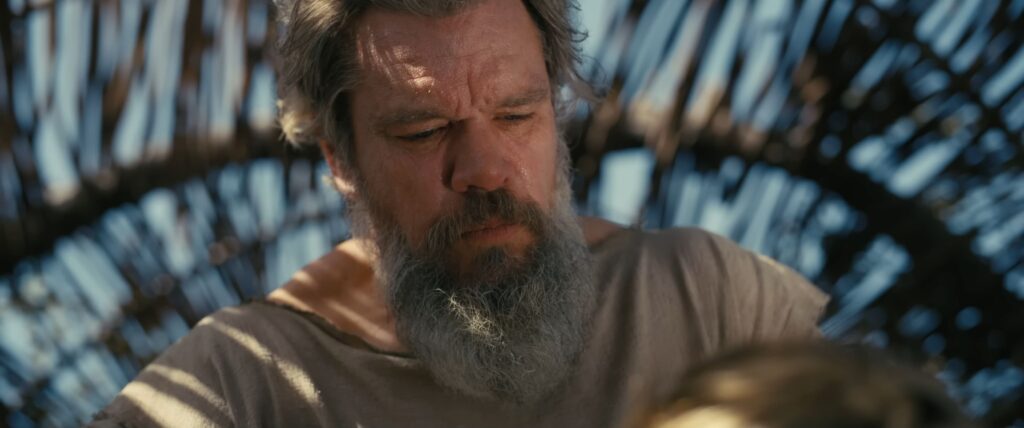
In a masterful stroke of reinterpretation, the sirens especially transcend their reputation as seductive temptresses, and instead sing a far more intimate song that reaches deep into Odysseus’ soul. While his men block their ears and Nolan’s soundscape dulls in tandem, we’re left only with their distant silhouettes on the rocks, and the king’s silent, tortured cries. Of course, there is no melody that could possibly match what Matt Damon’s expression alone conveys. It is “all the things you want it to be, then all things you wish you’d never wish for,” he reflects.
“It was the song of all the promises I failed to keep. And it told me I don’t really want to go home.”
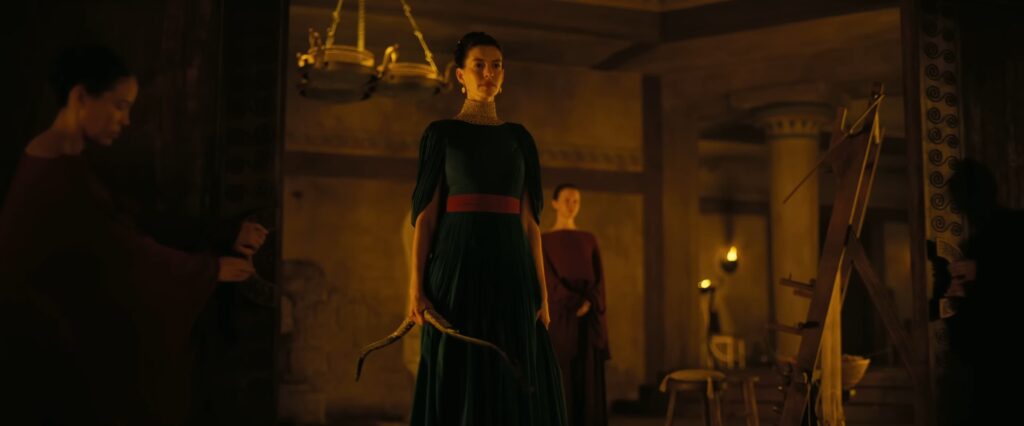
This contradiction lies at the core of Odysseus’ internal battle, and even when gods and monsters aren’t testing him, Damon carries that weight in a performance that convincingly grounds the myth’s monumentality. He possesses a sturdy gravity that resonates even in his absence, and which effectively becomes the axis around which the drama on Ithaca revolves. There, Anne Hathaway’s suppressed grief as Penelope often leans on Nolan’s framing, visually confining her behind a wooden lattice, while Robert Pattinson’s slippery, scheming Antinous outdoes a relatively one-note Tom Holland. Although John Leguizamo and Samantha Morton only appear in minor roles, both steal scenes from even the film’s biggest stars, and neatly round out a stacked ensemble which Nolan has handpicked with intention.
The trivial controversy around Nolan’s creative liberties amounts to little within the scope of his staggering achievement, particularly given the film’s interrogation of oral tradition as a living, unstable process rather than a fixed record. Homer was not The Odyssey’s originator after all, as even he simply set down in writing what generations of bards had already sung, embellished, and revised, demonstrating the total impossibility of any true ‘canon’. In that same spirit, Nolan’s contemporary inflections of dialogue and design are less about modernising this myth, and far more a matter of acknowledging the inevitability that any storyteller’s contextual influences bleed into their tale. Rather than directly reproducing Homer’s words, he thus captures the sensation of a story as it is lived, recreating the awe, dread, and wonder an ancient audience might have felt listening to it around a fire.
It is through the act of adaptation after all that Nolan deftly folds in other ancient texts such as the Iliad and the Aeneid, and ultimately makes room for the Trojan War, despite it preceding The Odyssey’s events. After two hours of glimpsing its devastation in fragmented memories, we finally experience it through Odysseus’ own eyes, accompanied by a melancholy monologue of rhetorical questions that almost seem to confess another man’s sins.
“What if the Odysseus you knew lost his way? What if one night, in a strange city, he saw things that made him think the home he knew couldn’t possibly be there anymore? What if, when he left the belly of the horse and opened the gates of Troy, he saw ten years of rage pour into the city in one night?”
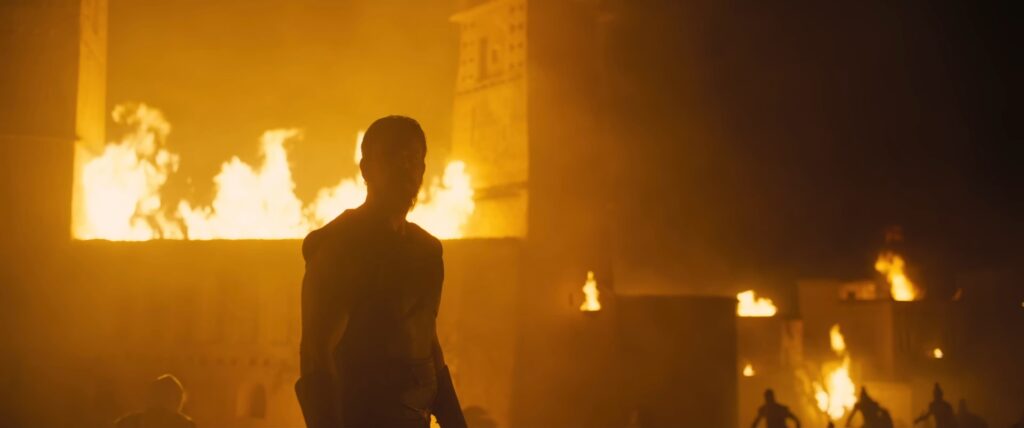
Beyond Troy alone, this king’s world of honour and glory is collapsing, and he can’t deny his own hand in its destruction. It is not just war that scars civilisations, but also the shame it sends back with its victors, hollowing out the halls and chambers they once knew. We are never quite certain that Odysseus’ conscience will follow his body home, and in that psychological ambiguity, The Odyssey becomes as much a veteran’s reckoning as a hero’s journey. It takes a brave soul to wrestle with Homer’s epic poem of wandering warriors and vengeful gods, yet as Nolan so powerfully proves, only a true visionary can carve such a haunting, cinematic elegy from three thousand years of myth.
The Odyssey is currently playing in cinemas.
Nice to hear about this film, I do have a few questions.
1. Where would this rank for this decade so far
2. Where would you put this in Nolan’s filmography overall
and 3. Thoughts on the rest of the cast