
Paweł Pawlikowski | 1hr 22min

As Europe recovers from the profound trauma of World War II, German novelist Thomas Mann sees no reason why he should choose between East and West. Despite fleeing the Nazi regime in 1933 and spending the remaining years exiled in America, he considers himself a citizen of high culture rather than ideology, while the faultline dividing his homeland remains a trivial concern. Art does not recognise borders, he claims – just as his idol Johann Wolfgang von Goethe represented a unified Germany before its political fracture, he floats above the scarred realities of postwar Europe, choosing to make his grand return by accepting a pair of literary awards on either side of the Iron Curtain. With his daughter Erika accompanying him on this road trip, he thus proceeds in self-assured detachment, secure in the belief that cultural prestige grants him immunity from any emotional responsibility.
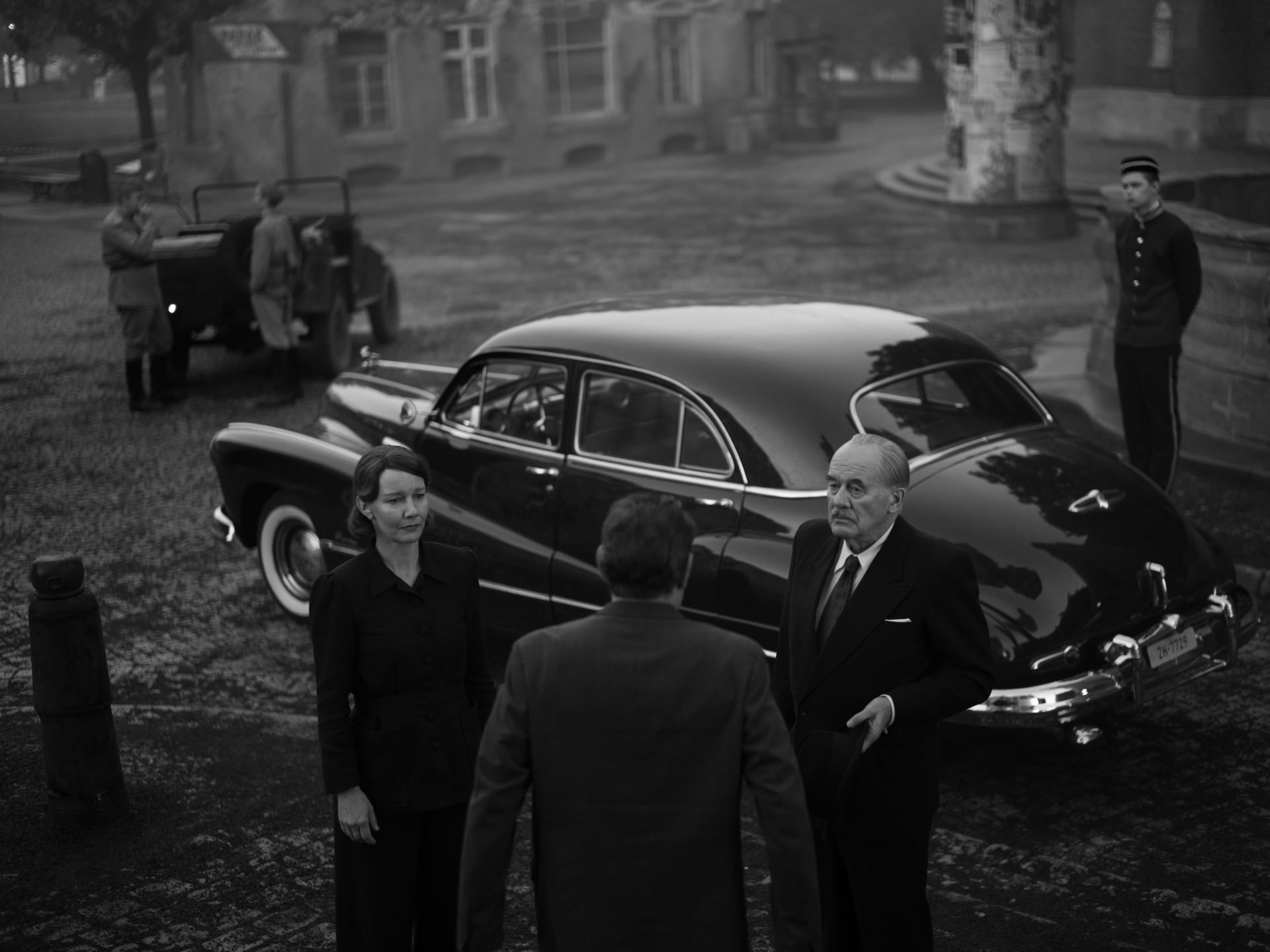
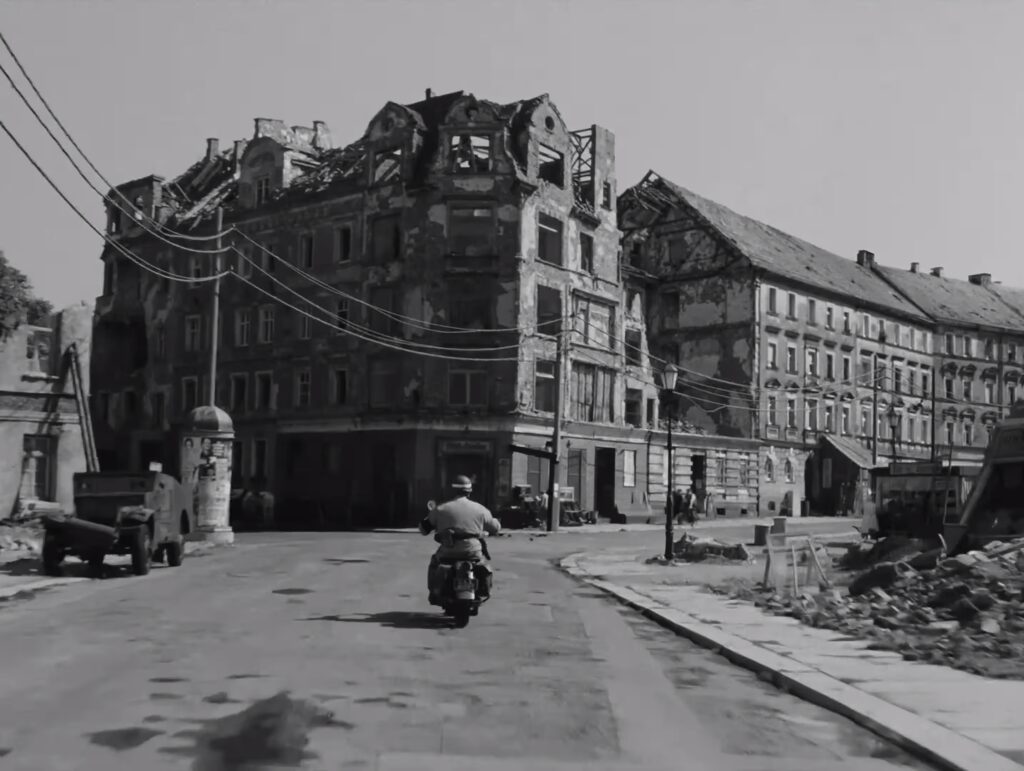
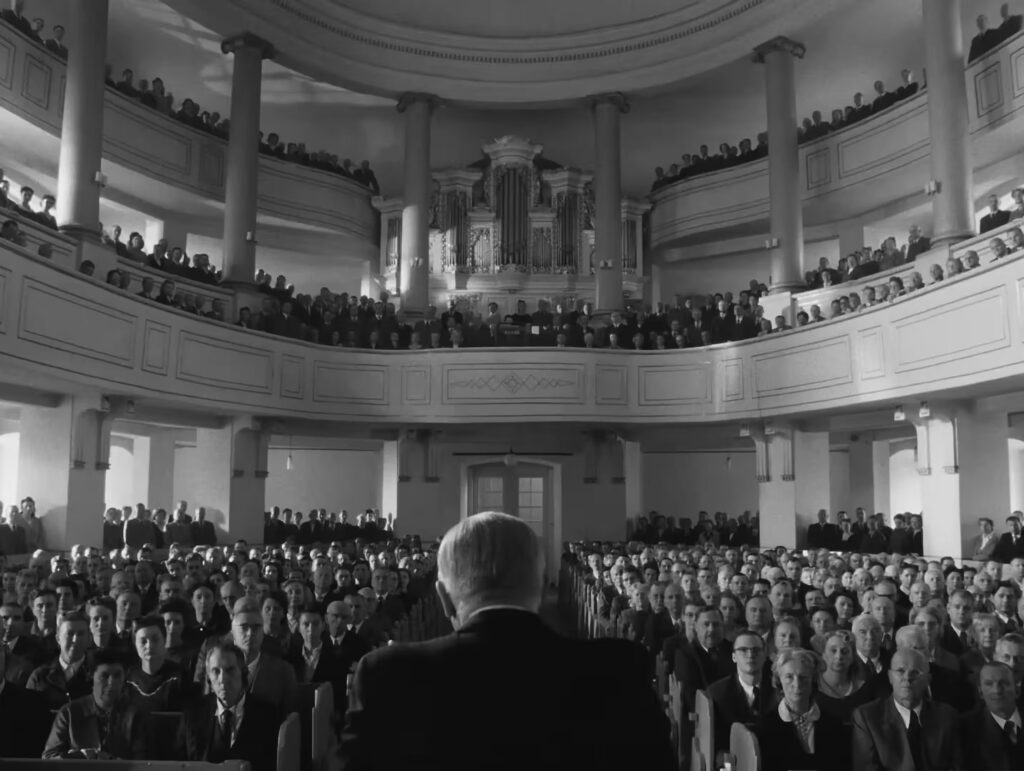
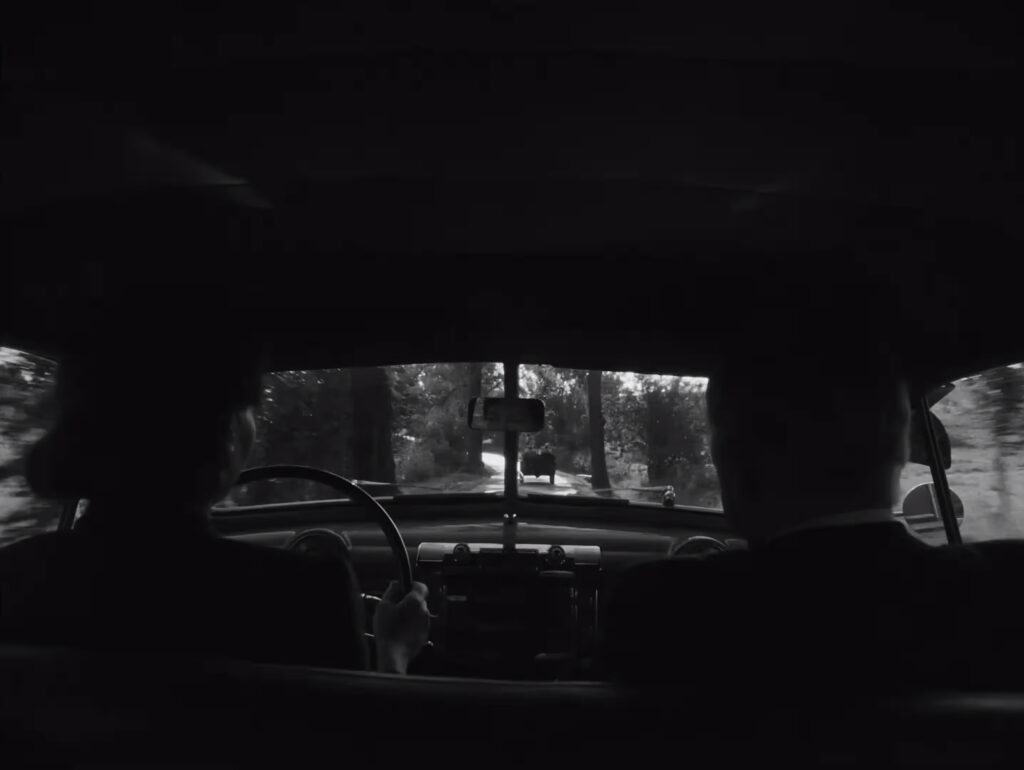
Still, with Paweł Pawlikowski’s deep focus compositions subsuming his characters in cavernous interiors and monumental ruins, Fatherland’s formal austerity does not allow its characters to so easily escape the reach of the past. Just as his previous films Ida and Cold War aesthetically position their subjects toward the bottom of the frame, crushed beneath the textured negative space of their surroundings, this postwar portrait isolates these figures while anchoring them firmly to history. Pawlikowski’s wide angle lenses vividly capture his painstaking recreation of 1940s Germany, particularly in tracking shots driving through bombed-out streets, though still Thomas displays a conceited optimism as he champions cultural unity within vast, bourgeois auditoriums.
Indeed, this writer has proudly insulated himself within an emotional void, leaving Erika and her brother Klaus to endure its creeping influence. Both siblings find a melancholy solace in their shared upbringing – while Klaus strains against depression to carve out his own career as an author, Erika holds a steady balance between her reserved composure and fierce principles. These are real historical figures after all, and although Erika’s past is not foregrounded here, her previous work as a war correspondent and running an anti-fascist cabaret position her as a political activist. Perhaps this is why Pawlikowski chooses to swap out his wife Katia, who in reality accompanied Thomas on this trip, for his more symbolically charged daughter. By narrowing in on this generational tension, Fatherland recognises the fundamental divide between those who cling to the nation’s noble, lofty ideals, and those who are forced to inhabit its contested future.
Of course, Thomas’ self-imposed distance is not some passive eccentricity. Early in his celebratory tour, the shattering news of Klaus’ suicide arrives, driving an even deeper wedge between his grieving sister and stoic father who bluntly maintains that “Klaus shouldn’t have done this to your mother. And to you.” Even while blaming his “attention seeking” son for his family’s pain, he notably does not include himself among those hurt by his passing, implicitly refusing to consider his own accountability. While Thomas’ literary stature is legendary, Klaus’ insecurities deepened in its shadow, forcing him into comparison with a father who offered no warmth, reassurance, or encouragement.
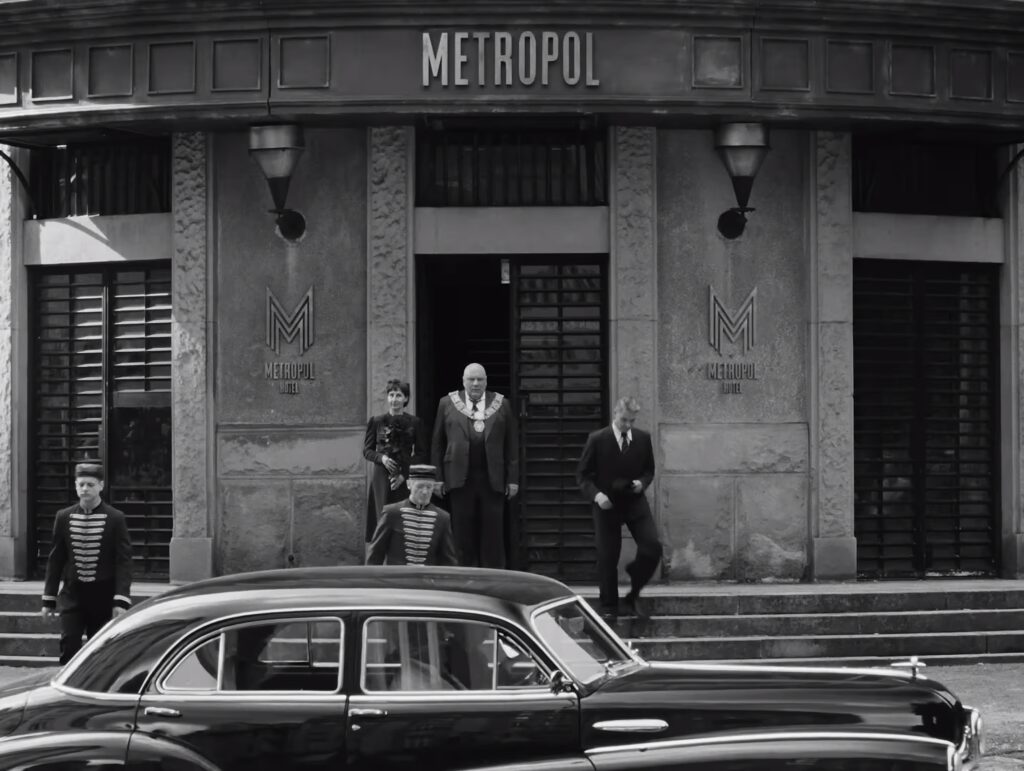
Nevertheless, the parallels between Klaus and Thomas remain all too apparent, particularly given their respective novels Mephisto and Doctor Faustus framing Germany’s fascist bargain through the Faust legend. In reworking Goethe’s tragic play, both recognise its historical relevance, which Pawlikowski further develops through the reflections of various civilians upon their wartime regrets and vindications. Approached by her ex-husband Gustaf Gründgens at a formal event in Frankfurt, Erika has no patience for his rebrand since the end of the war – he was one of the Third Reich’s greatest actors after all, essentially selling his soul to become a darling of the Nazi cultural elite. While he whitewashes his past through the testimony of Jewish colleagues and laments his time in a Soviet prison, Erika meets his self-pitying smugness with a slap to the face, rupturing the West’s diplomatic belief that former Nazi collaborators may be reintegrated into respectable society.
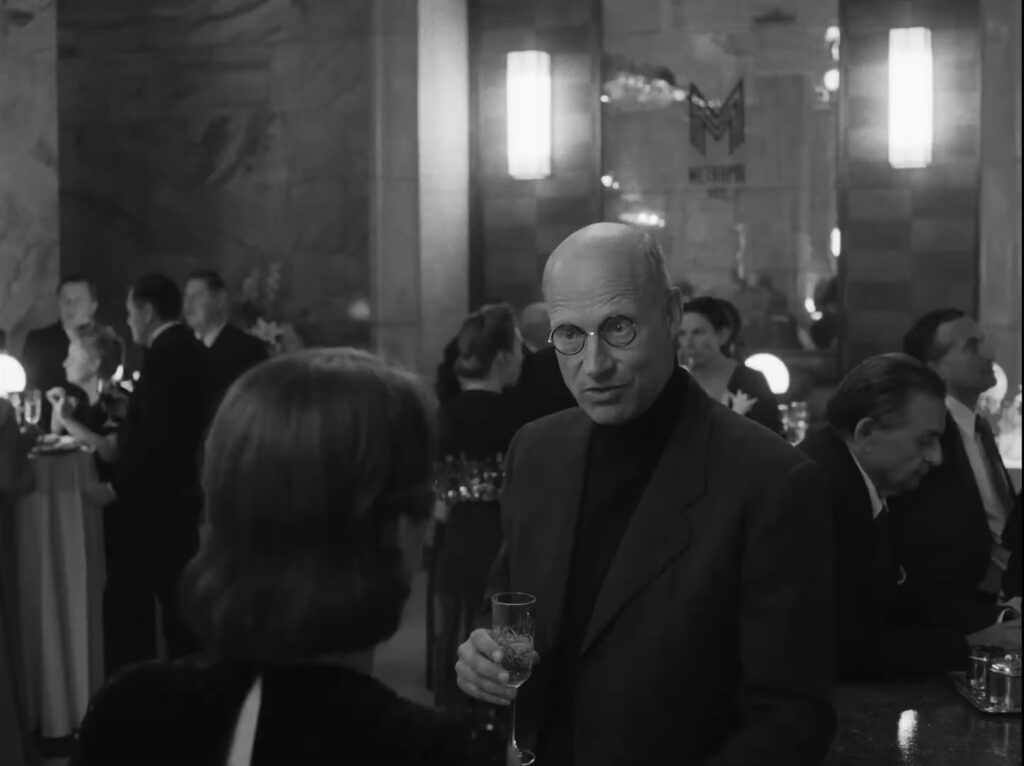
Across the room, Thomas is meanwhile in conversation with Richard Wagner’s grandchildren, who are similarly trying to rehabilitate the composer’s public image by seeking his support. Thomas is justifiably prepared to take a stand on matters of Nazi culture, insisting the entire opera house be razed to the ground and asserting his distaste for the Third Reich’s aesthetics. During an early press conference too, he brusquely shuts down one reporter’s ‘inner emigration’ defence, which many intellectuals invoked to justify remaining in Germany and preserving its ‘true’ culture even as they outwardly complied with authorities.
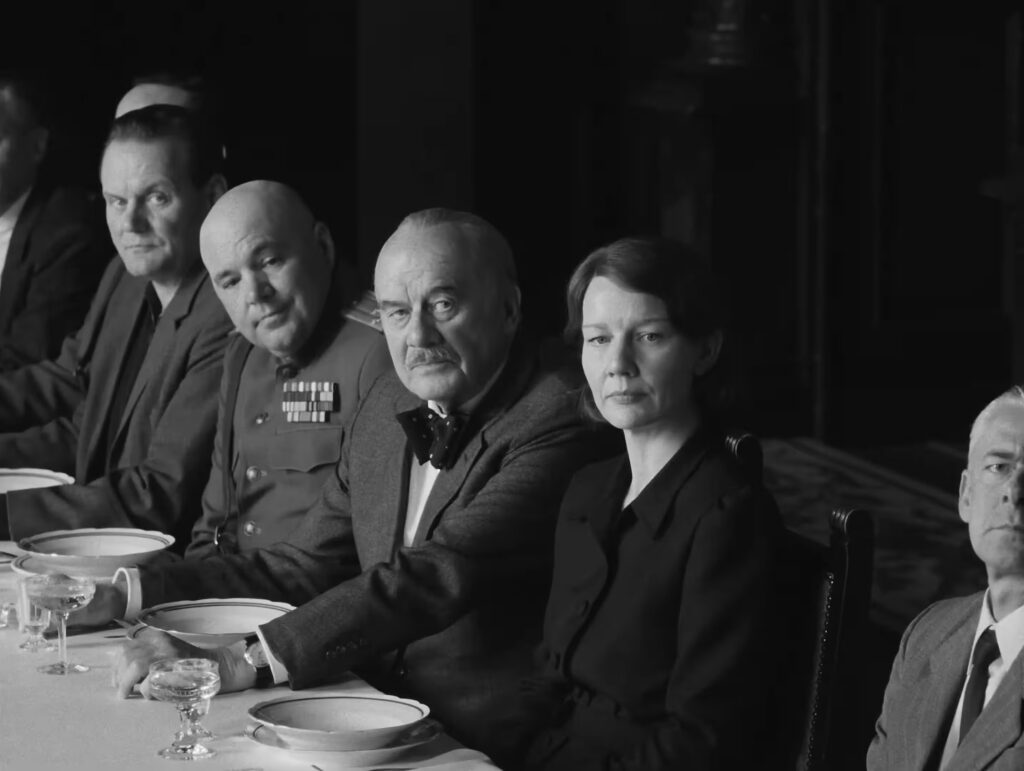
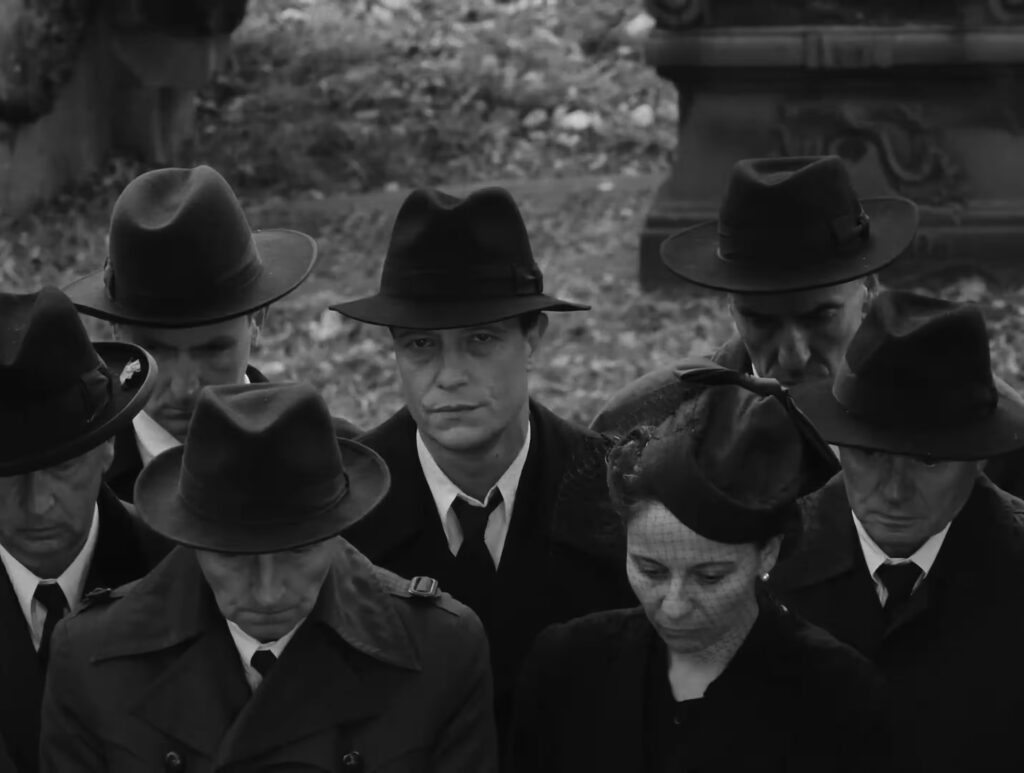
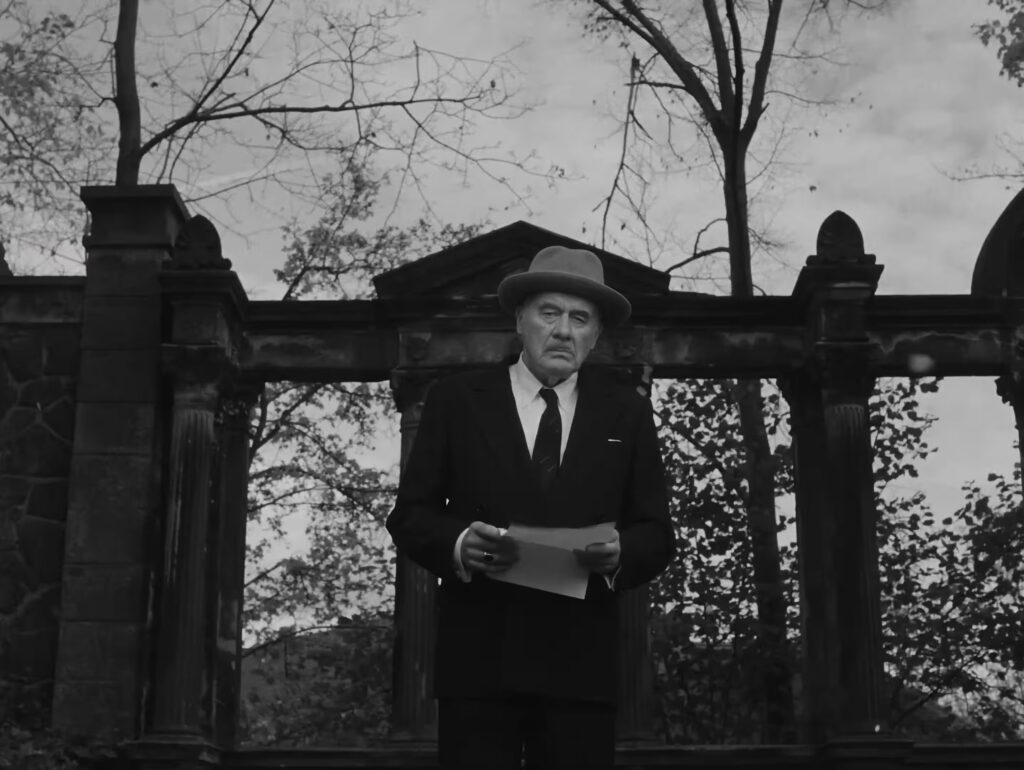
Still, this moral severity only makes Thomas’ hypocrisy harder to overlook, least of all for Erika. Highbrow art will not heal national wounds any more than it will restore fractured family ties, and as Fatherland enters the surreal realm of the subconscious, Thomas too confronts this limit. Pawlikowski’s meticulous framing of faces often recalls Ingmar Bergman’s stark portraiture, and this tale of an academic’s cross-country voyage is particularly indebted to Wild Strawberries, though the deepest resonance here lies in a fleeting dream which imagines Thomas at his son’s funeral. Speech in hand, he stands before a crowd, yet finds himself unable to speak. Among the mourners, Klaus’ face stares back at him, and silence overtakes him completely. There is no catharsis to be found either here or in his waking life, though at the very least, Thomas’ buried guilt can no longer remained ignored.
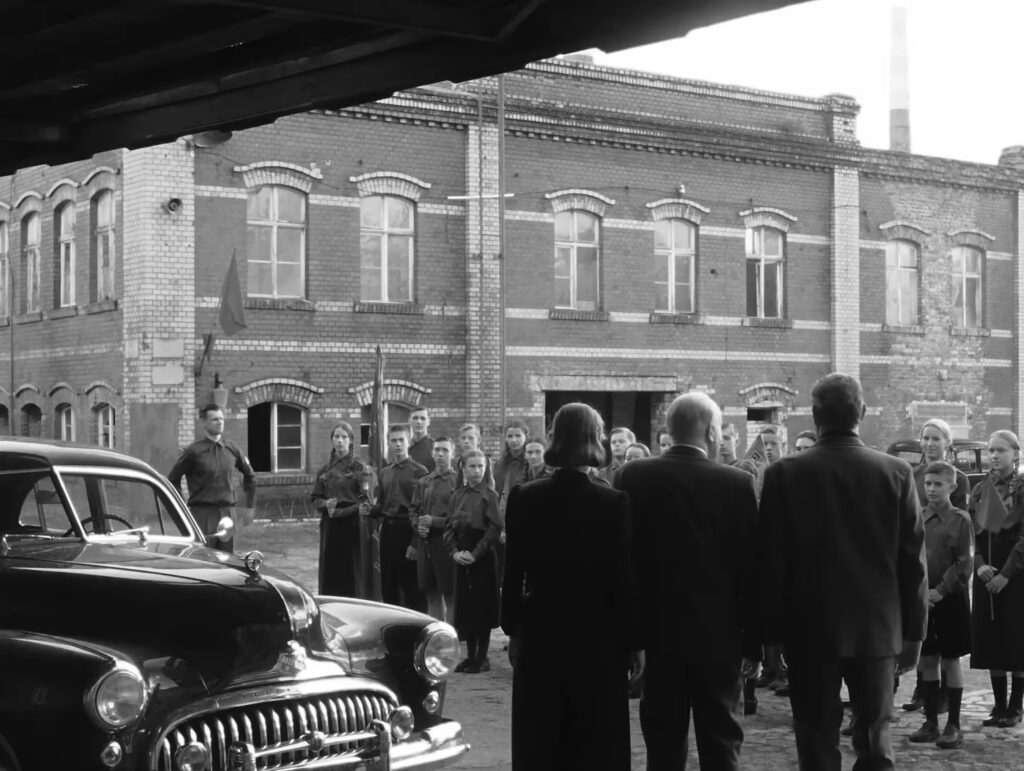
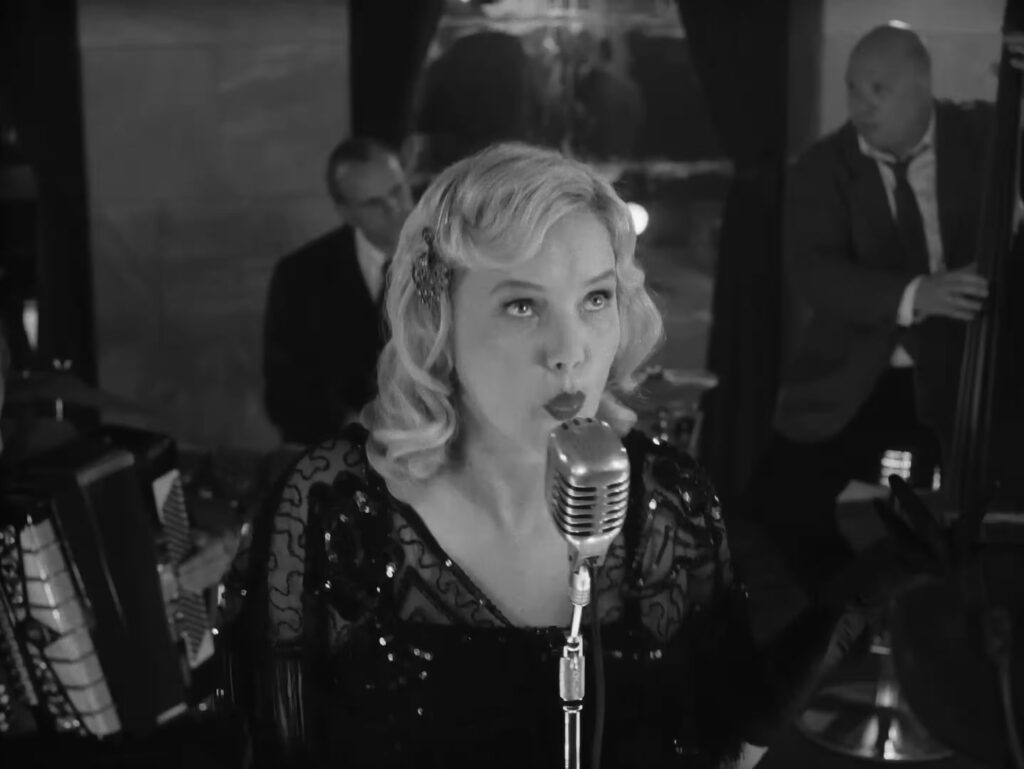
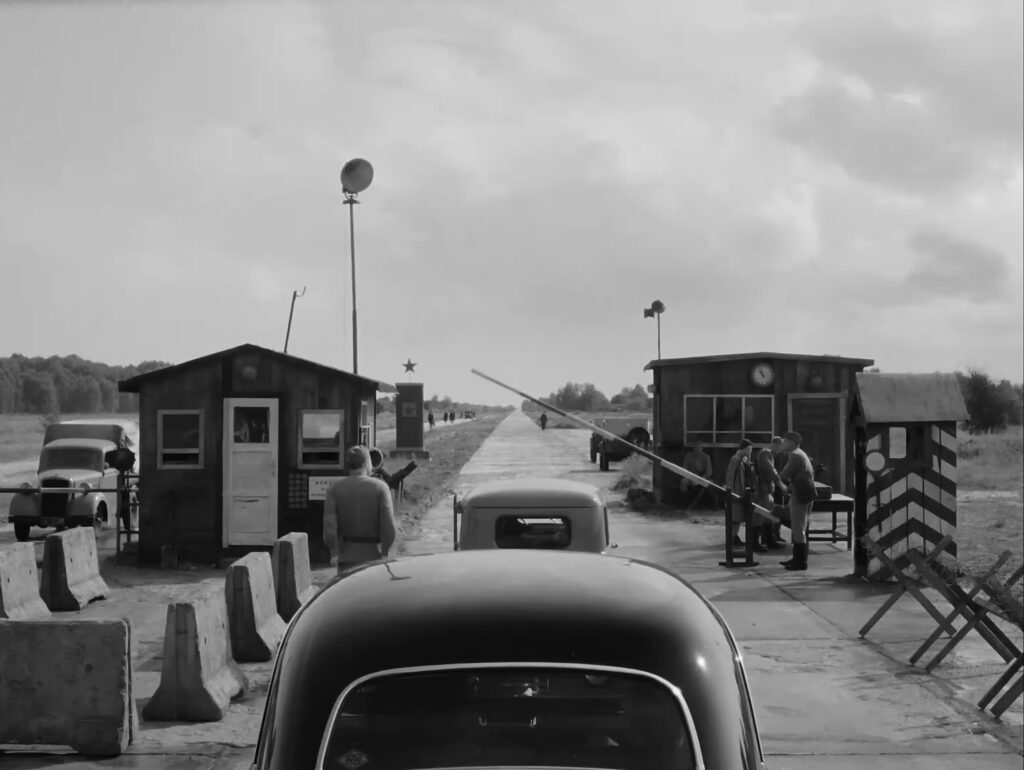
Especially once he crosses the heavily guarded border from West to East Germany, his refusal to acknowledge the material reality of Soviet occupation becomes increasingly untenable. Diegetic music becomes a crucial motif in expressing this geopolitical divide – where the West parties to upbeat jazz, sung by an animated Joanna Kulig from Cold War, here in Weimar we are subjected to a repetitive range of anthems that function more as propaganda than entertainment. Perhaps the most overt intrusion however comes when an activist confronts the writer in private, informs him of the inhuman Soviet camp set up next door, and encourages him to expose it in tomorrow’s speech. His swift apprehension leaves only a stunned silence in its wake, and as Thomas delivers his usual, blandly neutral address the following day, this dissident’s sacrifice is ultimately rendered futile.
Pawlikowski has never shied away from the postwar complicity of civilians after all, but by specifically shifting his focus toward Germany, he pinpoints Thomas’ homeland as Europe’s moral crucible. Through crumbling relics and lavish ballrooms, his severe, monochrome photography frames the writer’s introspection as an existential odyssey, forcing him to question his own self-satisfied intellectualism while Erika bears its emotional consequences. Sandra Hüller’s ascetic restraint feeds into this unresolved tension, carrying the exasperating weight of her father’s unexpressed grief alongside her own, and eventually even leaving one of his speeches to wander an overgrown garden of Weimar-era statues. Pawlikowski’s rolling camera recalls Alain Resnais as it drifts by these monuments, momentarily stepping beyond the narrative to contemplate a cultural heritage that has eroded with time, yet which nevertheless lingers within Germany’s living memory.
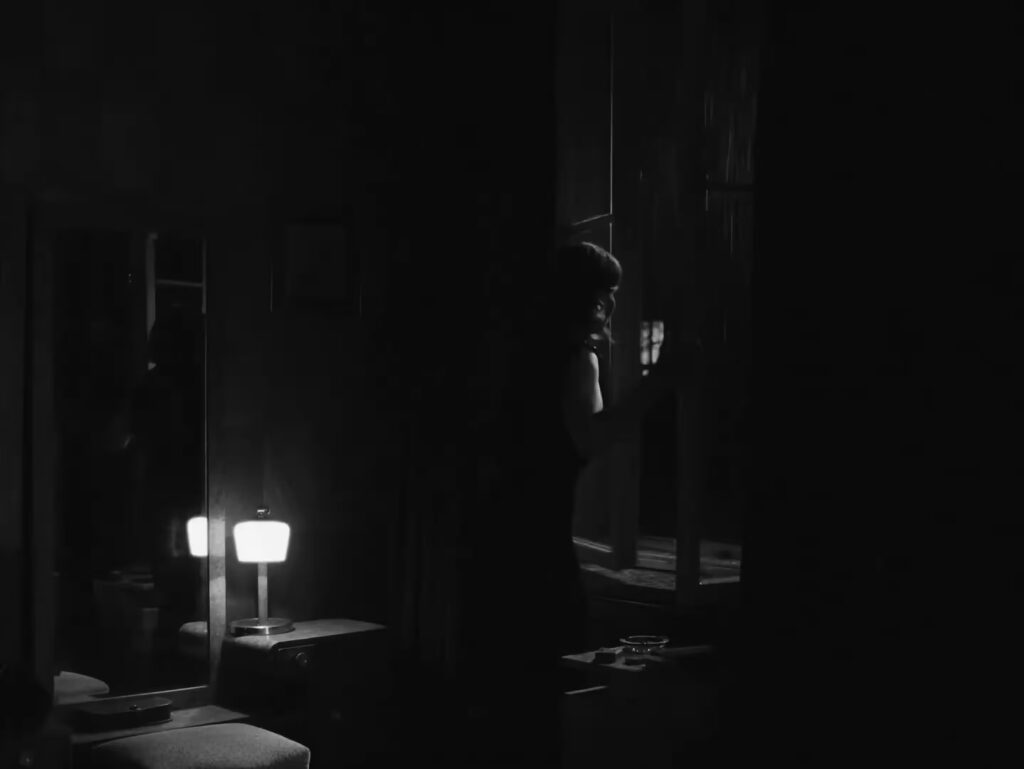
We may grieve those lost cultural ideals of a nation that has warped beyond recognition, though as Erika contends, any discourse that naively invokes these values while the world unravels is merely background music. As father and daughter make an unscheduled stop on their trip to explore a dilapidated church, Pawlikowski chooses this metaphor to distil Thomas’ nostalgic passion, filling its decaying, vaulted interior with sound of two men tuning a pipe organ. ‘Jesu, Joy of Man’s Desiring’ by Johann Sebastian Bach hauntingly drifts through the ruins, and particularly resonates here given what we learnt earlier of Klaus’ almost religious reverence for the composer. Without speaking a word, Thomas and Erika sit and listen to this sacred instrumental – and for the first time, we see the scholarly, stoic writer weep. Art may indeed spread hope among the remnants of civilisation, yet Fatherland’s formal severity never quite lets us surrender to such consoling illusions for long, mournfully recognising that these ringing harmonies cannot restore the social, political, or moral wreckage they echo within.
Fatherland will come to Mubi on October 23.
I’m sorry, but I don’t see how this movie is a tier below Cold War and Ida. Seriously, it’s just as visually gorgeous, formally rigorous, and honestly the most well written of the three. It’s pretty handily a masterpiece for me, what makes you think it falls short compared to the other 2
I hope you’re right, I’ve got it as a high MS at the moment but would love to revisit. It seemed like more of a thematically intellectual than formal achievement compared to the other two, and I would agree that it has the best screenplay. It certainly has room to move up. Whereabouts did you watch it?
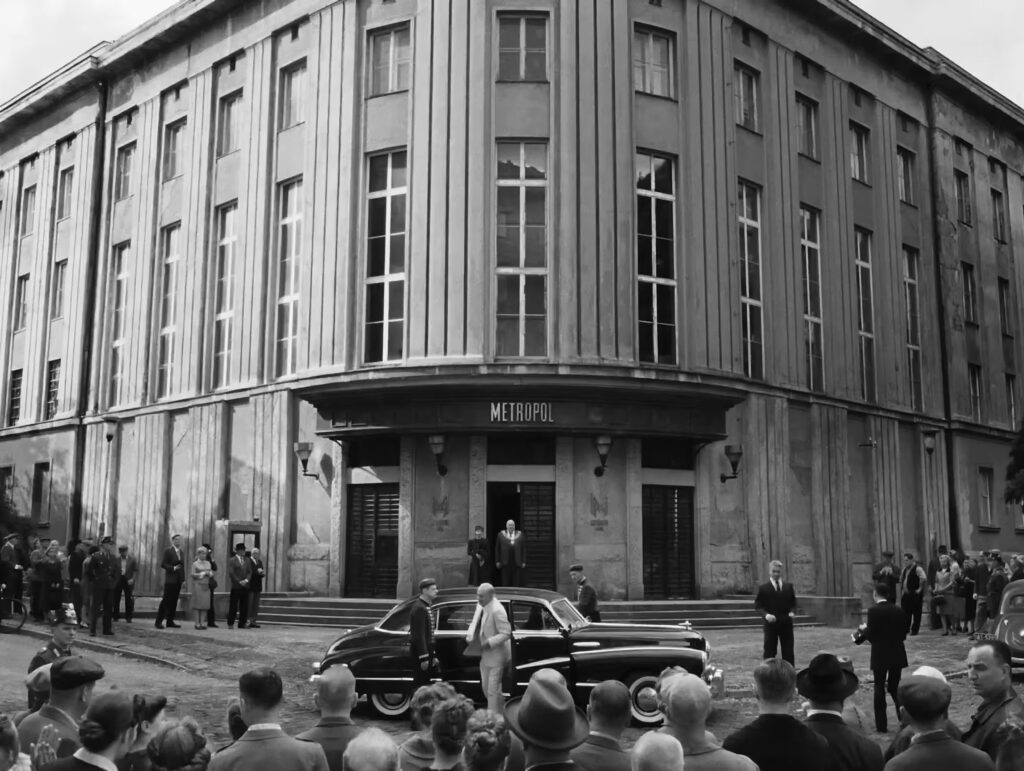
You did mention in your letterbox that you had initially underrated Cold War (wich I agree with you is one of the best of the 2010’s), so maybe it’s a similar case ? I got to see it with a friend at the Louxor theater in Paris, tickets were cheap but you had to buy them several days in advance or else they’d vanish. Getting to see it in the big screen defenitely was amazing. I agree that it’s the strongest intellectual achievement of the three, but also that in the case of Palikowski, style and content never go unmatched. There might not be the same amount of negative space compositions here than in Cold War or Ida, but there are a ton of instances of Palikowski utilizing the amazing setpieces he had in his disposal to craft gorgeous compositions (such as the upside down shot of Huller at the church(?) In general upside down angles are used quite a bit here) also, just like in cold war, music and singing are strong reoccurring motifs that match the content, both cases we have short films that dedicate a sizeable portion of their running time to showcasing the culture that is the subject of study through music and song (we have the jazz singer sequence, the children singing to welcome Thomas, the nationalists singing under Huller’s window in her moment of grief, the young soldiers singing in front of the officers, and the pipe organ Bach finale, I might have missed some but it’s defenitely a consistent theme) and surrounding the aural representation of art are these conversations about art’s role or neutrality/transcendence over or useless in the face of politics. The ex-nazi actors, Wagners grandson (Thomas mentions how Hitler was a fanatic of the artist that everyone in 1949 admires, again, does Hitler being a studied Wagnerian changes what his art means ?). Narrative form is important and I’d argue Fatherland has the strongest of the three(I mean aside from themes and dialogue it’s structure is audiovisually the most formal). And again, the movie is visually stunning. You brought up the surrealist metaphysical elements yourself and they’re defenitely strong, and while not as rigorous as in the previous two, Palikowski’s usage of negative space photography remains strong. I’d also argue there’s a visual motif of what would be negative spaces compositions with Thomas’s head being at the bottom center of the screen with the rest of the frame being cluttered by a crowd observing him. I can think of at least three instances, first with the journalists, then it’s the shot at the theater(?) You posted and another later dominated by black more than white. Also I’m not sure what to make of the scene of the statues with Huller but it’s esthetically very striking and mysterious.
I am gonna revisit it but I’m quite confident in my 5 star rating and MP status for now.