
Peter Greenaway | 1hr 59min

To architect Stourley Kracklite, the soul does not belong in the heart, or even the mind. It is the gut which houses that primal essence of appetite, ego, and mortality, physically swelling as it gorges itself, and gradually eroding the entire body. When his wife Louisa falls pregnant, his insecurity only deepens – why should her belly nurture new life while his gets fat, setting in pains that consume him from the inside out? Perhaps she is poisoning him, he wonders, though the doctor offers a far more rational diagnosis. His aches are merely the result of unhealthy eating habits and a chronic bout of narcissism.
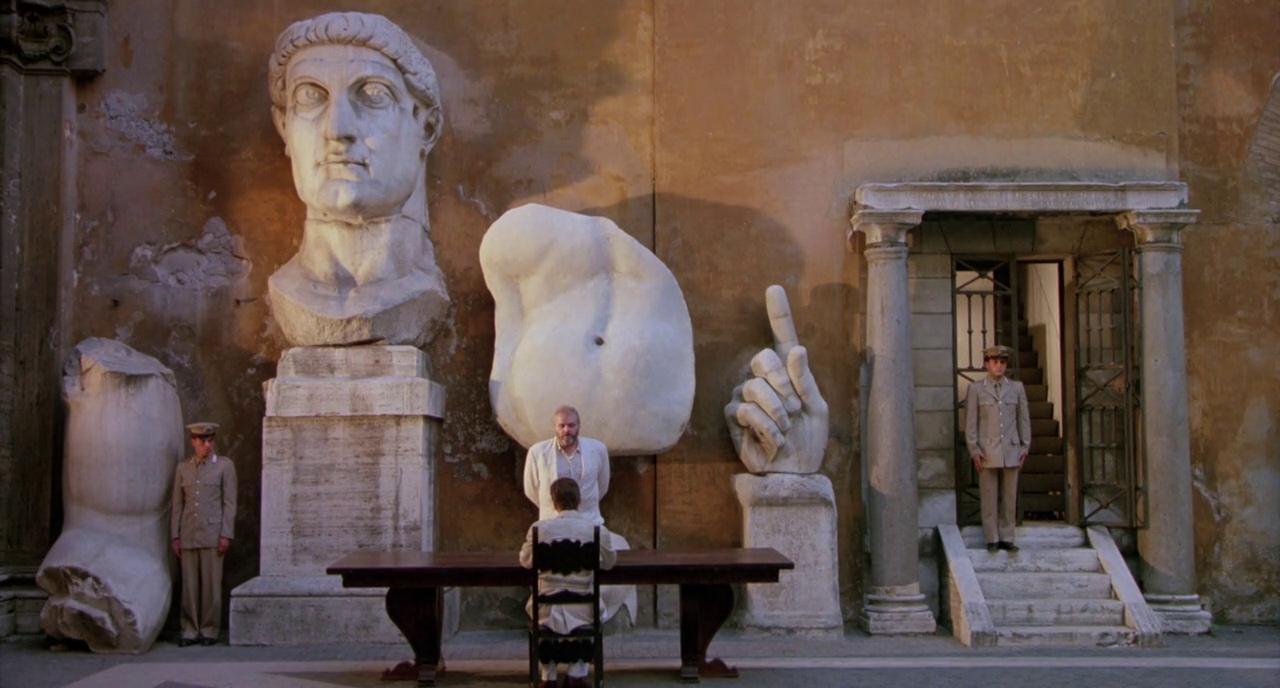
Against the perfect, symmetrical order of those monumental structures that Stourley has dedicated his life to, the human body appears especially flawed, unevenly curving and sagging where Enlightenment rationalism demands perfect proportions. During his efforts to establish an architecture exhibit in Italy, the Ancient Roman sculptures he encounters also set an impossible ideal, taunting him with images of Emperor Augustus Caesar’s muscular torso that he neurotically photocopies and arranges into rows. Stourley’s soft, fleshy girth might as well be the source of his mental and physical torment, and as we witness his humiliating undoing in The Belly of an Architect, the city’s structural creations slowly digest those who lay claim to their historic legacy.
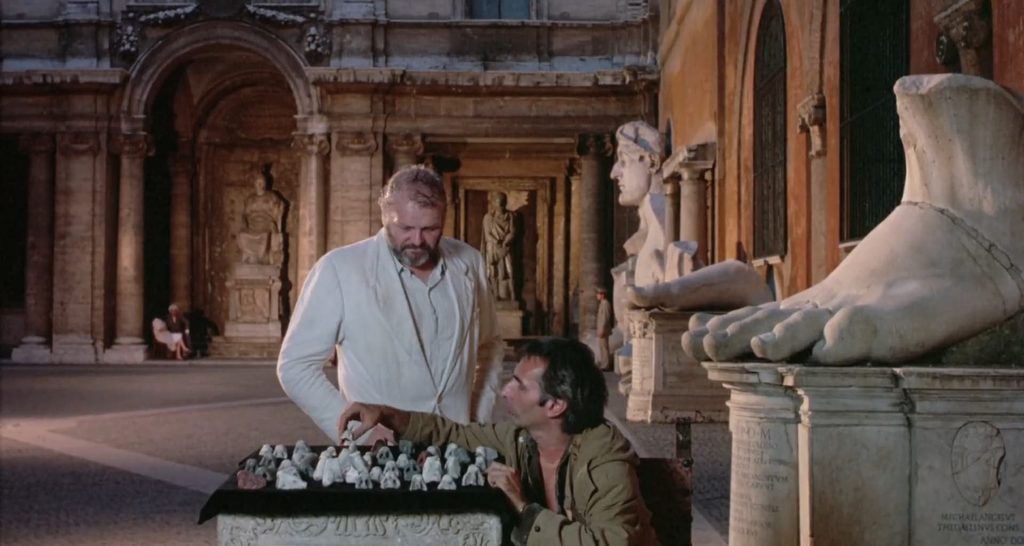
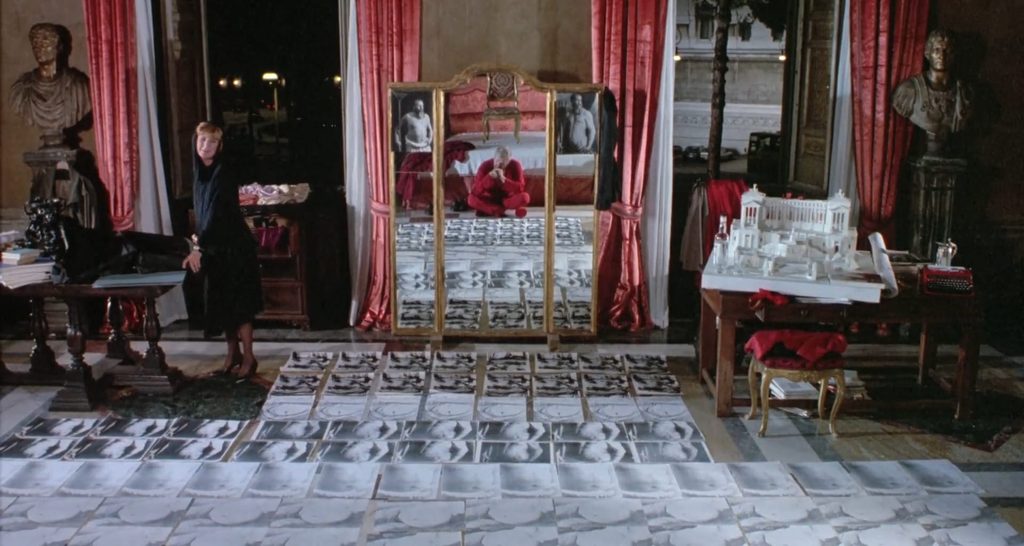
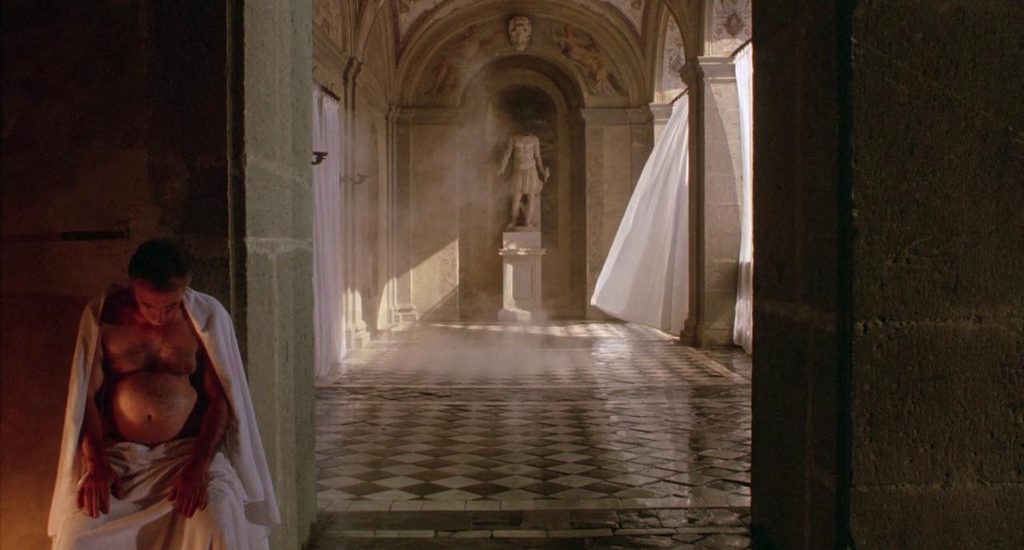
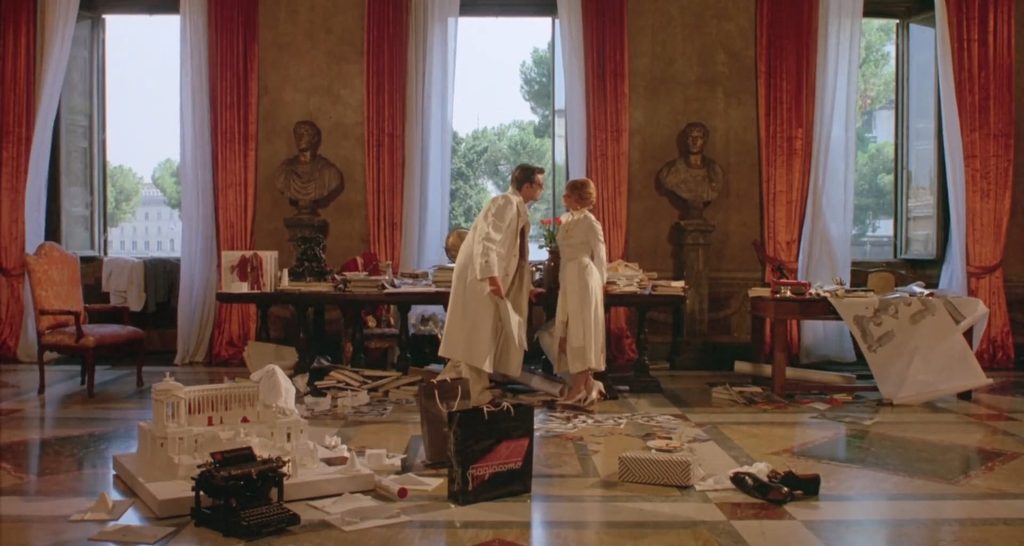
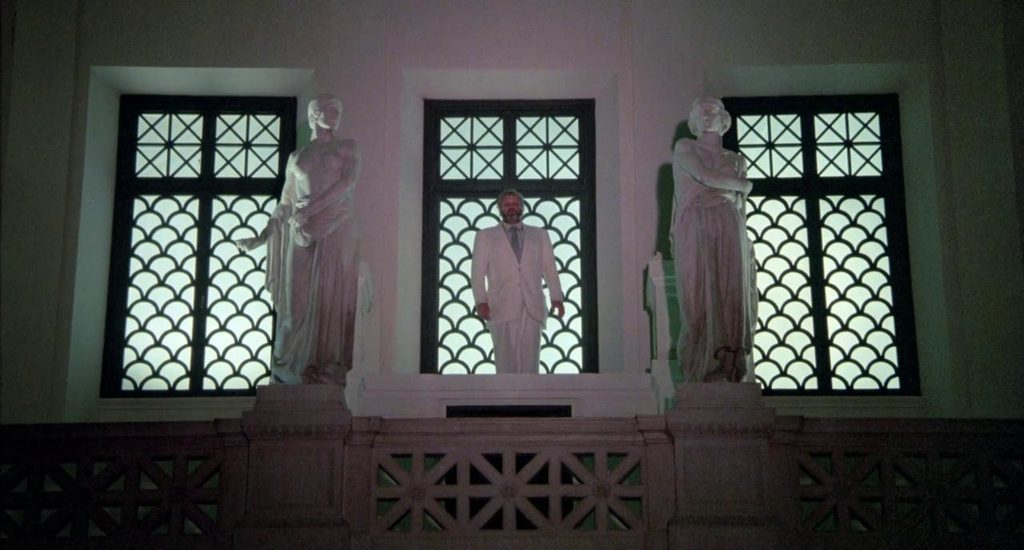
Especially within wide interior shots that so frequently diminish characters in the background, Peter Greenaway illustrates this imbalance, physically swallowing them up in doorframes while their conversations persist at full volume. His fixation on architecture is more than another exercise in closed, logical systems, having elsewhere centred taxonomy in A Zed & Two Noughts and gastronomy in The Cook, The Thief, His Wife & Her Lover. Here, this intellectual obsession offers a disciplined marriage of form and aesthetic, staging tableaux which impose the geometry and hierarchy of neoclassical design upon cinematic composition.
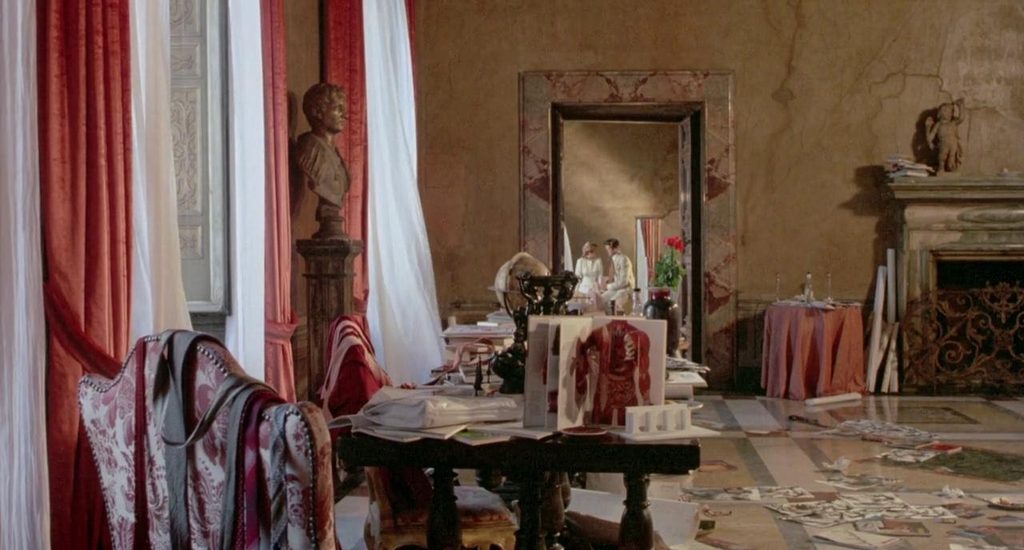
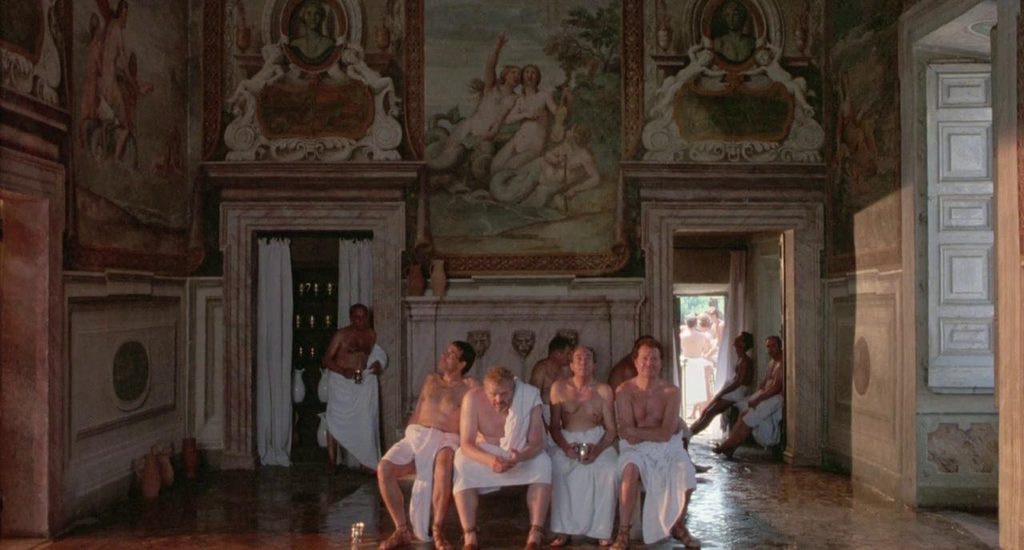
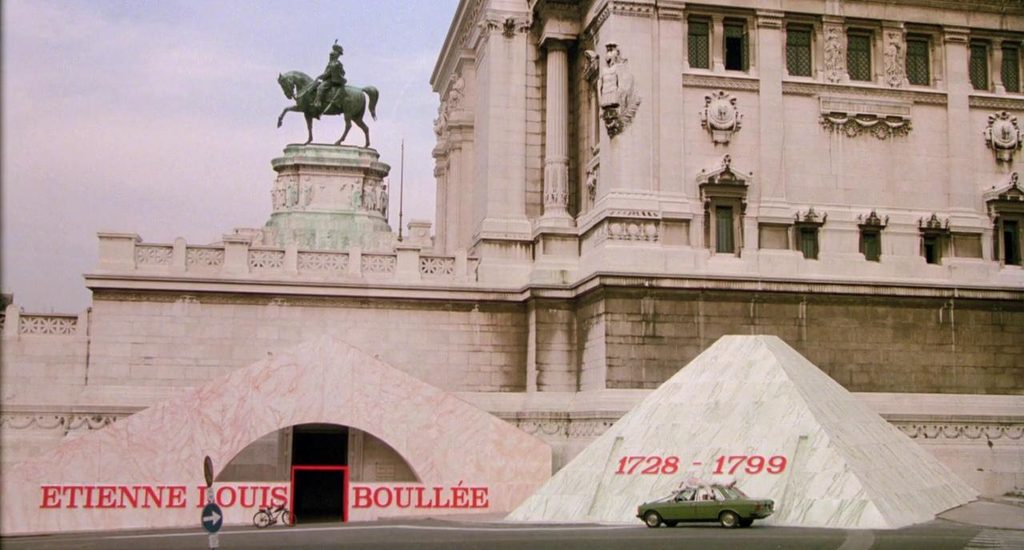
As the focus of Stourley’s commissioned exhibition, 18th-century French architect Étienne-Louis Boullée further personifies the notion of pure artistic idealism, especially given that he never had his most famous works fully realised or tainted by compromise. He is the unattainable standard by which Stourley measures himself, becoming a historic idol, mirror, and even confidante as the contemporary architect writes him letters, progressively revealing deeper layers of insecurity. Even Boullée’s distaste for blue and green hues is embodied within the chromatic design of The Belly of an Architect, as Greenaway rather opts for heavy contrasts of red and white, thus intensifying that dichotomy between fallible flesh and enlightened divinity.
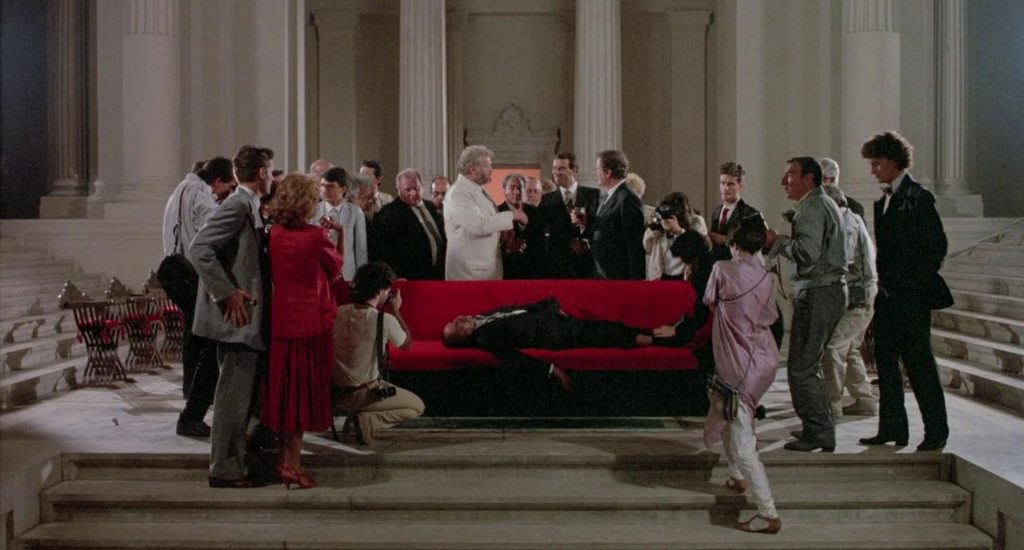
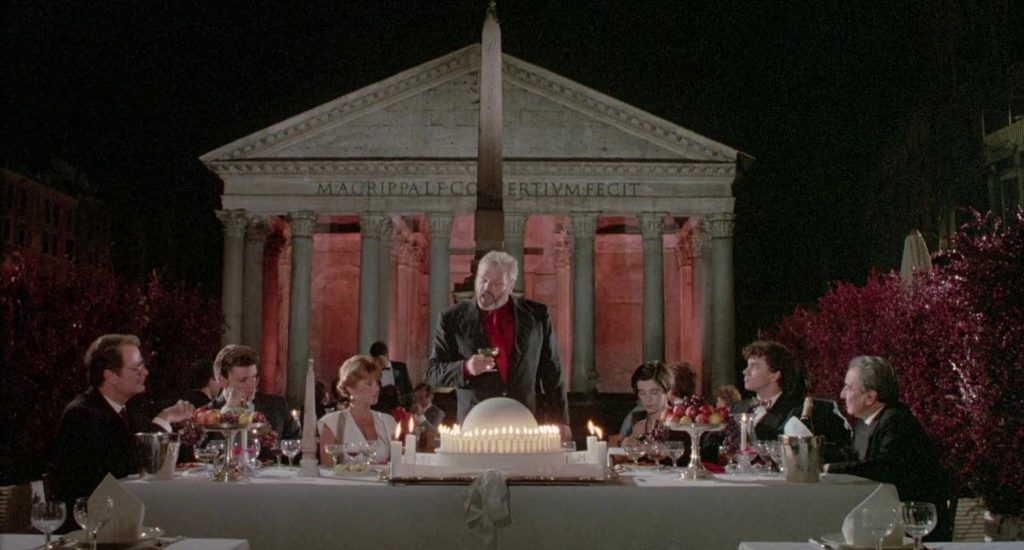
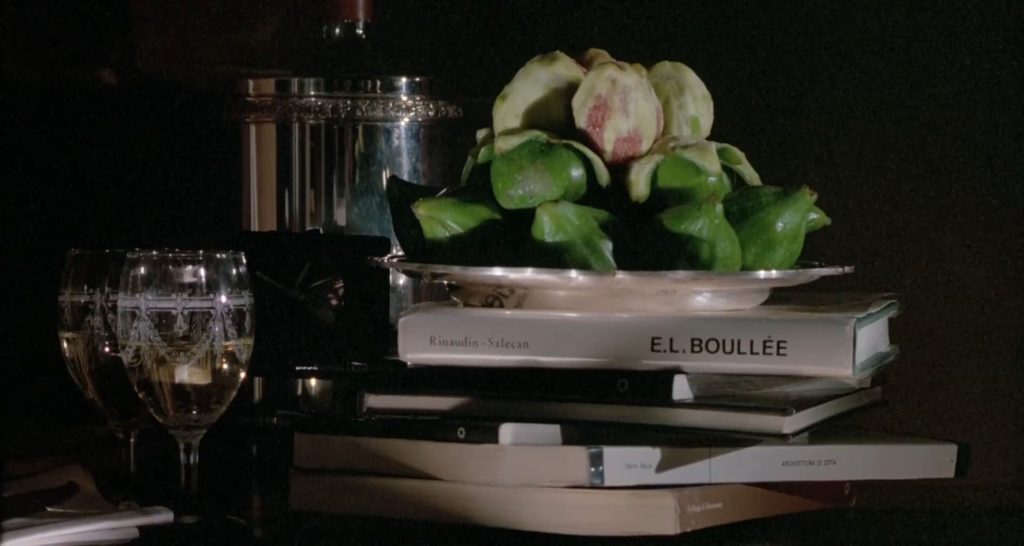
Indeed, this painstaking study of the human mind and body is deeply infused with the rigorous formal harmony of Europe’s artistic forebears, echoing Leonardo da Vinci’s The Last Supper during banquets and even staging such scenes against iconic Roman monuments. Symmetry is paramount to this aesthetic, frequently blocking the ensemble perpendicular to the camera as extensions of their constructed environments – though the closer we examine Stourley’s inner world, the messier the mise-en-scène becomes. Within his hotel room, overhead shots of Boullée books, alcohol, and half-devoured food compose still life paintings of self-indulgence, while a broader view of the cluttered space amplifies the disarray of Stourley’s deteriorating life. When Louisa also begins an affair with Caspasian, the younger, more influential co-organiser of the Boullée exhibit, Stourley especially begins to find the decay of his personal and professional life inversely mirror the soaring ascent of his successors.
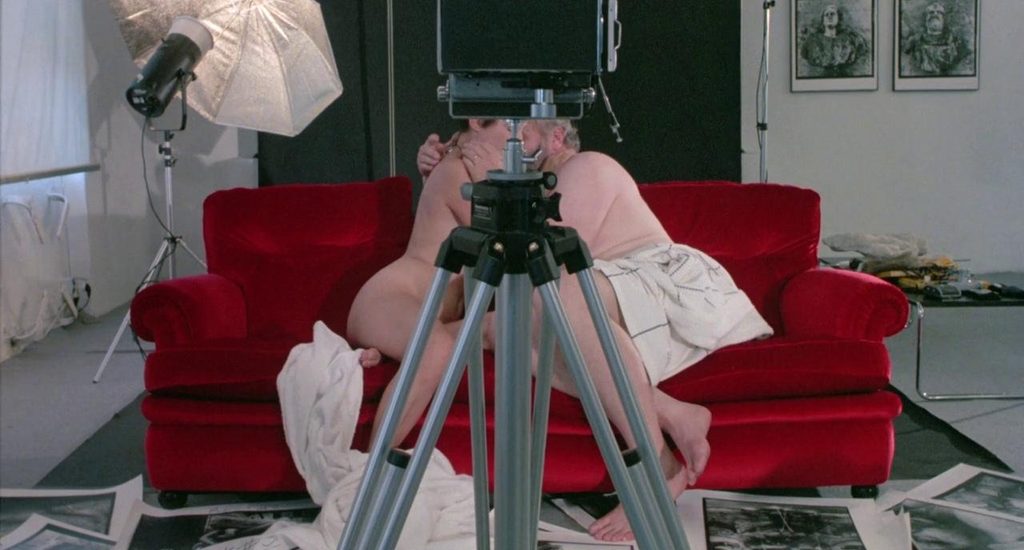
After all, the past and the future exist only in idealised abstract, and Stourley’s tenuous suspension between both renders him incapable of living up to either. Perhaps then there is some grace to be found in Caspasian’s sister Flavia, whose photographer’s eye reframes his physical excess as something worthy of aesthetic contemplation, and whose extramarital affection appears to ground him in the present. For Stourley, this affair is also a reclamation of vitality, as he even begins to include larger bellies in his pictorial collection of torsos – yet shame cannot be suppressed for long. Caspasian’s discovery of their romance is the blackmail he needs to take over the Boullée exhibition, and when Louisa leaves Stourley to be with her paramour, this ageing architect’s fragile authority finally collapses.
It is fittingly ironic that the news of his terminal stomach cancer should arrive against a backdrop of fragmented ancient tablets, as if consigning him to history before death has fully arrived. Alcohol is his last solace, and as he unsteadily splashes his face in a fountain, Wim Mertens’s fast-moving, cyclical score winds back to a mournful yet equally insistent piano motif. Much like this imperial city of stone and marble colonnades, the music is uncompromising in its rigidity, throwing Stourley’s drunken disintegration into sharper relief as he publicly laments that his belly is “rotting away from the inside.”
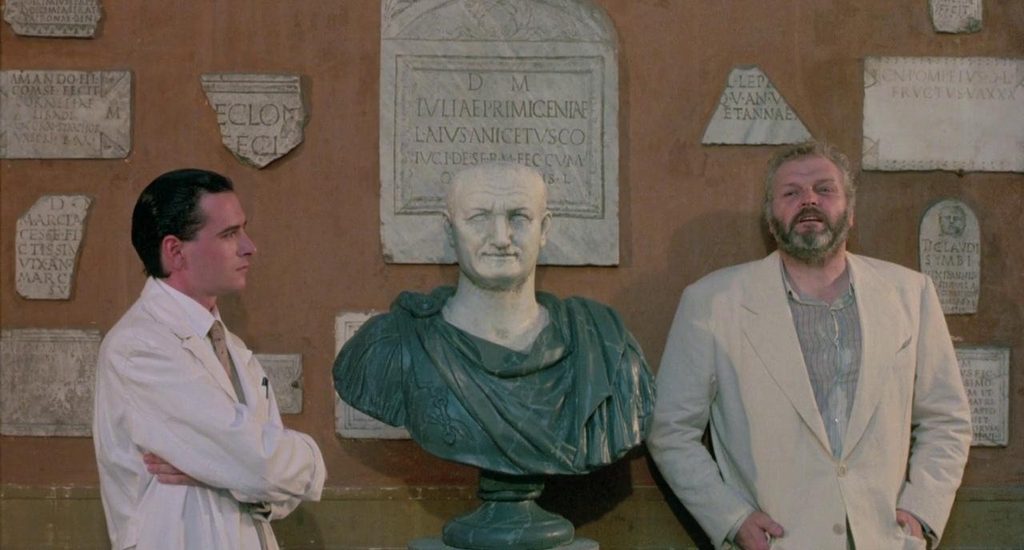
Indeed, the weakness of the human form is made brutally tangible in the architect’s frenzied outbursts, its bodily and existential decline exposed beneath the colossal monuments he once revered. It seems that taking his own life is the only way that Stourley may regain some control over his mortal vessel, and it’s only poetic that he should do so at the opening of the Boullée exhibition. This was to be his contribution to the cultural heritage of Rome, paying tribute to a historic ideal he could have never achieved, yet Caspasian’s usurpation of his career and marriage effectively severs any hope for the future too.
Still, Stourley’s professional rival is not the ultimate embodiment of this stolen future in The Belly of an Architect. Far below the balcony from which he prepares to hurl himself, Louisa collapses, and the cries of a newborn pierce the air. At the moment of Stourley’s demise, new life noisily arrives, effectively displacing the older generation’s anguish with the indifferent innocence of youth. Contemporary pursuit of perfection may be an exercise in futility, yet through Greenaway’s formal orchestration of this obsessive architect’s corporeal downfall, the eternal duality of classical antiquity and perpetual renewal asserts its sublime, timeless dominion.
The Belly of an Architect is not currently streaming in Australia.