
Zhang Yimou | 1hr 35min

“When I buy an animal, I treat it as I wish,” wealthy fabric dyer Jinshan threatens his new wife Ju Dou one night as he whips her in their chamber. Two other women have preceded her, both beaten to death when they failed to bear him a son, thus making her prospects equally dire given his impotency. Life in this torturous wedlock is unbearable, yet beyond Jinshan’s barbaric cruelty, romantic reprieve may still be found. Peering through a peephole to her washing area, the fabric dyer’s adoptive nephew Tianqing voyeuristically admires Ju Dou in silence – though when she realises she is being watched and exposes herself, it is not an act of erotic seduction. Beneath her garments, she reveals bruises, and through tears acknowledges the mutual understanding between them.
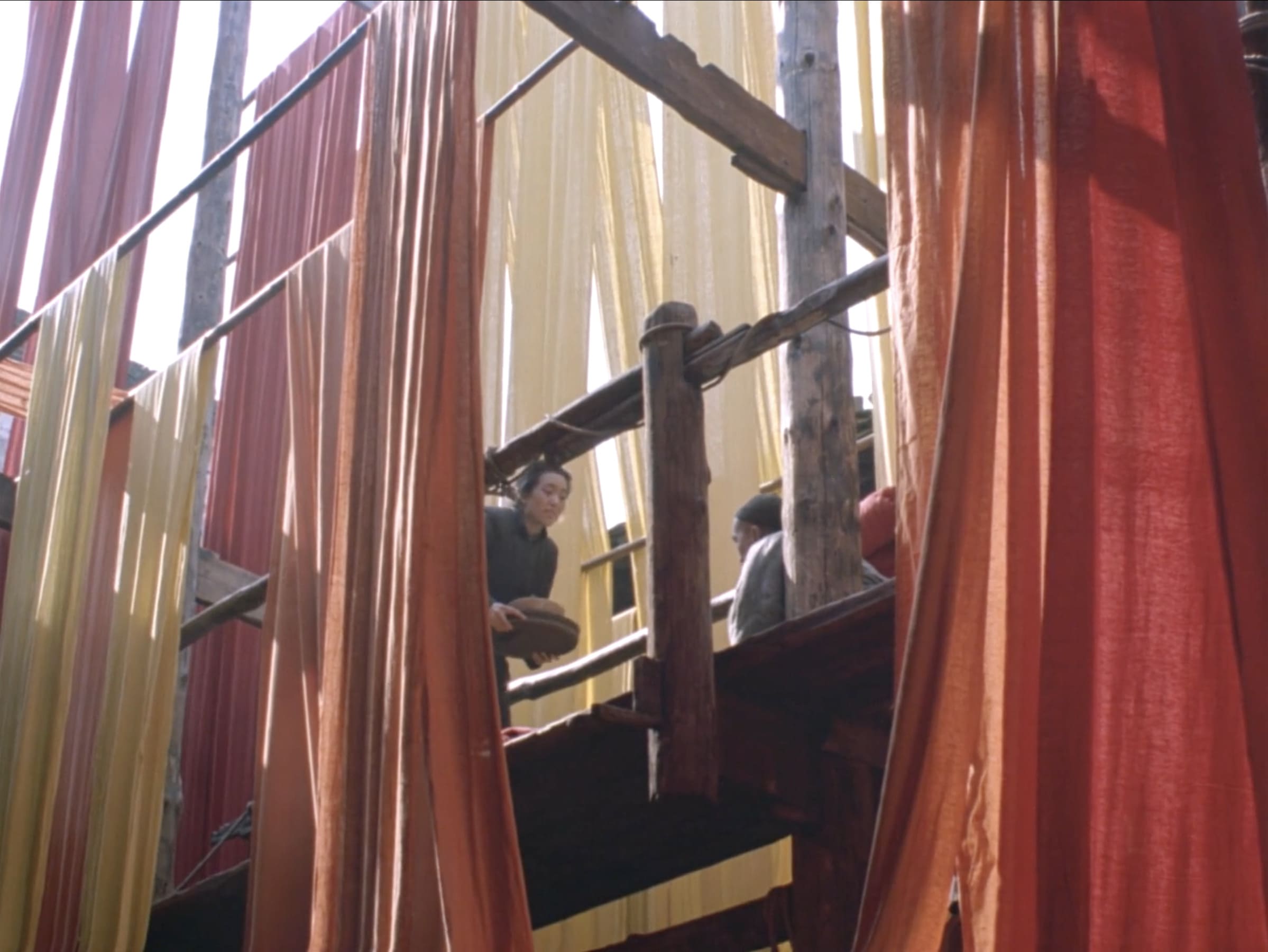
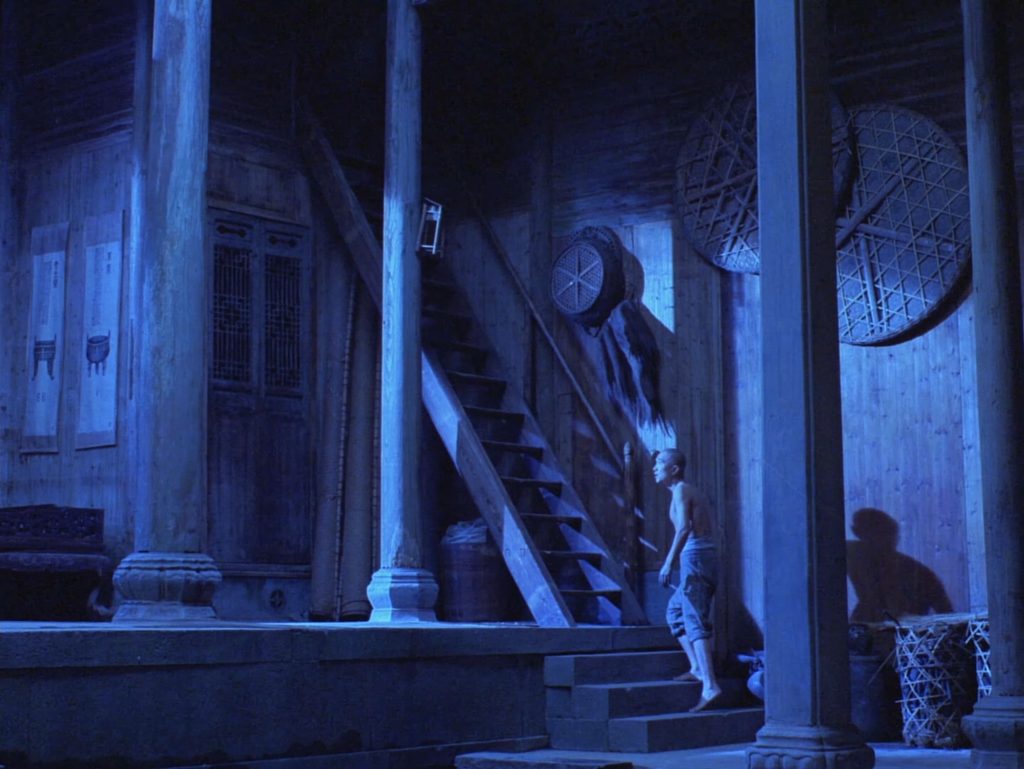
Much like Yimou Zhang’s debut Red Sorghum, Ju Dou once again finds Gong Li navigating love and tradition in early 20th century China, though its small-scale intimacy marks a heavy departure from that wartime drama. Swapping out a sorghum wine distillery for a dye mill, Zhang shifts his focus from communal industry to private suffering, and aims a far more critical lens towards this period’s feudal patriarchy. Deep red hues still dominate the mise-en-scène in street lanterns and dye vats, but the palette also vibrantly expands to embrace blues, pinks, oranges, and greens, manifesting Ju Dou and Tianqing’s repressed desire through the mill’s long, billowing silks.
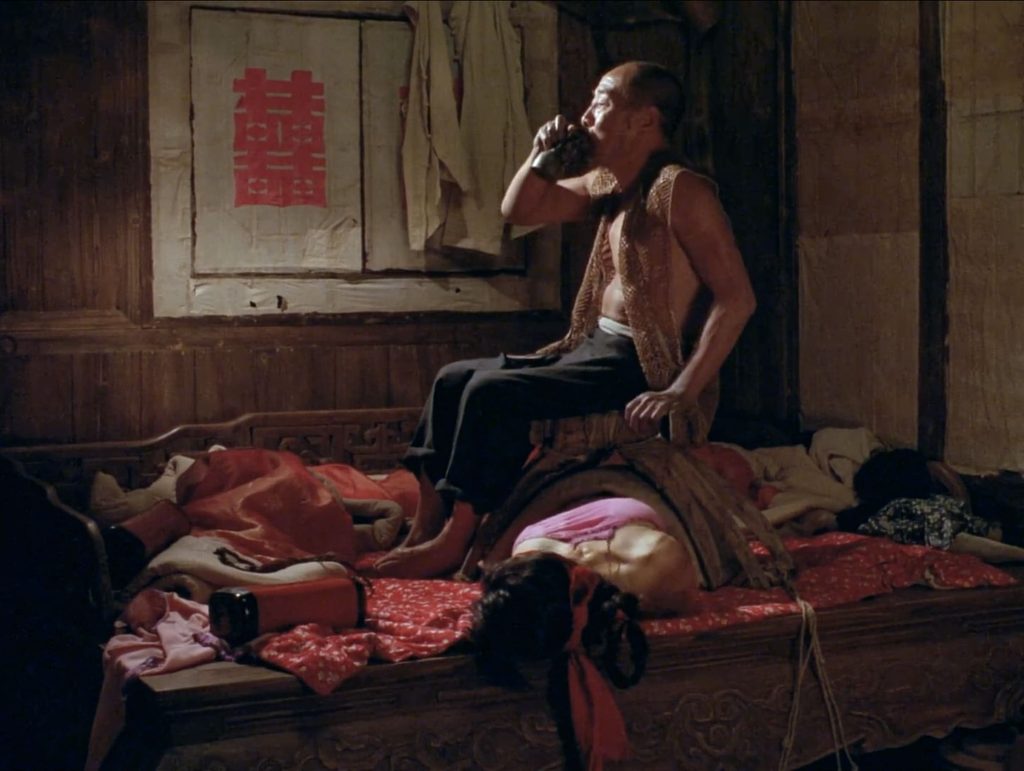
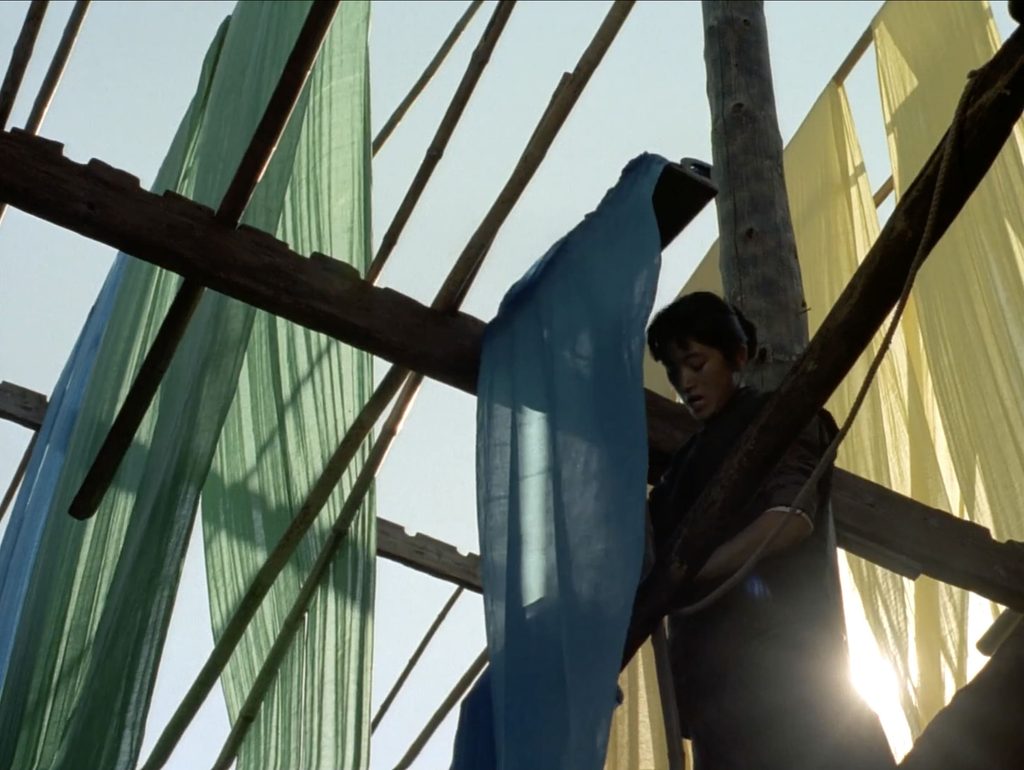
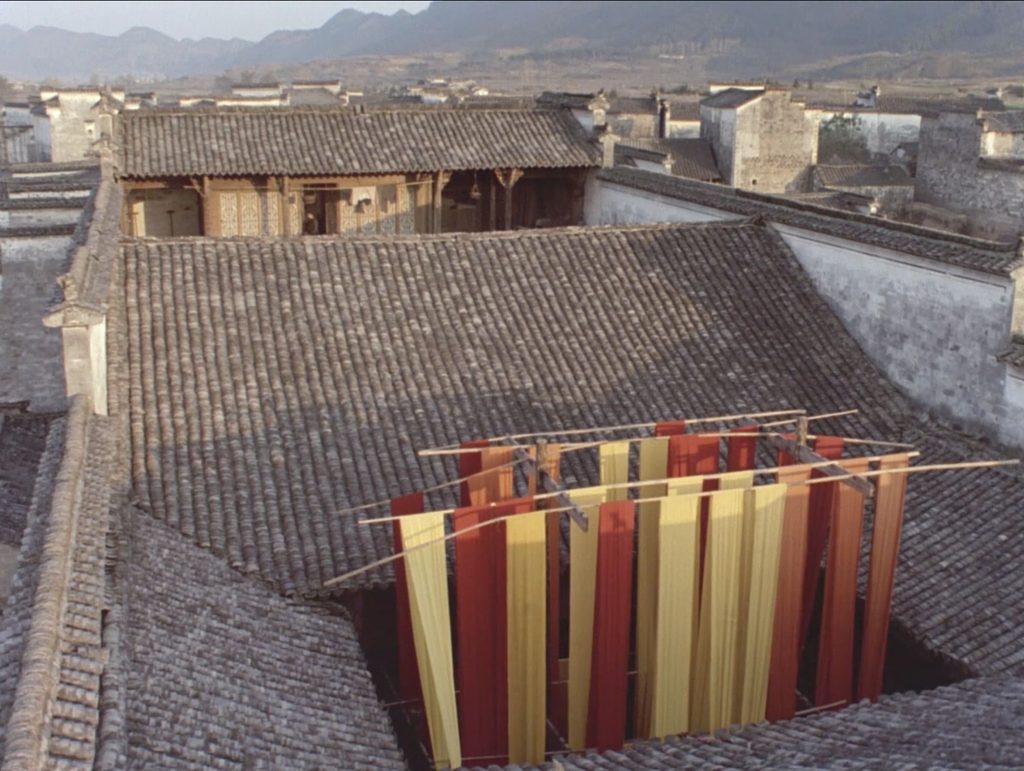
Zhang is to be largely credited for this aesthetic triumph – Ju Dou’s use of Technicolor photography long after Hollywood abandoned the technology is an explicit rejection of naturalism, and opts instead for heightened visual symbolism. Long dissolves delicately bridge scenes of romance and malice here, spanning the range of conflicted emotions that Ju Dou harbours towards the two men in her life, while the rising steam from dye vats softly diffuses shafts of natural light. The mill itself becomes an extension of its occupants’ yearning and transgression, and when Ju Dou and Tianqing finally consummate their affair, it directly responds with spinning wheels that bring the hanging fabrics cascading to the ground.
This is not the only time Zhang evokes such elemental instability in his setting though, mirroring the emotional turbulence of his characters. As years slip by, Ju Dou gives birth to Tianqing’s son, Tianbai, who is presented as Jinshan’s heir. The lovers grow careless with their private affection after Jinshan is crippled from a stroke, and when he inevitably learns of their betrayal, the textiles once again coming crashing down as casualties of his furious rampage. He intends to burn them along with the entire mill, yet his weakness leaves him easily subdued. Recognising how little power he truly holds, Ju Dou and Tianqing thus trap him in a barrel, condemning him to helplessly bear witness to their love.
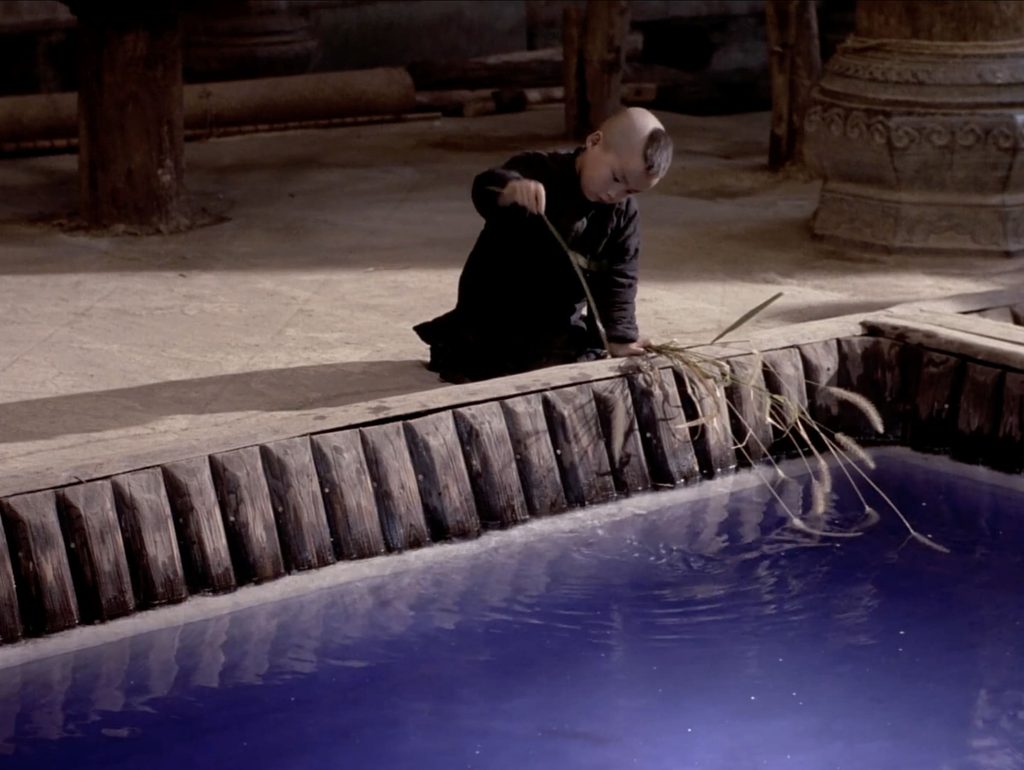
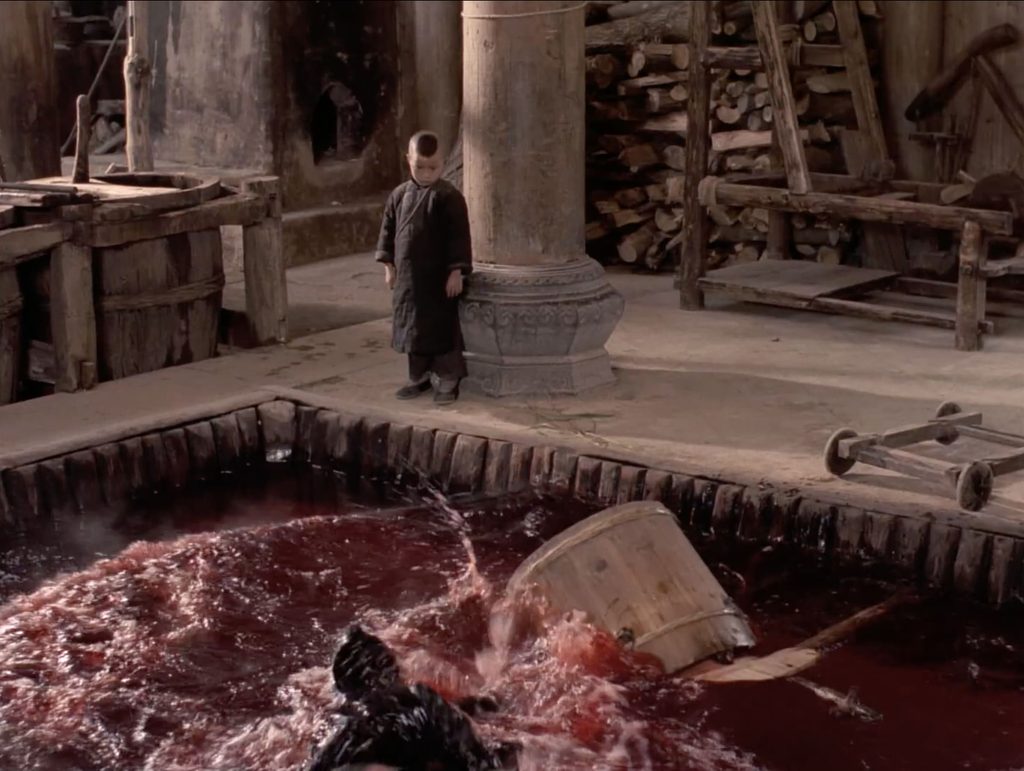
His is not a happy existence from that point on. After almost murdering the three-year-old Tianbai by pushing him into a dye vat, Jinshan halts his plot and rejoices when the child calls him father – only to eventually meet that very same end himself, slipping and drowning in the blood-red bath. Despite his naivete, there is already a chilling echo of Jinshan’s sadism in Tianbai’s laughter, laying the groundwork for this family’s continuing cycles of violence as the boy watches his supposed father die.
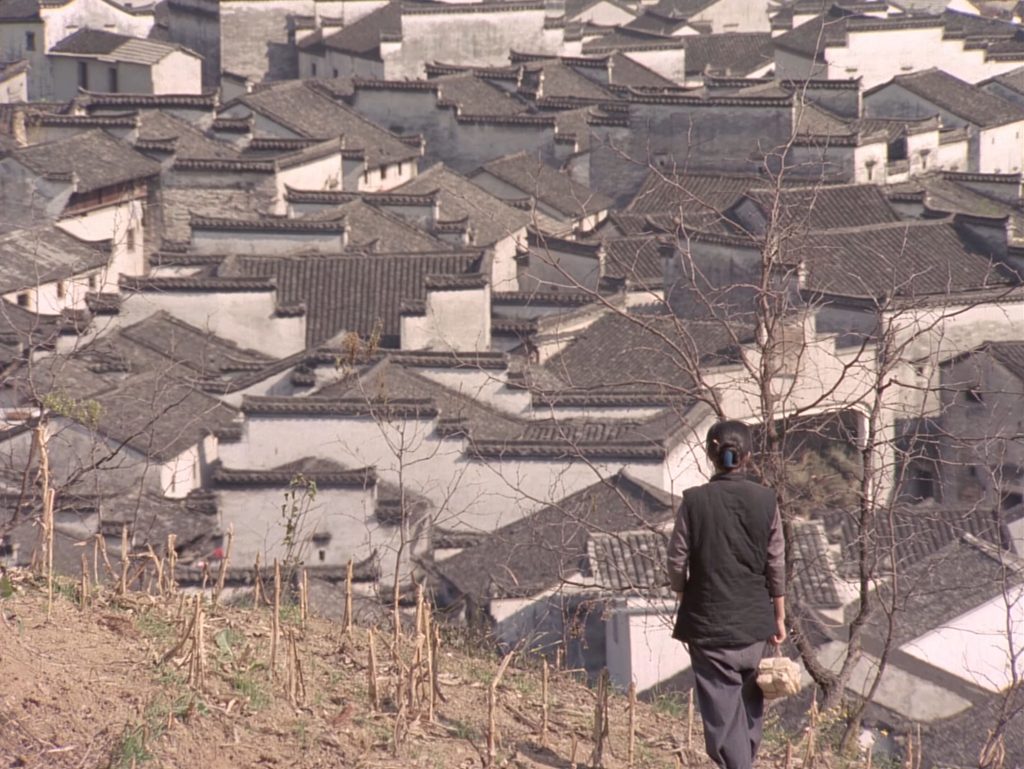
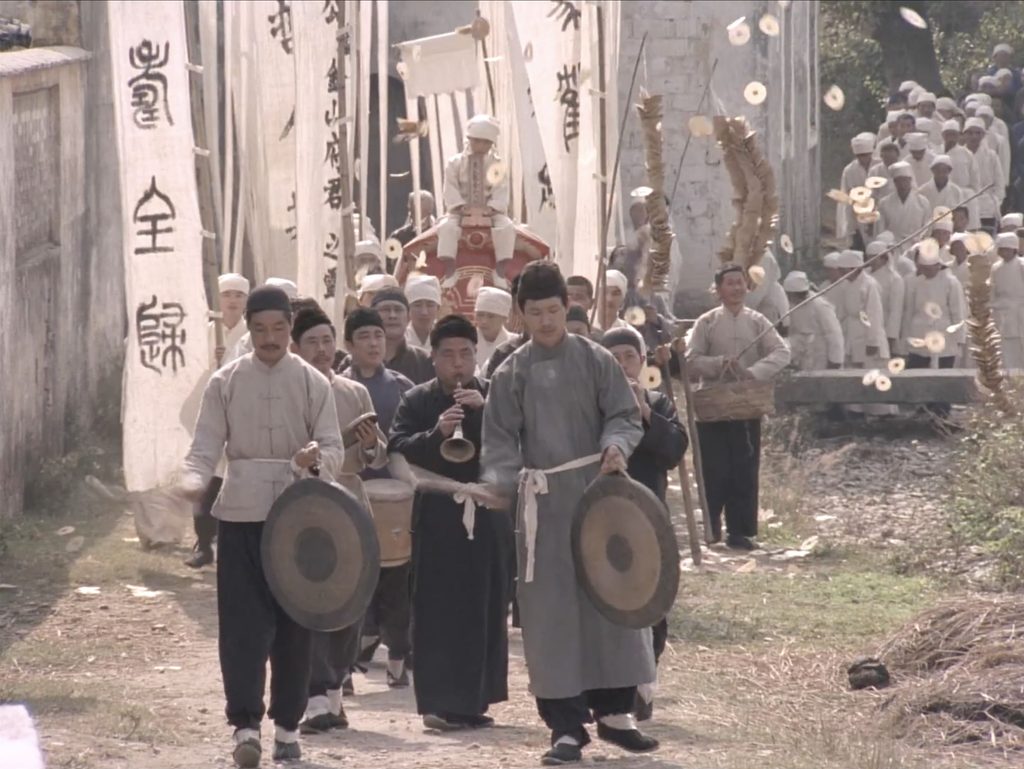
After all, Jinshan’s brutality does not end with his death. Tianqing was a fearful coward beneath his uncle’s rule, and even after inheriting the role of family patriarch, he proves incapable of asserting moral authority. Its rustic decor stripped of all colour, Jinshan’s funeral procession winds its way through the village streets, forcing Ju Dou and Tianqing to abide by tradition and dramatically throw themselves in the path of the casket – the only visual element to retain Zhang’s aggressive red palette. Publicly debasing themselves for the sake of ritual, they remain trapped by Jinshan’s legacy, acknowledging that the passing years have not freed them from its grip.
“Since the old man’s death, we live in fear of gossip.”
The colours of Ju Dou strain to reclaim their former vividness from here on, sapped by Tianqing’s timidity and shame. He has not modelled a strong alternative to Jinshan’s viciousness and left Tianbai to mature into an angry, resentful teenager, frustrated by this household of nervous secrecy. As a result, when he overhears rumours about a clandestine affair, he chases the instigator through town with a butcher’s knife and later attacks Tianqing in an implacable rage.
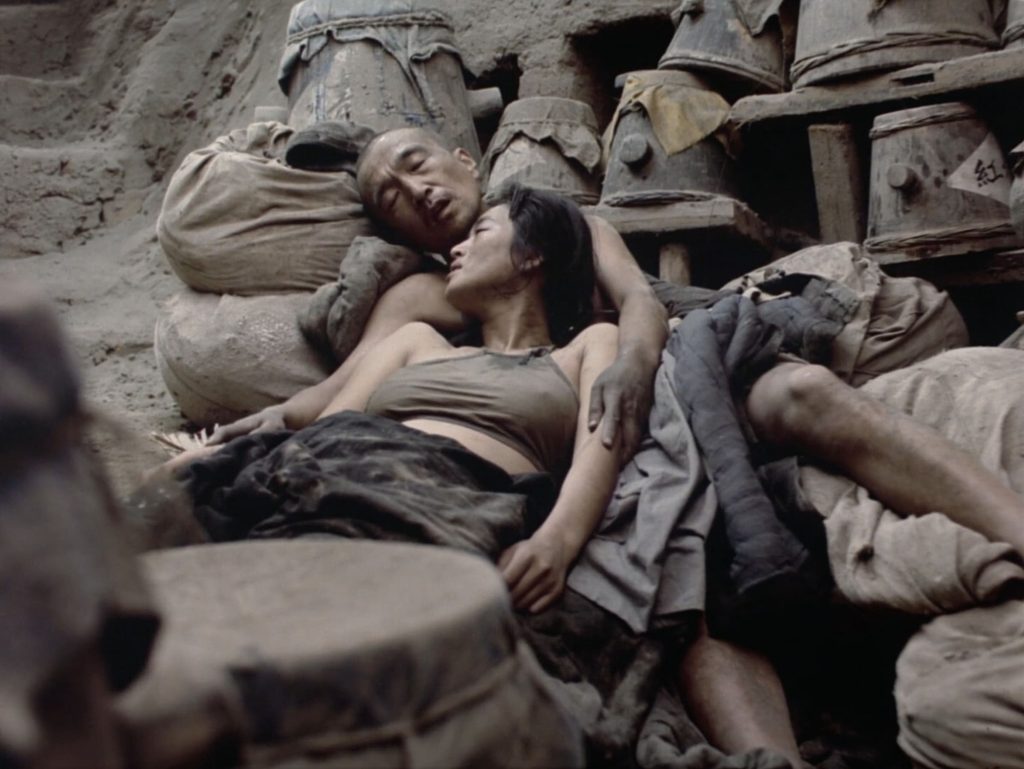
His mother’s impulsive confession of Tianbai’s true parentage does not improve the situation either. Regretful and frightened of what their actions have wrought, the two lovers resign themselves to slowly suffocate in the dye mill’s airtight cellar, where Zhang’s dusty, muted palette entirely drains the environment of any remaining vitality. Their son is a mirror image of the domineering man they thought had long perished, and it is no fault but their own for keeping his spirit alive.
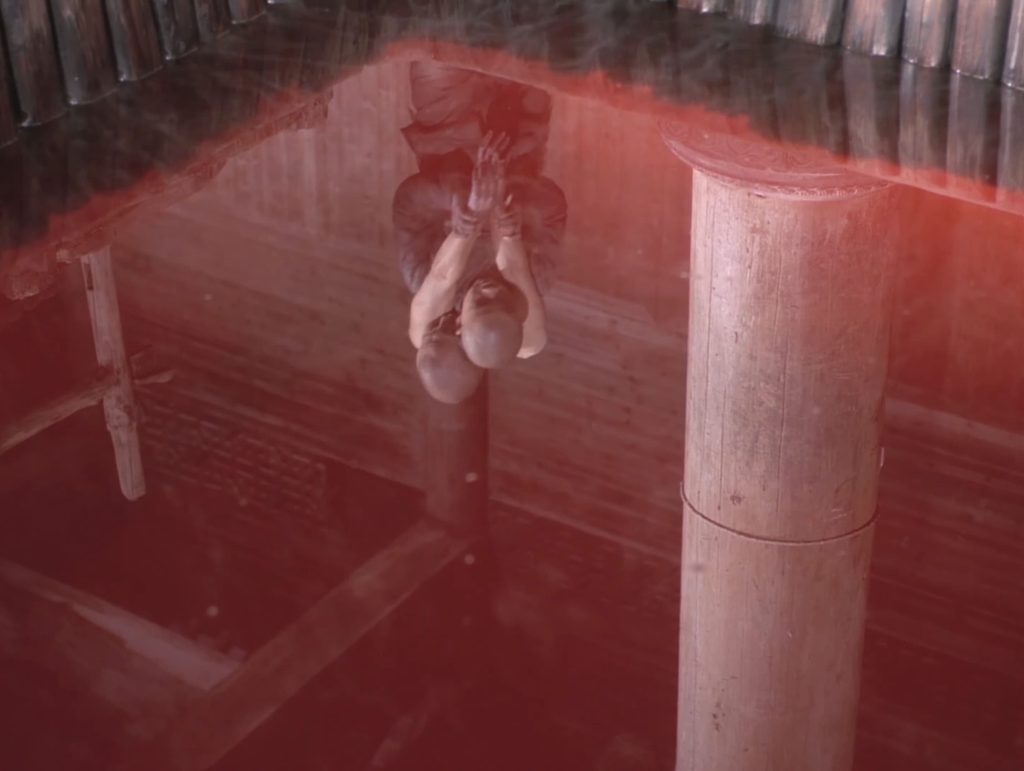
Unfortunately, this inheritance is nowhere more evident than in Tianbai’s following retribution. Pulling his weakened father from the cellar, he carries him towards the dye vat that once drowned Jinshan, and which nearly brought the same fate upon his head. Amid the lethal tension, Zhang’s camera catches their reflections in its steaming, scarlet surface, soon disrupted by Tianqing’s clumsy splash and the unravelling silks he frantically grasps at in panic.
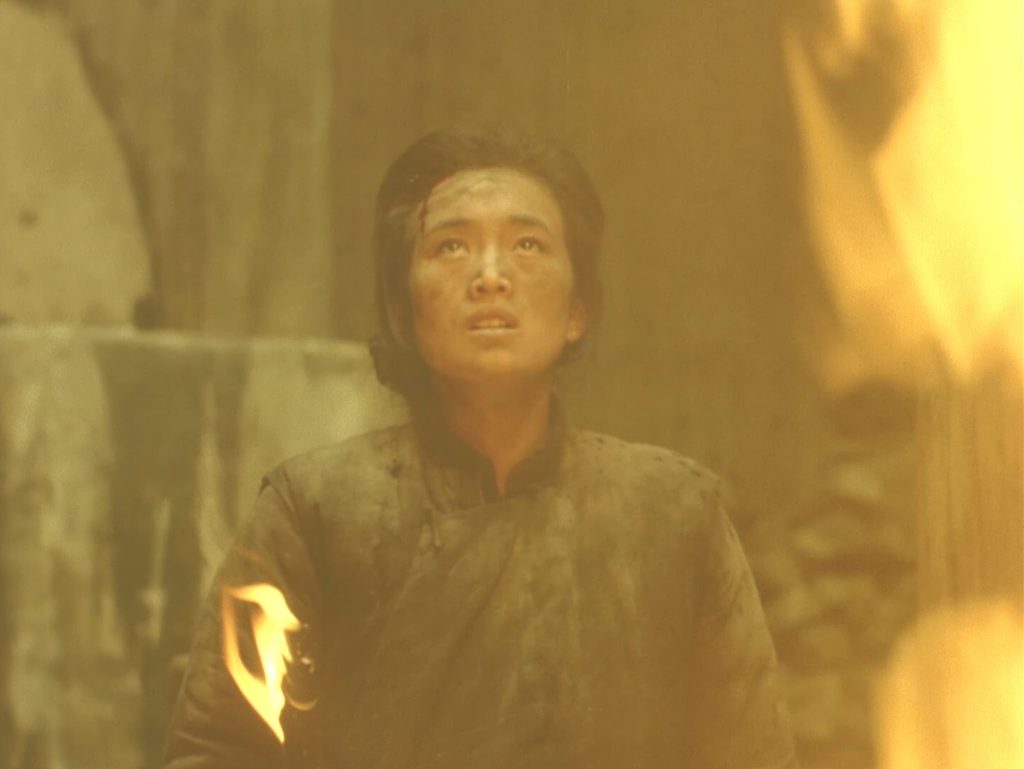
There is a tragic, ritualistic poetry in Ju Dou’s framing of these vats, consistently posing the greatest mortal threat to the men of this household. Cycles of bitterness and retaliation are never fully broken here, and so both are carried forward through the bloodline, perpetuating a legacy of premature, eerily parallel tragedies. At a certain point, there is no saving a house poisoned by generations of violence, Ju Dou resolves in her grief – the only resolution is to burn it all down, fulfilling Jinshan’s threat from many years ago. As flames engulf the dye mill in these closing minutes, all those once-saturated, expressive colours are consumed by a scorching orange, and Zhang formally reduces this cursed family to its inevitable self-annihilation.
Ju Dou is not currently streaming in Australia.