
Top 10 of the Year
| 1. In the Mood for Love | Wong Kar-wai |
| 2. Songs from the Second Floor | Roy Andersson |
| 3. Werckmeister Harmonies | Béla Tarr |
| 4. Yi Yi | Edward Yang |
| 5. Dancer in the Dark | Lars von Trier |
| 6. Requiem for a Dream | Darren Aronofsky |
| 7. Traffic | Steven Soderbergh |
| 8. Amores Perros | Alejandro Iñárritu |
| 9. Memento | Christopher Nolan |
| 10. Platform | Jia Zhangke |

Best Film – In the Mood for Love
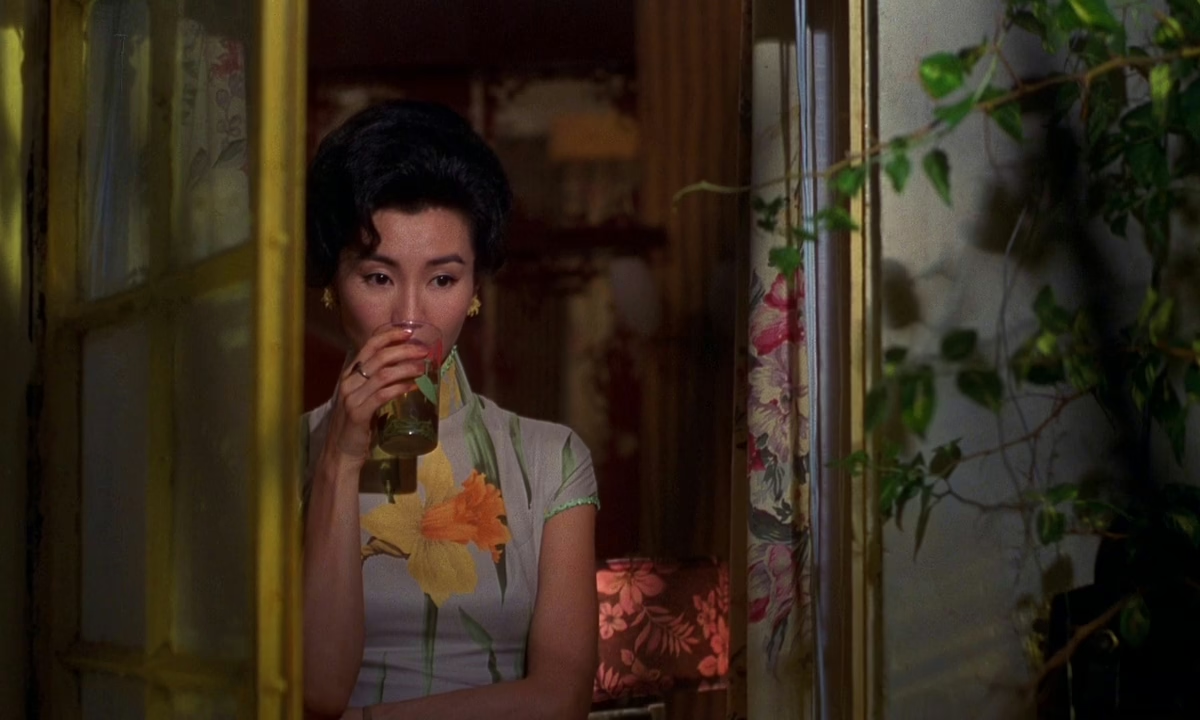
There are many potential candidates for the best film of 2000, and although Edward Yang, Béla Tarr, and Roy Andersson all make formidable claims, the definitive answer is In the Mood for Love. This is Wong Kar-wai’s finest achievement, and is fully deserving of a place among the top 10 films of all time for its towering triumph of mise-en-scène, formal rigour, and aching, unconsummated romance between two neighbours whose spouses are having an affair. By withholding the faces of their unfaithful partners, Wong channels all emotional identification through the pair’s role-playing, blurring the line between self and substitute as they rehearse difficult confrontations. Floral décor, patterned textiles, and slow-motion passages heighten the emotional confinement of these would-be lovers while underscoring their proximity, ultimately producing one of cinema’s most exquisitely controlled expressions of longing and restraint.

Most Underrated – Traffic
Steven Soderbergh has three films in the TSPDT top 2500 list, and none of them are Traffic – his most formally assured and ambitious work to date. This is an epic interrogation of the Mexican and U.S. drug trade by way of three parallel stories, each taking a different angle on the matter. Clear-cut political stances are presented without prioritising any position, while Steven Soderbergh’s musty yellow and blue filters visually split this story into gritty confrontations with crime and institutional complicity. Ultimately, these divisions are meaningless – drug abuse affects the most straight-laced families, while the roughest cops carry a sensitivity that many respected politicians lack.
Most Overrated – In Vanda’s Room
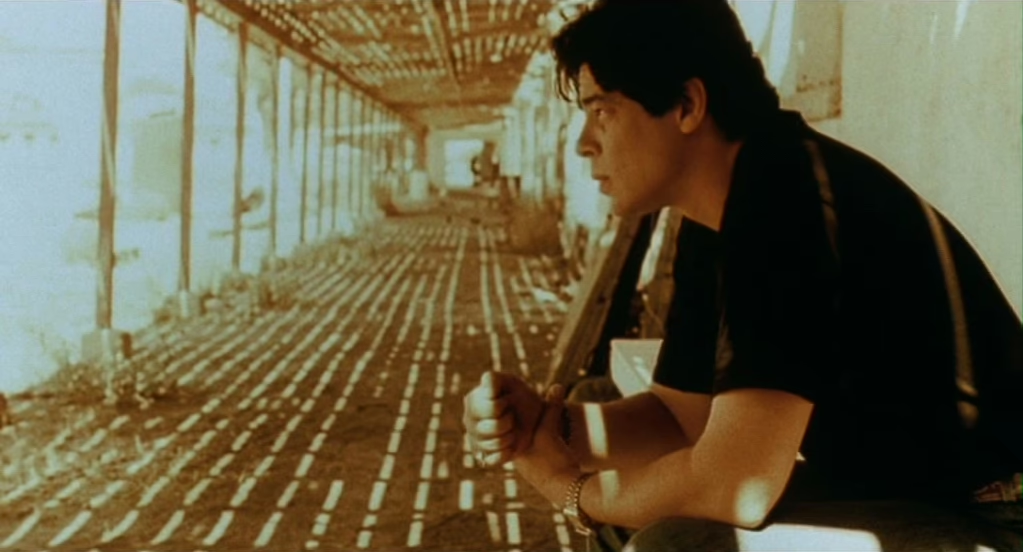
In Vanda’s Room is considered the 4th best film of the year, and the 465th best film of all time by the TSPDT critical consensus. Pedro Costa would eventually justify that level of acclaim, but this is not the film to do it. The three-hour run time makes for a rough watch when there is virtually no formal progression of events from one scene to the next, yet it is nevertheless the work of an auteur who relishes his long, static tableaux and improvisational realism, studying the life of heroin addict Vanda Duarte. His experiments with digital filmmaking manifest with mixed results, painting the grim beauty of Lisbon’s outlying shanty towns in suffocating darkness and wide shots, yet the visual limitations of the technology are still often apparent.

Best Directorial Debut – Amores Perros
Alejandro Iñárritu bursts onto the scene in 2000 with one of history’s greatest debuts, intersecting multiple character arcs through a car accident that reverberates across the class boundaries of Mexico City. Very gradually, an urban ecosystem of violence and moral depravity comes into focus, fragmented through his non-linear narrative and parallel editing. Unlike the fluidity of Iñárritu’s later films Birdman and The Revenant, Amores Perros possesses a grainy visual style and rapid-fire pacing that desperately seeks sense within the sprawling, convulsive madness.

Gem to Spotlight – Sexy Beast
Right next to Amores Perros, Sexy Beast is another great debut from one of this century’s most exciting directors. Jonathan Glazer playfully pushes our expectations of the gangster genre with his eccentric, British black humour here, following the reunion of the psychopathic Don and retired associate Gal. His background directing music videos is apparent in his editing rhythms of his editing, accentuated by slow-motion, freeze frames, voiceovers, and dramatically high angles, while his deadpan, offbeat comedy undercuts the threat of violence. It is a simple story, but Glazer’s twists are brilliantly played.

Best Male Performance – Tony Leung in In the Mood for Love
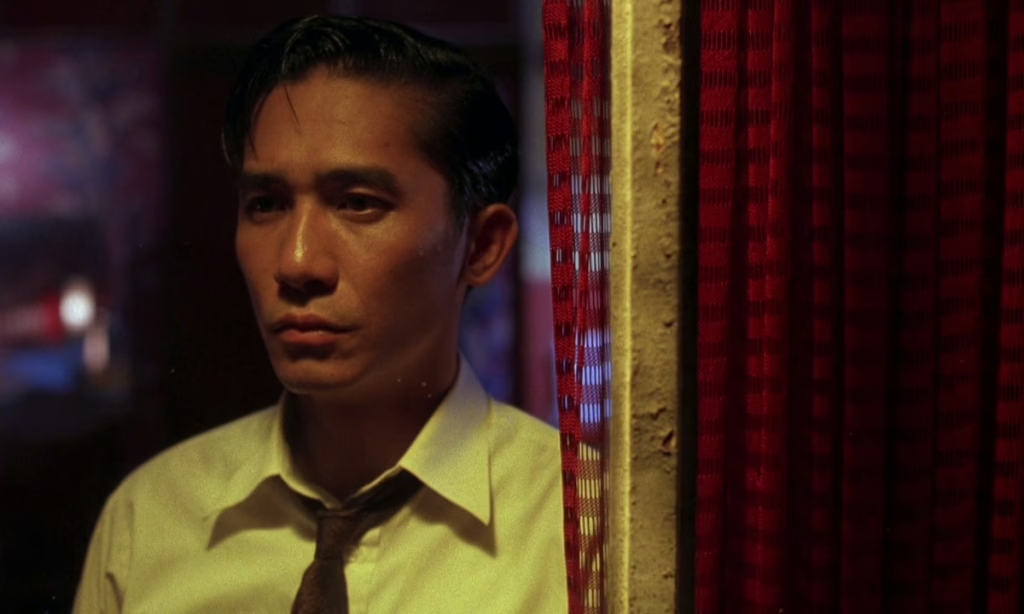
Tony Leung delivers one of cinema’s great romantic performances in In the Mood for Love, embodying the aching sorrow of a man who has lost his wife to an affair, and is tortured by longing towards another he knows he can never have. He maintains a composed dignity in his loneliness as Chow Mo-wan, yet still his yearning and moral conflict surface in his guarded posture and long, held gaze.
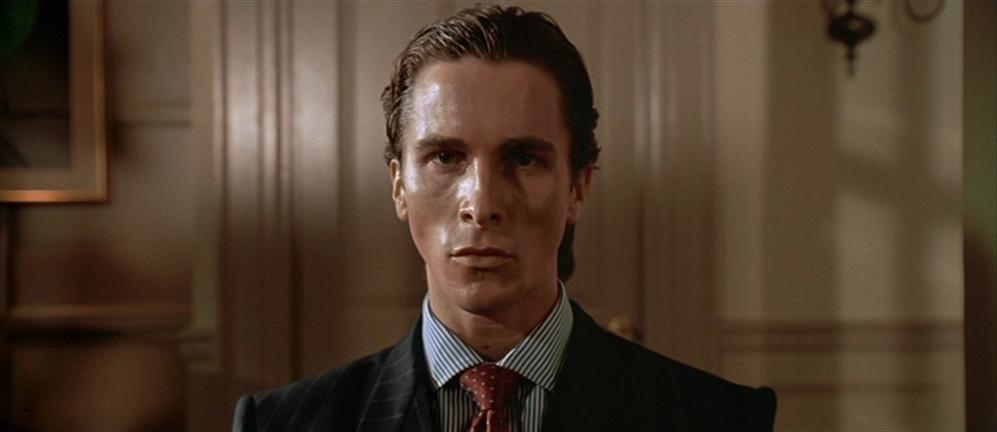
Christian Bale’s performance in American Psycho isn’t far behind Leung’s – it is equal parts razor-sharp satire and psychological menace, resulting in one of cinema’s most magnetic serial killers and Wall Street bankers. The exaggerated vocal inflections and overstated politeness are all part of his painstakingly curated image, hiding Patrick Bateman’s rage and vanity beneath an artifice that uniquely belongs to a certain class of elite.
| Actor | Film |
| 1. Tony Leung | In The Mood For Love |
| 2. Christian Bale | American Psycho |
| 3. Guy Pearce | Memento |
| 4. Jared Leto | Requiem for a Dream |
| 5. Lars Rudolph | Werckmeister Harmonies |
| 6. Benicio del Toro | Traffic |
| 7. Gael Garcia Bernal | Amores Perros |
| 8. George Clooney | O Brother Where Art Thou? |
| 9. Ben Kingsley | Sexy Beast |
Best Female Performance – Ellen Burstyn in Requiem for a Dream
It is virtually a three-way tie at the top here, as Ellen Burstyn, Maggie Cheung, and Björk’s acting in their respective films each belong among the top 20 female performances of all time. To split hairs though, Ellen Burstyn edges out the other two for her upsetting descent into drug addiction, revealing a suburban tragedy in Requiem for a Dream beyond the street-level desperation depicted in the other storylines. She lives in a pit of fragile insecurity, and it is hard not to feel an ache of sorrow for Burstyn as she monologues on the cheap, shallow joy these new drugs have brought her.
Maggie Cheung on the other hand offers a subdued longing and exquisite precision in In the Mood for Love. She stands out onscreen in her stylish cheongsams, though her elegance only sharpens her sense of repression, emphasising the emotional turbulence behind her impeccably poised demeanour.
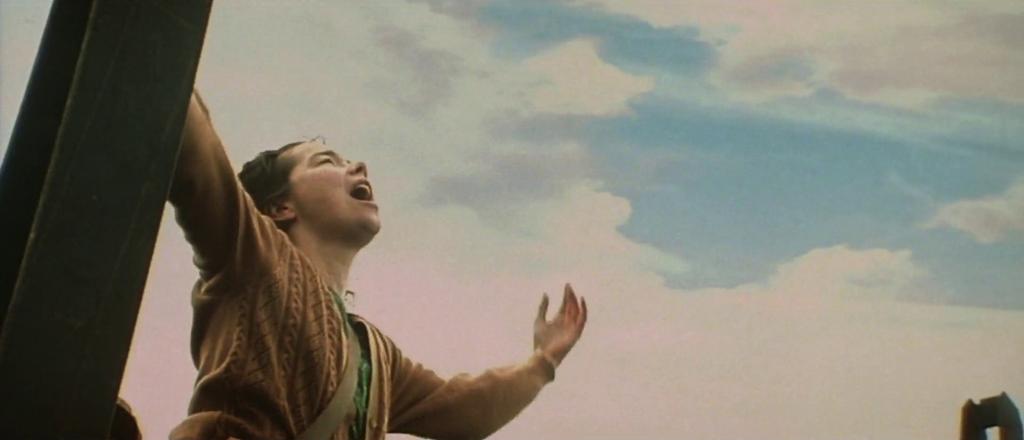
Lars von Trier’s female protagonists often suffer deeply, though Björk’s tragic innocence is particularly heartbreaking, offering an emotional whiplash between buoyant musical numbers and devastating cruelty. Her lack of conventional acting polish becomes an asset in Dancer in the Dark, delivering blunt line readings and emotional eruptions through musical escapism.
| Actress | Film |
| 1. Maggie Cheung | In the Mood for Love |
| 2. Björk | Dancer in the Dark |
| 3. Ellen Burstyn | Requiem for a Dream |
| 4. Jennifer Connelly | Requiem for a Dream |
| 5. Michelle Yeoh | Crouching Tiger, Hidden Dragon |
| 6. Zhang Ziyi | Crouching Tiger, Hidden Dragon |
| 7. Juliette Binoche | Code Unknown |


Best Cinematography – In the Mood for Love
When production for In the Mood for Love ran over schedule, cinematographer Christopher Doyle was replaced by Mark Lee Ping-Bing, though both demonstrate extraordinary skill in depicting its lovers’ rich inner lives through splendid visual form. It is one of cinema’s great romances, and also one of the art form’s most exquisitely handsome films, evoking the intimacy and restraint of its characters through saturated colour palettes and tightly framed interiors. Slow-motion photography elongates glances between would-be lovers, while offscreen space is effectively used to emphasise emotional absence, driving them deeper into their mutual repression.
| Film | Cinematographer |
| 1. In the Mood for Love | Christopher Doyle, Mark Lee Ping-Bing |
| 2. Songs from the Second Floor | István Borbás, Jesper Klevenas, Robert Komarek |
| 3. Werckmeister Harmonies | Milós Gurbán, Erwin Lanzensberger, Gábor Medvigy, Emil Novák, Patrick de Ranter, Rob Tregenza, Jörg Widmer |
| 4. Yi Yi | Wei-han Yang |
| 5. Crouching Tiger, Hidden Dragon | Peter Pau |
| 6. Requiem for a Dream | Matthew Libatique |
| 7. Platform | Yu Lik-wai |
| 8. Amores Perros | Rodrigo Prieto |
| 9. Dancer in the Dark | Robby Müller |
| 10. Traffic | Peter Andrews |
| 11. O Brother, Where Art Thou? | Roger Deakins |
| 12. Gladiator | John Mathieson |
| 13. Sexy Beast | Ivan Bird |

Best Editing – Requiem for a Dream
The rapid-fire montages of Requiem for a Dream are easily the film’s most memorable visual motif – each time heroin is injected, cocaine is snorted, or pills are swallowed, these images are delivered in swift barrages of disturbing close-ups, and magnified by visceral sound effects. As the film approaches its demoralising climax though, Jay Rabinowitz’s parallel editing comes to the fore, following the diverging paths of of four drug addicts while aligning their physical and psychological degradation.
| Film | Editor |
| 1. Requiem for a Dream | Jay Rabinowitz |
| 2. In the Mood for Love | William Chang |
| 3. Memento | Dody Dorn |
| 4. Amores Perros | Alejandro Iñárritu, Luis Carballar, Fernando Pérez Unda |
| 5. Crouching Tiger, Hidden Dragon | Tim Squyres |
| 6. Traffic | Stephen Mirrione |
| 7. Sexy Beast | John Scott, Sam Sneade |
| 8. Snatch | Jon Harris |
| 9. Dancer in the Dark | François Gédigier, Molly Marlene Stensgård |
| 10. O Brother, Where Art Thou? | The Coen Brothers, Tricia Cooke |
| 11. Gladiator | Pietro Scalia |

Best Screenplay – Memento
Christopher Nolan builds his screenplay for Memento upon a rigorous narrative experiment, emulating his protagonist’s amnesia through reverse chronology and fractured timelines. This formal structure transcends mere gimmick and reinforces his disorientation, using repetition, omission, and symbolic patterns to examine the instability of an identity that cannot retain new memories.
| Film | Screenwriter |
| 1. Memento | Christopher Nolan |
| 2. O Brother, Where Art Thou? | The Coen Brothers |
| 3. Amores Perros | Guillermo Arriaga |
| 4. American Psycho | Mary Harron, Guinevere Turner |
| 5. Yi Yi | Edward Yang |
| 6. Traffic | Stephen Gaghan |
| 7. Songs from the Second Floor | Roy Andersson |
| 8. Code Unknown | Michael Haneke |
| 9. Platform | Jia Zhangke |
| 10. Dancer in the Dark | Lars von Trier |

Best Original Music Score – Requiem for a Dream
Unlike traditional requiems which peacefully commemorate the souls of the deceased, Clint Mansell’s score in Requiem for a Dream intensely evokes the mortal terror that immediately precedes death, its strings and vocal chanting moving in endless, circular rhythms. There is no catharsis to be found here in this nightmare – the music spirals with the characters, repeating and intensifying like a mirror of the their self-annihilating compulsions.
| Film | Composer |
| 1. Requiem for a Dream | Clint Mansell |
| 2. Crouching Tiger, Hidden Dragon | Tan Dun |
| 3. Dancer in the Dark | Björk |
| 4. Gladiator | Hans Zimmer, Lisa Gerard |
| 5. Werckmeister Harmonies | Mihály Víg |
| 6. In the Mood for Love | Michael Galasso |
| 7. Traffic | Cliff Martinez |
| 8. Amores Perros | Gustavo Santaolalla |
| 9. Memento | David Julyan |
Year Breakdown
There are few years in history that boast as remarkable a body of films as 2000. The first American entry arrives only in the lower half of its top ten, though this is no indictment of Hollywood. The depth of films is marvellous, the number of masterpieces is incomparable, and five shining gems of world cinema sit confidently right at the top. Not only does In the Mood for Love belong on the top 10 of all time, but it is also strongest work of cinema since 1979, when Apocalypse Now and Stalker previously demonstrated the transcendent potential of the art form. As excellent as Wong Kar-wai’s run through the 90s may have been, this is undoubtedly his finest achievement.
Asian cinema at the turn of the millennium does not rest solely on his shoulders though. While Wong is crafting a highly polished romantic drama, Crouching Tiger, Hidden Drama transports audience to 19th century Imperial China, revealing Ang Lee’s mastery of the martial arts wuxia genre and giving Michelle Yeoh her mainstream breakthrough. The subdued realism of Edward Yang and Jia Zhangke’s films offer important counterpoints here too, with Yi Yi patiently observing three generations of a Taiwanese family, and the epic scope of Platform chronicling the sweeping societal shifts that define China’s sixth generation filmmakers.
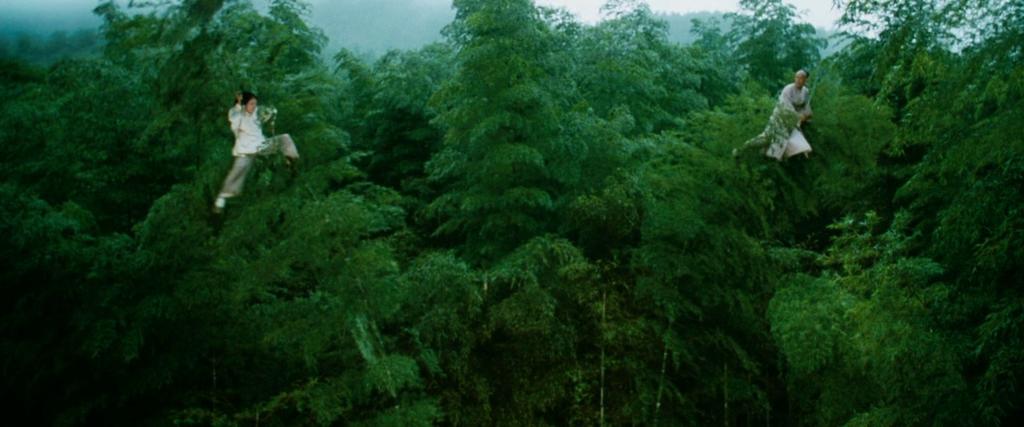


These films sit among the peaks of each director’s career, though this trend is not confined to Asia. Back in America, Darren Aronofsky reaches disturbing new heights with Requiem for a Dream’s descent into drug-fuelled addiction, while Steven Soderbergh takes a broader perspective on the drug industry from the intertwined perspectives of dealers, police officers, and bureaucrats.
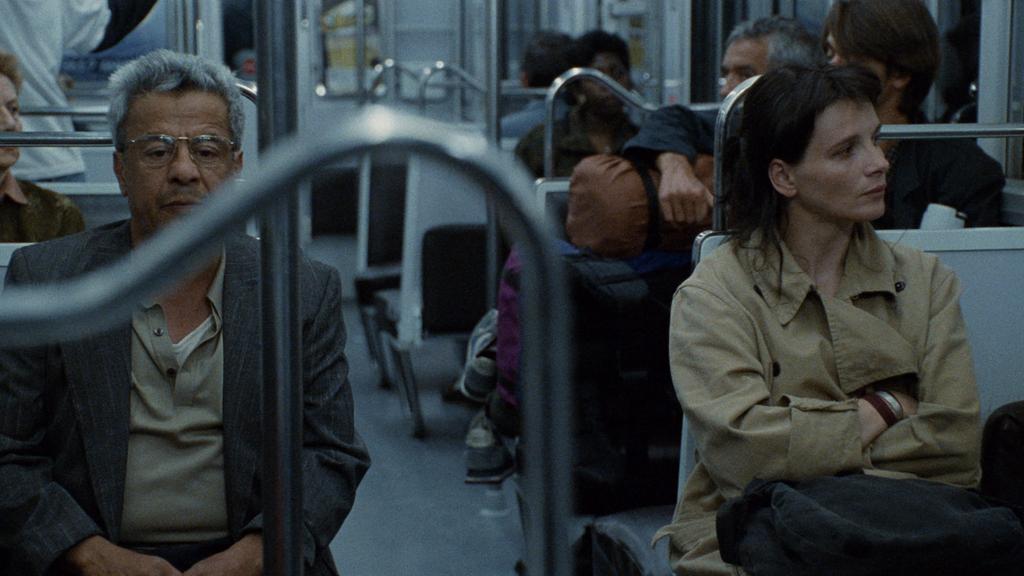
Even beyond Requiem for a Dream and Traffic, multi-strand narrative structures seem to be taking off this year, as Michael Haneke also presents fragmented vignettes that follow the paths of different characters splitting off a from a single event in Code Unknown. It is Alejandro Iñárritu though who most distinctly defines this style of ‘hyperlink cinema’ in his extraordinary debut Amores Perros, binding us to the non-linear perspectives of three people involved in a devastating car accident, and reaching across the formidable class boundaries of Mexico City. This is an important landmark of Nuevo Cine Mexicano, and officially introduces Iñárritu as the third and final pillar of the Three Amigos next to Alfonso Cuarón and Guillermo del Toro.
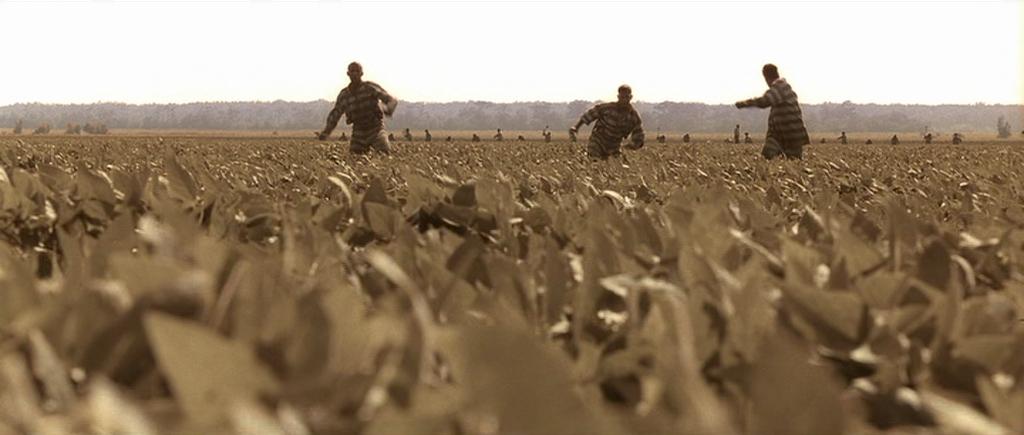
Also emerging with some very fine directorial debuts are Jonathan Glazer and Park Chan-wook, though even more notable are heavy-hitters Christopher Nolan and Roy Andersson – both of whom had made films before, but are only now revealing their magnificent artistic potential. Where Memento set the standard for Nolan’s experimental, non-linear storytelling, Songs from the Second Floor delivers a gallery of jaw-dropping, painterly tableaux, revealing a Kafkaesque city in decline. Even bleaker than both these films however is Werckmeister Harmonies – a miserable, monochrome marvel from Hungarian director Béla Tarr that is every bit Sátántangó‘s equal.


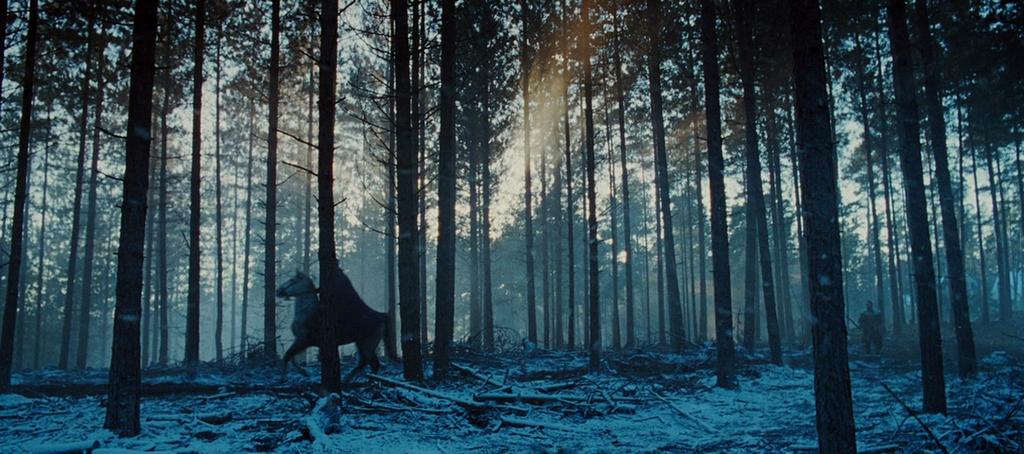
Arthouse cinema aside, Gladiator dominates mainstream pop culture in 2000, calling back to historical Hollywood epics like Ben-Hur and winning Best Picture at the Oscars for it. The blockbuster sits alongside Mission: Impossible II and How the Grinch Stole Christmas as one of the highest grossing films of the year, and although they may have their defenders, Ridley Scott’s swords-and-sandals epic is inarguably the best of the three. The rise of Lionsgate Films is also difficult to ignore in this period, especially with American Psycho establishing it as a bold new player willing to take risks on controversial material, and distinguishing it from more conservative major studios.
Finally, the digital revolution officially takes root in the year 2000, seeing Lars von Trier experiment with this low-fi, cutting-edge technology in Dancer in the Dark and win the Palme d’Or for it. Pedro Costa also uses his slow-burn docudrama In Vanda’s Room to explore its potential as well, although to inferior results. Still, the stage was set for filmmakers like David Lynch, Michael Mann, and Danny Boyle to continue leading the charge into the new millennium, and for digital cameras themselves to grow in popularity and improve in quality.
Film Archives
| Film | Director | Grade |
| Almost Famous | Cameron Crowe | R/HR |
| American Psycho | Mary Harron | MS |
| Amores Perros | Alejandro Iñárritu | MS/MP |
| Battle Royale | Kinju Fukasaku | R |
| Billy Elliot | Stephen Daldry | R |
| Castaway | Robert Zemeckis | R |
| Code Unknown | Michael Haneke | MS |
| Crouching Tiger, Hidden Dragon | Ang Lee | MS |
| Dancer in the Dark | Lars von Trier | MP |
| Erin Brockovich | Steven Soderbergh | R |
| Gladiator | Ridley Scott | HR |
| High Fidelity | Stephen Frears | R |
| In the Mood for Love | Wong Kar-wai | MP |
| In Vanda’s Room | Pedro Costa | R |
| Joint Security Area | Park Chan-wook | R |
| Memento | Christopher Nolan | MS/MP |
| O Brother, Where Art Thou? | The Coen Brothers | MS |
| Platform | Jia Zhangke | MS |
| Sexy Beast | Jonathan Glazer | HR |
| Snatch | Guy Ritchie | R/HR |
| Songs from the Second Floor | Roy Andersson | MP |
| The Yards | James Gray | HR |
| Traffic | Steven Soderbergh | MP |
| Unbreakable | M. Night Shyamalan | R |
| Werckmeister Harmonies | Béla Tarr | MP |
| Yi Yi | Edward Yang | MP |
| You Can Count On Me | Kenneth Lonergan | R |

