
Abel Gance | 2hr 46min

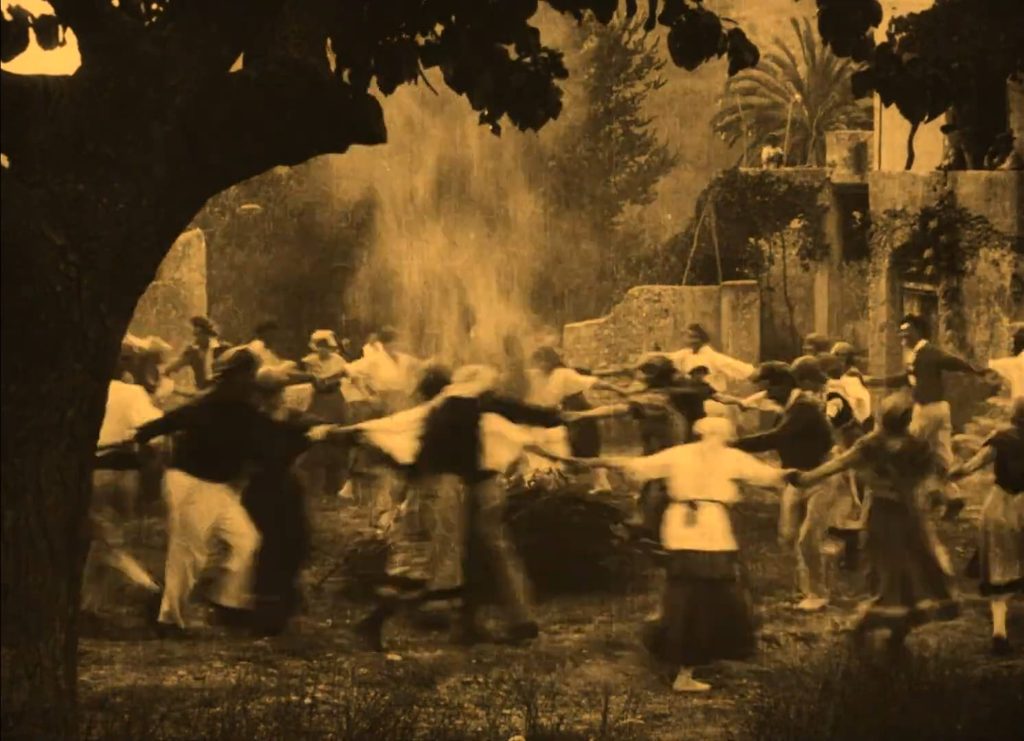
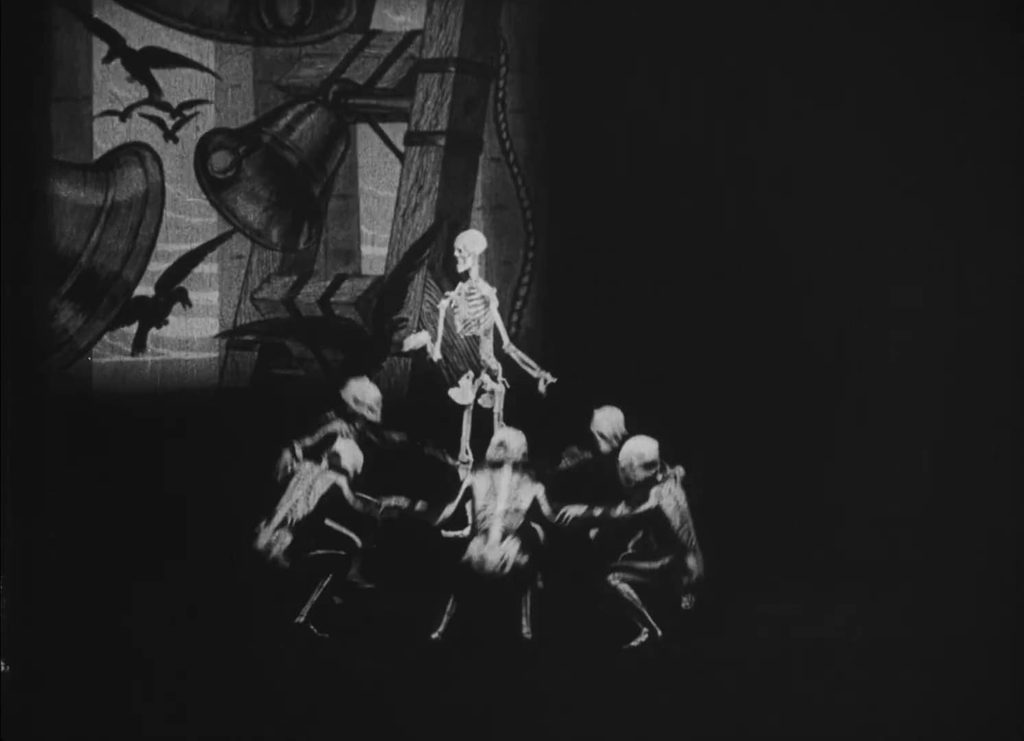
When France’s call to arms reaches the hilltop villages of Provence in J’Accuse, only a few among the crowd sense the tragedy to come. “What’s war?” one child ponders as men break out into patriotic songs, disregarding their wives’ tears. For sensitive poet Jean, brutish hunter François, and Édith, the woman they both love, this global conflict will especially test each in ways they cannot yet imagine. While soldiers lay down their lives to stop Germany’s advance across French soil, invading armies steal the innocence of those left behind – and superimposed over battlefields and home alike, skeletons dance in a mocking, gleeful celebration of death.
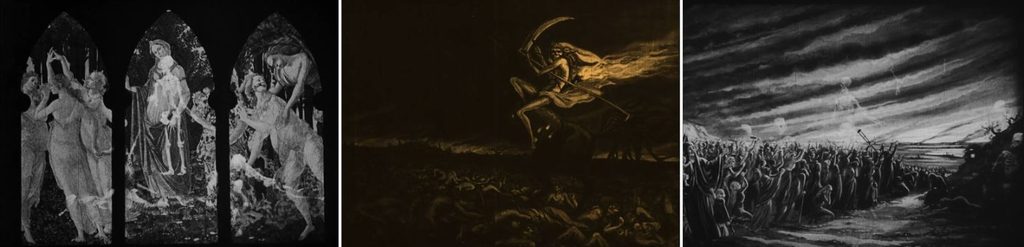
In true Gothic fashion, Abel Gance saturates J’Accuse’s imagery with this danse macabre, and further layers its morbidity through foreboding motifs of owls, scythes, and Renaissance iconography. His editing is extraordinarily light on its feet here, deploying cutaways and montages with impressionistic grace, while also turning abruptly violent when the horror demands it. After all, this is the director who would entirely redefine cinema’s visual language a few years later in Napoleon, and J’Accuse is where that experimentation first takes flight in its epic scope. Across years of conflict, envy, and heartbreak, Gance’s three protagonists tirelessly struggle to find their way home, yet his haunted visual imagination ensures they never fully escape the ghosts of war.
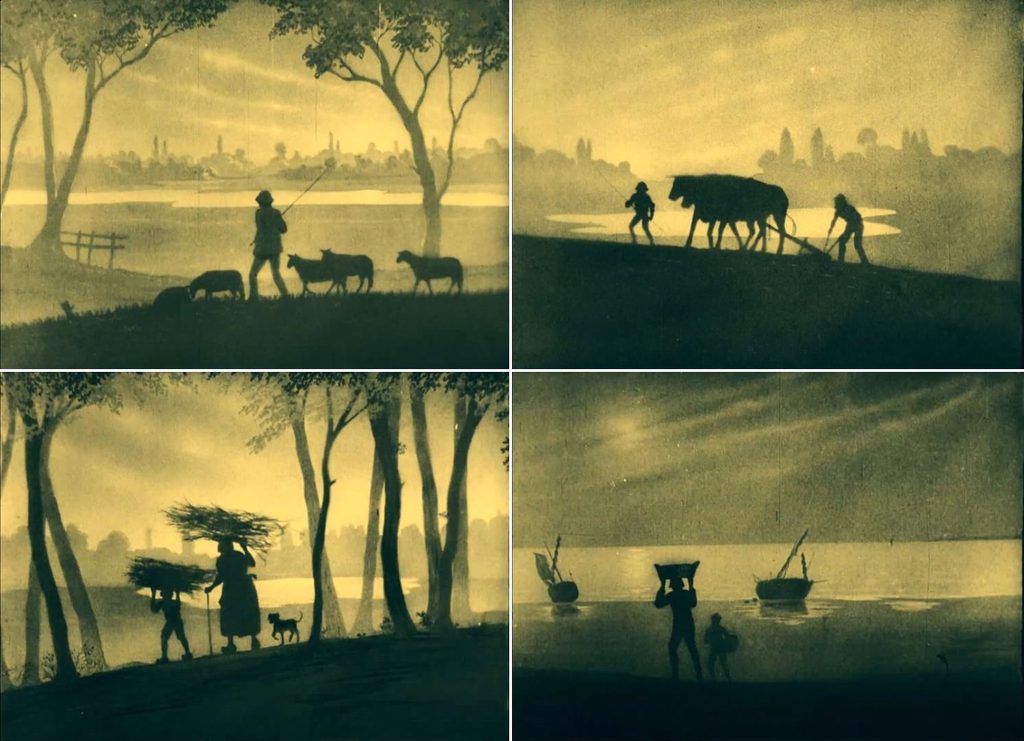
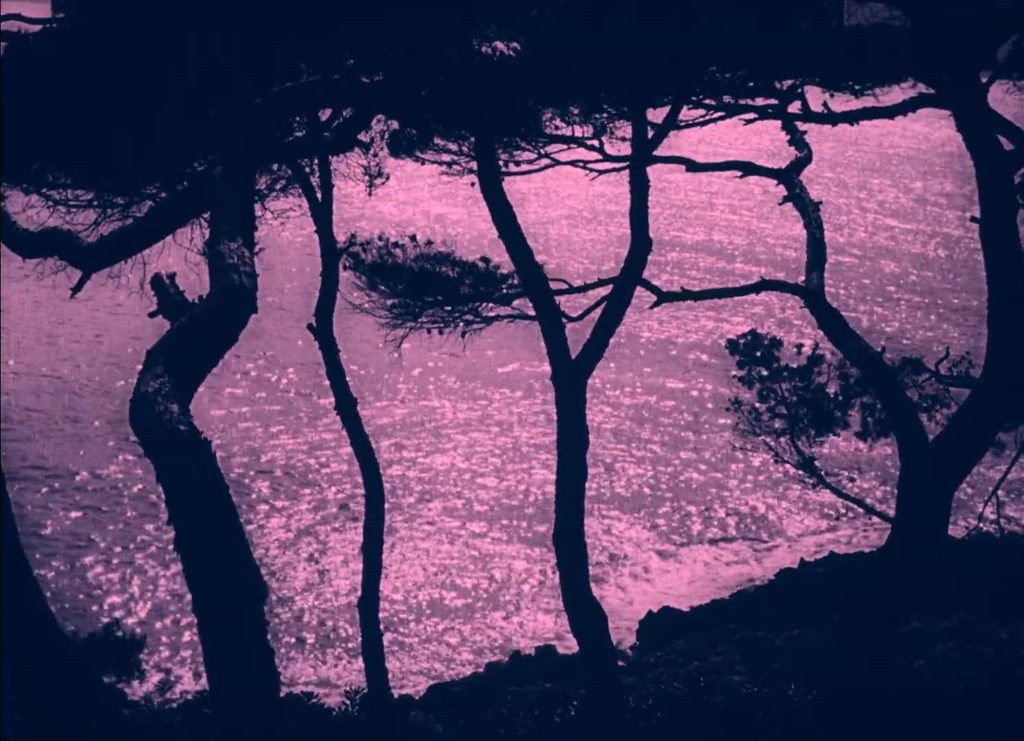
Before World War I arrives on their doorstep, a starker contrast couldn’t be drawn between Jean and François, representing two opposing forces of masculinity. Though Édith is miserably married to the latter, her heart belongs with the man who weaves poetry from everyday life, which Gance conjures in evocative images rather than words. Where Jean’s poem ‘The Pacifists’ unfolds in silhouetted cutouts of scenic, pastoral life, his ‘Ode to the Sun’ employs a dreamlike purple tint in its montage of calm oceans and islands, bathed in the warmth of a gentle sunrise.
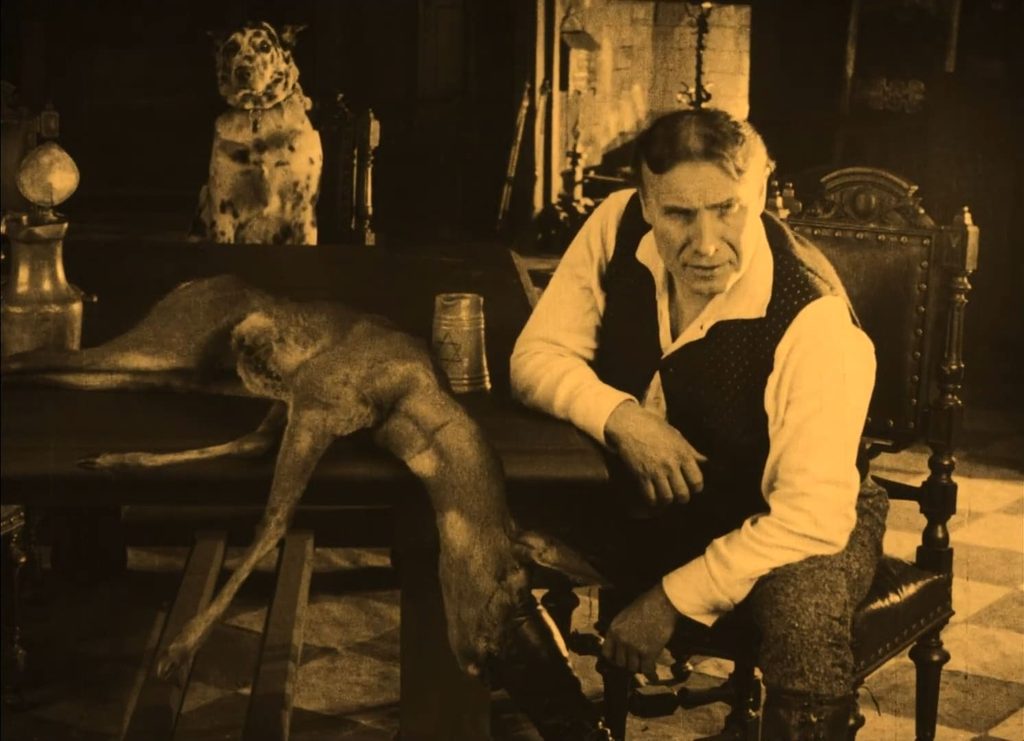
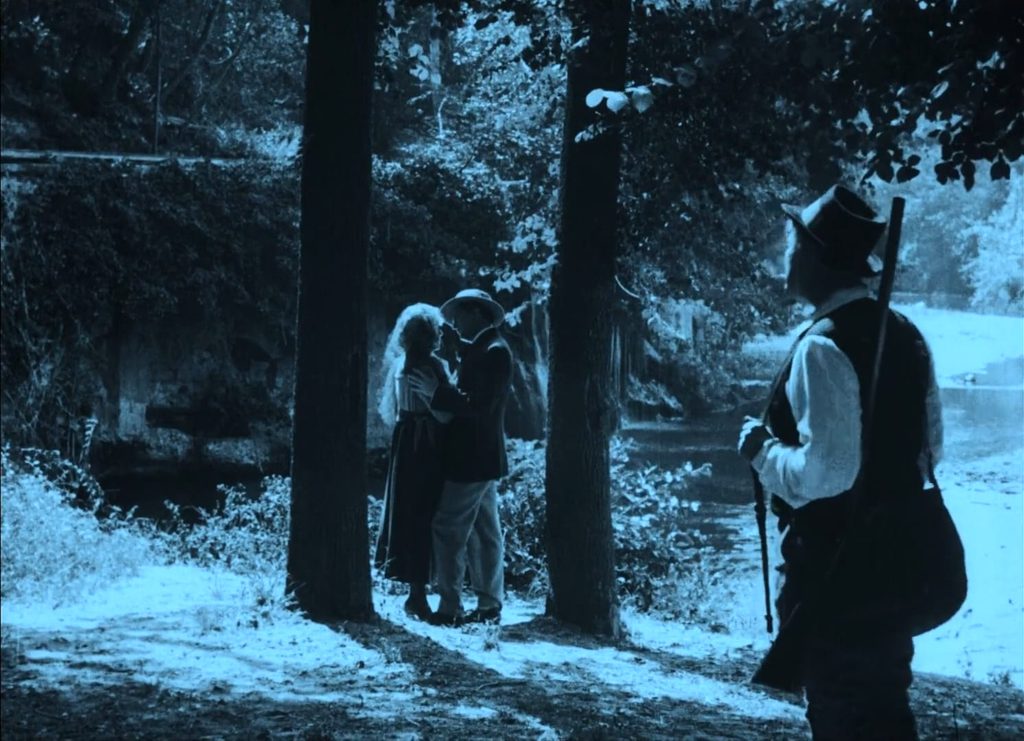
Conversely, François holds no patience for such soft sentiments. His home is one of animalistic brutality, embodied in the bleeding deer carcass slumped across his table, and the cruel delight he takes in watching his snarling dog hungrily snap at it. Thankfully, he resists the urge to shoot Jean when he catches the poet with his wife down by the lake, though the bird he targets instead is not so fortunate. Sorrowfully picking up the tiny, lifeless creature, Jean mourns this innocent casualty, and Gance paints a poignant portrait of Édith’s fundamentally different treatment by these two men.
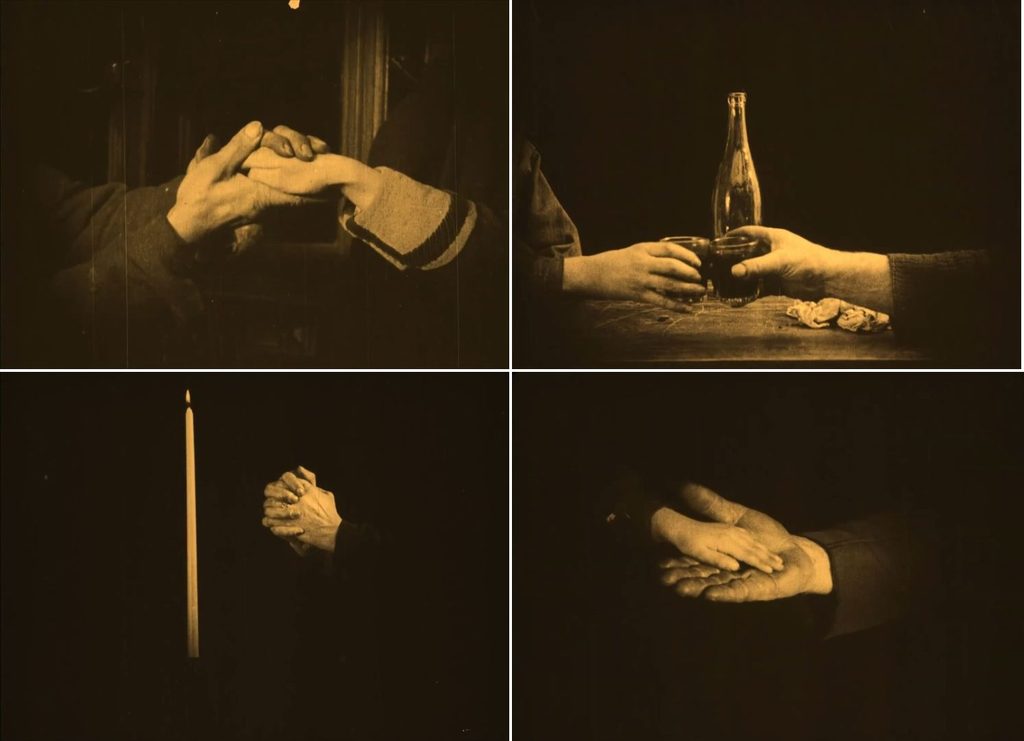
Still, history pays no mind to such private affairs of the heart, and it is only a matter of time before these rivals are called to the front. “The humble tragedy of departure” plays out as an anonymous montage, where hands of all sizes share a last drink, pray by candlelight, and clasp one another in farewell, echoing a universal refrain across every French household.
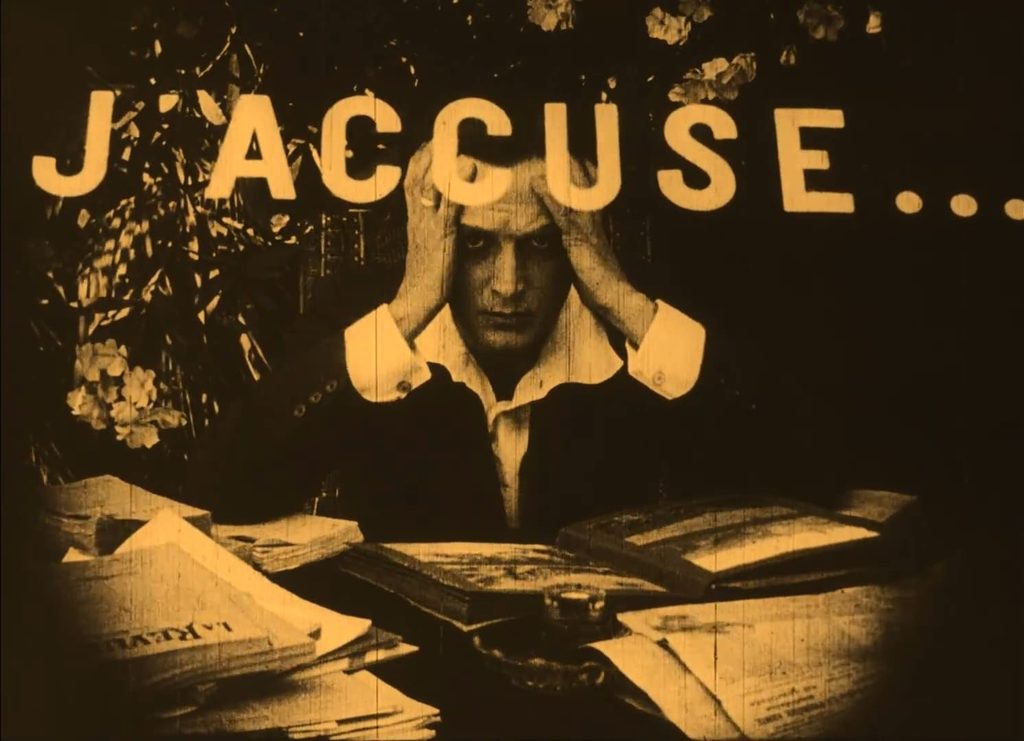
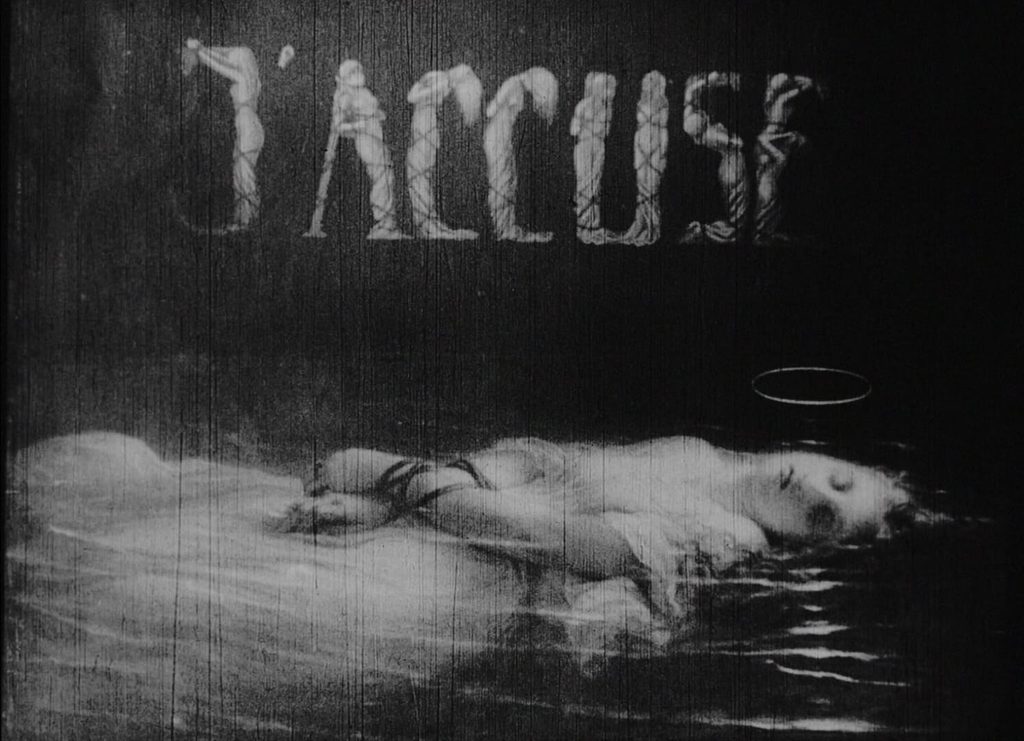
Édith’s tears, however, are reserved for only one man. Jean’s departure is scheduled for a month after François’, but rather than leaving his wife with her beloved for that time, François spitefully sends her to live with his parents in Lorraine. Unfortunately, jealousy begets tragedy, as isn’t long before news arrives of her capture by Germans. “J’accuse,” Jean cries upon learning of her fate, though for now his fury has no clear target. Far more unsettling than the accusation itself is the composition of the intertitle’s letters – undressed women, tortured and bound in various anguished poses. These are the forgotten casualties of war, Gance grimly implies, and Édith is merely one among countless victims.
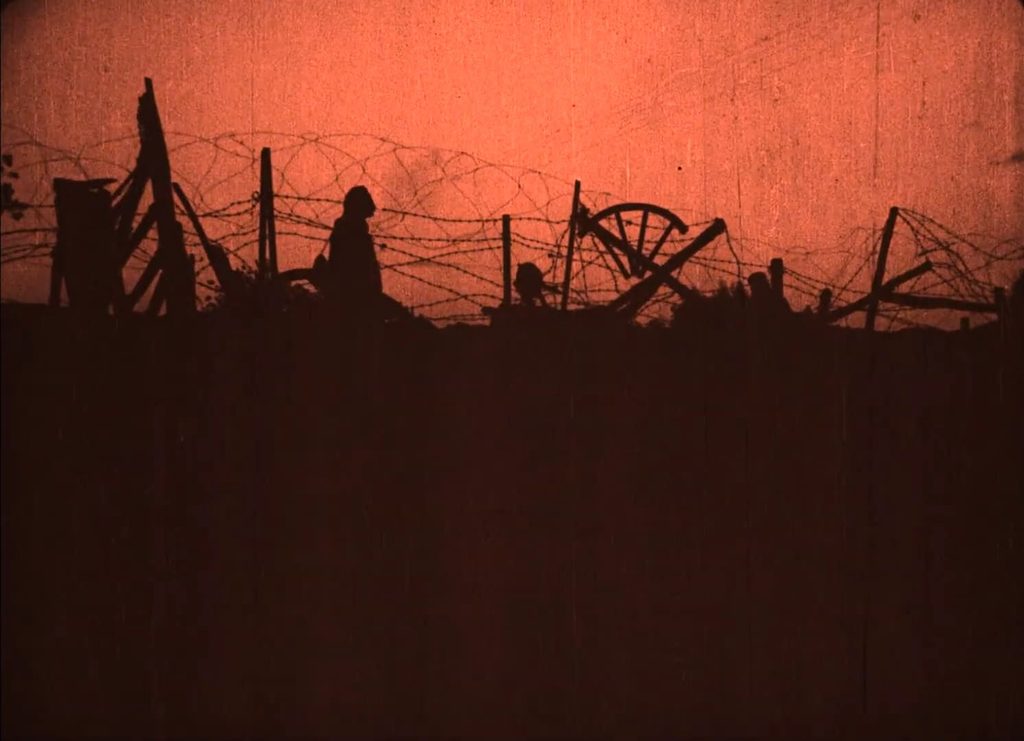
Her disappearance is the impetus Jean needs to abandon his poetic idealism and demand immediate deployment to the front, seeking vengeance on an enemy who holds no regard for the sanctity of women. It is a harsh transition Gance stages here too, saturating silhouetted trenches, barbed wire, and soldiers in a deep crimson tint as explosions tear across the frame. Unaware that Jean is away at training school, François refuses to accept Édith’s fate, writing to her father that she has secretly run away with Jean. Elsewhere, Jean writes to his own mother, urging her to keep an ear out for any news – and when the two men finally cross paths in the trenches, Gance draws their parallel lives closer still, mirroring their furtive gestures and later capturing their letters’ recipients in the same shot.
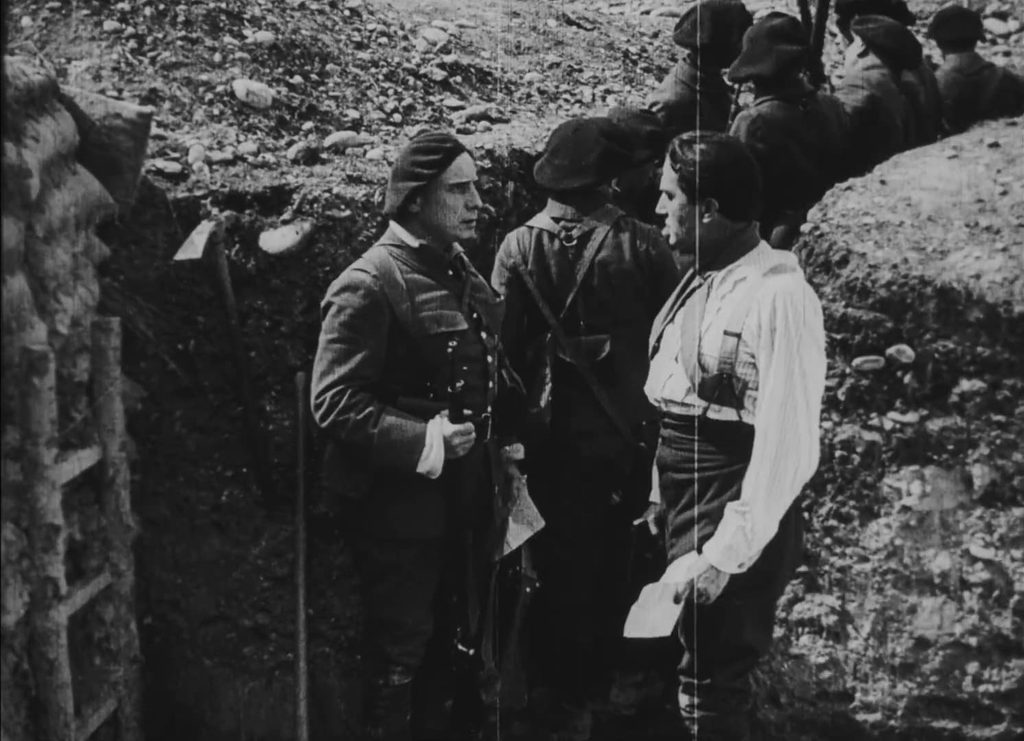
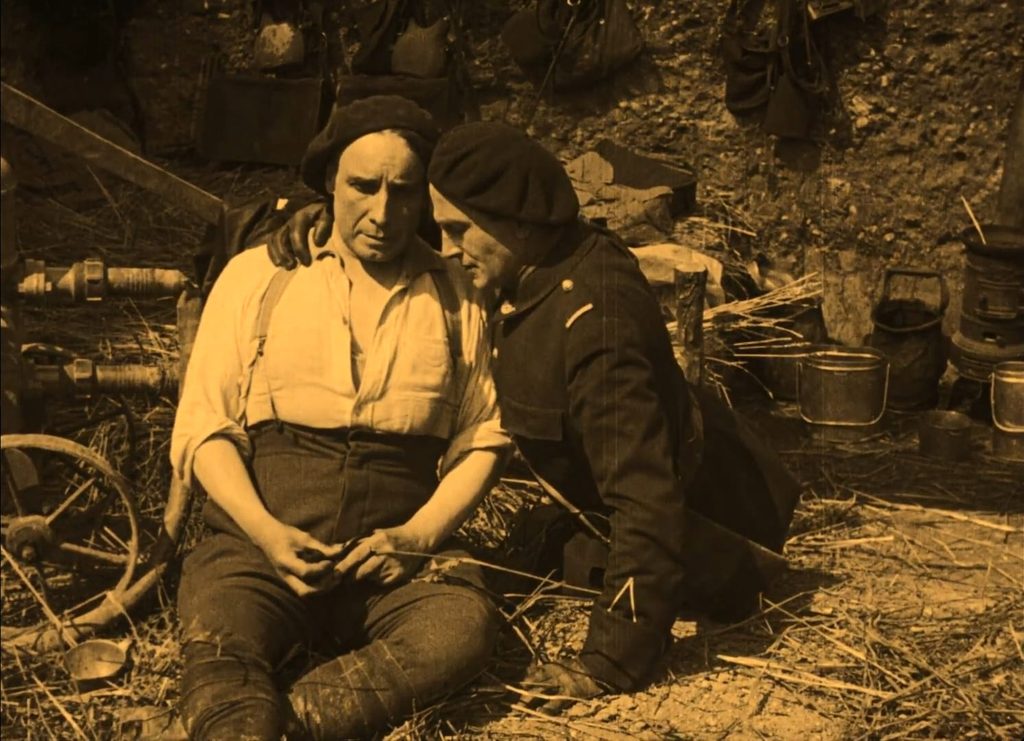
It is only inevitable that this dramatic irony eventually dissolves, as Jean recognises the sincerity of François’ unspoken feelings towards Édith and ultimately volunteers to take his place on a suicide mission. Following his miraculous survival, the two find an unlikely camaraderie, with Francois even insisting that his new friend abandon the formal ‘vous’ for the casual ‘tu’. As men fighting to stay alive for the same woman, they evidently have more in common in the trenches than they ever did back home, and Gance reveals a sweet, unexpected tenderness amid the carnage.
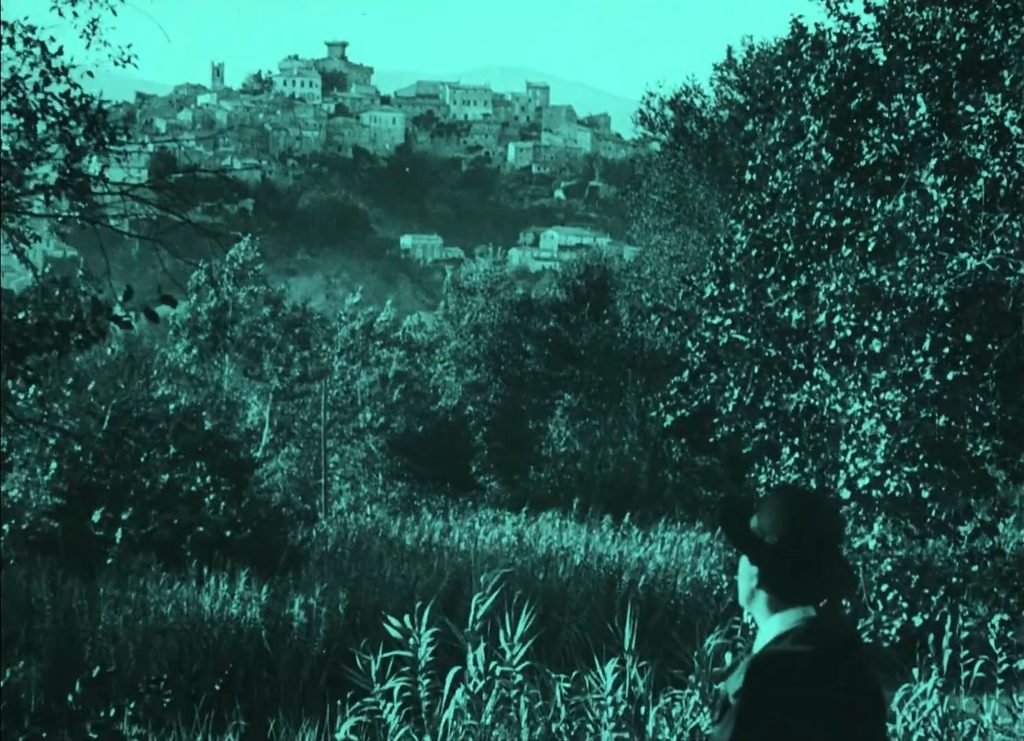
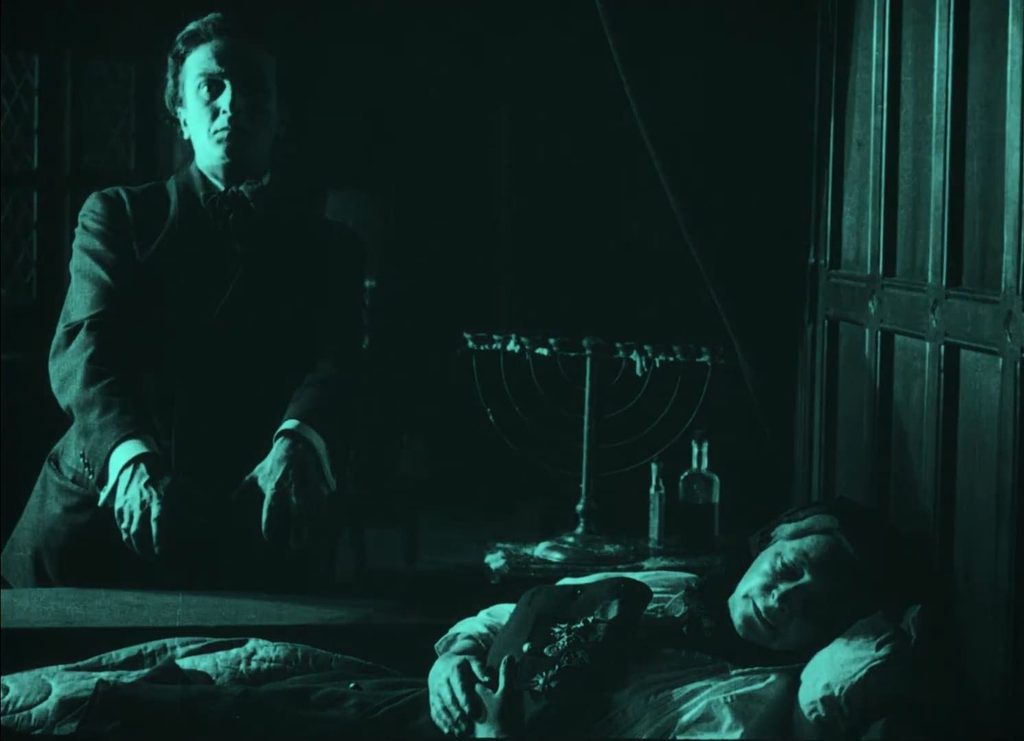
When word of mother’s deathly illness reaches Jean however, neither friendship nor sickness can keep him back from venturing home. Gance’s camera follows him down the road until his small village atop the hill comes into view, though as the poet bids his mother farewell with his ‘Ode to the Sun’, spectral images of Édith now wander its purple-tinted landscapes like a lost spirit. “All he found was the sadness of twilight,” Gance’s intertitle reads, while the menorah by his mother’s bedside extinguishes the last of its flames.
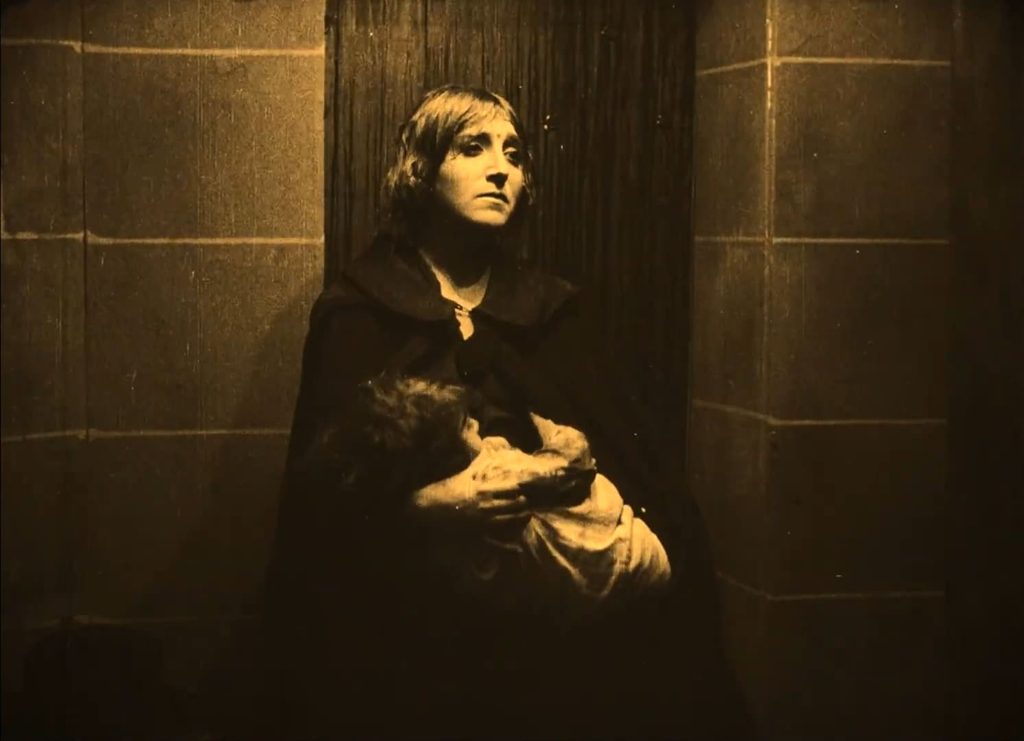
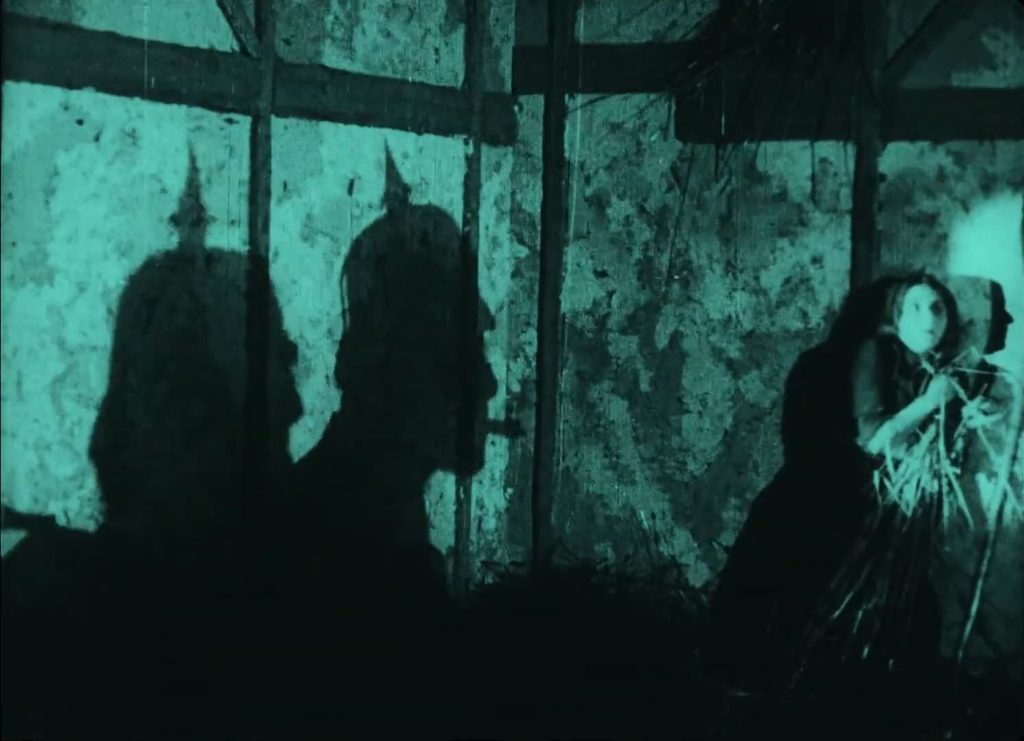
Indeed, whatever fire once burnt inside Jean is gradually dying, and not even Édith’s unexpected arrival back in town can reignite it. She appears a haggard, withered shell of her former self, hollowed out by an unspeakable trauma revealed in flashback. As the looming shadows of German soldiers reach across a wall, she shrinks into the corner, hoping to escape their grasp – yet the young girl now cradled in her arms is proof enough that she never did. Perhaps he is not Angèle’s biological father, though Jean nonetheless promises to raise her like his own, even as he recognises the danger this relationship could pose should word of it ever reach François.
Therein lies the secret that once again drives these new friends apart, and which Gance can’t help narrating with his elegant, literary intertitles. He famously aspired to become the Victor Hugo of cinema after all, and his writing in J’Accuse ranks among the finest of the silent era, varying between lengthy novelistic passages and shorter interjections that poetically ruminate on human nature. “Chance does not like secrets,” he muses when François returns home, finding Jean and Édith suspiciously doting on this young girl of mysterious origins. He has a plan to trick the truth out of them, and sensing the danger before it arrives, Gance poetically forewarns – “Misfortune was afoot, on velvet claws.”
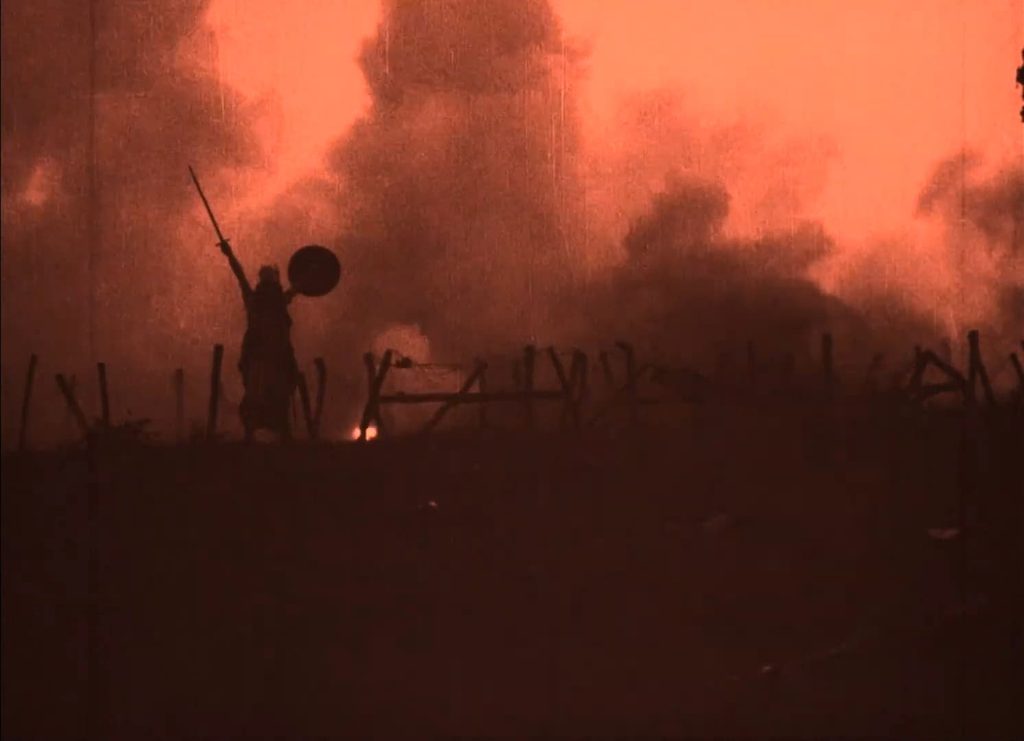
Perhaps it is the brotherhood forged in the trenches or the sobering perspective of war, but François’ anger is directed at neither his friend nor wife when he learns of Édith’s trauma. Reserving his rage for the true perpetrators of her suffering, he instead returns to the trenches alongside Jean, both united in a shared vow of vengeance. “Courage boys! The Gaul is with us!” a fellow soldier shouts, invoking the ancestral spirit of France – and imprinted against the red, smoky battlefield, the silhouette of that ancient warrior stands with sword and shield raised to the sky.
Still, Jean and François know all too well that the odds of surviving this battle are slim. If Jean returns alone, then he is to look after Édith and Angèle, François insists – though the prideful Jean cannot return the sentiment. Should misfortune befall him, he intends to delay Édith’s grief with a series of letters, predated and staggered for delivery months ahead.
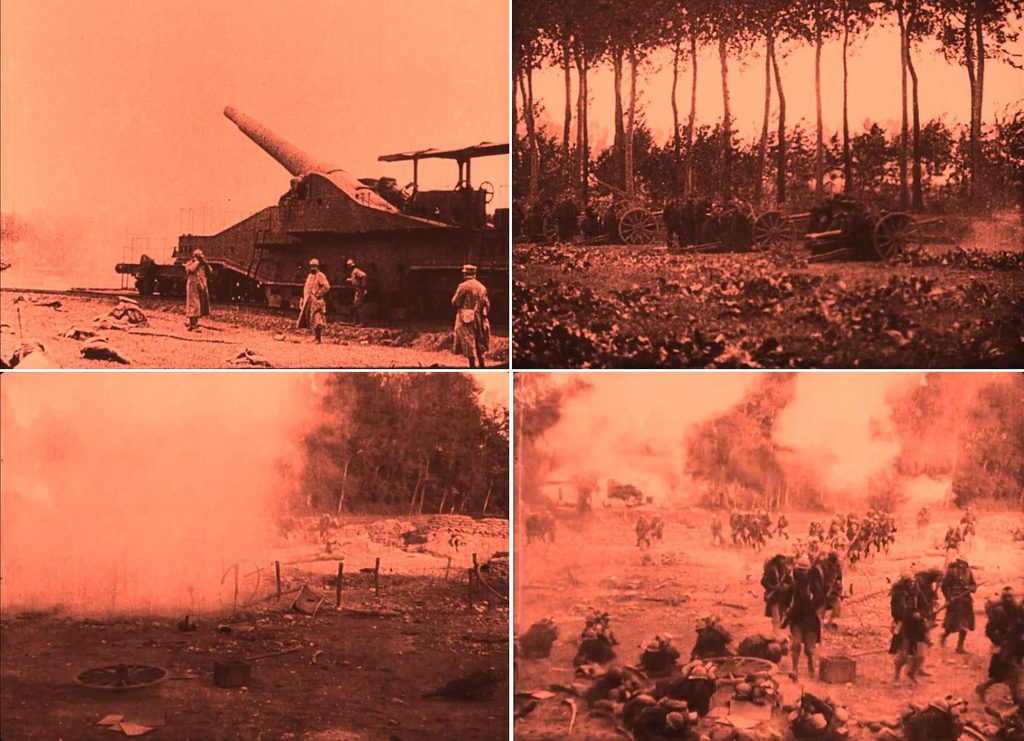
Within this awkward exchange, Gance probes the psychological complexity of soldiers staring down the same fate, and further imbues J’Accuse with a documentary-like authenticity as its scope expands beyond intimate melodrama. “If these letters reach anyone, may they inspire in an honest heart a horror of the vile infamy of those responsible for this war,” reads one of several letters reproduced verbatim from the frontline correspondence of soldiers. Before the following assault begins, Gance’s intertitle even announces that it was shot during the Battle of Saint-Mihiel, though it is his rapid-fire editing of real troops running through bombarded village streets which captures World War I’s immense, visceral terror.
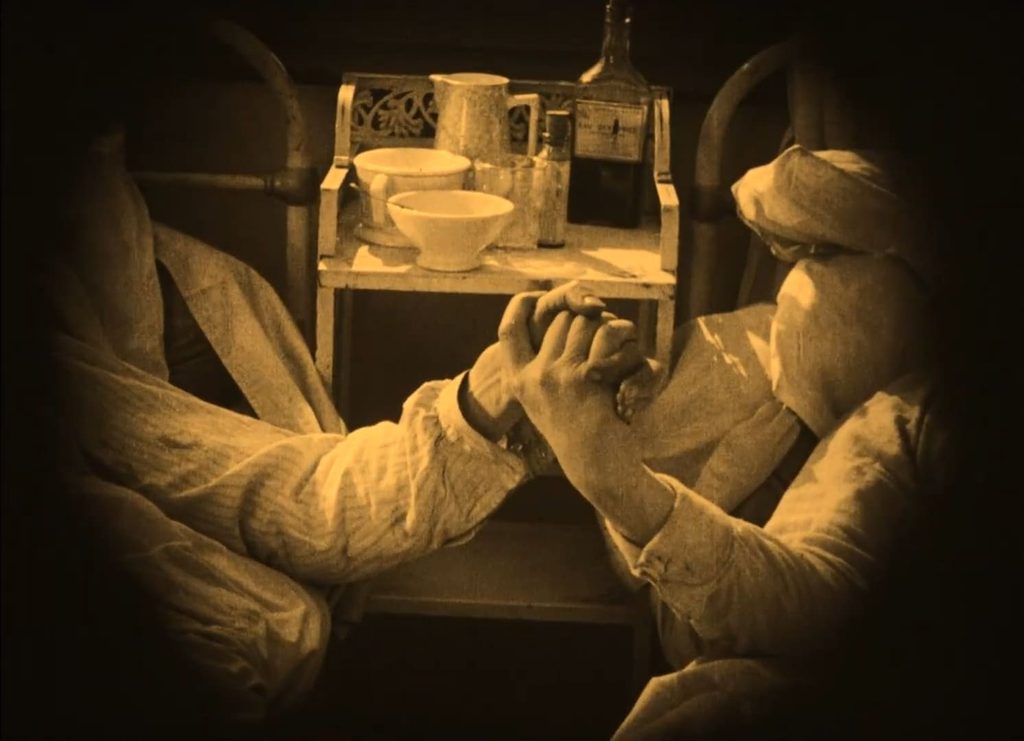
“J’Accuse!” a shell-shocked Jean cries out from his hospital window, watching that danse macabre swirl across the carnage. His wounds may be invisible, but when we find François in the neighbouring bed, it is clear his own will be fatal. Facing the end, the once-jealous, iron-fisted husband now tearfully reminisces on his dog, Édith, and everything he will leave behind – and in a final gesture of love, he reaches for his friend’s hand, holding it tightly to the very end.
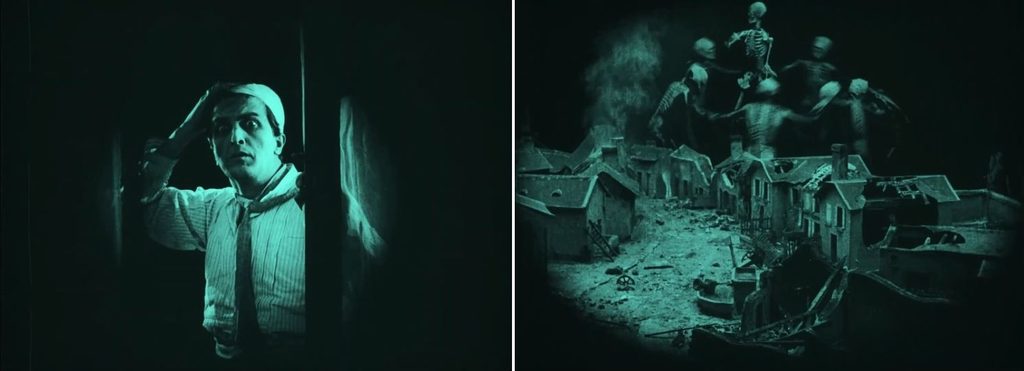
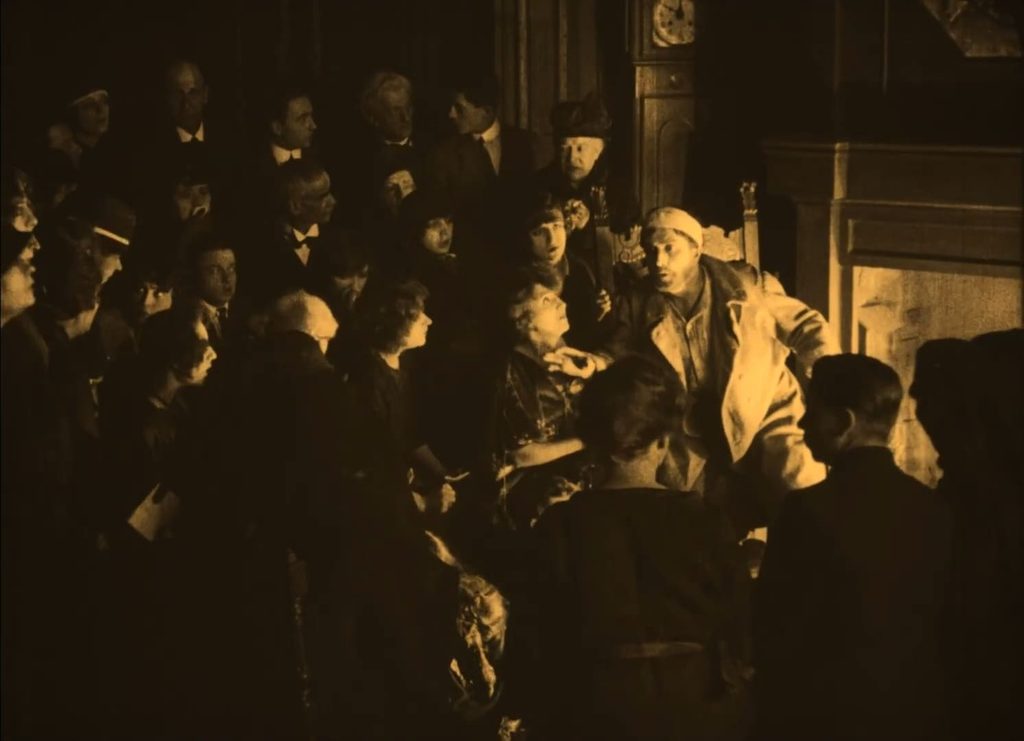
Jean may return home to Édith and Angèle with a clearer mind, though in his heavy heart, he carries an unsettled reckoning. “Nightmares… dreams… life… war… the dead… and the living. I don’t know anymore! I accuse!” he raves, before summoning the entire town to hear the vision that consumes him.
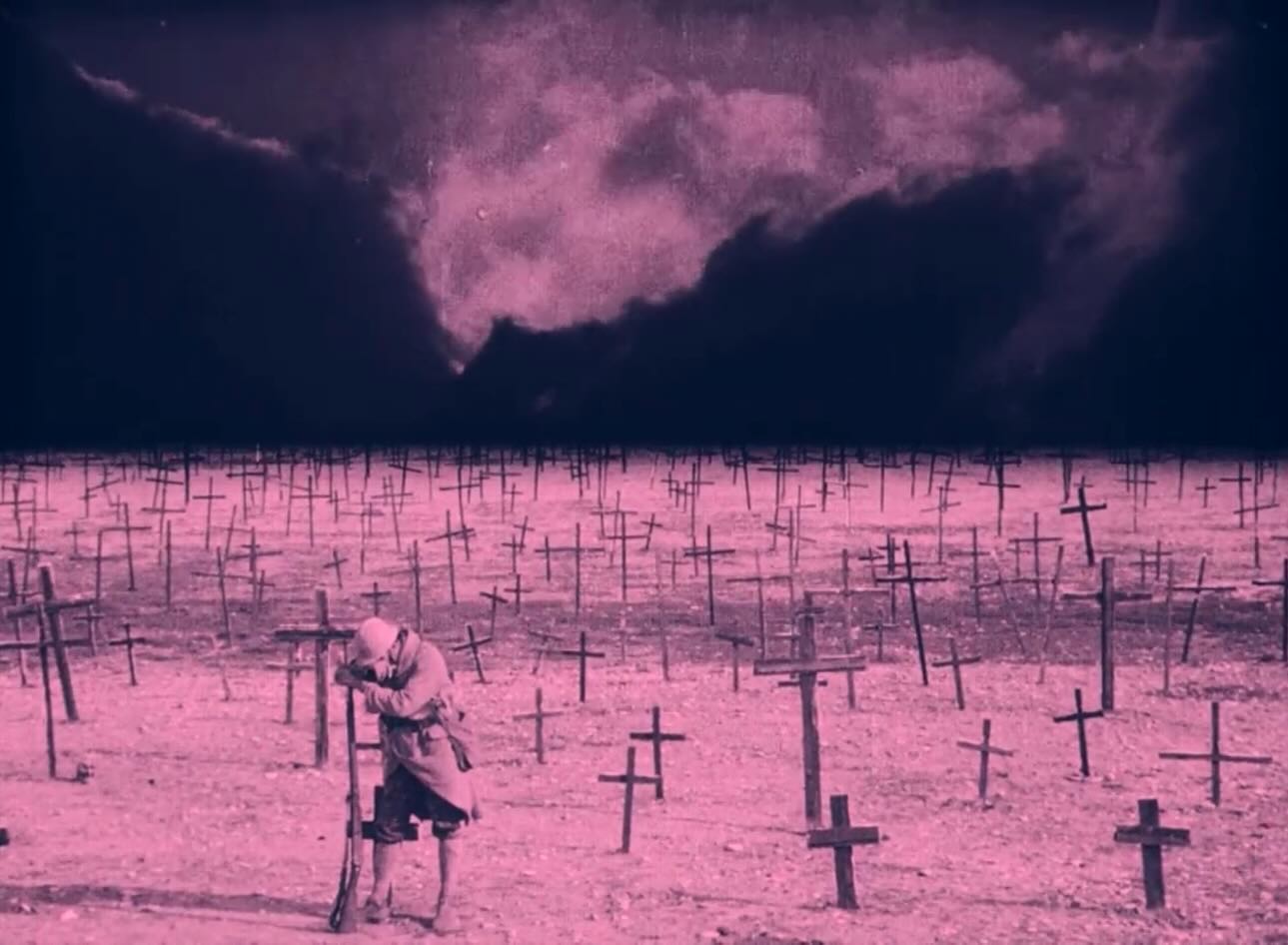
If there is any scene in J’Accuse that distils its bitter grief into a single, powerful metaphor, then it is certainly the apocalyptic sequence that follows, where Jean stands guard over a vast battlefield of slanted crosses and darkened clouds. Much like his ‘Ode to the Sun’, Gance’s purple tinting distinguishes this dream as a realm beyond the waking world, transforming each cross into the body of a fallen soldier. As if roused from a deathly slumber, the bodies begin to rise, and stagger en masse toward an unshakeable purpose.
“The time has come to find out if our death has served any purpose! Let’s go home and see if they are worthy of our sacrifice. Awaken!”
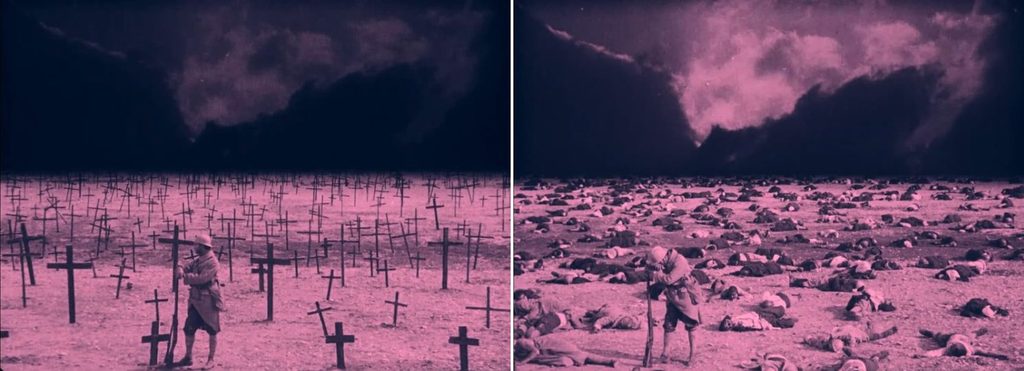
Though unmistakably surreal, Gance’s sequence is deeply rooted in the experiences of those who served, casting real soldiers as his ghostly army and thus lending the vision a stirring, personal weight. During the time of shooting, they were on leave from the front, knowing full well that many among them would meet their real deaths in the coming weeks. Crowds of hundreds may parade through the Arc de Triomphe, celebrating their long-awaited victory – yet in an unnerving, horizontal split screen, so too do these “unknown dead” march in grim procession. The biblical imagery is equal parts Ezekiel’s Valley of Dry Bones and the Book of Revelation, resurrecting the dead not to comfort the living, but to sit in judgement over them.
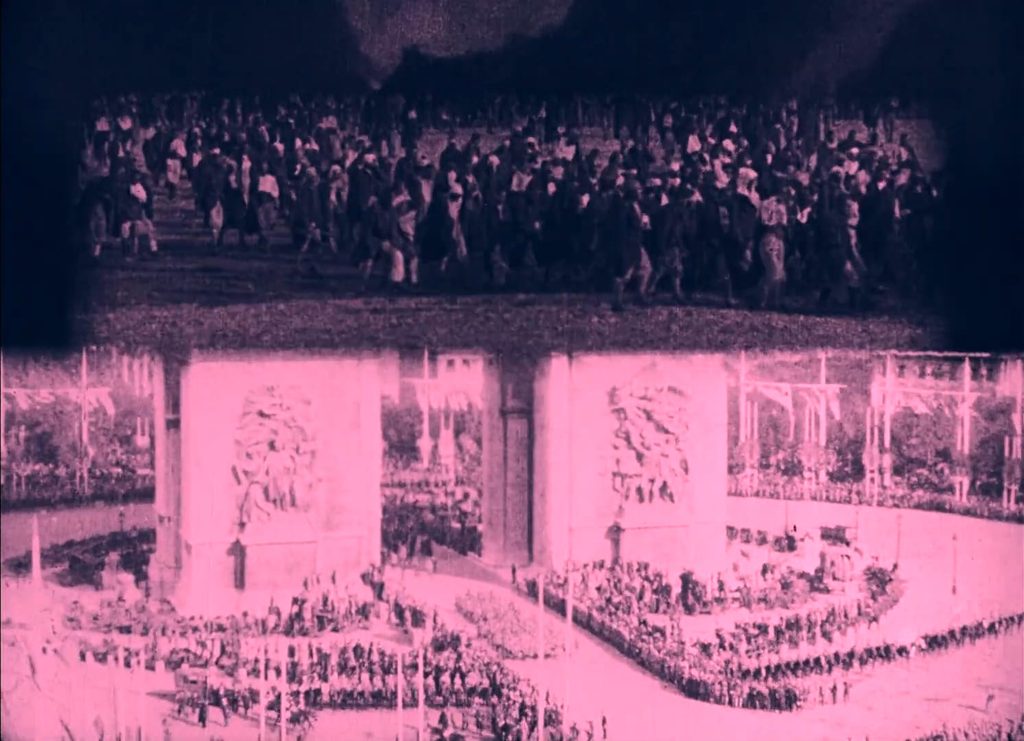
Shrouded in darkness, the horrified faces of Jean’s audience listen intently to his story, fearful of what is coming for them. “If you’ve been faithful to your dead, you have nothing to fear,” Jean warns, though not all present find comfort in these words. As the dead reach their destination, prophecy and reality finally converge, manifesting the spirits of François, Édith’s father, and countless others. Widows who abandoned their mourning, sons who squandered their father’s legacy, and war profiteers who grew fat off others’ suffering are all condemned by the returning spectres, and equally met with the same damning cry – “J’Accuse!”
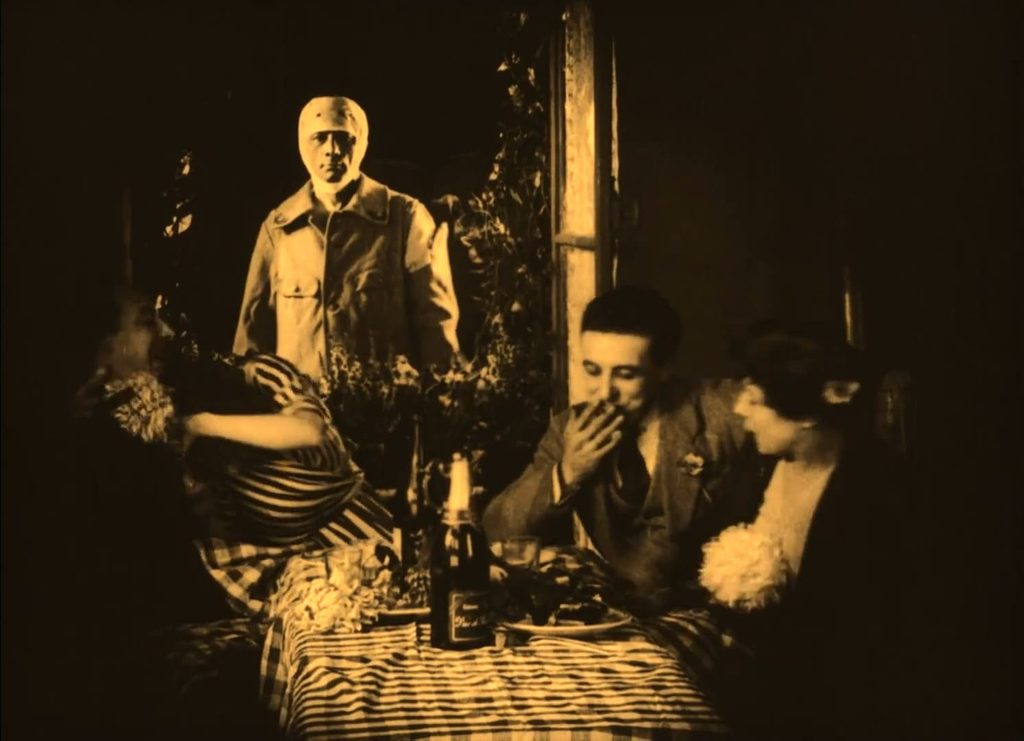
Still, along with denunciation, the dead also offer a strange, inscrutable hope – “mysterious words of the future that the living didn’t understand, yet were full of peace and serene joy.” For now, no punishment is to be delivered, they reveal as they carry their crosses back to their graves. Instead, Jean and Gance alike issue a stern caution to the living, demanding that the sacrifices of those who died be honoured by striving toward a more just, peaceful world.
Even in these closing minutes however, J’Accuse still has one final indictment to deliver, as Jean retreats to his mother’s home and revisits his ‘Ode to the Sun’. Dense as they may be, Gance’s poetic intertitles never once overshadow his visual storytelling, and his audacious decision to conclude with such a lengthy, incendiary monologue especially stretches the expressive limits of silent cinema.
“Wait, O Sun, before I go and disappear among the dead this night,
And if my hand clutches at my window sill,
It is, o bitter whimsey, out of preference to have died in the place of which I sing
I went there, a poet, festoons and astragals,
Genius beaming in my smile!
I returned a soldier, a statue, a spectre,
From my tomb I cry
Pushing back the stone as the earth itself would intone
Hear me in the name of those your splendour abused
Are you afraid?
You blush vermillion.
I was Jean Diaz, but I changed my muse
My, once sweet, name is now J’Accuse!
And I accuse you, o Sun
Of illuminating a frightful bout,
Mutely, placid, undisgusted,
Like a horrible face with tongue cut out,
Of clinging to your azure balcony,
Sadistically watching till the final rout.”
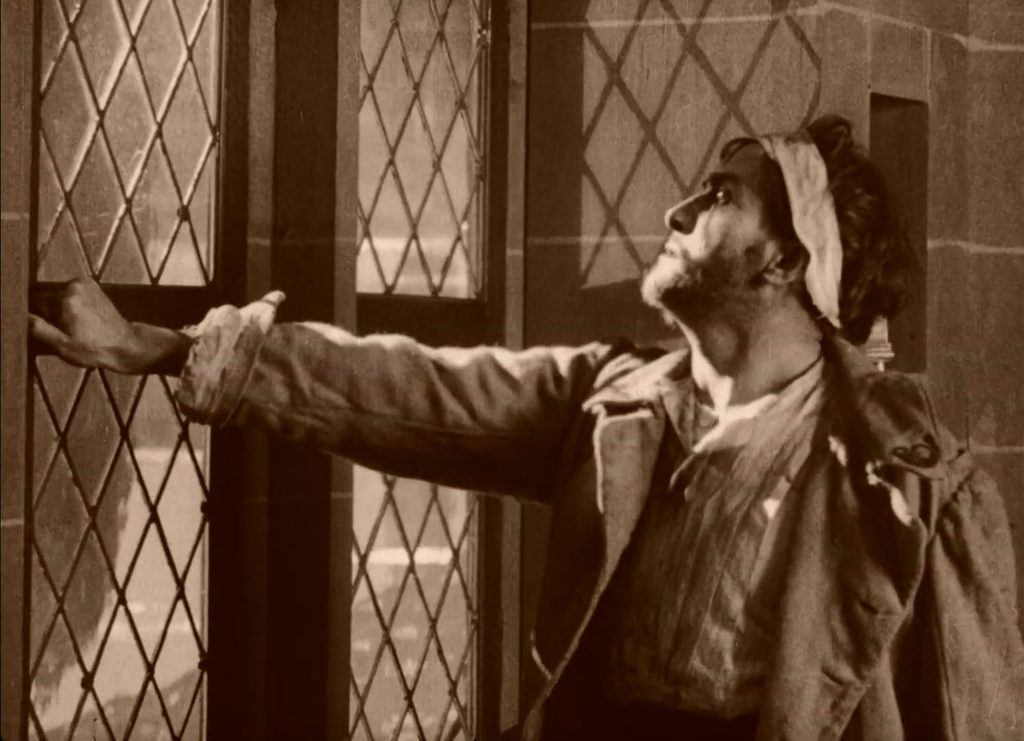
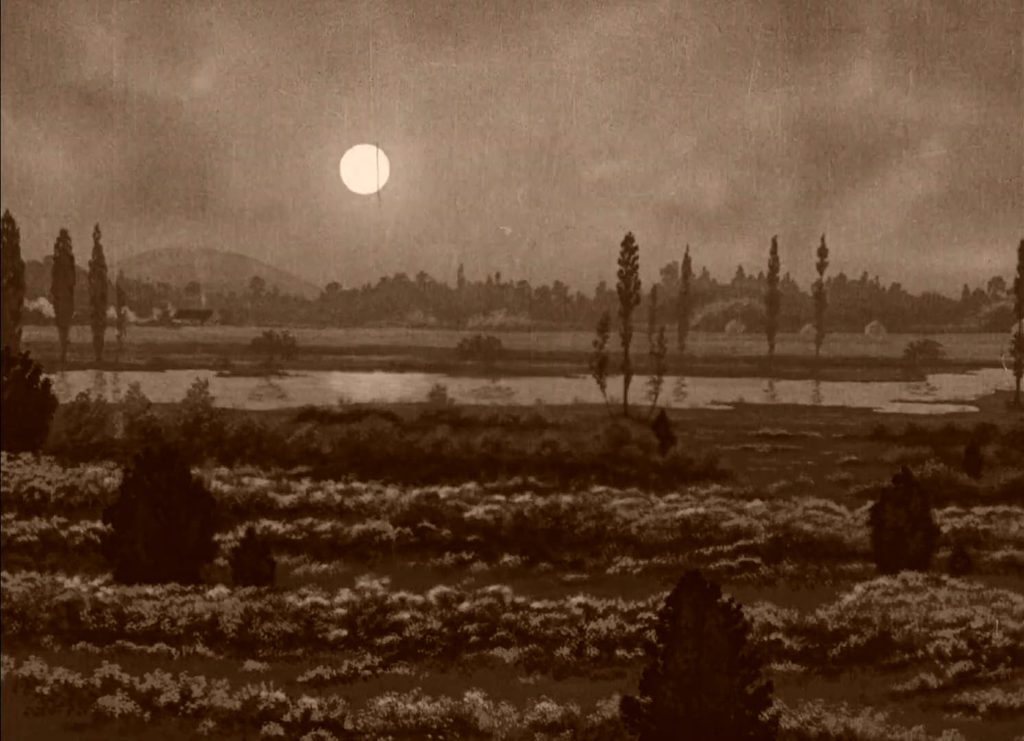
Gance’s writing is nothing less than sublime here, cynically personifying that golden luminary as a silent witness to suffering, while drawing on a rich arsenal of rhetorical devices to weaponise Jean’s poetry against the radiance that once inspired it. No longer does he find comfort in his “poems about sunlit peace and the sweetness of life.” Instead, he can only laugh at the fool who believed that such transcendent beauty could possibly redeem humanity from ruin. His identity as a poet is shattered, and in its place, he becomes “J’accuse” made flesh – a voice for those who were silenced by war, raging at the absurdity of a universe where grace merely tolerates the existence of savagery.
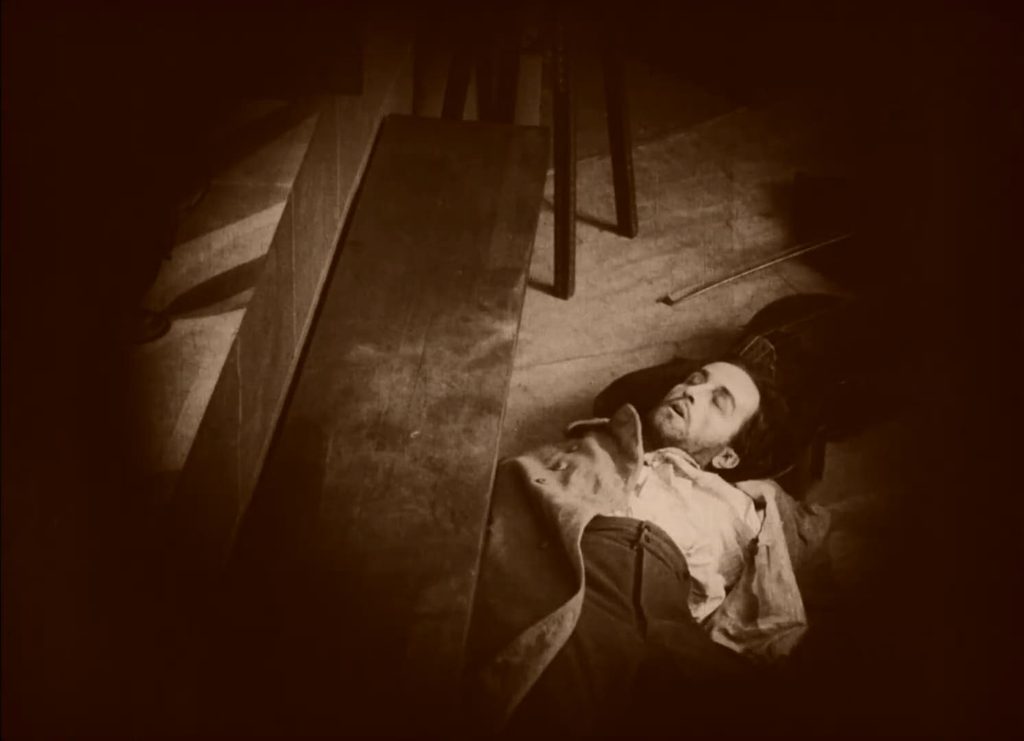
There ends Jean’s testimony, and with it, his will to live. Falling back on the floor in weary, resentful anger, he dies, even as the sun’s beams reach through the window to caress his lifeless body. Many fall short of redemptive grace in Gance’s epic war drama, and many refuse to answer for it. More than any guilty individual though, it is the crime of complacency which earns his fiercest condemnation, bitterly mourning an innocence that this heedless, bloodstained world may never recover.
J’Accuse is in the public domain, and available to watch on many free video sharing sites including YouTube.