
Zhang Yimou | 1hr 39min

Besides his remarkable talent, astonishing story, and humble background, the swordsman known only as Nameless arrives in the Kingdom of Qin as a blank slate. The three assassins who once threatened the King’s life have perished by his hand, and as a reward, he has been invited to approach within ten paces of the throne and tell his triumphant tale. From a figure so disconnected from any fixed identity however, truth does not easily support a single, authoritative history. Details sharpen or soften with each retelling, while motives are frequently reassigned according to the narrator, whose emotions are rarely separable from the matter at hand. Through the competing testimonies of Zhang Yimou’s historical reconstruction, the conflict between warring nations is sublimated into the act of storytelling – yet in its constant contradictions and revisions, so too does it trace a winding path towards reconciliation.
At its structural foundations after all, Hero is based on the dialectic opposition of thesis and antithesis, before completing the triad with a synthesis that seeks to harmonise the two. There are heroes on both sides of the war, the opening text informs us, though such a claim is meaningless without first considering how heroism is constructed through distinct political perspectives. In more ways than one, Zhang is indebted to Akira Kurosawa, adopting the fragmented narrative framework of Rashomon to expose how truth bends in the hands of those recounting it. From there, Hero expands beyond a tale of conspiracy and assassination, and evolves into a grand, multifaceted meditation on the founding of imperial China itself.
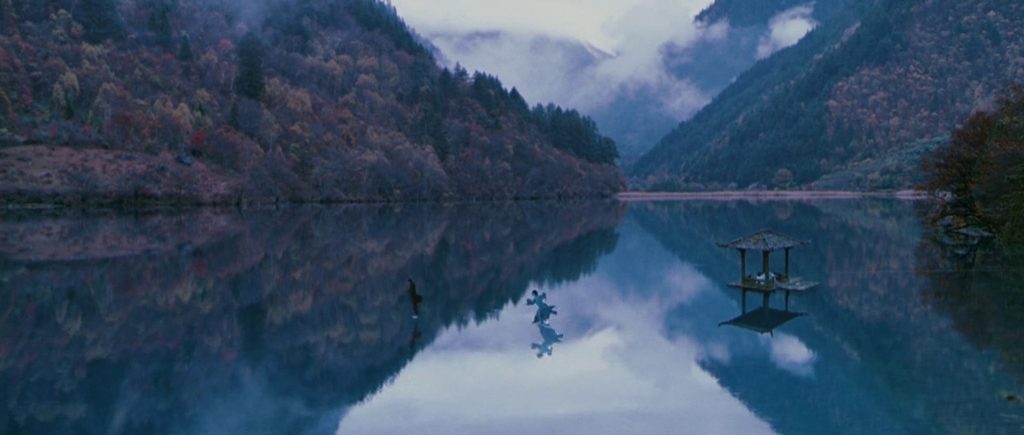
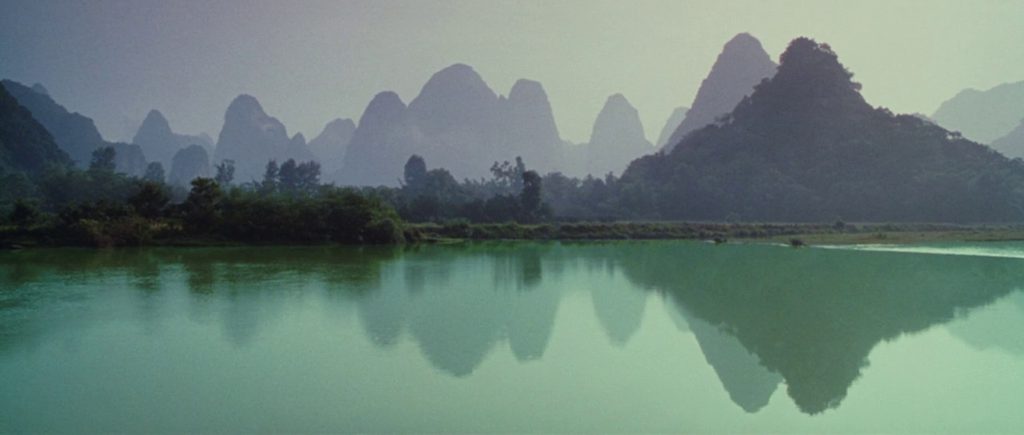
Although Zhang had previously framed leaders, concubines, and labourers as modern folk heroes, each impacted by the turbulent 20th century, Hero marks his formal entry into mythmaking of a more ancient, elemental kind. Martial arts are elevated to a mystical philosophy in the wuxia genre, gifting mortals the abilities of flight, agility, and lethal precision that surpass ordinary physical limits, and here Zhang even compares this swordsmanship to music and calligraphy in its creative discipline. Sworn enemies glide freely between trees, as weightless as the wind, and feet skim lightly across the surface of tranquil, blue lakes, leaving little more than a ripple behind. The legendary casting of Chinese stars such as Jet Li, Tony Leung, Maggie Cheung, Donnie Yen, and Zhang Ziyi only further amplifies the film’s operatic scale too, effectively lending each of these stylised, historic figures a formidable screen presence.
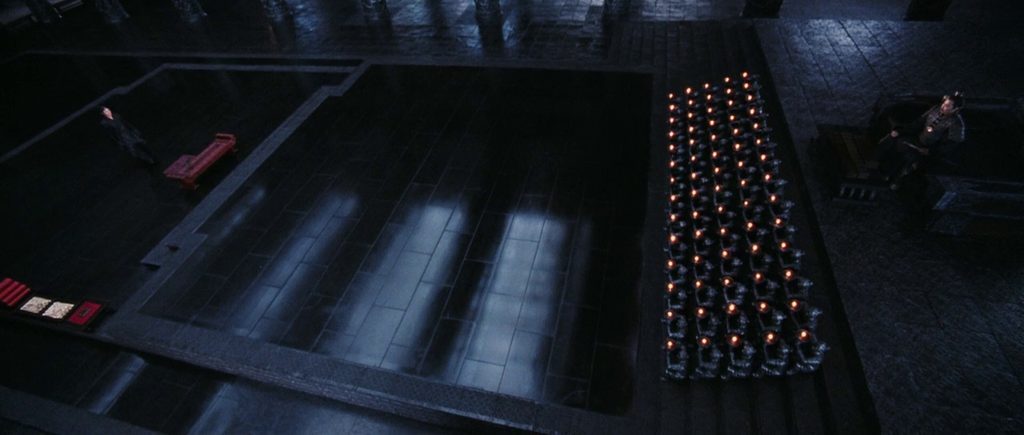
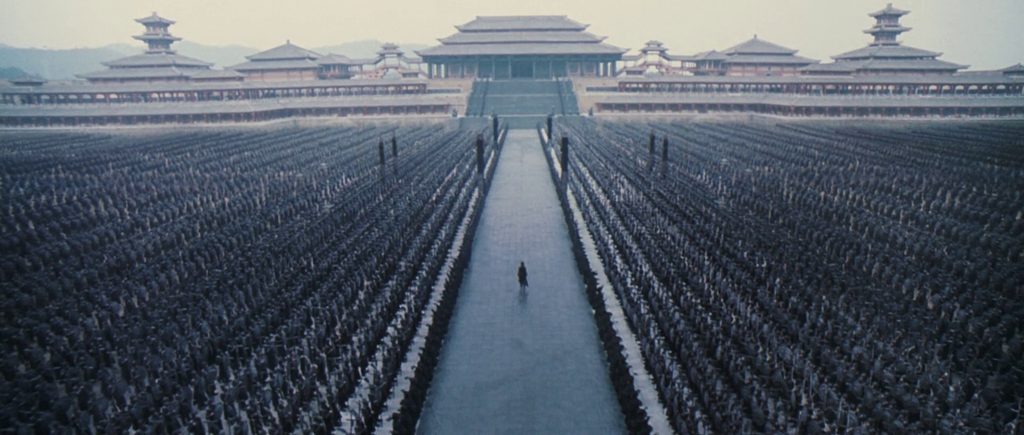
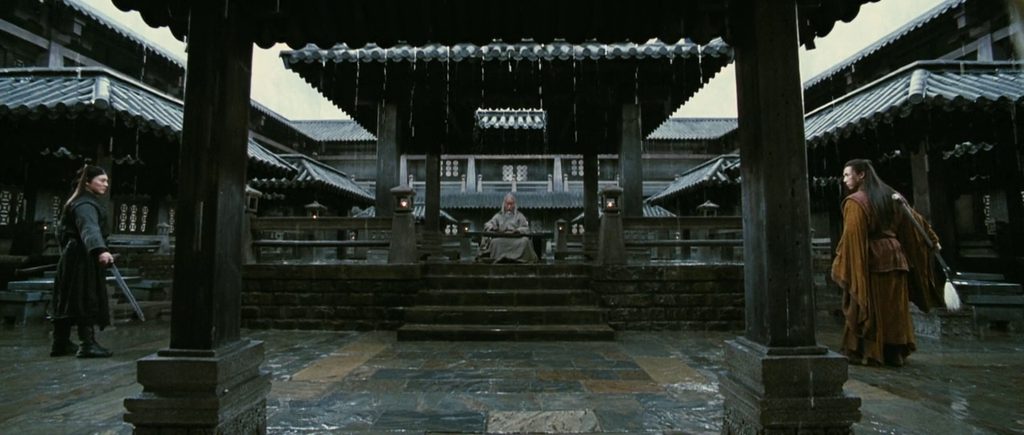
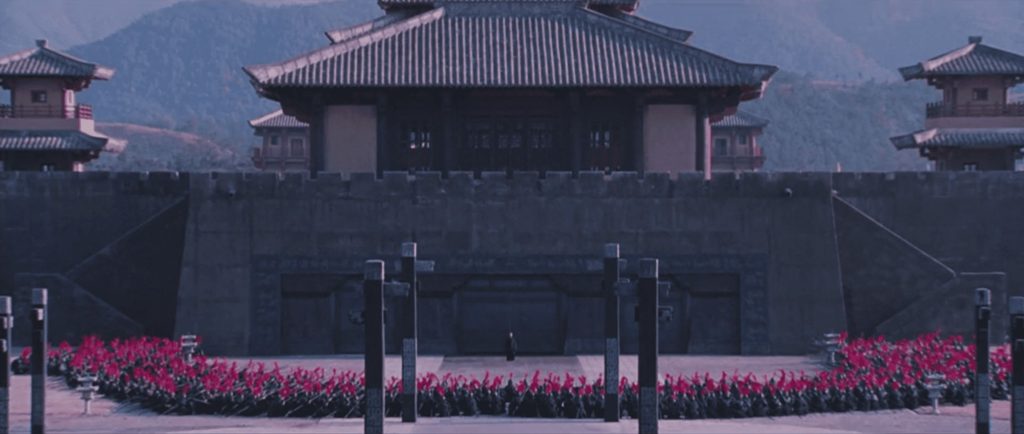
Right from the moment Nameless narrates his fight with the assassin Long Sky at a chess house, Hero establishes the transcendence of such stylised combat, elegantly aligning their miraculous movements with the plucked strings of a Chinese zither. In this courtyard of stone and timber, rain drips from sloped roofs to the tiles below, while Zhang’s sombre black palette unifies finely carved pillars and flowing garments under an even, controlled restraint. This aesthetic is not desaturated in the colour grade, but rather constructed within a spectrum of dark greys, further connecting Nameless’ flashback to the charcoal-toned horses, soldiers, and architecture of the King’s court. Such monochrome austerity does not represent evil however, but rather a sombre impartiality, unswayed by emotional embellishment or subjective distortion. For as long as we remain within this field of neutrality, we instinctively trust the veracity of Zhang’s narrative.
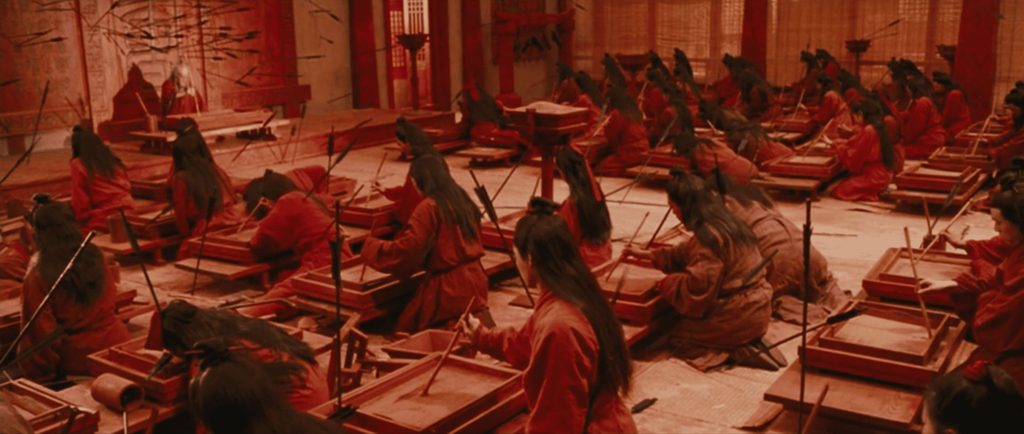
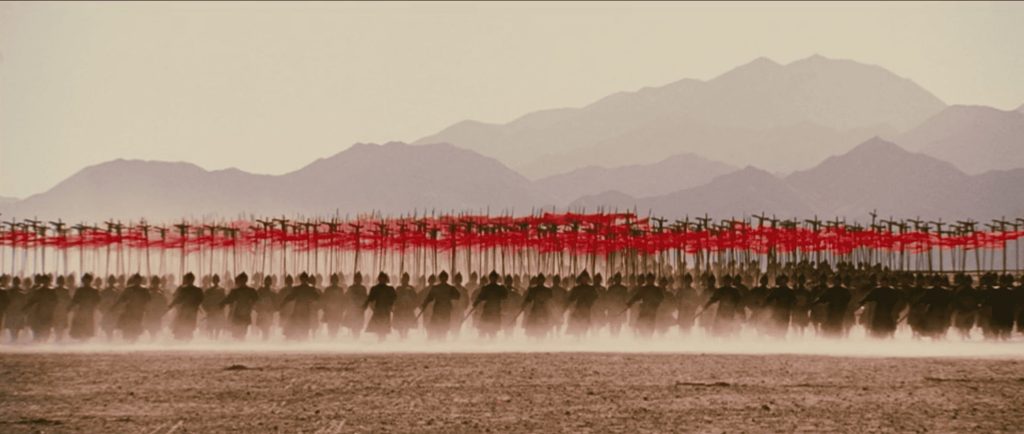
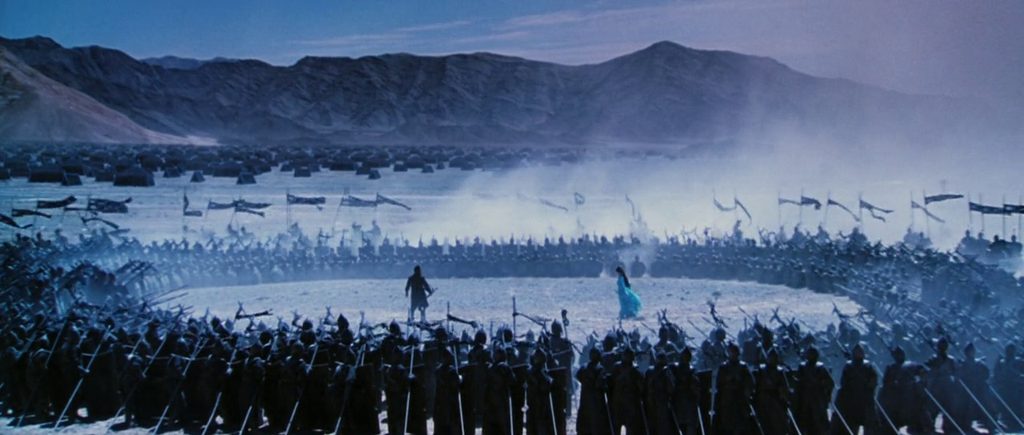
As such, when Nameless’ tale moves to the calligraphy school where assassins Flying Snow and Broken Sword study their arts, Hero shifts into the volatile realm of heightened legend. He has already claimed victory over Long Sky, and now as he seeks to exploit the rift between these lethal lovers, Zhang saturates their passion and anger in an oppressive crimson palette. With the King’s forces laying siege to the school outside, a second layer of Kurosawa’s influence emerges, staging rich battle sequences reminiscent of Ran in their vast militaristic formations and colour-coded allegiances. Warriors wielding blood-red banners advance through a dusty desert, and as archers take aim at the school, scarlet-robed students calmly remain seated under their master’s orders.
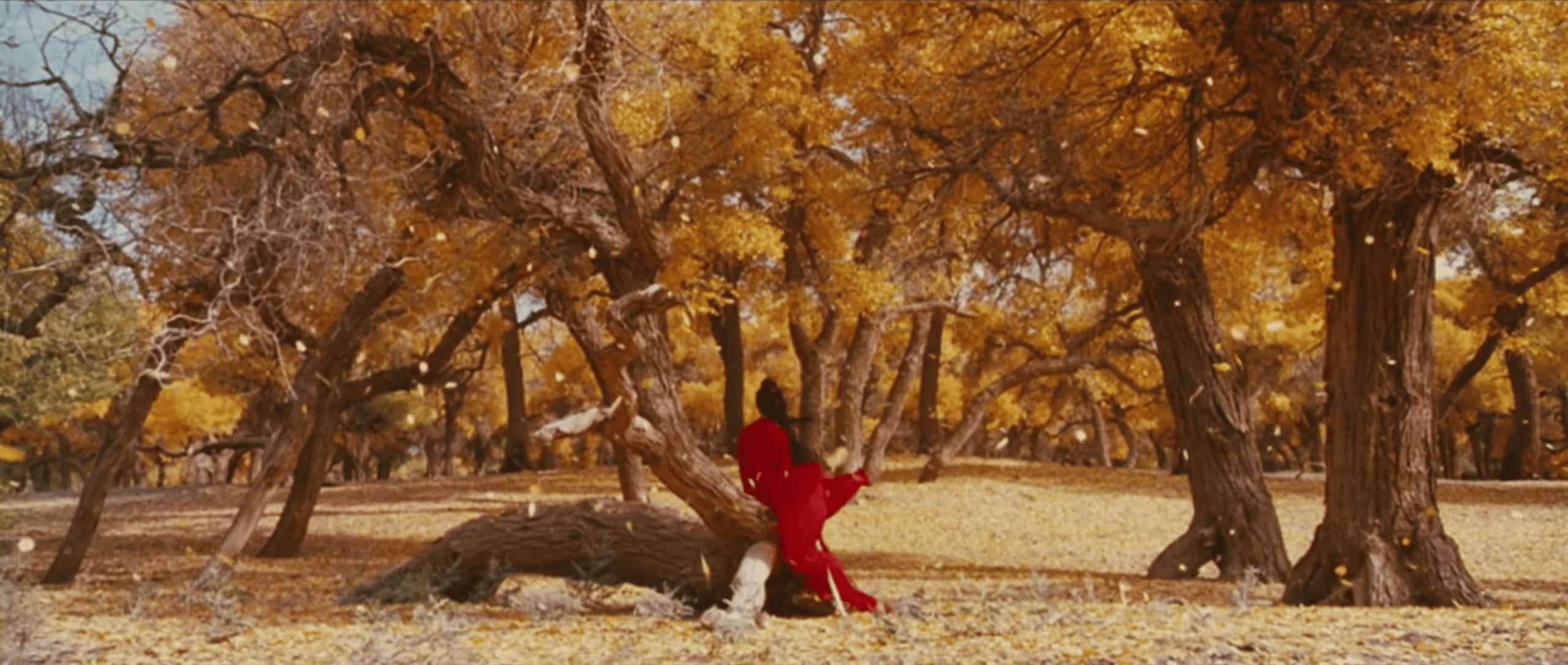
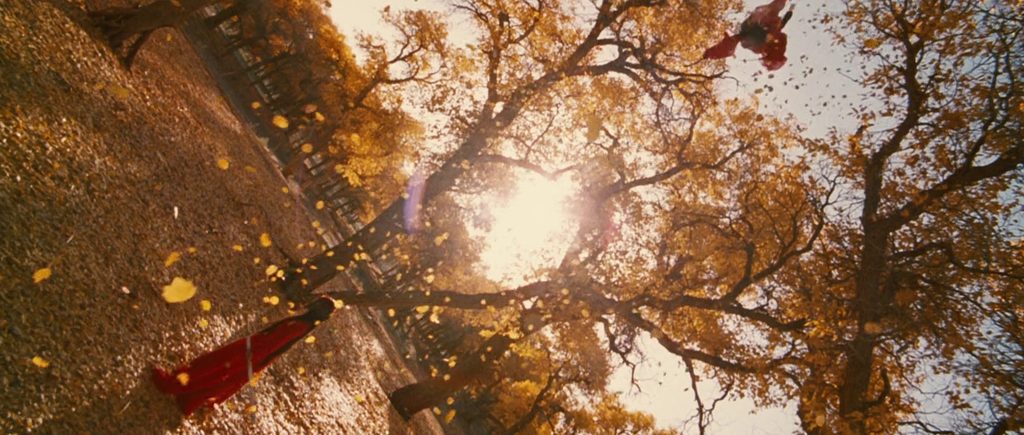
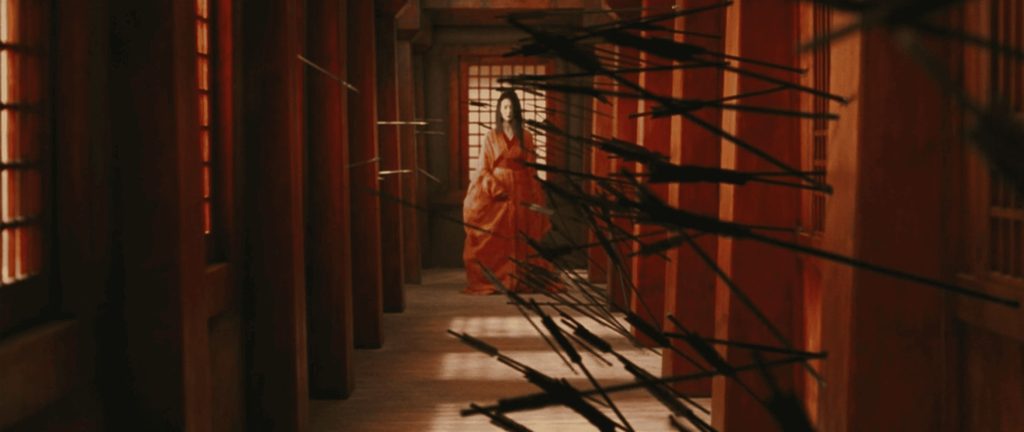
Standing on opposite sides of a red corridor rapidly filling with arrows, Nameless offers Snow his assistance, and together they demonstrate extraordinary agility in deflecting the volleys mid-flight. He has come seeking a scroll from Sword that might reveal his secrets of swordsmanship, and now as he infiltrates their circle, he provokes Sword’s jealousy through the rumour that Sky is in love with Snow. Once he has effectively driven Sword into a retaliatory sexual encounter with his infatuated assistant Moon, Nameless barely has to interfere any further – after Snow coldly regards their bodies moving beneath burgundy silk sheets, she slays Sword shortly thereafter, thus drawing a grieving Moon into a duel. Their red garments cut out striking figures against the yellow, autumnal trees where they nimbly leap between branches in swirling gusts of leaves, and when Moon finally succumbs to her wounds, Zhang mournfully fades the foliage into the same crimson wash as of the rest of their world.
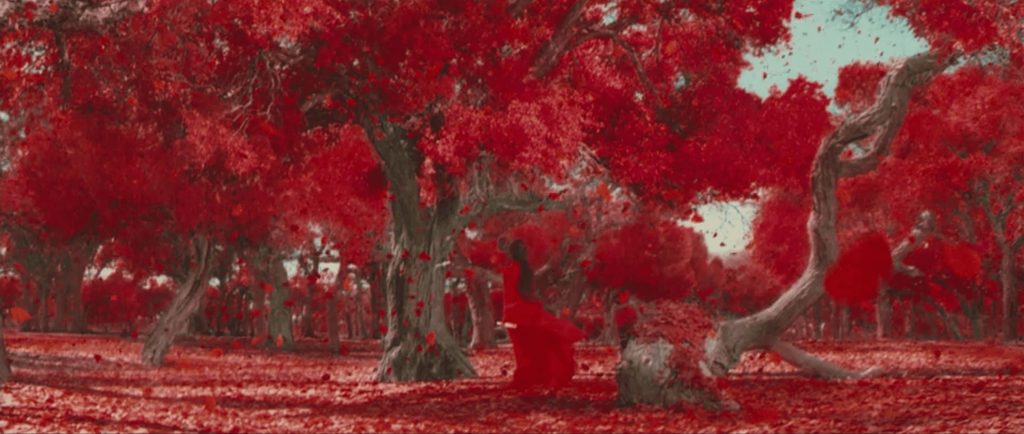
Nameless’ plan worked, he recounts to the King. Snow was emotional and unfocused as they fought before his soldiers the following day, leading to her swift defeat, though the King is not so easily convinced by his tale. Skilled assassins are not so easily manipulated, he argues, and Sky would never lose a duel unless it were planned. There begins the next retelling of this story, this time casting it in cool blues – the colour of calm reason, guiding Nameless, Sky, Snow, and Sword forward in their conspiracy to slay the King.
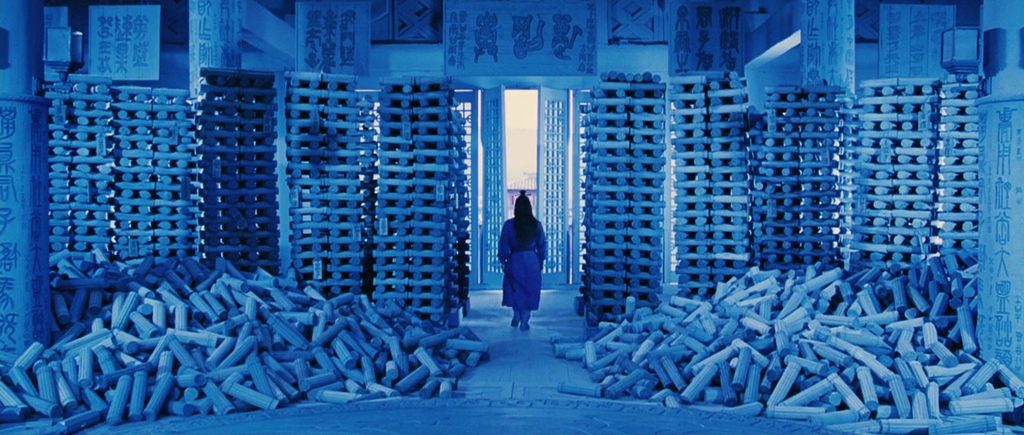
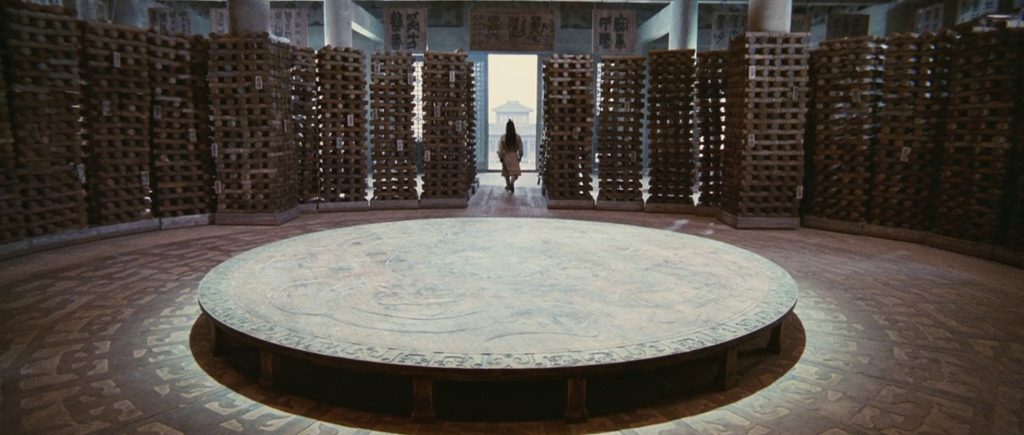
After all, Nameless is well-trained in a lethal manoeuvre which unfailingly kills a target within ten paces, and all he requires is the credentials to place him within striking distance of the throne. Recognising Sky’s sacrifice to achieve this goal, Snow and Sword meet Nameless within a circular library of bamboo-strip scrolls, though no longer does it burn with a fiery red palette. Handsomely swathed in cobalt, it hosts Nameless’ demonstration of his remarkable talent as he flies swiftly around its edges, severing all the scrolls’ binding cords in the time it takes a small bowl to be tossed in the air and land precisely on his sword. One assassin must die if his scheme is to work, he explains, and as Snow approaches her death in the duel that Nameless previously recounted, she is enveloped in the desert’s dusty, cerulean haze.
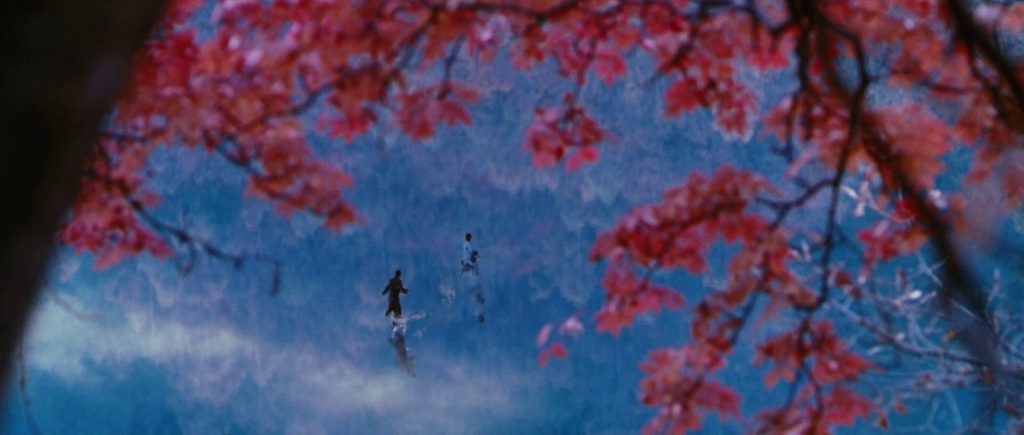
There are many breathtaking combat sequences in Hero, some even taking place entirely within Nameless’ mind as he predicts his opponent’s moves, though perhaps none so evocative as his skirmish with Sword upon a serene, mountain-bound lake. Bound by honour to avenge his lover’s death, Sword fights without any true malice, and Zhang matches his composure in meditative long dissolves, slow-motion choreography, and cutaways to water as it moves with their swinging blades. Never quite breaking the lake’s mirrored surface, their bodies glide in balletic coordination, framed by distant red blossoms and refracted from shots taken beneath the water itself.
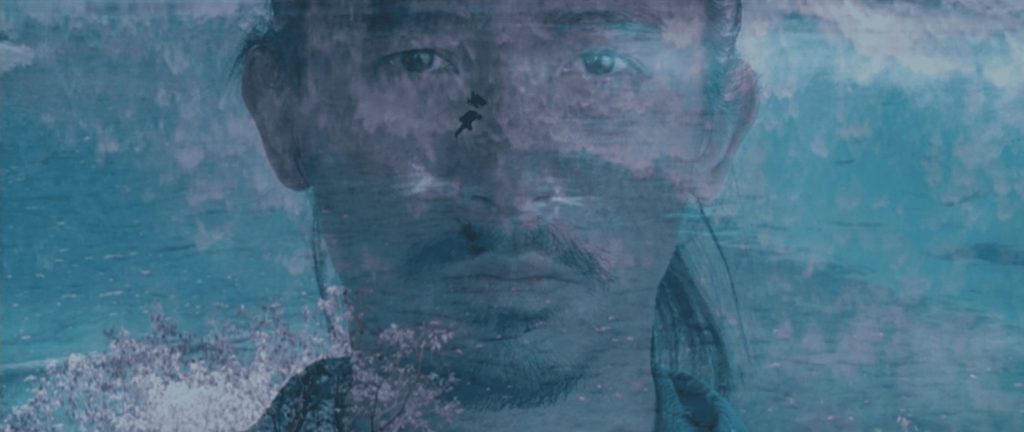
There ends the King’s interpretation of the tale, as Sword lays down his life to be with Snow, yet Zhang is far from done interrogating its truth. The King’s account was mostly correct, Nameless confesses, though the conversation that took place in the library was neither a ruse to divide the assassins nor a plan for their sacrifice. Gone are the saturated reds and blues of emotive subjectivity, and in their place, Zhang pares his production design back to white – clean, honest, and impartial in its lightened clarity. Wrapped in this neutralised space, Nameless is sincere in his intention, explaining a technique that may pierce one’s body with a sword yet spare their life by missing every organ. Performed upon Snow in front of the King’s soldiers, it would credibly simulate her death without real harm, yet Sword is not so easily drawn into their scheme.
Zhang wields incredible command over his formal structure as Hero enters another layer of flashback, this time handing the narration to Sword as he recalls his encounter with the King three years prior. Green is the colour of health and harmony in Chinese culture, and here as Sword’s loathing of the King turns to mercy, it flows through mossy lakes, lush robes, and the giant, billowing fabrics of the throne room he successfully penetrates. Having sliced through an entire army of warriors outside, he now faces the man he believes to be tyrant, and who puts up a worthy fight that nearly matches his own discipline. Leaving him with little more than a cut however, Sword ultimately retreats, frustrating Snow who remains stubborn in her resolve against the King.
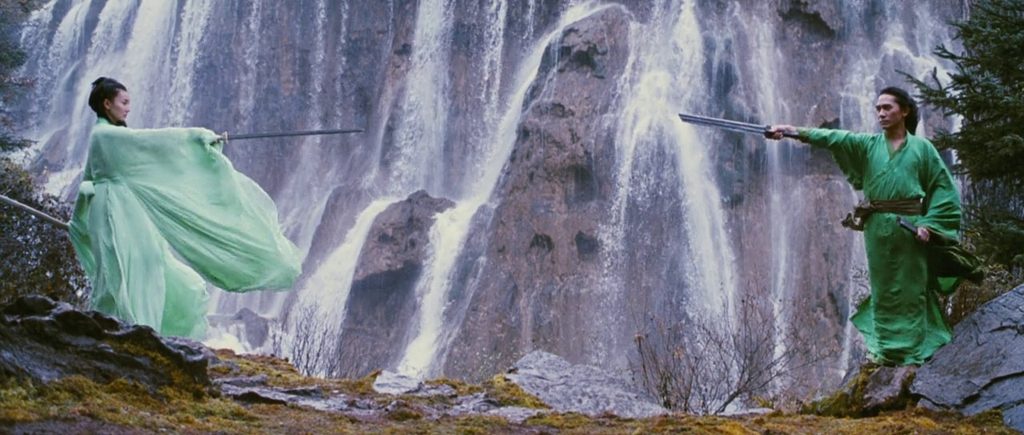
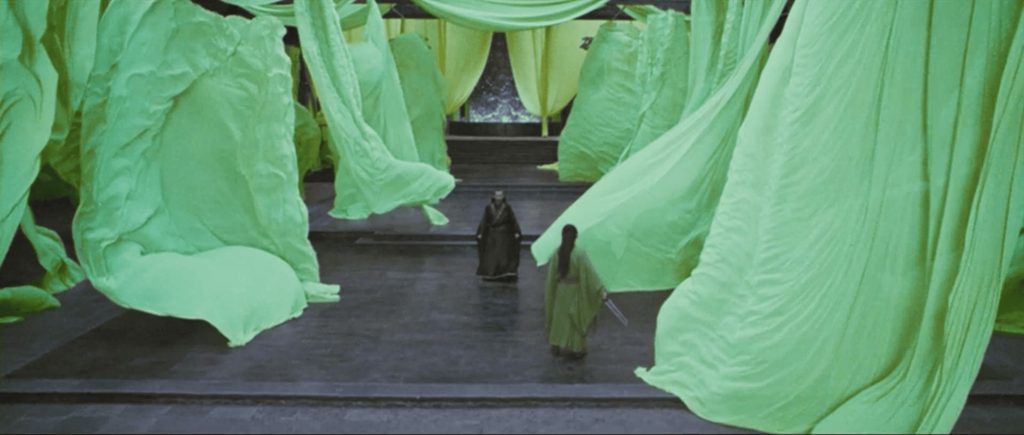
Indeed, Nameless also intended to fulfil this assassination for the good of the country, yet a simple philosophy has similarly moved him to compassion. The scroll he sought from Sword when he first came to the calligraphy school does not reveal any secret technique, but rather a swordsman’s highest ideal, achieved through three stages of mastery.
In the first, man and the sword become one, able to turn a simple blade of grass into a lethal weapon. In the second, the sword resides purely in the heart, allowing a warrior to slay a foe from afar. Finally, in the third, there is no need for a sword at all – the desire to kill has been extinguished, and peace prevails.
Therein lies the meaning of the single Chinese character adorning Nameless’ scroll, perfected through calligraphy and martial philosophy. ‘Tianxia’ has often been translated as ‘Our Land’, ‘Under Heaven’, or ‘The World’, yet rather than an expression of patriotism, it encompasses humanity as a single, universal order. People will die in the King’s effort to unite China’s warring states, yet if not for his campaign of conquest, then countless more will perish in endless conflict.
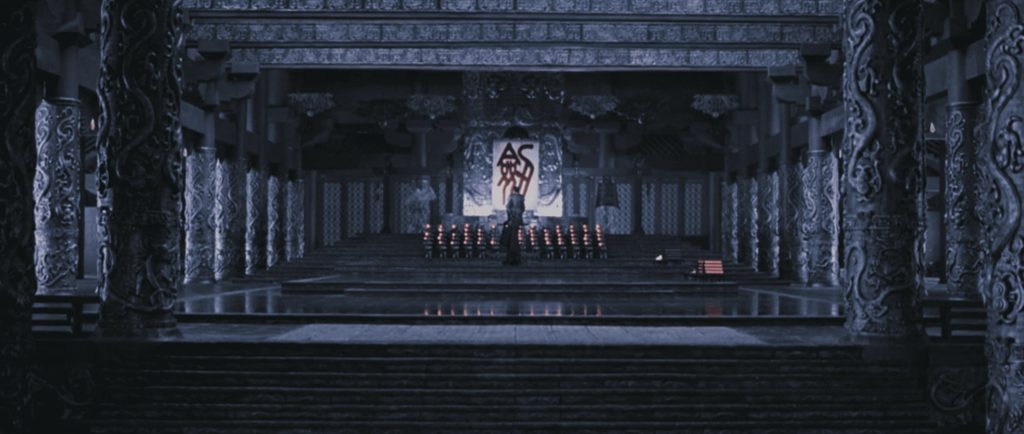
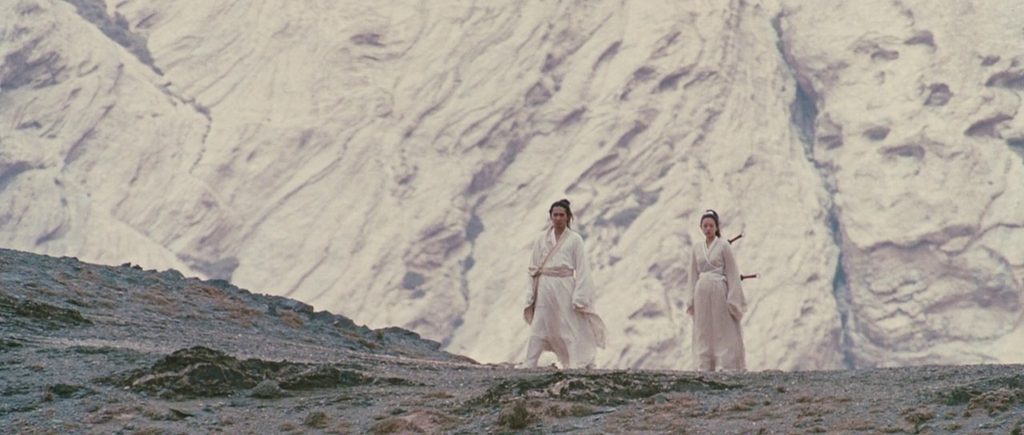
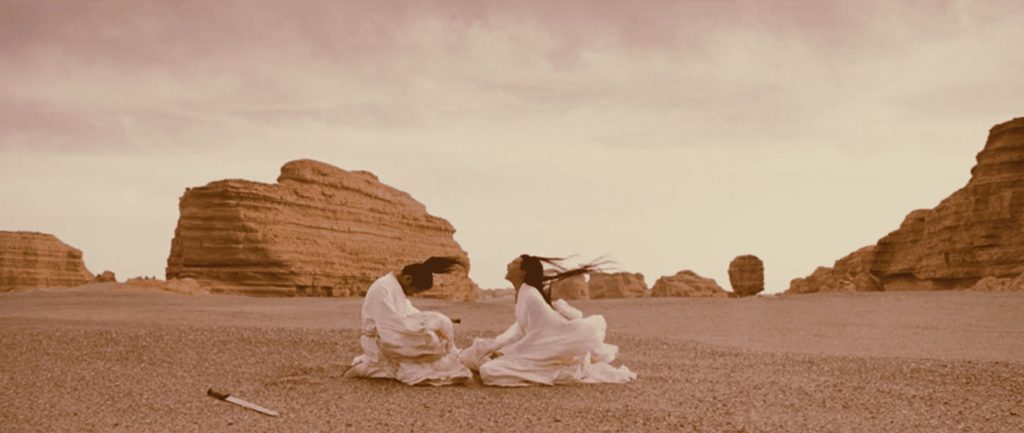
As spectacular as Nameless and his fellow assassins may be in their mythic abilities, each capable of bending history in whichever direction they choose, Hero ultimately recognises the necessity of surrendering individualism to collective peace. Nameless surely accepted that the moment he entered the throne room, aware that even if he earned the King’s admiration, he would still be executed for treason. While he stoically meets his end, we also witness Sword and Snow duel one final time in a blinding white desert, though they too ultimately die by the same blade in each other’s arms. Personal conviction may perish with the rise of national unity in Hero, yet through its remarkable chromatic and dialectical form, Zhang effectively choreographs the convergence of competing truths into a harmonious, unified world under heaven.
Hero is not currently streaming in Australia.
Pingback: The Best Films of the 2000s Decade – Scene by Green
Pingback: The Best 250 Films of All Time – Scene by Green
Pingback: The 100 Best Shot Films of All Time – Scene by Green
Pingback: The 50 Best Cinematographers of All Time – Scene by Green
Pingback: The 100 Best Film Scores of All Time – Scene by Green
Pingback: The 50 Best Film Composers of All Time – Scene by Green