Zach Cregger | 1hr 34min

By nature of such an interactive medium, there is an inherent obstacle in translating video games to cinema. The agency of controlling a character is fundamentally different from passively watching a mission unfold, and far too often we find such adaptations prioritising the mythology of their source material over the experience of playing it. Where Zach Cregger succeeds in rebooting Resident Evil as a film franchise is in addressing that key disconnect – it is the thrill of overcoming obstacles which drives the game after all, and there is no need to complicate our protagonist’s quest to deliver a valuable medical sample with extraneous exposition. As it is, the narrative is refreshingly restrained in its efficiency, packing an entire survival-horror campaign into a tight 90 minutes that is at once patient and remarkably propulsive.
Just as important to Cregger’s bold conception, there is nothing about medical courier Bryan that suggests the makings of an action hero. This is largely a one-man show for Austin Abrams, who carries Resident Evil with the naivety of a self-confessed gamer that has never so much as shot a gun before. He is not equipped to overcome every hurdle he encounters, as even beyond the ever-present threat of mutated zombies, Cregger delights in confronting him with electric fences, endless flights of stairs, and padlocks that are not so easily overcome with bullets. Running gags that play on video game logic culminate in delicious payoffs, and as Abrams tumbles from great heights and staggers on with deadpan resignation, he begins to resemble Buster Keaton more than Bruce Willis. The nightmare he has landed in was not the assignment he was given when he picked up an urgent delivery from St. George’s Hospital, yet nevertheless, he pushes forward to see the job through.
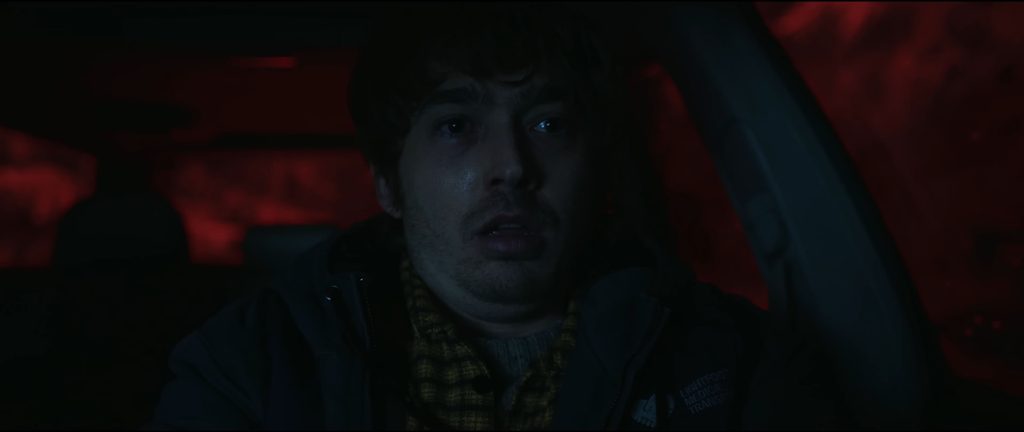
Even as Cregger embraces the darkly comedic potential of Resident Evil’s premise though, still he remains acutely focused on its central horror. The zombies of these games diverge drastically from virtually every other iteration of the monsters – rather than reducing humans to festering corpses, the virus accidentally unleashed by the Umbrella Corporation chaotically rewrites each victim’s biology, granting them a grotesque array of unique features. Without attempting to explain the mechanics, this creature design may be the greatest act of worldbuilding in the film, as we learn of their unique ability to regenerate and heal through assimilating other bodies. Instead of overloading us with swarms of zombies too, Cregger takes his time exploring the creative variations of individual encounters, keeping dialogue largely to Abrams’ muttered curses while unfolding the story through visual discovery.
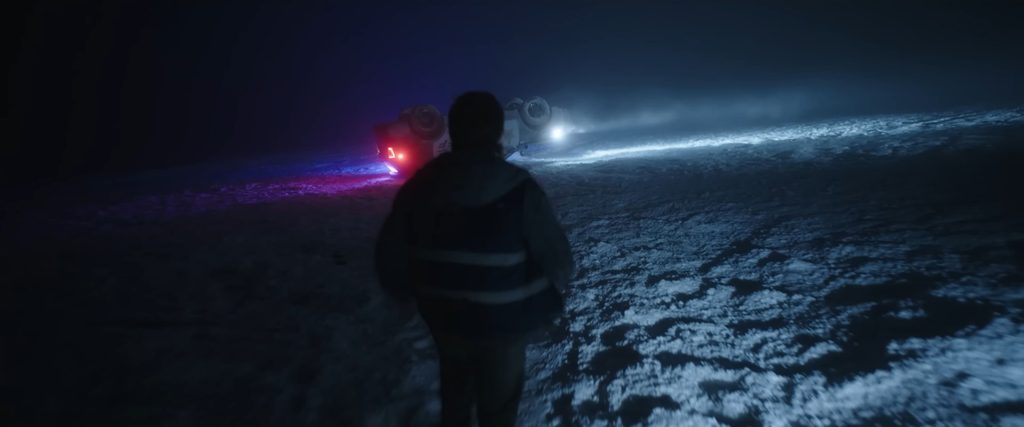
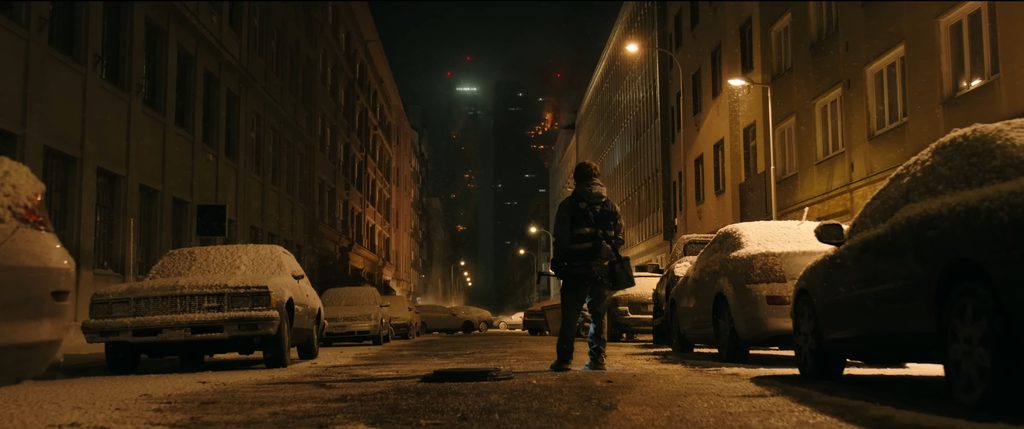
Using Bryan as the vessel through which we navigate this dystopia, Resident Evil often keeps its camera tethered to his body, deliberately evoking video game aesthetics as we shift between first person POV shots behind guns and third person tracking shots. Cregger’s lighting is similarly dynamic across farmhouses and skyscrapers alike, bathing them in the jaundiced, low-key glow of house and streetlamps, while car headlights and brake lights carve dark roads into stark white and ominous red washes. These flourishes lend the film a playful tactility, offering an immersion that never lets us feel entirely safe, though it is his body horror which gives his stylistic pastiche its most unsettling edge. Through zombies which spew acid, unleash swarms of rats from their bellies, and lash out with writhing tentacles, we relish the vile spectacle – and despite our protagonist’s haplessness, his resourcefulness proves invaluable in turning their respective abilities and weaknesses against each other.

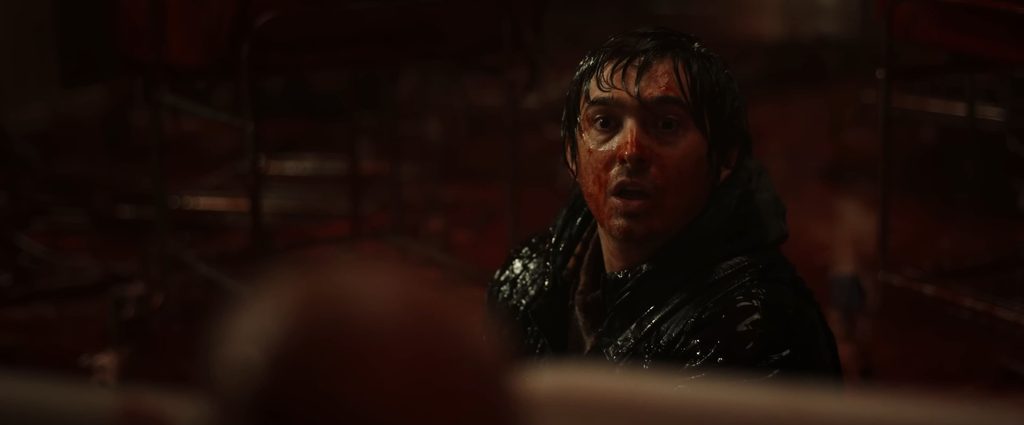
On a subtextual level as well, these creatures gradually take on a deeper resonance within the context of Bryan’s insecurities, catching him at a crossroads in life. His concerns about becoming a father may not be a dominant plot thread, being explicitly referenced on only three occasions, yet it is telling that so many of Resident Evil’s monsters reflect a different facet of that fear. Genre expectations are frequently subverted here, teasing a team-up that seemingly pushes Bryan towards fatherly responsibility, only to immediately confront him with the devastating alternative. The hospital maternity ward of bulging sacs and long-limbed babies plays on that same dread, though it is that rolling amalgamation of tangled limbs that becomes Cregger’s most enduring metaphor. Stalking Bryan throughout the film and growing with each appearance, this writhing mass effectively becomes an inescapable shadow of his anxieties, threatening to absorb him into a larger unit like a suffocating family.
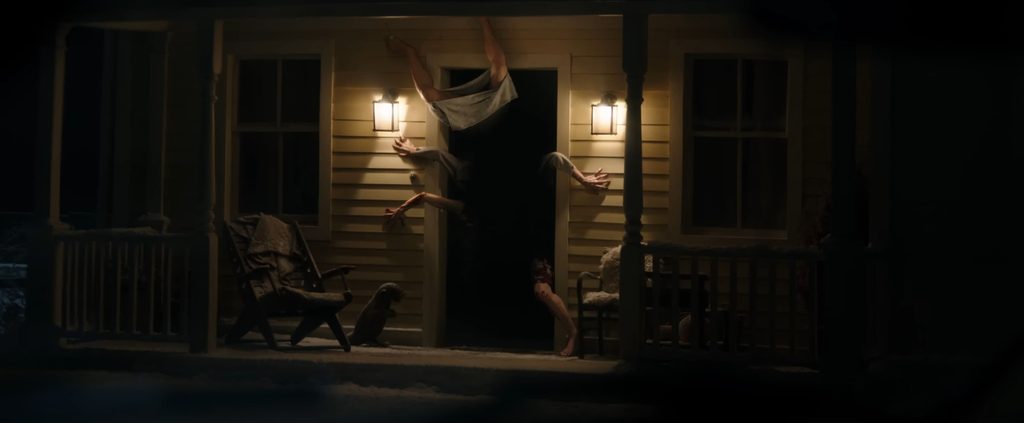
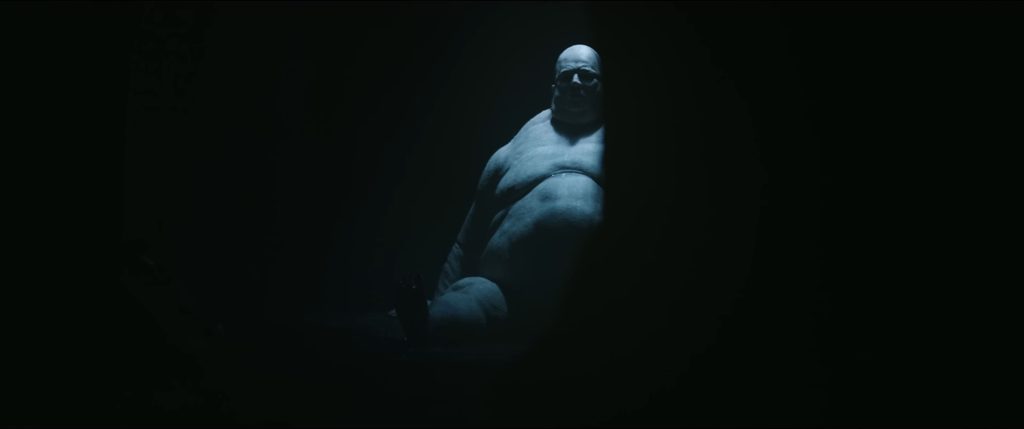
Whatever this infection may be, it thoroughly destroys the ordinary boundaries of the human body, and Cregger makes it exceedingly clear that no one’s plot armour is strong enough to withstand its terrors. Hardened soldiers, brilliant scientists, and innocent civilians are all fair game, leaving Bryan with precious few allies he can safely rely upon, while the odds of his own survival shrink with each step towards his destination. It takes a horror craftsman unburdened by convention to recognise Resident Evil’s appeal beyond the game controller, and in the lean, disciplined construction of Cregger’s homage, the barest essentials of survival are enough to sustain a story as spare as it is gruelling.
Resident Evil is currently playing in cinemas.