
Zhang Yimou | 1hr 50min

When Qiu Ju approaches the local police to register a complaint against the village chief, she seeks something far more fundamental than financial restitution. After a dispute over building regulations ends with him kicking her husband Qinglai in the groin, putting him out of work for several days, 200 yuan is the price he is ordered to pay – though compensation is beside the point. Punitive justice alone does not restore the dignity that has been lost, and the chief’s refusal to acknowledge any wrongdoing renders the settlement meaningless. For moral order to be set right, a simple, sincere apology must given, recognising the injury that he inflicted upon a poor family whose only safeguard is its honour.
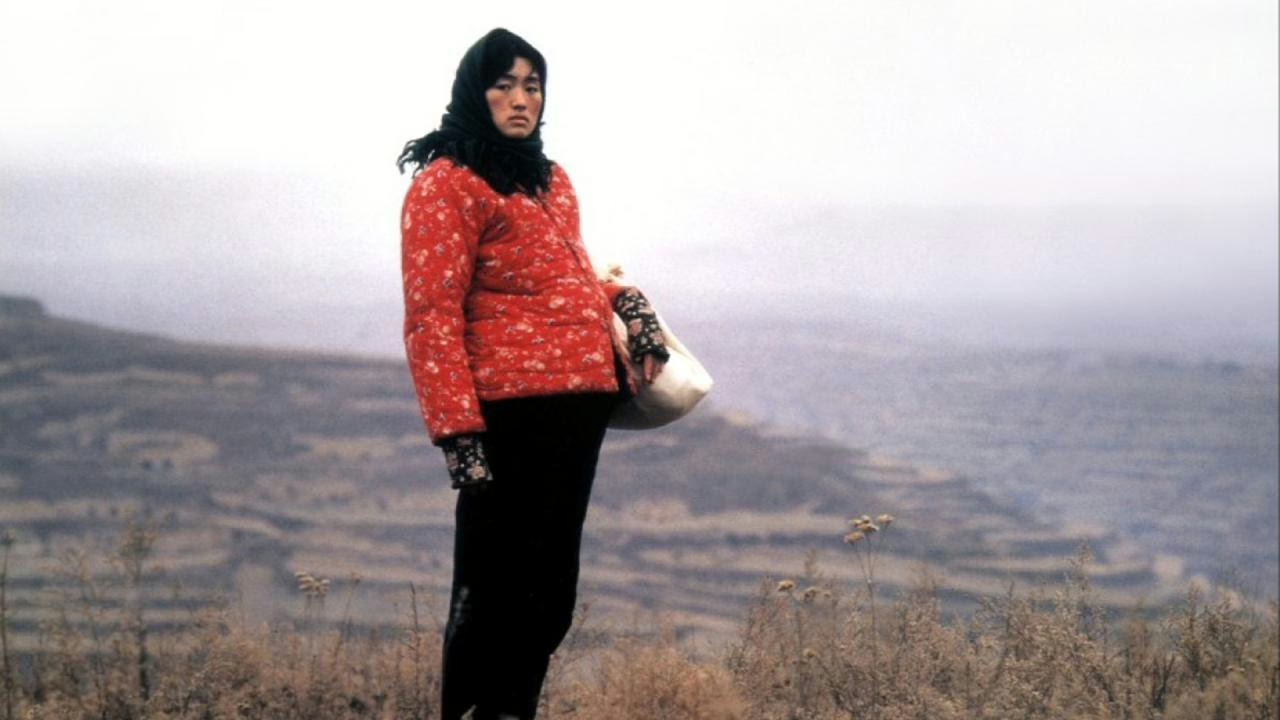
Unfortunately, bureaucracy is an unwieldy machine of formality in The Story of Qiu Ju. Departing wholly from the aestheticised period settings of his earlier work, Zhang Yimou opts for a far more neorealist vision of China’s village life, situated in the nation’s post-Cultural Revolution era as it transitions toward reform and modernisation. While the chief represents an older style of authority common in rural areas, the administrative hierarchy that Qiu Ju appeals to signals a state increasingly committed to official legal process, though she is not exactly well-equipped to navigate such complex procedures. Even reaching the nearest town to find authorities who sit above the chief requires a long, bitterly cold trek down desolate country roads, carrying her further from home the more she presses her case.

That Qiu Ju is visibly pregnant only compounds the physical strain of her pursuit as well. Zhang offers no lush, colourful filters to soften her story – his muse Gong Li is as unglamorous as ever here, her face dirtied and her ill-fitting clothes buttoned up tight around a swelling belly. The title The Story of Qiu Ju may carry the cadence of a Chinese folk tale, and the narrative simplicity of its protagonist’s plight even recalls the structure of one, yet Zhang’s unsentimental social realism firmly denies the moral resolution we might expect from such a tale. Each level of bureaucratic authority appears to work exactly as it should, and even the chief himself is shaded with sympathetic nuance, so why are we so frustrated with a system ostensibly designed to uphold order and fairness?
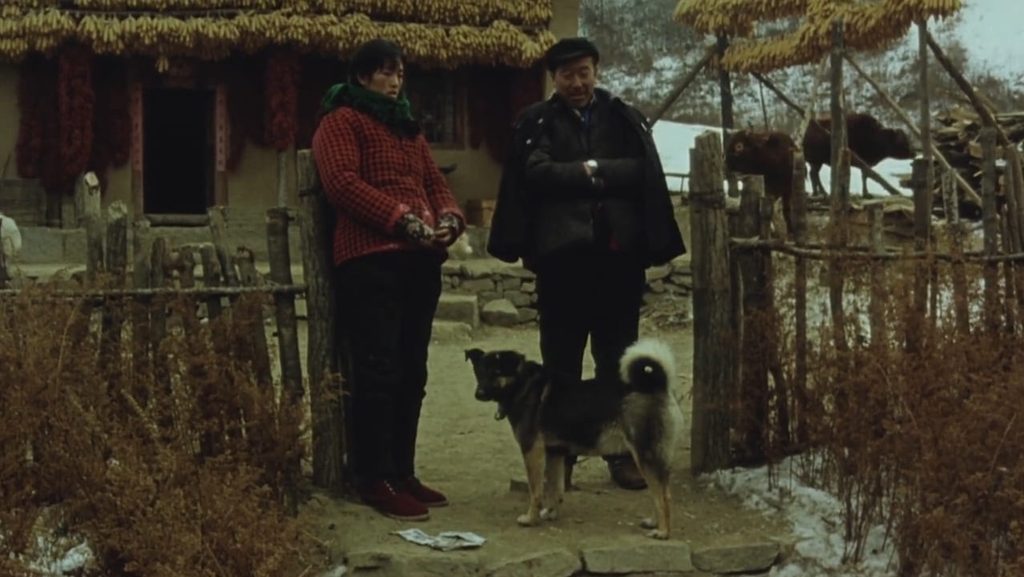
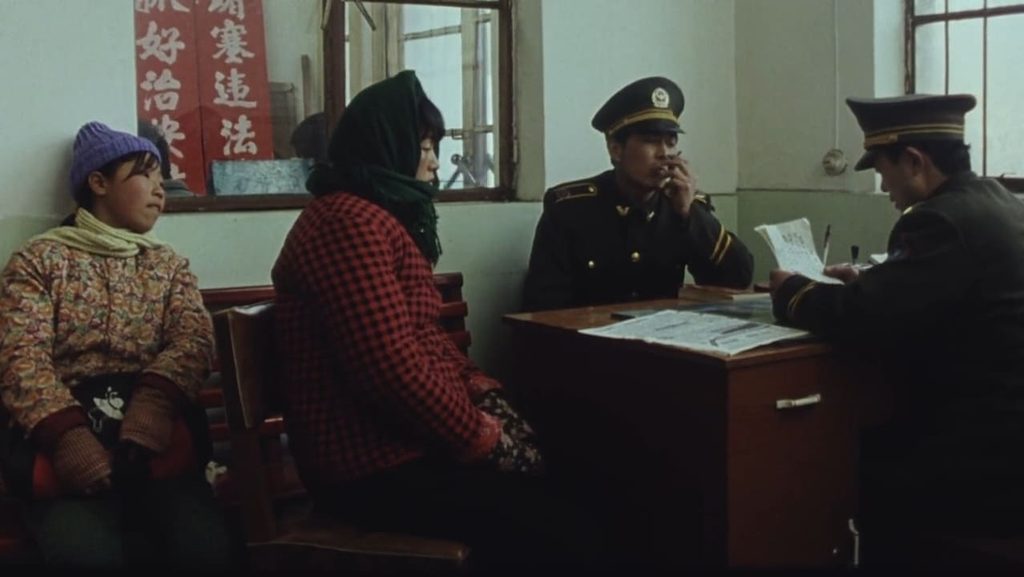
To answer this, one must examine Qiu Ju as a symbol of provincial society, uneducated on the intricacies of formal governance yet resolutely holding to her belief in accountability. Seeking assistance from a local lawyer, she is offered a harsh, uncompromising complaint letter, though she insists on something milder – she’s not looking to ruin the chief’s life after all. Unfortunately, the letter does little to convince the county authorities that the police’s ruling of monetary compensation was sufficient, and so all she can do is escalate her case to the city where righteousness might prevail.
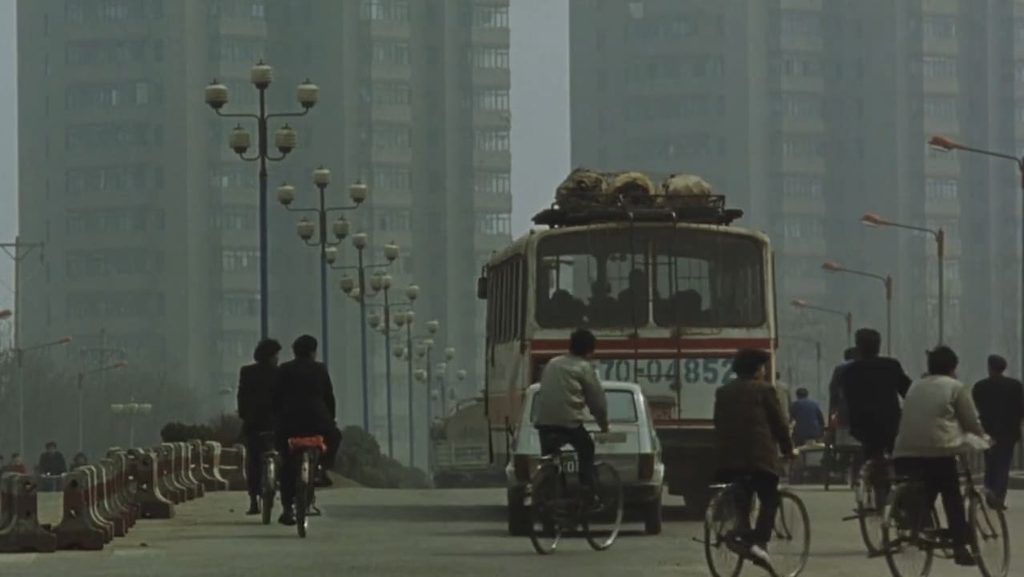
Here, The Story of Qiu Ju undertakes a major geographical shift. The provincial capital is much more than a day trip from her village, and so after wheeling her wagon through snow, hitching a ride on a truck, and catching a bus, she finds herself lost in a crowded, unfamiliar cityscape. Along with her sister-in-law Meizi, the two are visually consumed by the masses of people pushing through the streets, and easily scammed by unscrupulous rickshaw drivers looking to exploit their naivety. The cheapest lodging here is a brick bed shared with strangers, yet its owner is at least kind enough to offer advice on approaching the Public Security Bureau – if they hope to reach its director, they must personally appeal to him with offerings.
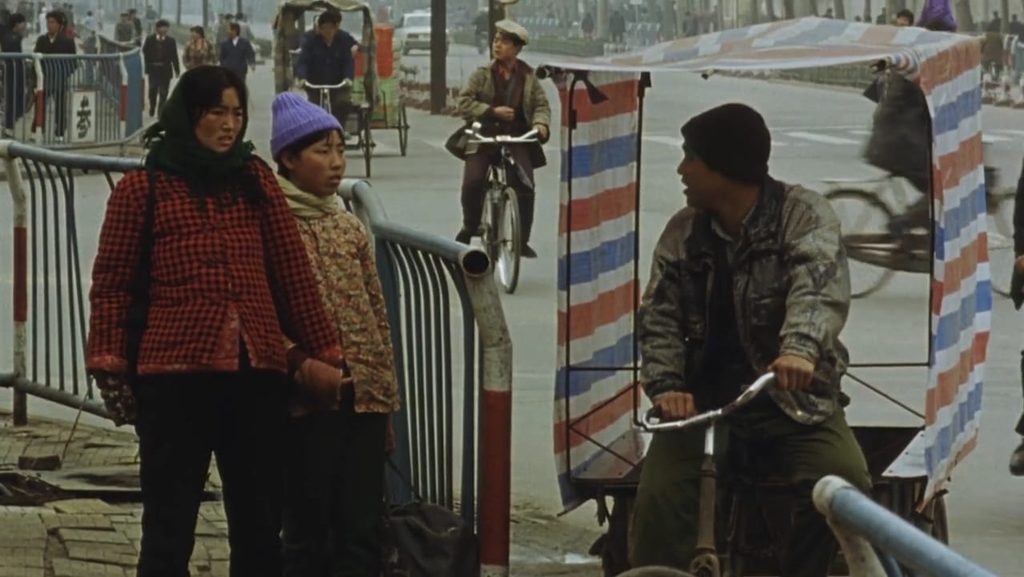
Whoever we imagined might head up this government office, it certainly isn’t the kind, principled man who turns away Qiu Ju’s gifts, sincerely considers her case, and safely escorts her back to her lodging. How could an agency under such thoughtful direction neglect the needs of ordinary citizens, she wonders, or allow injustice to persist? Upon receiving a letter that simply orders the chief to pay an additional 50 yuan, the answer becomes painfully clear. It is useless to expect meaningful recourse from official channels, no matter how compassionate their administrators may be. Even they are working within the strict confines of a system designed to protect itself over the people it serves.
From there, the only avenue left for her to seek justice is the courtroom, the director advises Qiu Ju. He bears her no ill will when the district lawyer recommends she sue the Public Security Bureau before targeting the chief, yet the resolve that once drove her forward in her quest is gone. Qiu Ju is worn-out and disillusioned that her grievance will ever be resolved, though even more unbearably, she is burdened by the guilt that innocent people may suffer because of her insistence.
Still, when the court rules in favour of the Public Security Bureau, ahead she forges with an appeal to an even higher court. Officials visit Qiu Ju’s village to medically examine her husband for evidence of injuries from the confrontation, yet these upper levels of bureaucracy move slowly, and soon enough the matter loses its urgency. Grudges soften with time, and on New Year’s Eve when she goes into labour, it is the chief who rallies men to carry her to the town hospital.
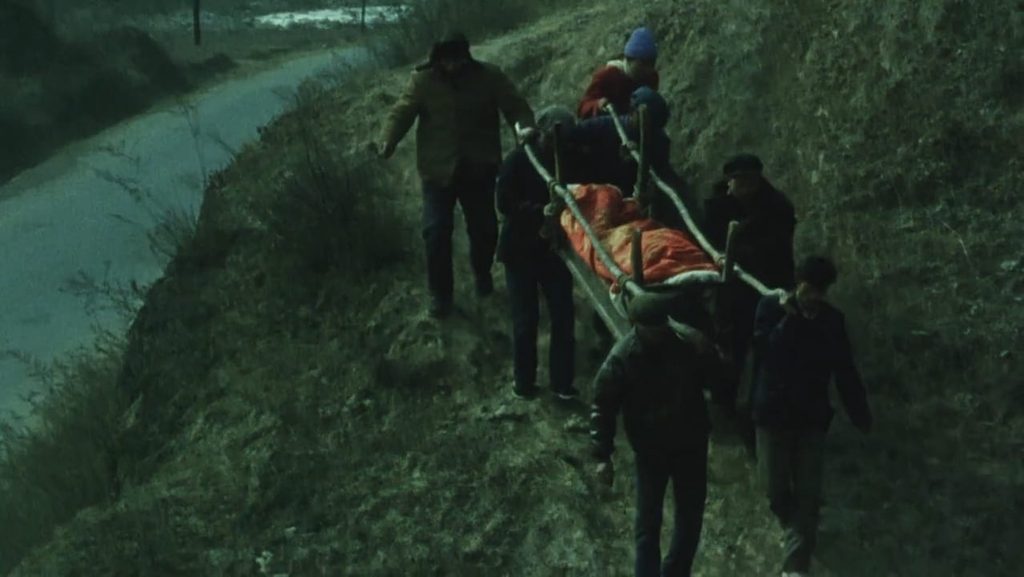
Qiu Ju does not take this gesture of good will lightly either. At the one-month celebration of her baby’s birth, she extends an invitation to the man she once relentlessly pursued, only to find a police officer turning up instead. Medical examinations have proven that Qinglai indeed suffered multiple broken ribs from the assault, he reveals, and Qiu Ju’s quest for accountability is successful – the chief has been arrested and sentenced to fifteen days in jail.
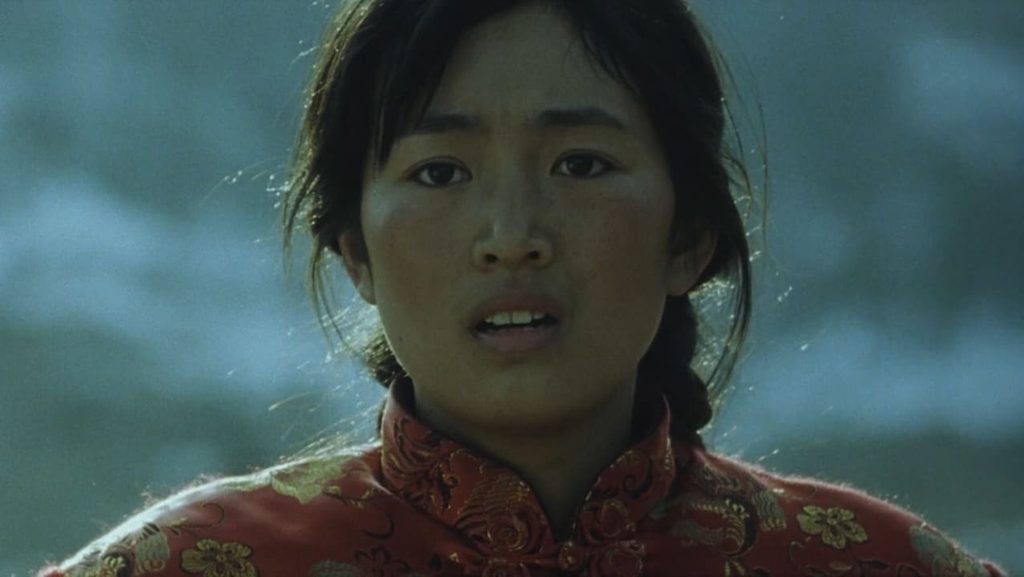
Victory has never tasted so bitter as it does in this conclusion to Zhang’s unsparing portrait of moral persistence. There is no apology, and no real closure for Qiu Ju as the law passes a judgement she never truly desired. Chasing the sound of fading sirens, her guilty expression is held in a haunting freeze frame, revealing the troubled conscience of a woman who has recovered no honour in such a hollow triumph. The China that once seemed governed by custom and community is swallowed up by sprawling bureaucracy in The Story of Qiu Ju, and through this cultural transformation, Zhang laments the loss of its simple, unsullied dignity.
The Story of Qiu Ju is not currently available to stream in Australia.