
Satyajit Ray | 1hr 14min

When scriptwriter Amitabha finds himself stranded in a small town, taking refuge in a tea plantation, and unexpectedly crossing paths with his former love, the years seem to dissipate in an instant. Though she is married Bimal, the gracious man who shelters him, still he finds himself swept away in cherished memories. There, days of youthful longing return with aching clarity, bathed in the warmth of romantic nostalgia and heartache.
For Karuna, the encounter stirs something far less certain. “What an awful day,” she proclaims when he arrives, averting his gaze and quickly moving to another room. The cold reticence she displays seems to seal their past shut, yet as he watches her shadow pacing back forth through the light beneath his bedroom door, her own hesitancy trembles. When Satyajit Ray isn’t absorbing us into Amitabha’s evocative memories in The Coward, this tense, elliptical relationship between old flames unfolds in glances and carefully staged blocking, choreographing an ambiguous dance of expression and tension that we may never fully decipher.
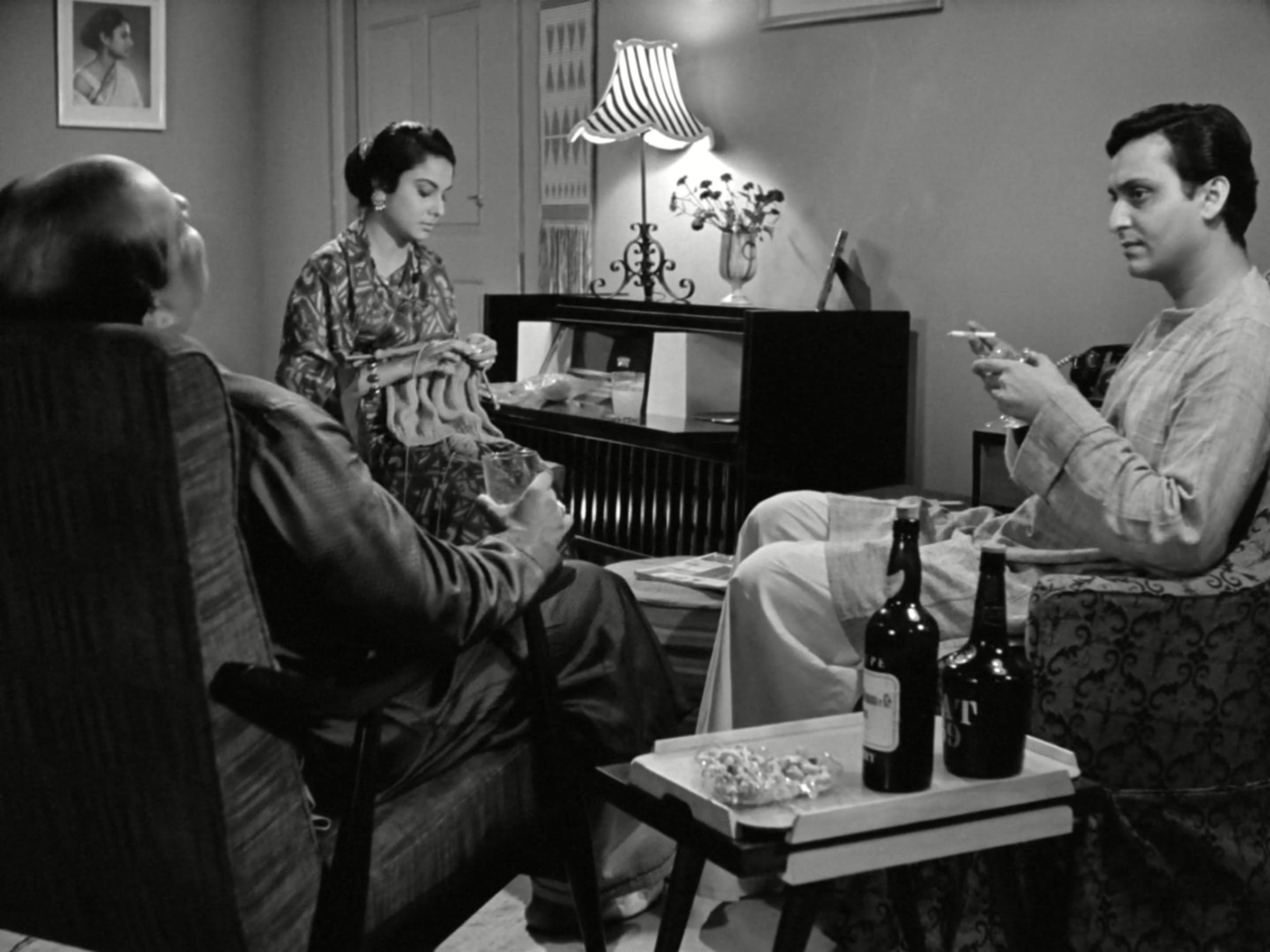
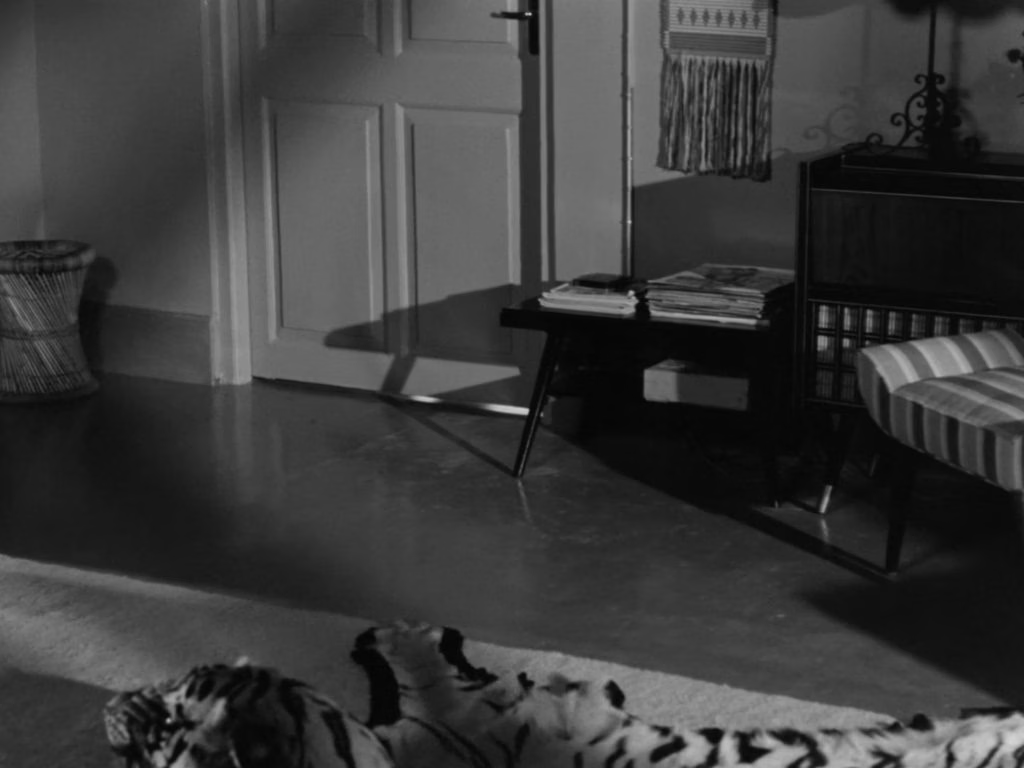
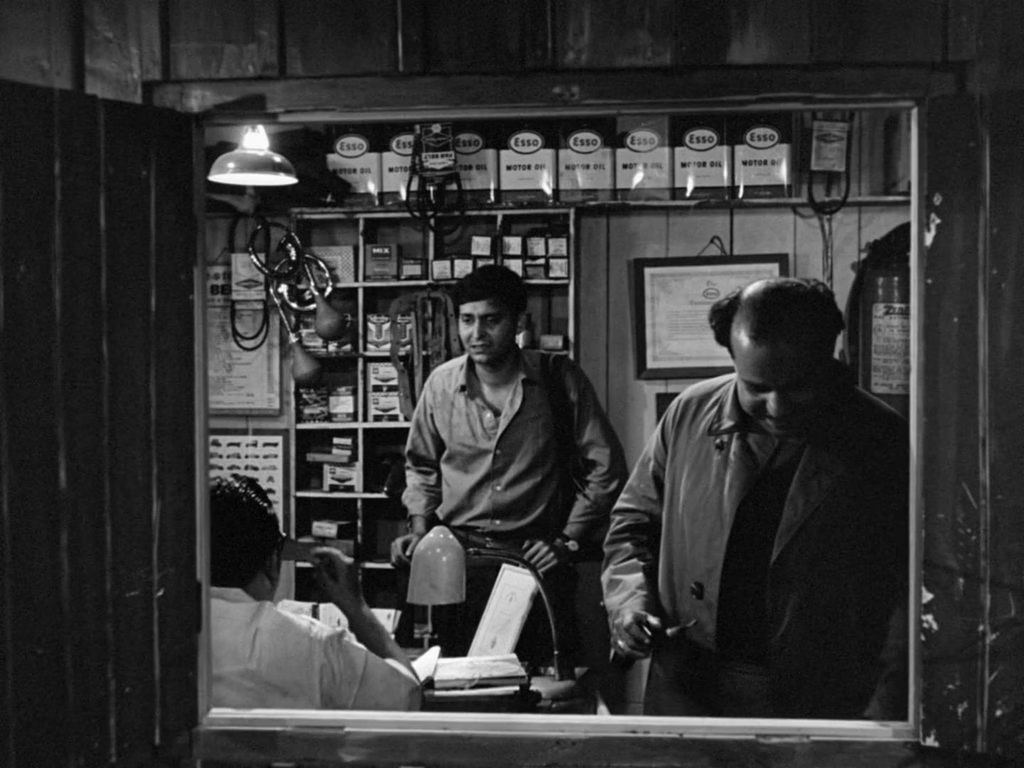
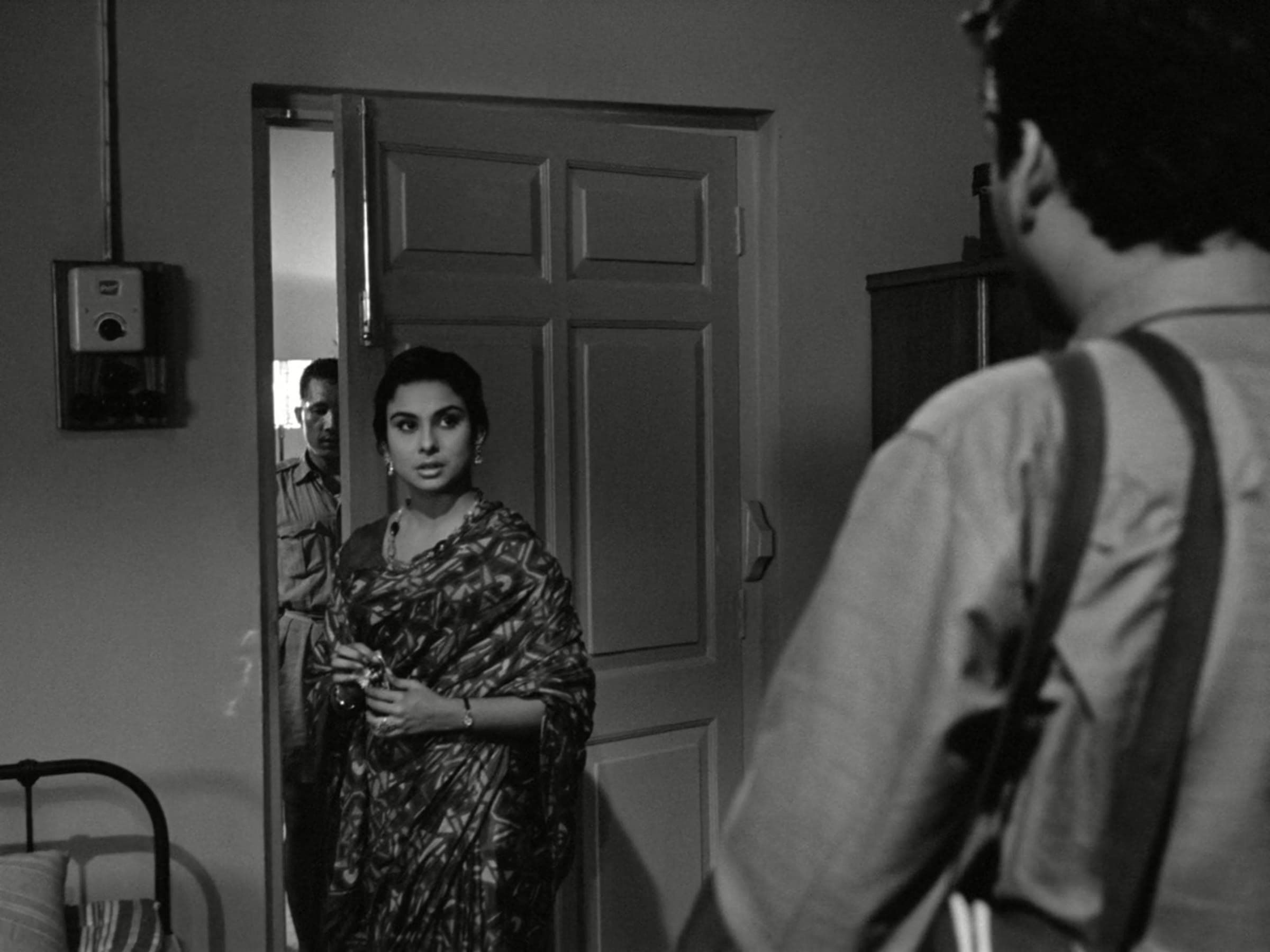
Especially in the presence of the kind but clueless Bimal, this is a secret which must be deeply buried, and Ray delights in tracing its impact upon all three players in his chamber piece. Ray’s fluid camerawork is clearly indebted to Jean Renoir, unfolding the opening shot in a long take that follows Amitabha into a mechanic shop, and eventually settling on a window frame where his run-in with Bimal takes centre stage. Later when Amitabha attempts his first private conversation with Karuna, Ray’s depth of field especially flourishes across three distinct layers, with the furthest keeping Bimal visible through a narrow crack in the door.
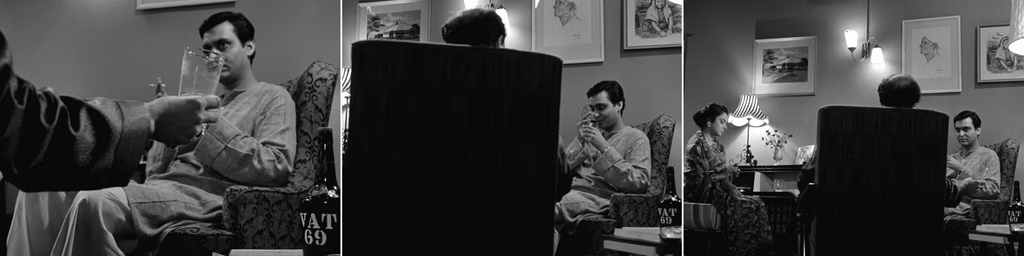
As all three relax in the lounge though, his presence becomes visually insistent, beginning with a low angle of Amitabha that hangs Bimal’s hand and drinking glass in front of his face. Ray’s camera dollies backwards to dominate the frame with Bimal’s chair, pushing Amitabha off to the side, and then again into a wide shot that heavily imposes his oblivious authority between the former lovers. Still, not even this can keep Amitabha from attempting some sort of reconnection, confidentially asking if she is happy in her marriage and desperately wishing for a negative answer. While he confesses his inability to fall in love again after their breakup, she continues to dance around the question of her feelings, before settling on a cryptic deflection.
“Let it be a mystery.”
If there is anywhere that Amitabha might find clarity, then it is through those memories which surface in transitions, each seamlessly interlacing past and present. The sleeping pills he borrowed from Karuna aren’t enough to quell his troubled thoughts, as the camera’s slow zoom into his uneasy face is abruptly broken by a smash cut of her walking through his door – though Ray is quick to reveal that we have been taken back to the moment of their separation. Her disapproving uncle is withdrawing her from art school and taking her far away, she explains, perturbed that he seemingly has her entire life planned out.
The Coward may be the weakest of Ray’s three collaborations with Madhabi Mukherjee, yet still she commands the screen across its short run time, radiating a sensitive vulnerability in flashbacks that she skilfully masks in the present-day scenes. With tear streaks running down her face and her gaze wandering off in the distance, she ponders the possibility of marriage to escape her uncle’s rigid control, only for Amitabha to recoil at the suggestion. “Just give me a little more time,” he begs, unable to make the commitment which could save their relationship – but for Karuna, his hesitancy is reason enough to walk away.
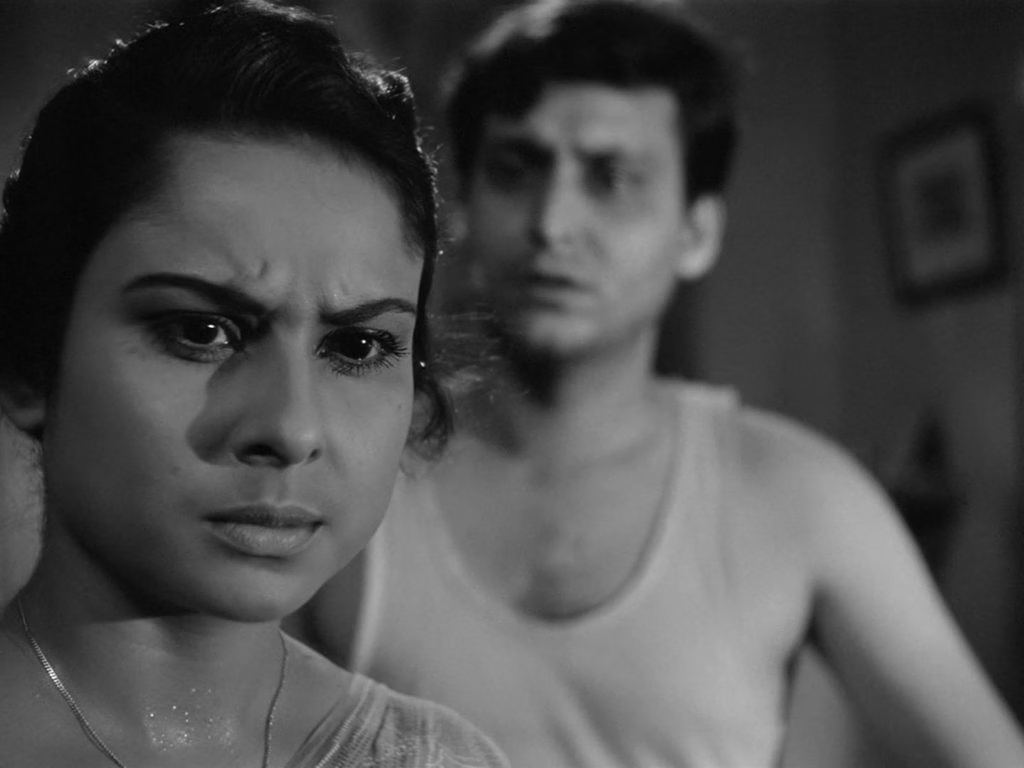
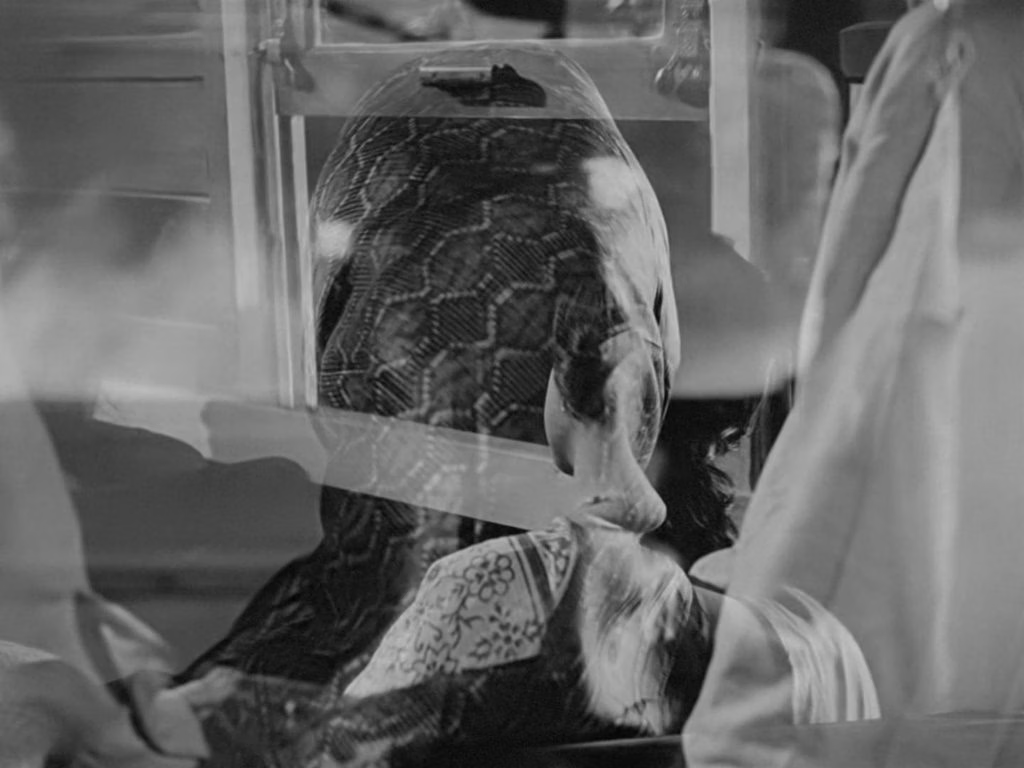
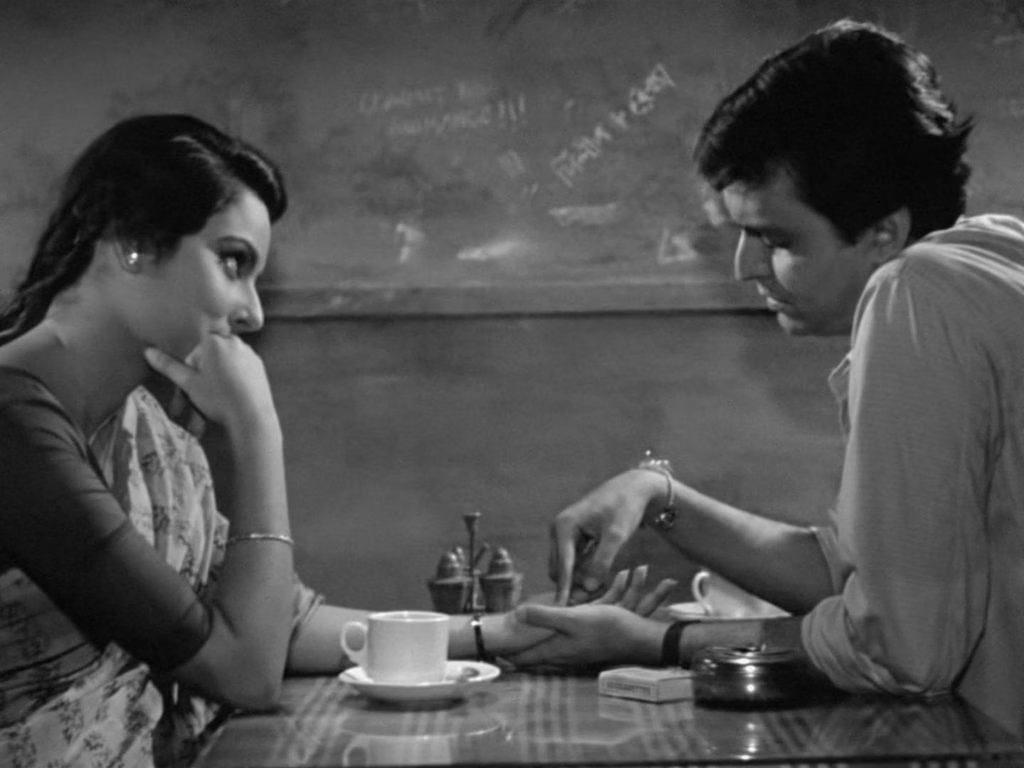
Through this pained memory, Ray poignantly reveals the coward of his film’s title, paralysed by the fear of lifelong devotion. This a choice that has haunted him every day of his life since, and now as he accepts Bimal’s offer of a lift to the train station, the long drive becomes another nostalgic meditation. Gazing at Karuna’s head from the back seat, her expression is concealed, yet Ray’s match cut nevertheless transports us to the first time he laid eyes on her – glimpsed from this very angle, as fate would have it. There, he kindly paid for her bus ticket when the inspector caught her riding without a fare, and as she affectionately lays her hand on Bimal in the present, he again slips back into a fond recollection of reading her palm.
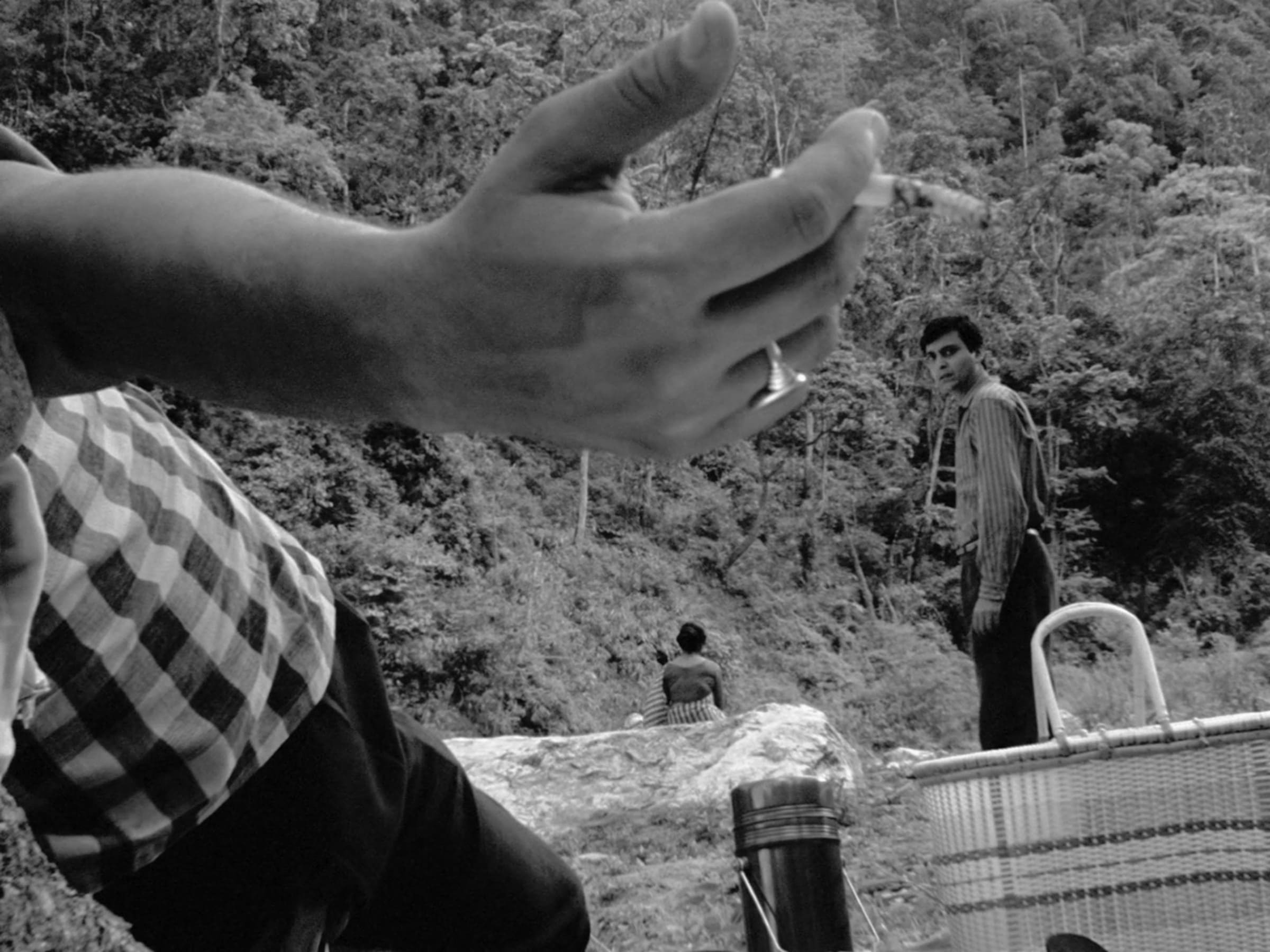
She cannot possibly love this man, Amitabha reasons during a brief stop – Bimal is an alcoholic, and must surely mistreat her in some way. As Karuna sits by a rushing stream and her husband falls asleep on a rock, Ray delivers another string of remarkable compositions that trap Amitabha between the two, rendered with a piercingly deep focus to rival Orson Welles. On one end, Bimal’s hand hangs limp in the frame, while on the other, Karuna’s expression remains stoic behind a pair of sunglasses. His time is running out, and as such, he takes this short window of opportunity to scrawl a hasty, secret letter.
“I’ll wait at the station until the last moment. If you still love me, come. I won’t let you down this time.”

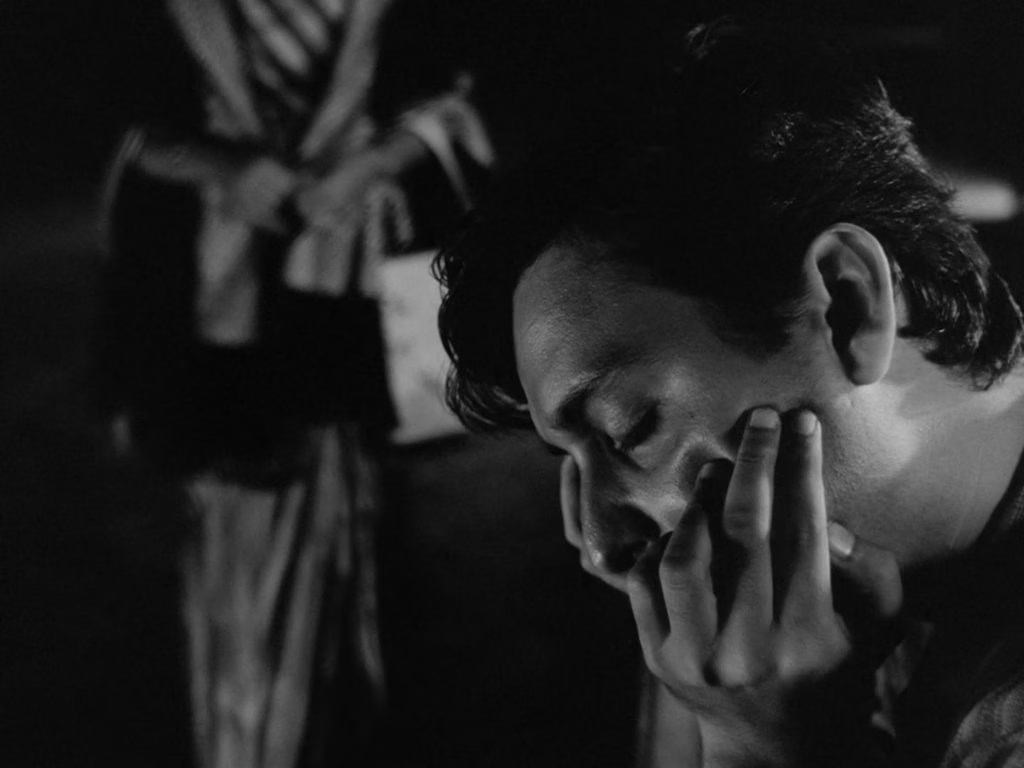
Sitting on a bench by the railway, Amitabha rests his face in his hands, and hours slip by as Ray’s match cut ushers in the night. Ray has toyed with our romantic expectations all throughout The Coward, and when Karuna approaches from the background, he entertains one last moment of hope. As Amitabha recognises the faint resentment in her face though, his smile quickly fades. “Do you have my sleeping pills?” she coolly asks. “Let me have them, darling.”
Mukherjee totally commands this devastating blow in their final exchange, leaving Amitabha to bleed out in silence. After succumbing to his faltering resolve and letting her go once, the hubris to imagine a second chance is extraordinary, particularly after she has long settled into wedlock. Closure is cruelly denied in The Coward, and Ray’s final stroke is merciless, stripping away every illusion of romance to reveal a man undone by the cold, paralysing shadow of doubt.
The Coward is currently streaming on The Criterion Channel.