
Luis Buñuel | 1hr 41min

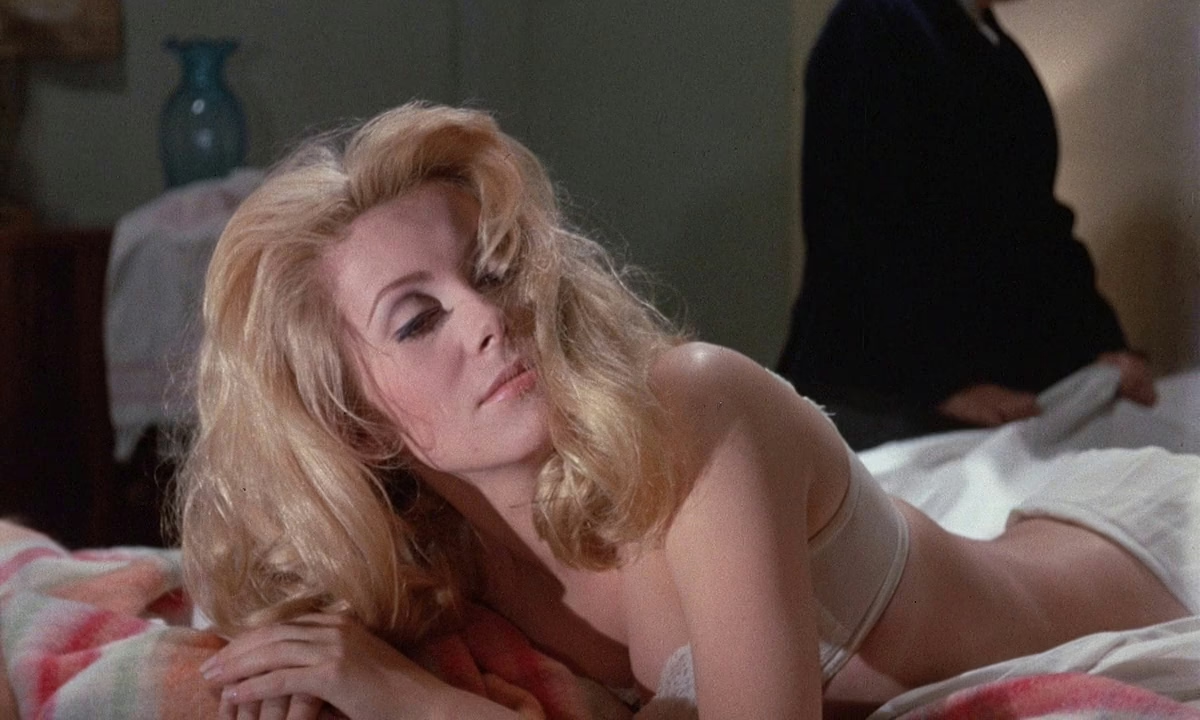
When housewife Séverine first approaches the high-end brothel run by Madame Anaïs, it is clear that she is no ‘belle de nuit’ – a lady of the night. Unlike the other employees, she is a respected woman of Paris’ upper class, comfortably married to a wealthy doctor and striking the ideal image of domestic, feminine virtue. Still, her mind can’t quite help drifting into forbidden territory, entertaining fantasies of whips, bondage, and domination that dissolve the boundary between shame and desire. Maybe by satisfying male strangers, then she can also satisfy these impulses, she decides – but only between the hours of 2 and 5 o’clock in the afternoon, when her husband Pierre is working. Indeed, as a daytime prostitute, Séverine is no belle de nuit. With a touch of irony, Madame Anaïs thus christens her Belle de Jour.
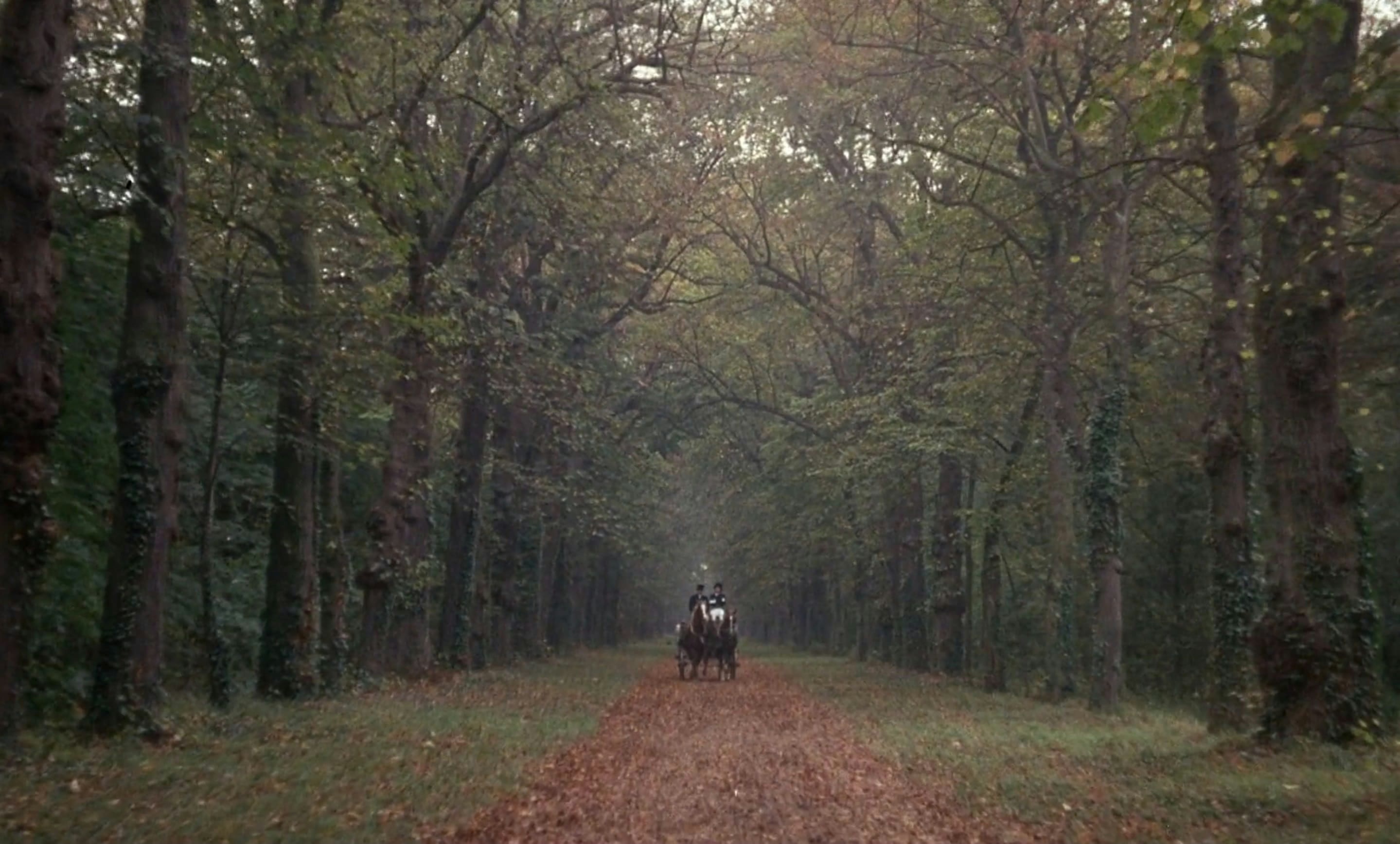
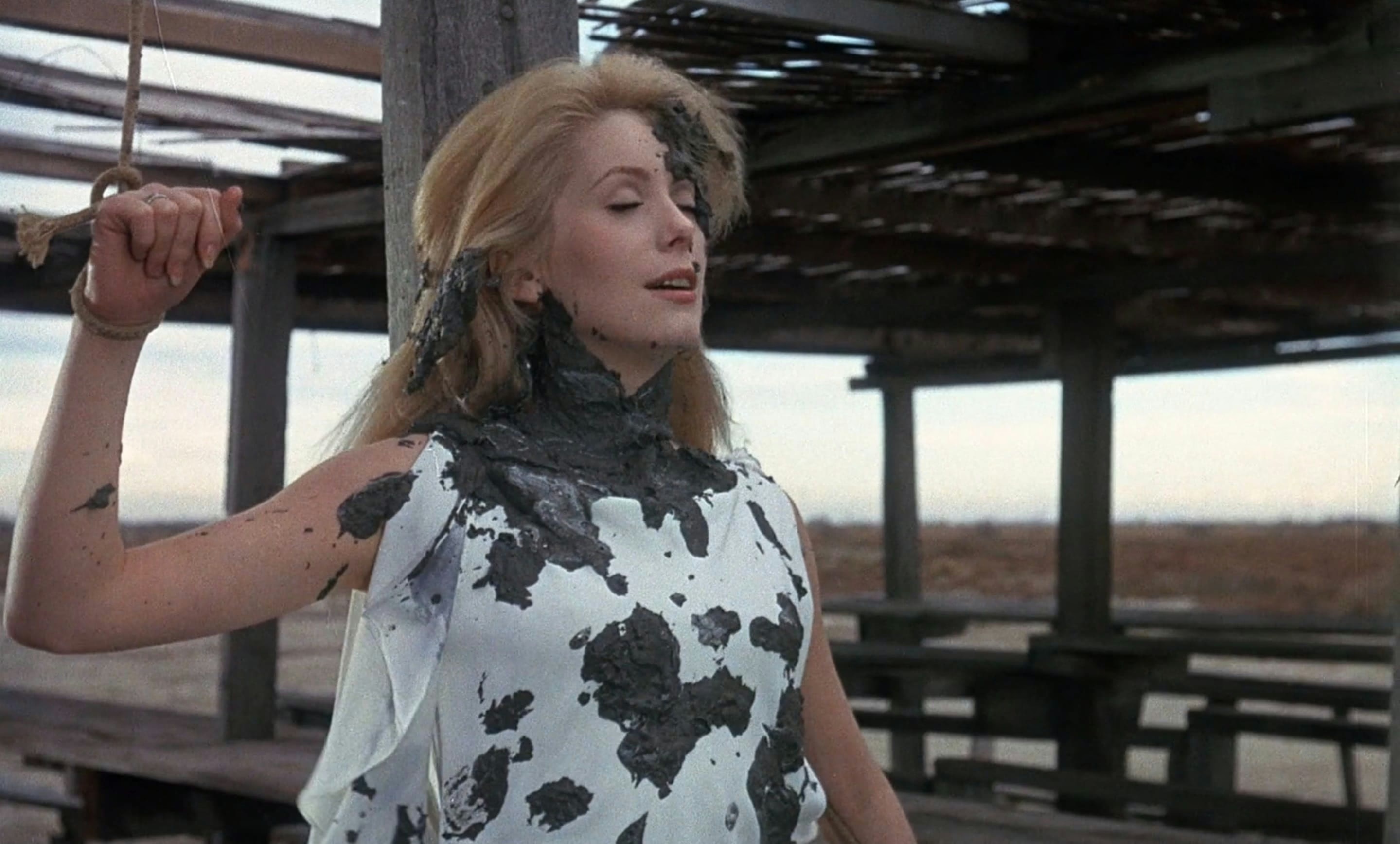
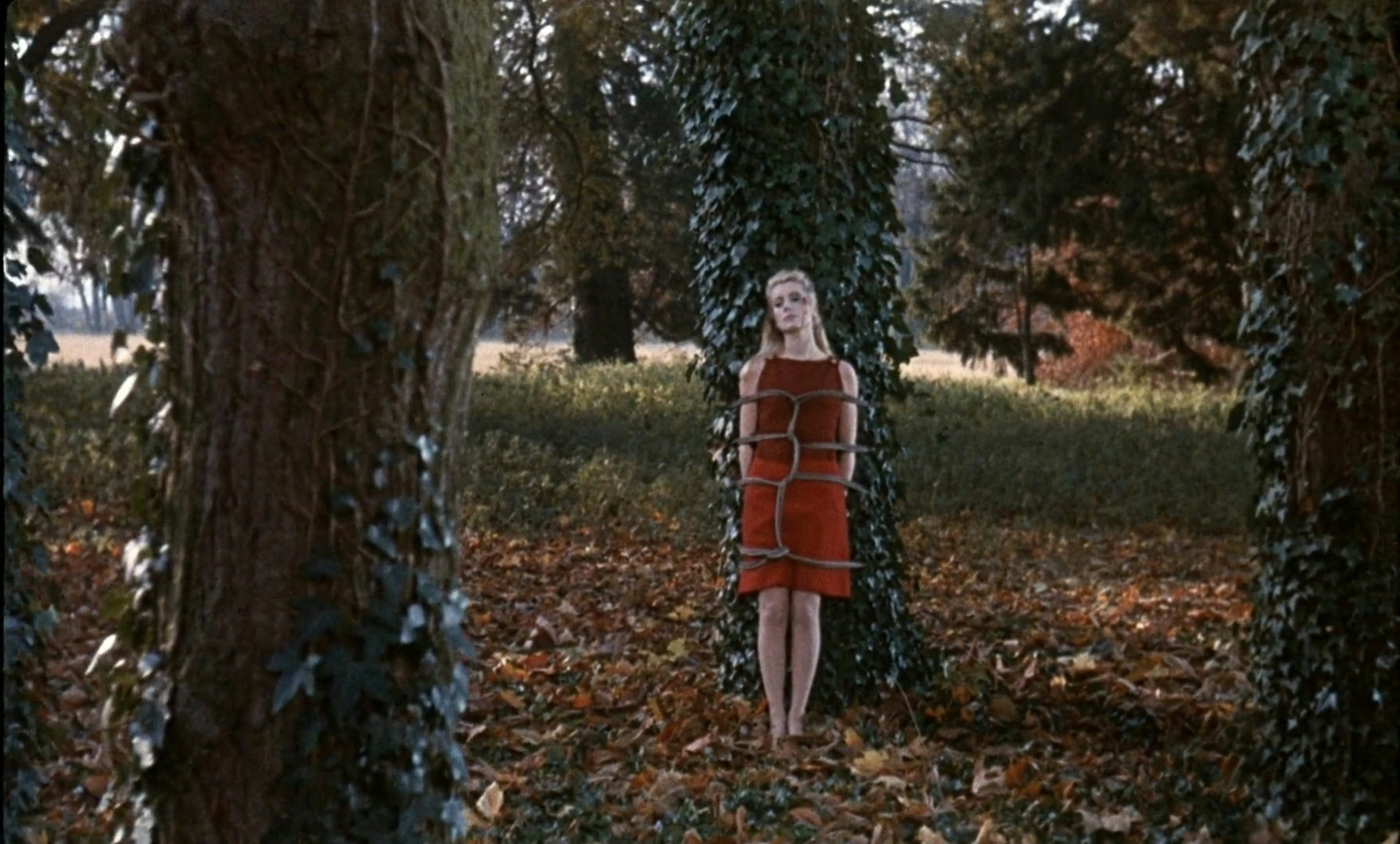
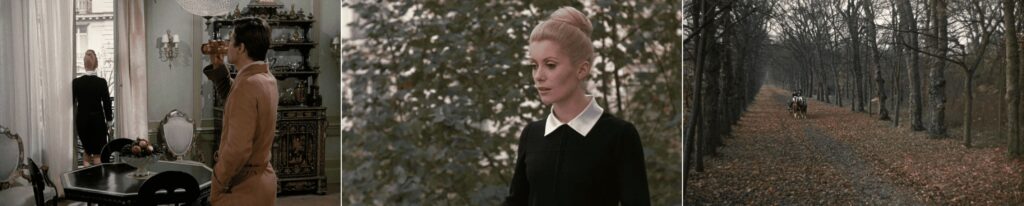
Luis Buñuel had spent several decades sharpening his satirical assault on bourgeoise pretensions before undertaking this interrogation of commodified sexuality, though here he finally finds the perfect vessel for this contempt. Catherine Deneuve’s icy elegance masks a well of unresolved traumas and erotic compulsions, frequently erupting in surreal daydreams that formally diverge from the polished austerity of her waking life. In the opening scene, a tranquil carriage ride down a beautiful, leafy avenue abruptly twists into a sadistic fantasy as Pierre binds Séverine to a tree, rips off her clothing, and perversely watches her violent whipping. Her pained expression melts into pleasure as she bites her lip, and in another hallucinatory formal interlude later on, she similarly relishes the debasement inflicted by Pierre and his friend Husson as they fling mud at her.
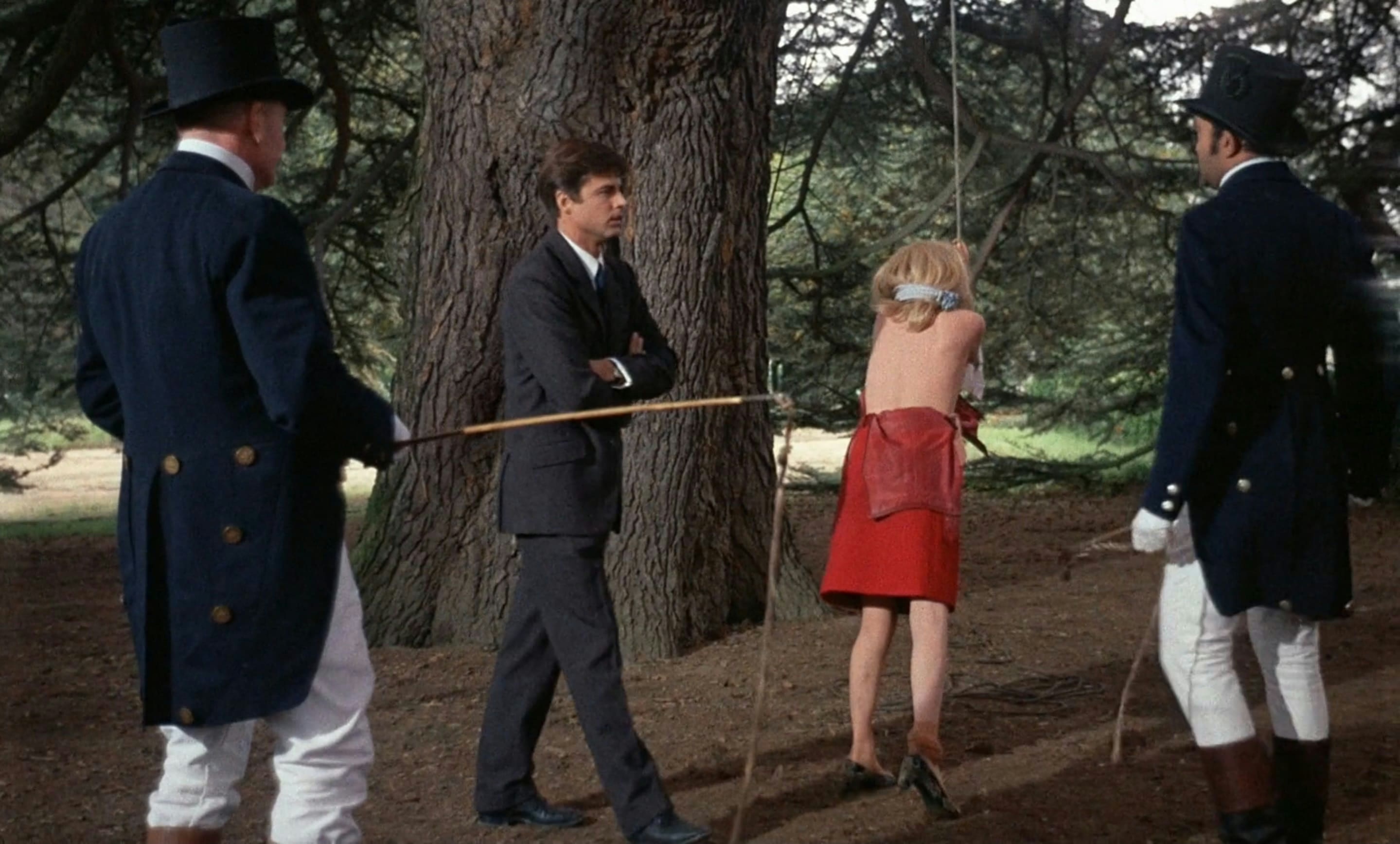
Although Buñuel’s adaptation is relatively faithful to Joseph Kessel’s original novel, these psychosexual daydreams are purely his own, threaded through Belle de Jour’s narrative as amusingly jarring intrusions. Colour becomes a crucial signifier here, especially defining her Yves Saint Laurent-designed wardrobe through projections of social decorum and suppressed desire. While her beige and brown outfits frequently blend into her surroundings and white palettes signal her purity, the red flashes of Buñuel’s mise-en-scène alternatively frame her dreams in an aura of lust – most notably in the vibrant overcoat from that opening sequence. Bit by bit, this latent passion makes its way into her life too, seeing her adopt the soft sensuality of a pink robe and eventually embrace that crimson outfit during a brothel shift. Through this subtle interplay of colours and costumes, Buñuel thus encodes bourgeoise fashion with psychological meaning, delicately tracing Séverine’s emotional arc from repression to erotic transgression.
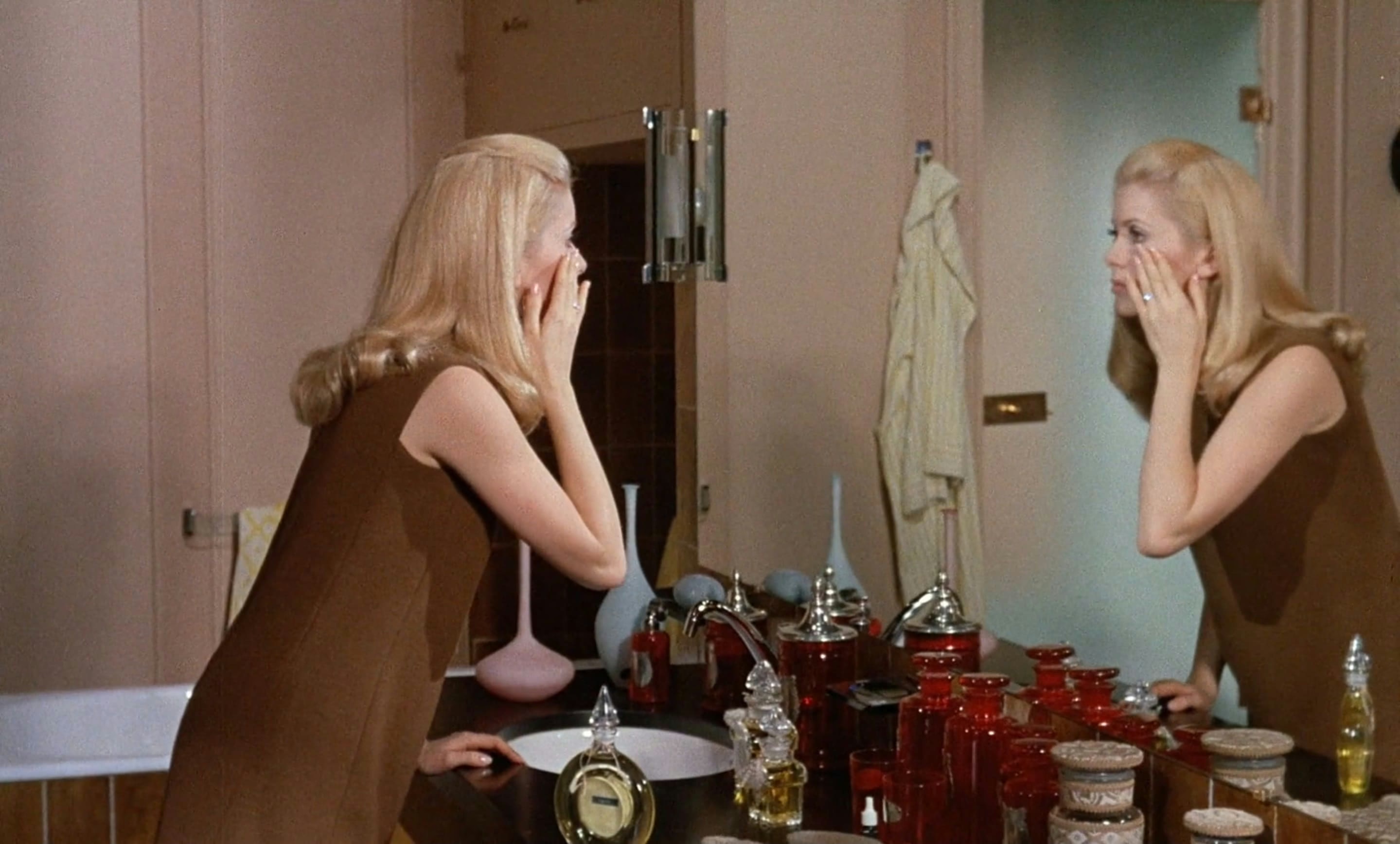
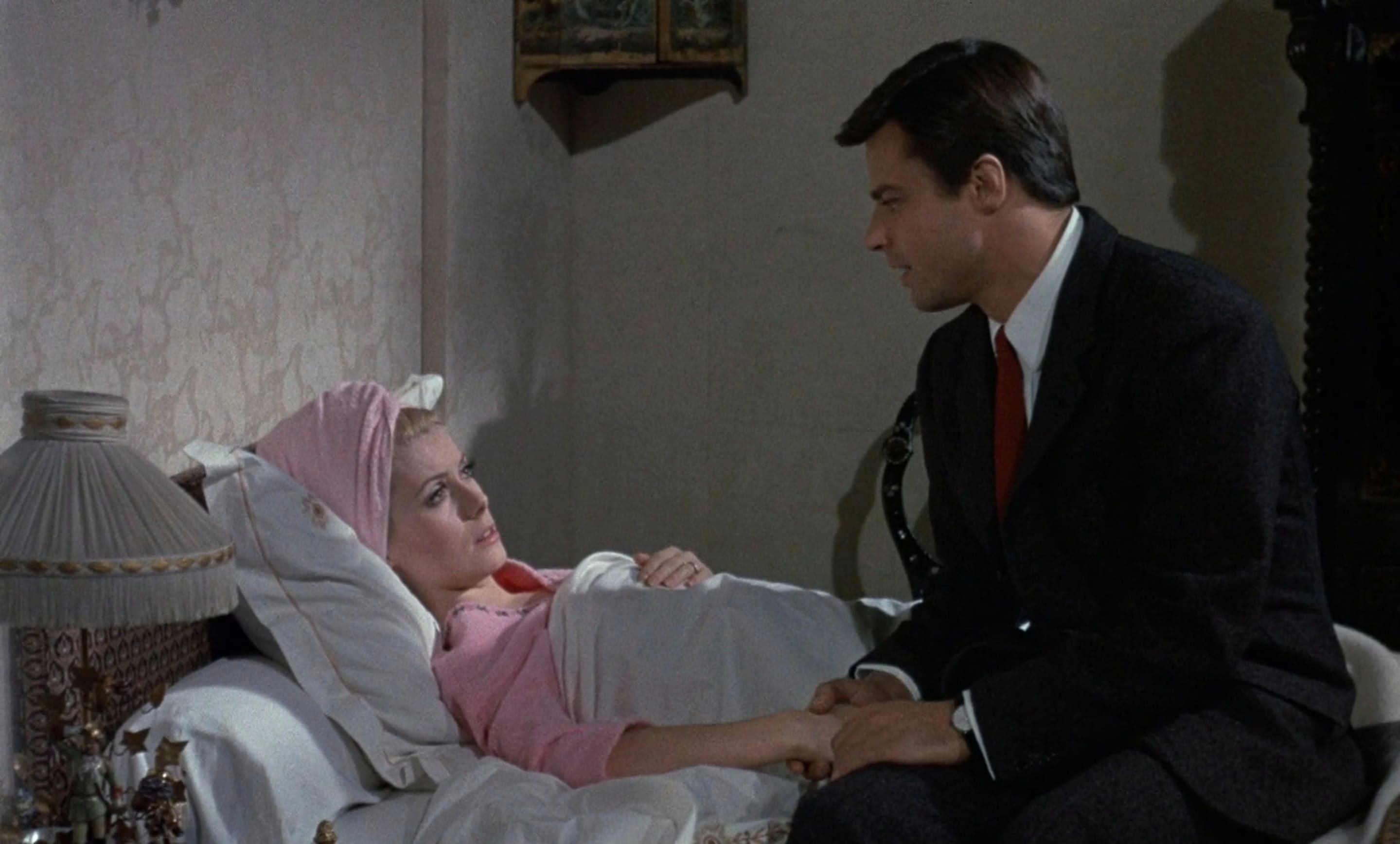
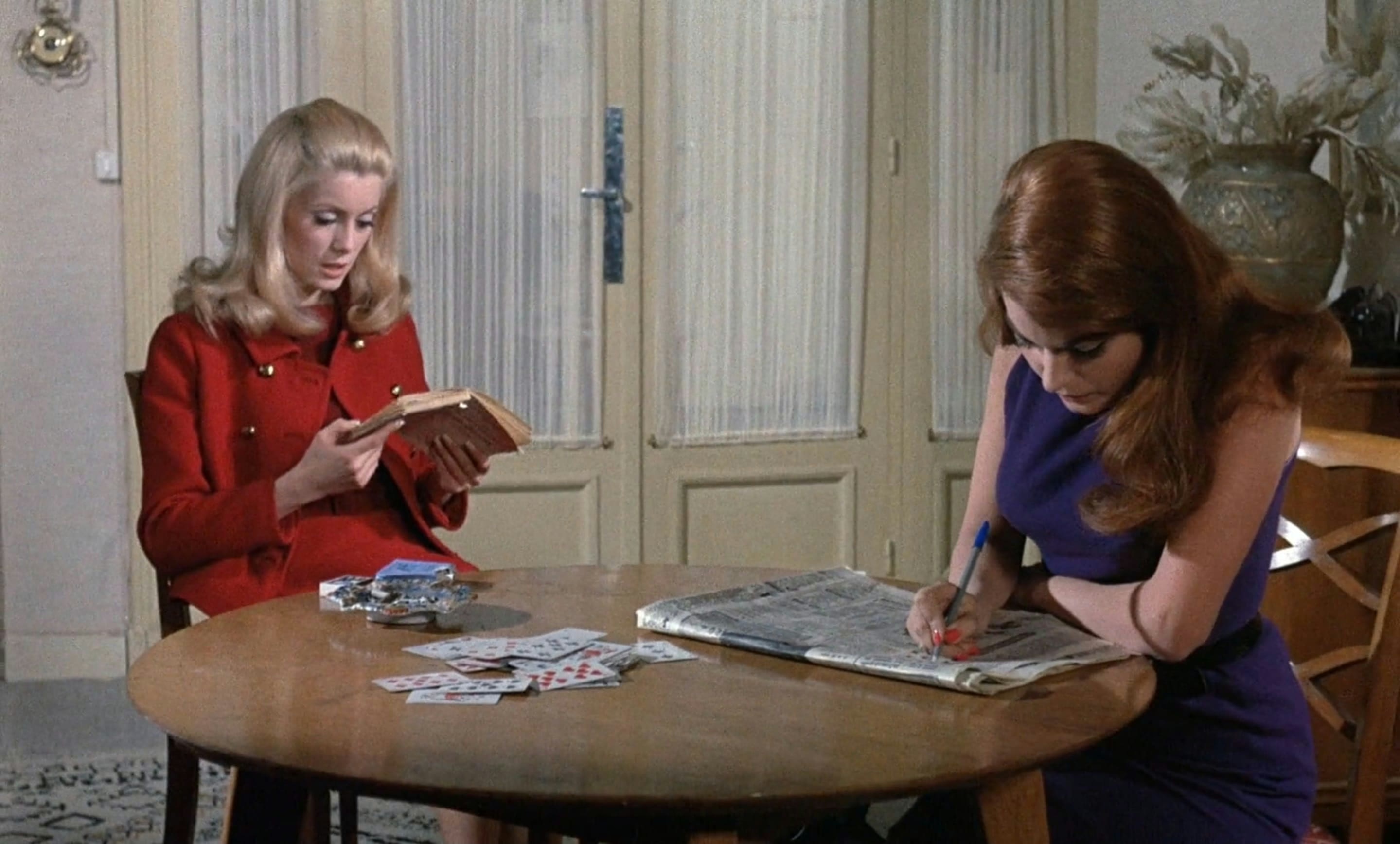
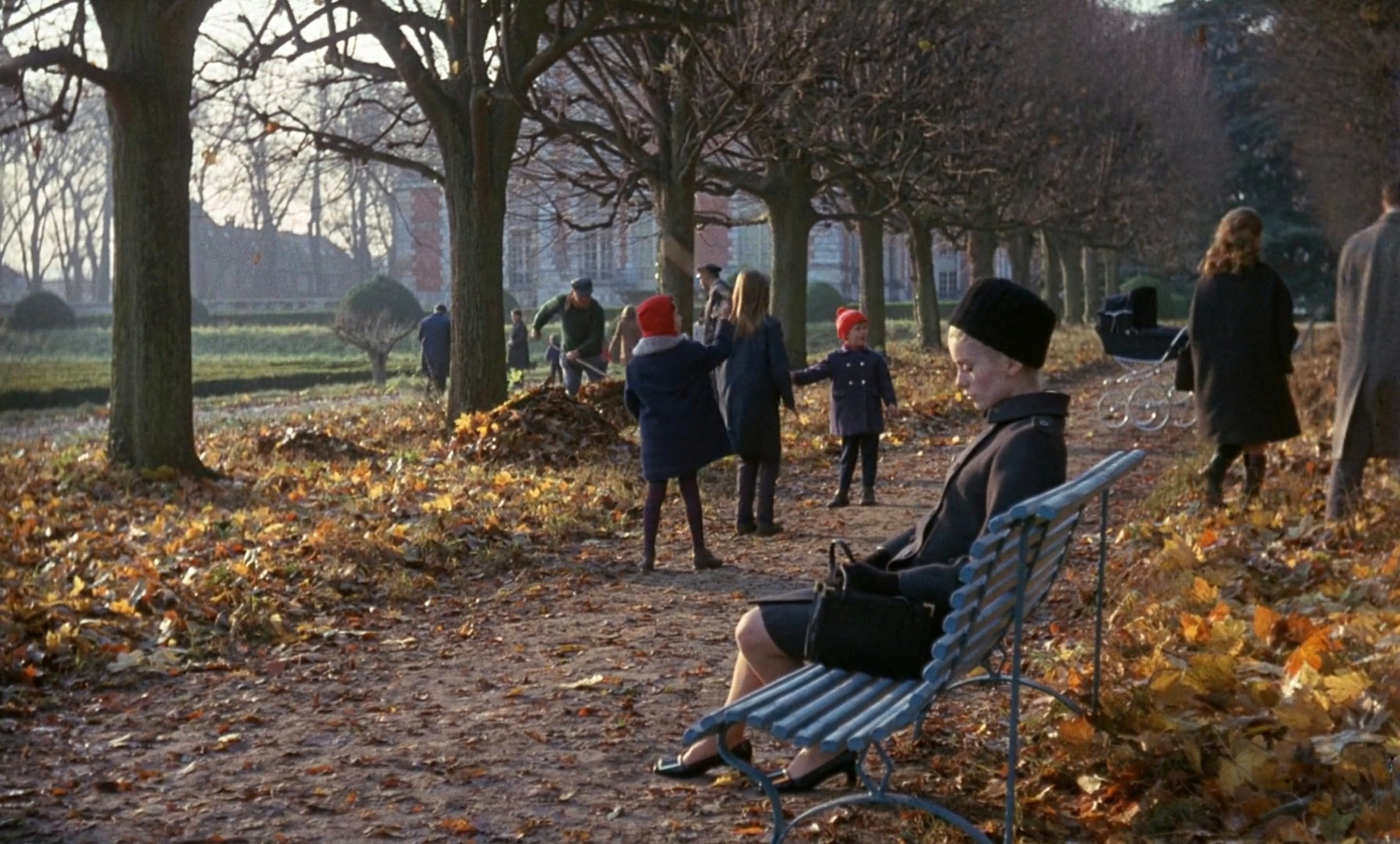
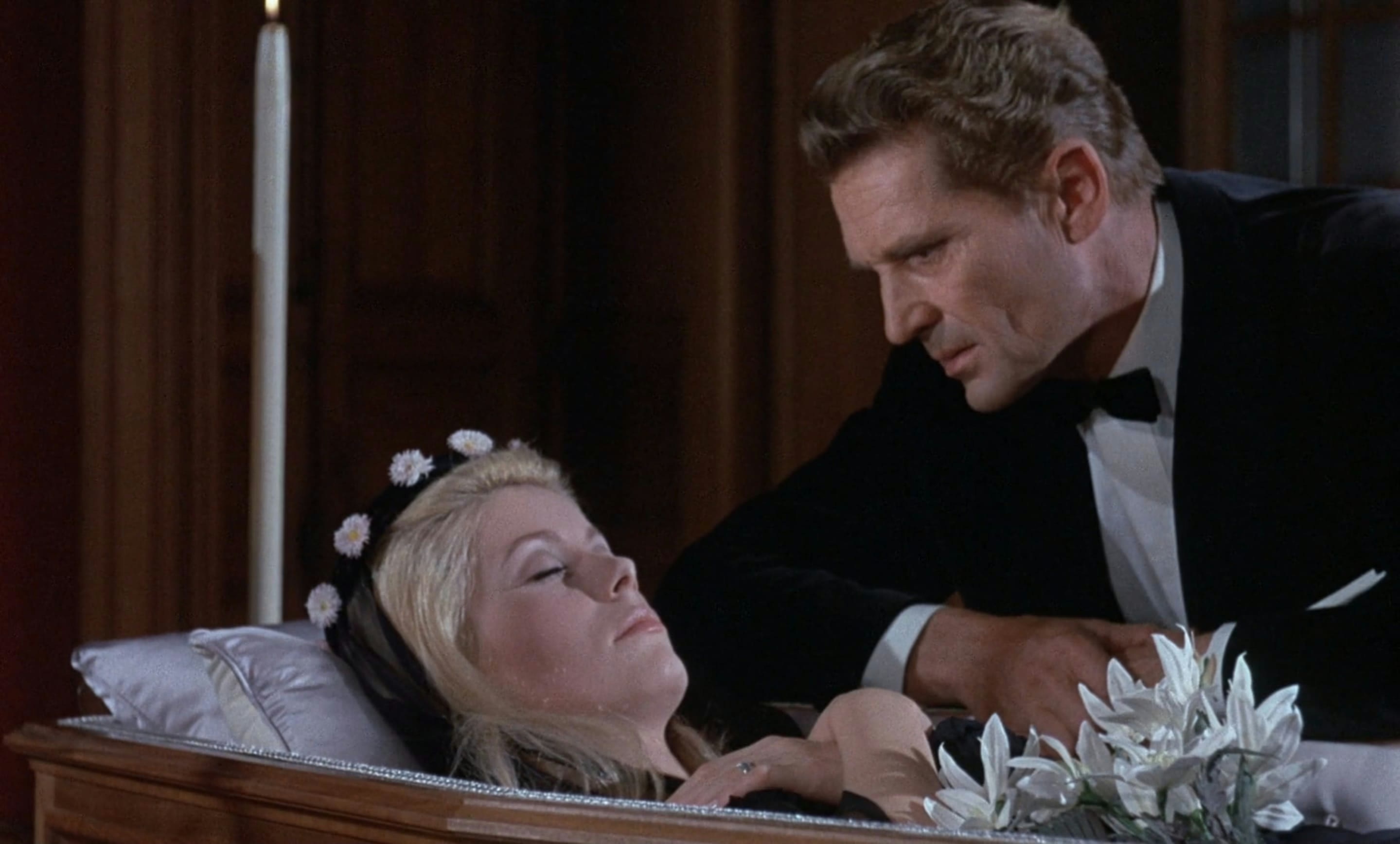
Still, through Buñuel’s purposeful ambiguity, boundaries of consciousness often dissolve into a haze of surreal uncertainty. When Séverine is invited to visit a Duke’s lavish countryside manor, lie in a coffin, and impersonate his dead daughter, we are driven to question which world this necrophilic roleplay belongs to. Truthfully though, it is the ambiguity itself which most tellingly reveals the eroding distinction between life and fantasy. In these instances, there is little to convince us either way besides the bizarre, unnatural behaviour of aristocratic men – but don’t these strange contradictions echo the incongruency of her own virtue and vice?
Perhaps the starkest contrast between the guilty pleasures of men and women though lies in the double standards imposed on them, and nowhere is this more evident than in Husson’s brazen sense of entitlement. It is his disdainful gossip about their acquaintance Henriette and her double life as a sex worker which introduces Séverine to the brothel after all, and of course, his visits to that same establishment only underscore the hypocrisy of his judgement. “I must see you sometime, without your husband, of course,” he insists shortly after trying to kiss this apparent paragon of purity, though upon later learning her shameful secret, he claims that temptation is gone.
“I guess what attracted me about you was your virtue. You were the wife of a boy scout. That’s all changed now. I have principles, unlike you.”
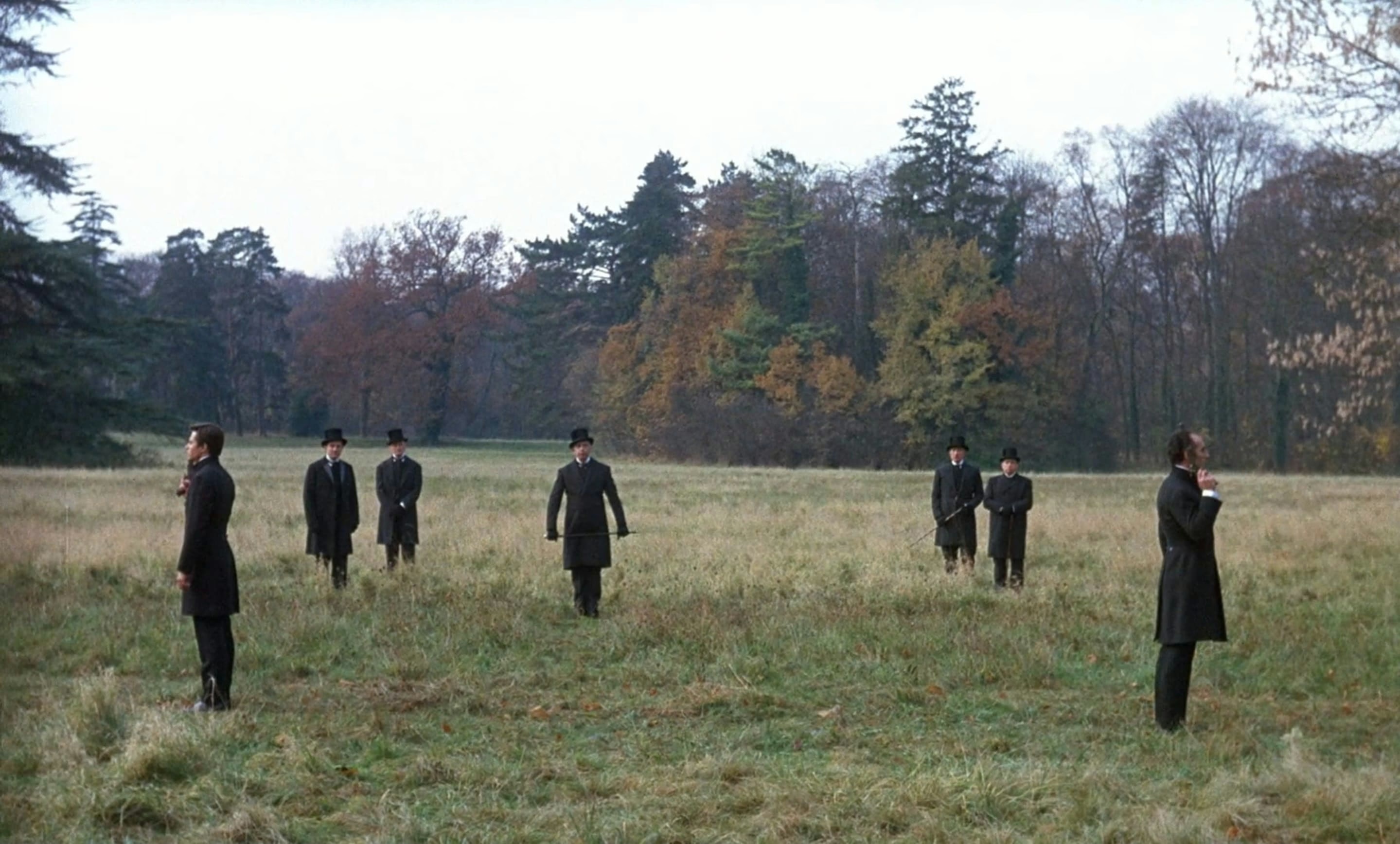
At the very least, he will not tell Pierre what he has learned, the libertine promises. He would much rather hold the knowledge over her with smug superiority. As such, the following tableau of Pierre and Husson’s pistol duel initially seems to be some sort of heroic reverie – until Pierre’s bullet accidentally strikes Séverine. Tied to a tree and bleeding from her head, her subconscious seems to seek atonement, and consequently raises the question of whether these sadomasochistic fantasies are rooted more in penance than gratification.
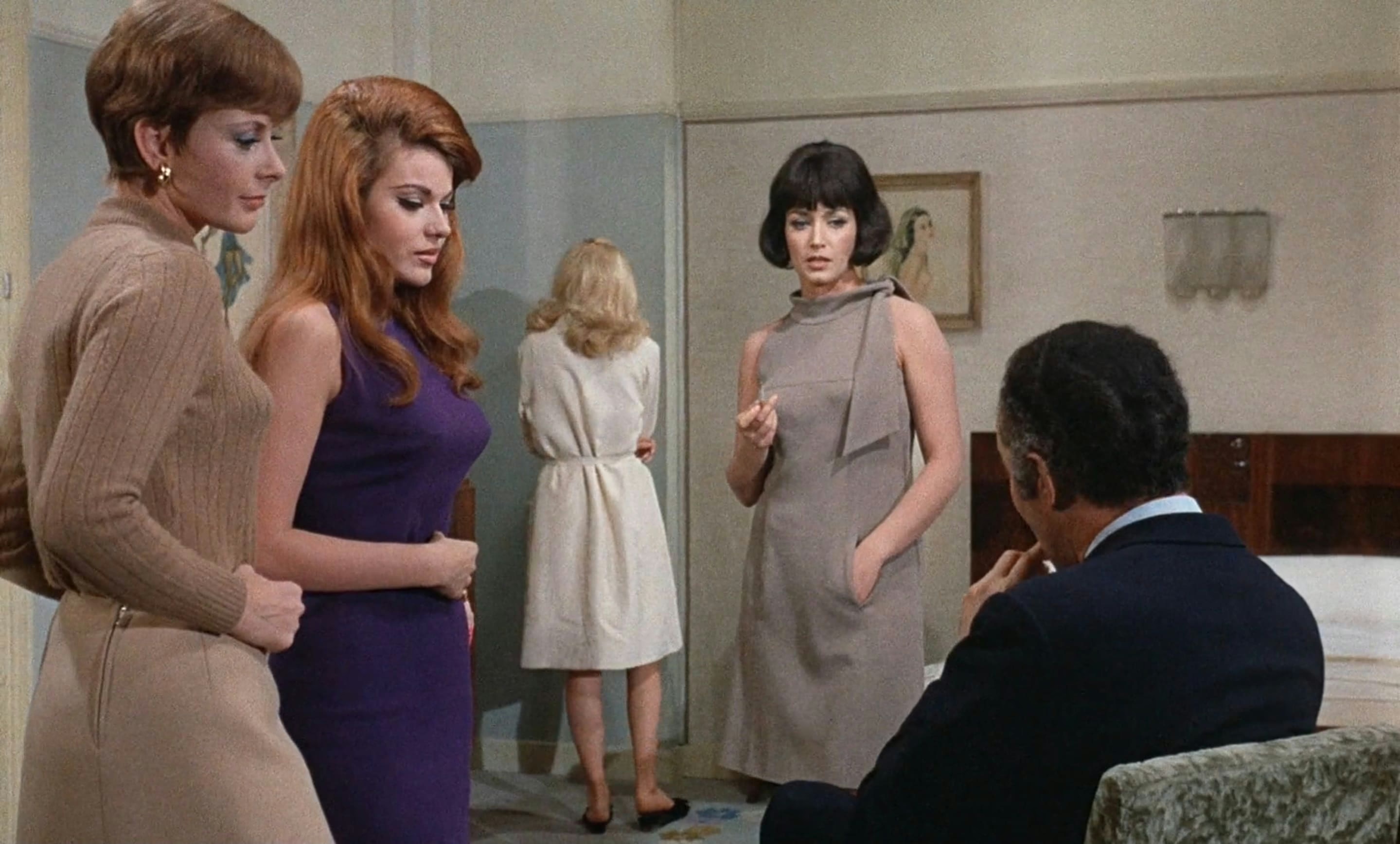
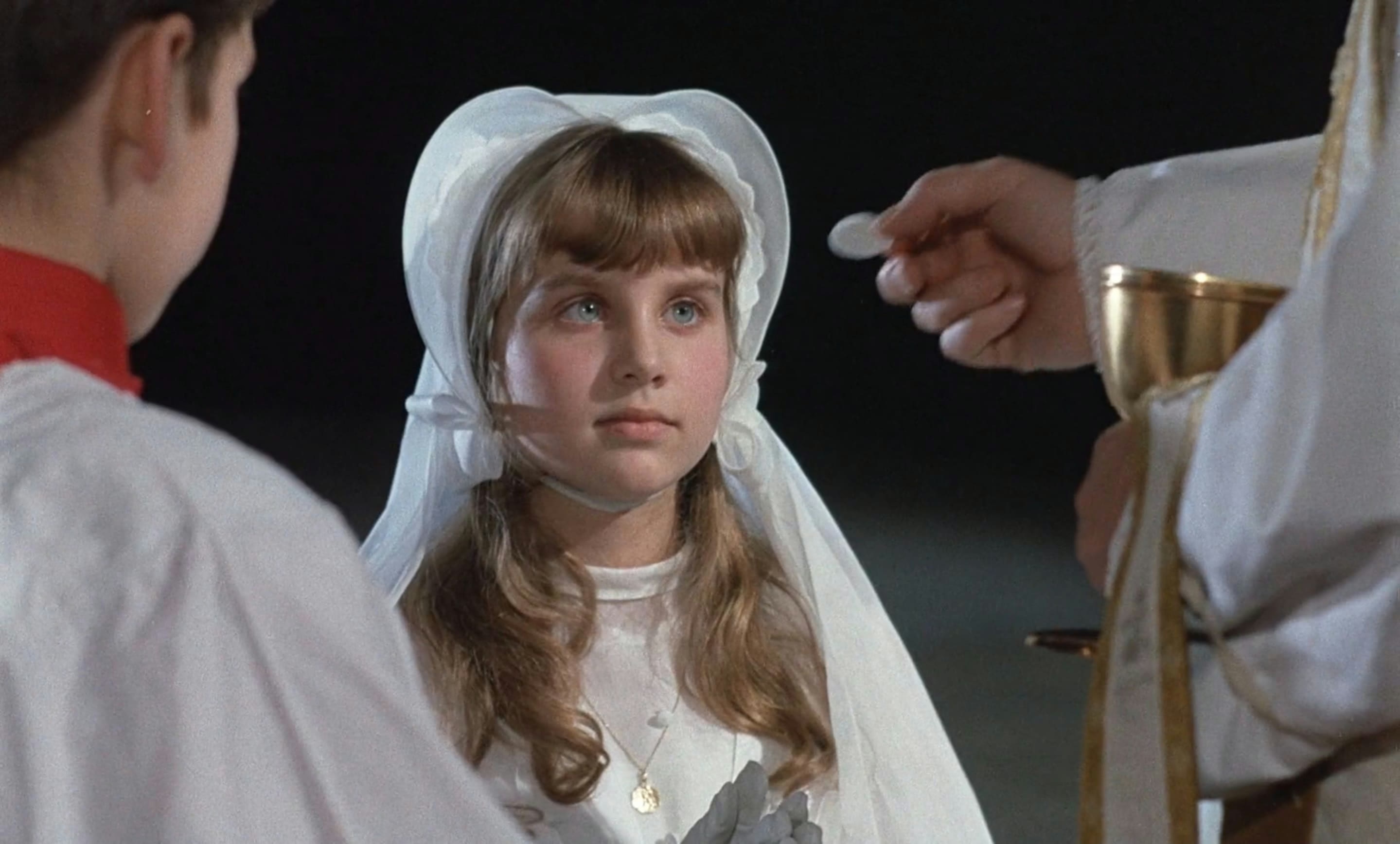
Buñuel’s attacks on religion aren’t quite as pronounced in Belle de Jour as in Viridiana, yet flashbacks to the sexual abuse that Séverine endured as a child in the Catholic Church nonetheless frame trauma as a catalyst for self-loathing, guiding her to seek absolution through punishment. In this light, Madame Anaïs’ brothel becomes a confessional space – and one that ironically perpetuates the same tragic cycles of exploitation, as we see in the clients’ disturbing sexualisation of her teenage goddaughter. Indeed, the desires of the men who pass through this profane sanctuary range from comic to grotesque, their appetites revealing as much about their patriarchal power as they do about Séverine’s conflicted desires. Mr. Adolphe the candy manufacturer is all smiles and jokes until her reticence triggers his aggression, and although she is disgusted by the gynaecologist’s humiliation fetish, his theatrical roleplay holds a warped mirror up to her own fantasies.
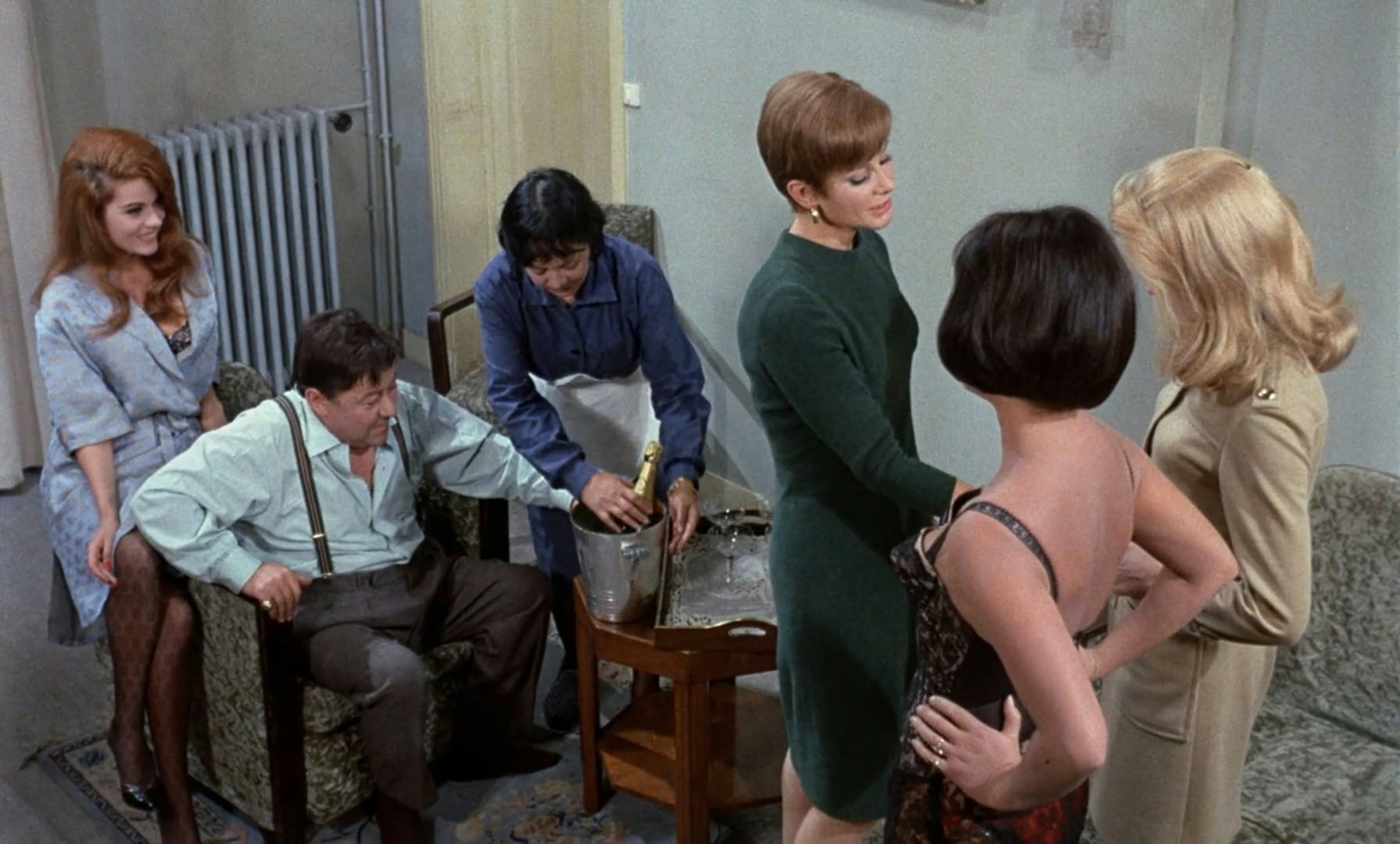
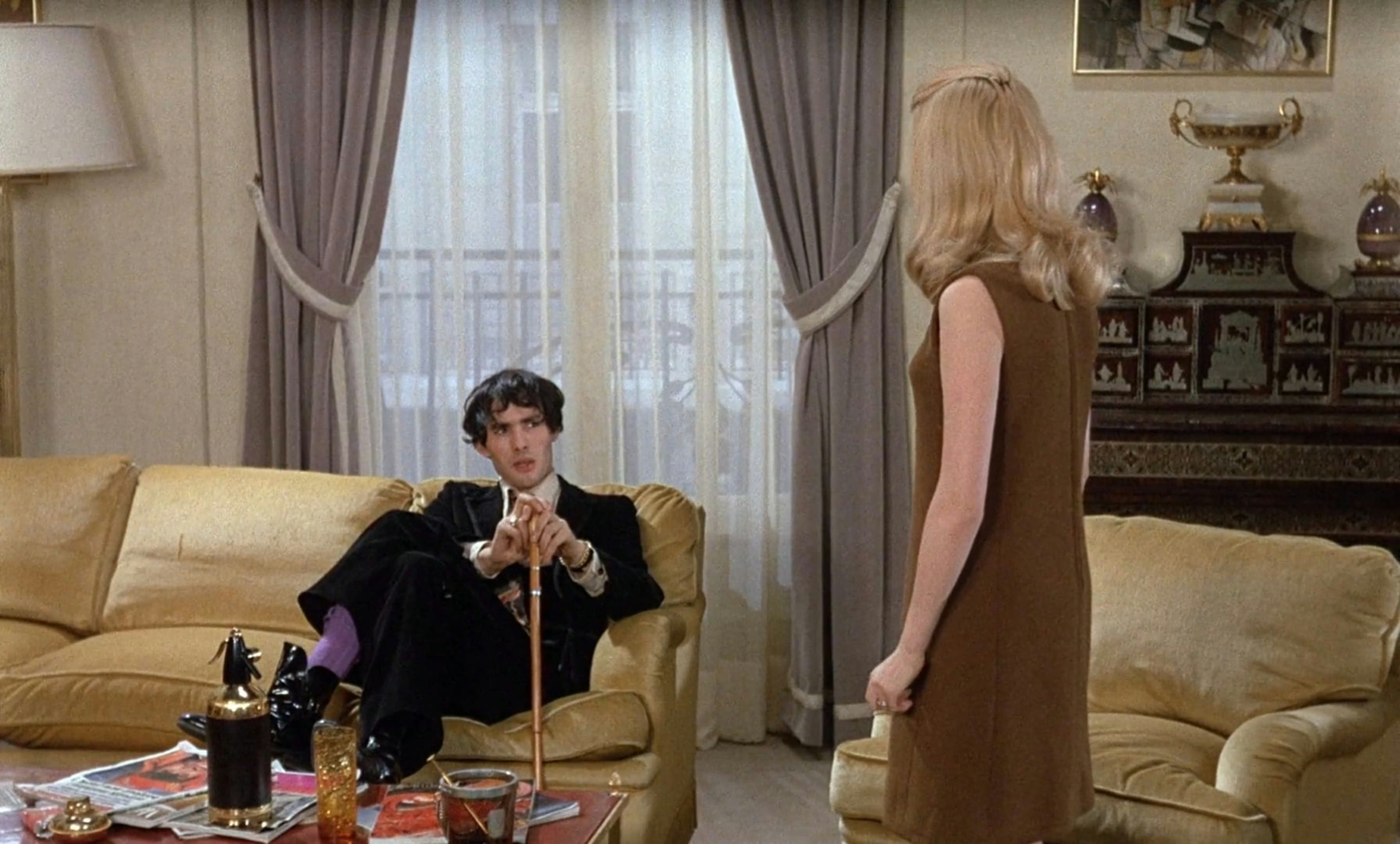
Of all Séverine’s clients, it is Marcel who she takes the strongest liking to, offering the excitement she has longed for in her daydreams. With his leather trench coat, gold grills, and gang affiliation, he strikes an intimidating figure, yet the sexual satisfaction he provides paradoxically rekindles her relationship with Pierre back home. As such, perhaps this newfound contentment is also responsible for restoring her self-worth, emboldening her to finally push back one day when he violently lashes out. His jealousy has boiled over, shattering the neat divide between her double lives when he visits her home and threatens to deal with the “obstacle” that is her husband. Unfortunately, Marcel proves true to his word – three gunshots crack through the street outside her apartment, leaving Pierre collapsed on the sidewalk and sealing Marcel’s fate in a storm of police bullets.
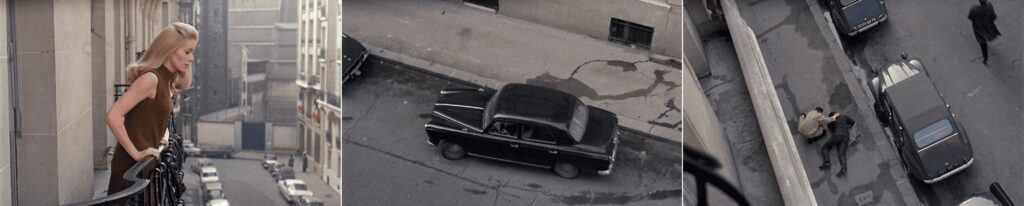
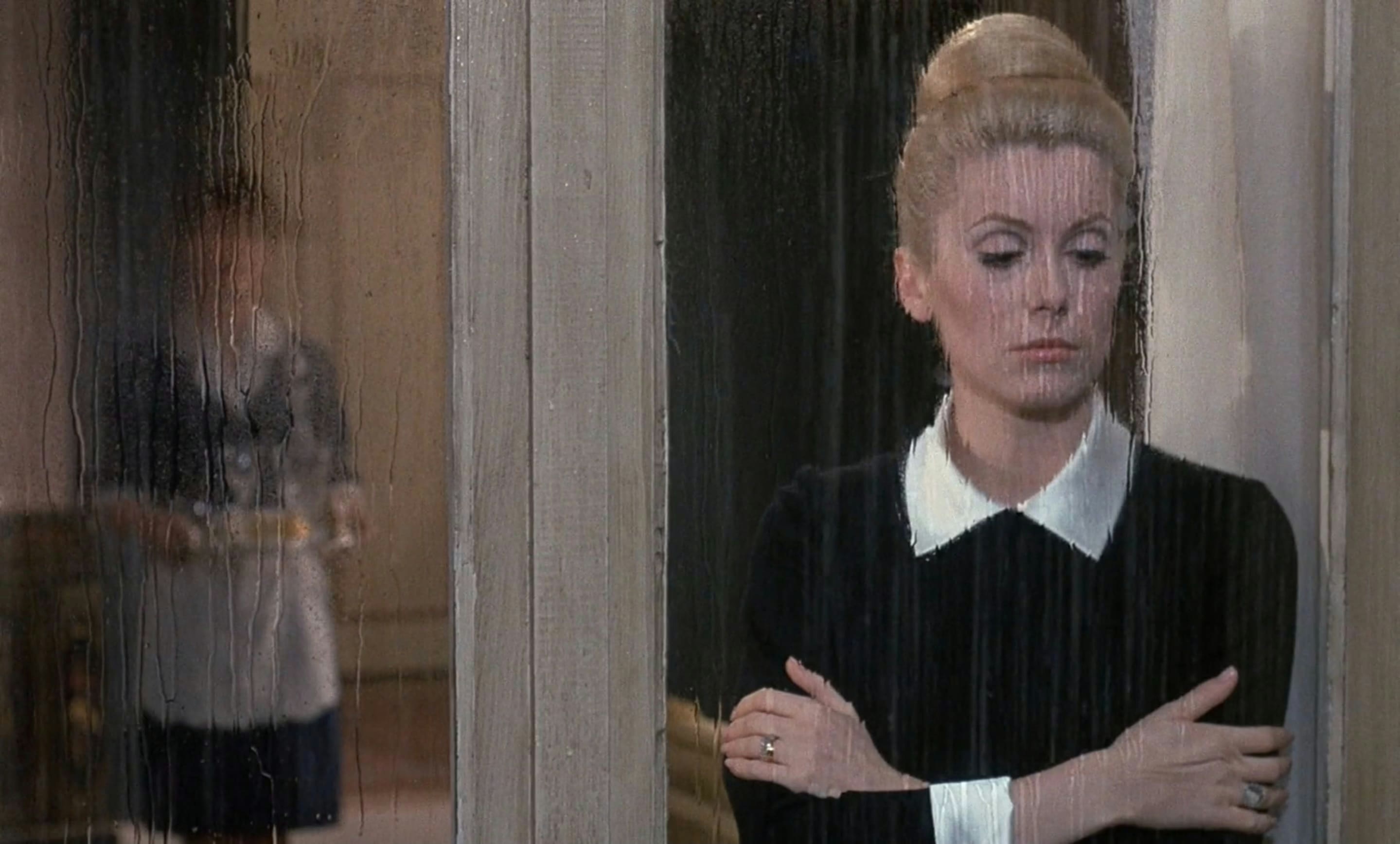
Although Pierre slips into a coma and eventually awakens blind and paralysed, it is a miracle that he should survive this attack. For the first time, Séverine now dresses in black, consumed by a new strain of guilt as she tends to her disabled husband. Nevertheless, Husson cannot resist deepening her torment. Informing Pierre of his wife’s extramarital activities is simply the right thing to do, he cruelly reasons, before promptly departing to let her deal with the fallout.
Séverine has not been entranced by daydreams since the accident, yet now as she sits with her silent, morose husband, the eerie sound of rattling coach bells ushers in one more reverie. “What are you thinking about, Séverine?” he asks with a smile, taking off his sunglasses and rising from his wheelchair. “I was thinking about you,” she softly responds, before turning toward the sound drifting in from outside. Buñuel’s editing is seamless as she appears to step onto the balcony and, in the same breath, into the leafy avenue of her opening fantasy. Belle de Jour thus bookends her spiral of fantasies with exquisite formal harmony, freeing her from the burden of shame – yet even as that horse and carriage glides down the street one last time, Buñuel’s promise of loving, reconciliatory grace appears as elusive as the dream it inhabits.
Belle de Jour is currently streaming on The Criterion Channel and SBS On Demand, and is available to rent or buy on Apple TV and Amazon Video.