
Satyajit Ray | 1hr 5min

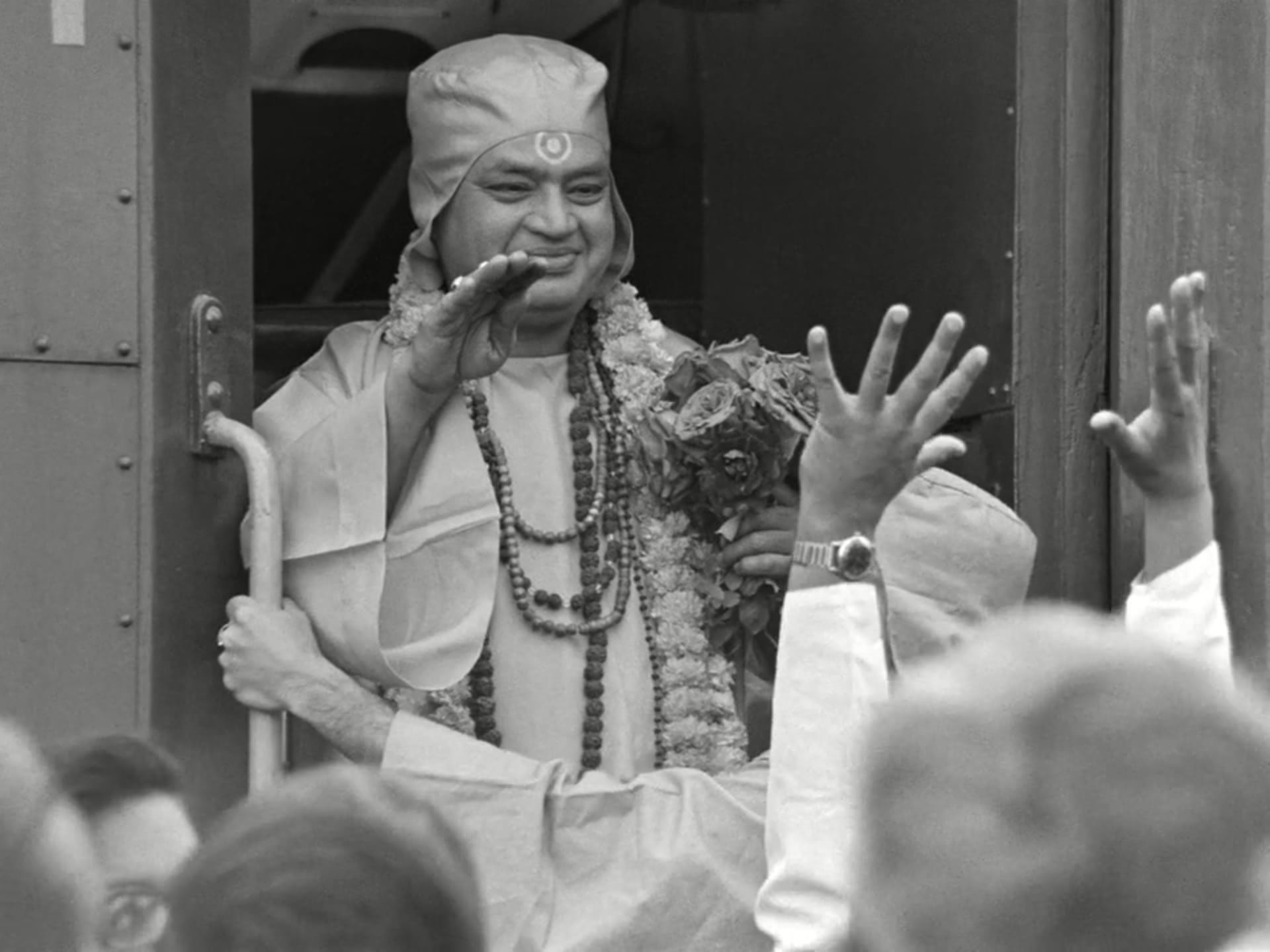
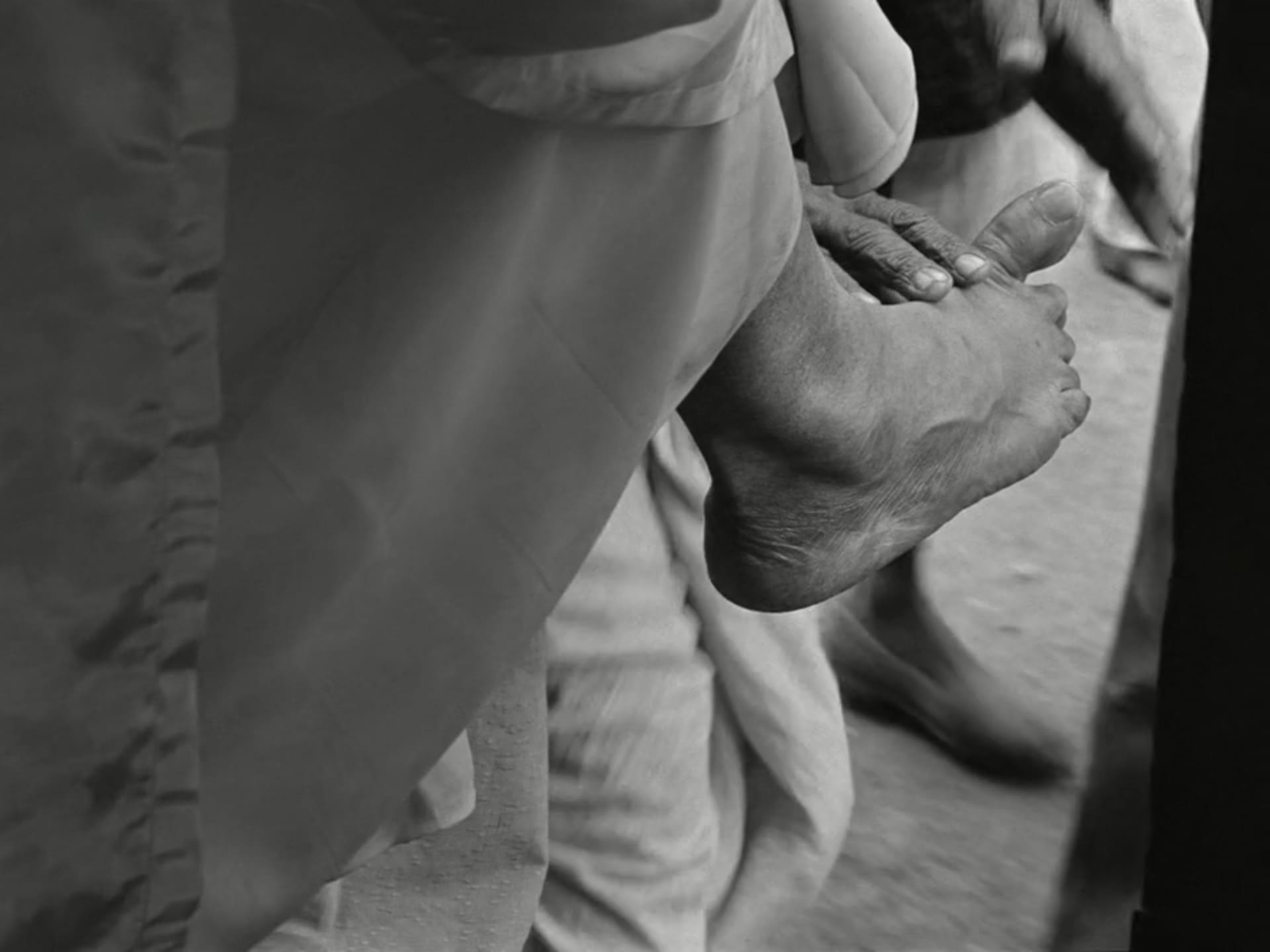
As Birinchi Baba departs a railway station teeming with devoted followers, he tosses enchanted green chillies to the masses, and holds out his big toe for them to reverently touch. It has been another successful stop in his journey of self-fashioned divinity, casting an alluring spell over the disillusioned who seek truth and meaning. His cosmic riddles and audacious boasts promise salvation to anyone who listens, so when he encounters grieving widower Gurupada Mitra on the train, this broken soul appears to be another prime target. As Satyajit Ray would have it though, their meeting will ultimately precipitate his downfall in The Holy Man, unravelling a self-conceited spiritual pretension that feeds on suffering and superstition.
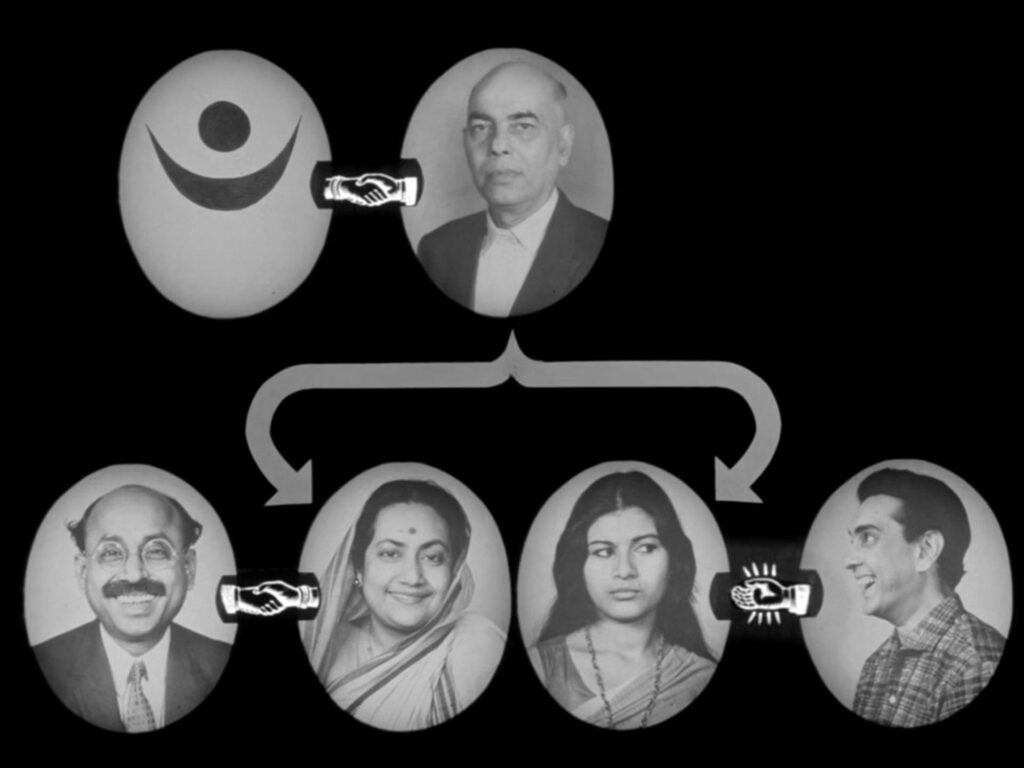
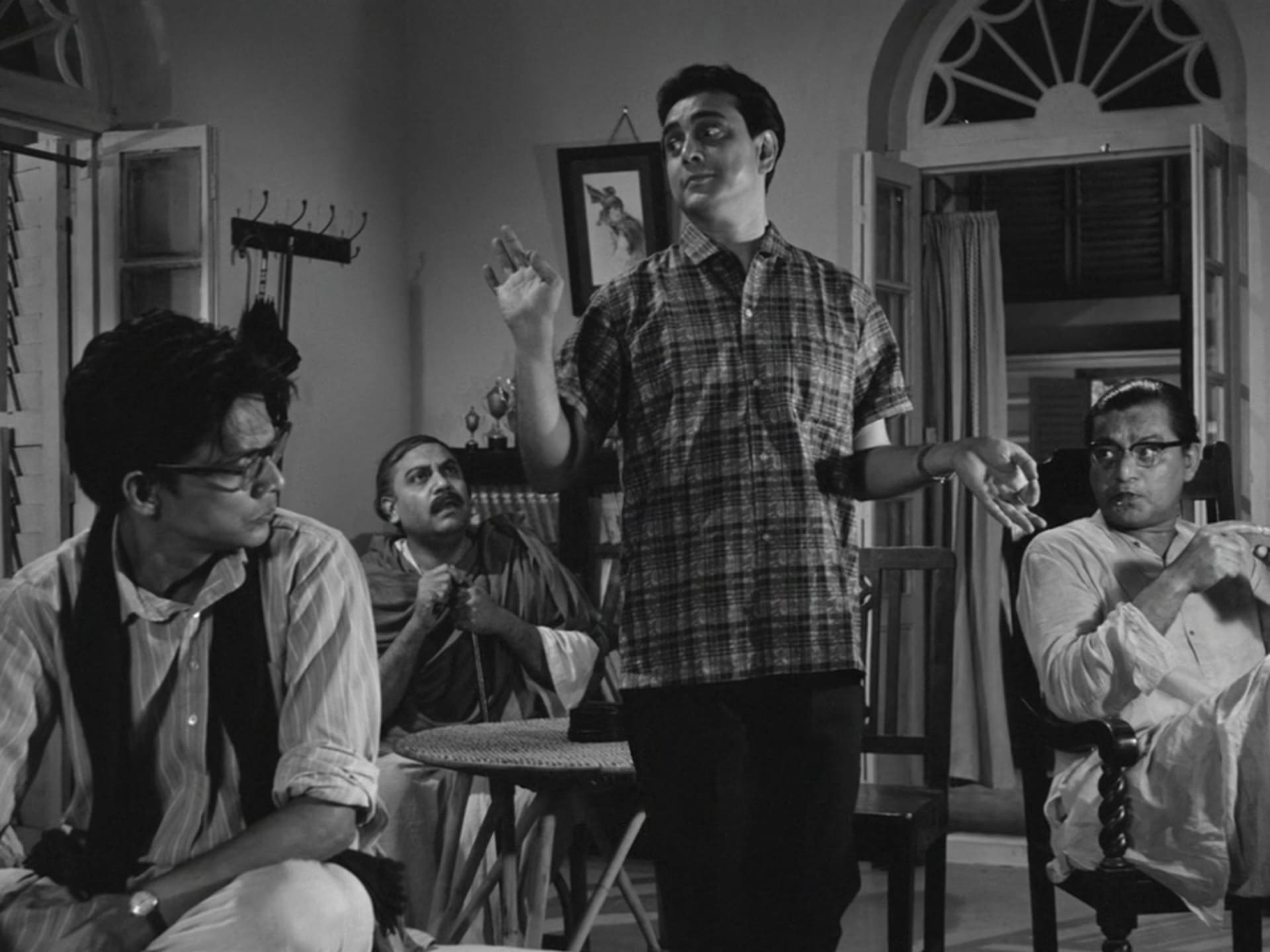
Although Gurupada’s daughter Buckhi has also seemingly fallen under his influence, her sweetheart Satya is far more sceptical of his theatrics. Through a visual gag that wouldn’t be out of place in the French New Wave, Ray maps out the knotty connections of characters that link the Mitra family to Satya’s friend’s Niberan, who similarly recognises the hollowness of Birinchi Baba’s sway. This is evidently one of Ray’s lightest, most comical films, revelling in the cartoonish exploits of a theatrical con artist, though the threat he poses to Satya and Buckhi’s tender, precarious romance remains significant. With Birinchi Baba converting the Mitra household into a temple of self-worship, Ray sets the stage for a battle of reason and delusion, escalating the absurdity of this holy man’s claims through sly humour and mounting tension.
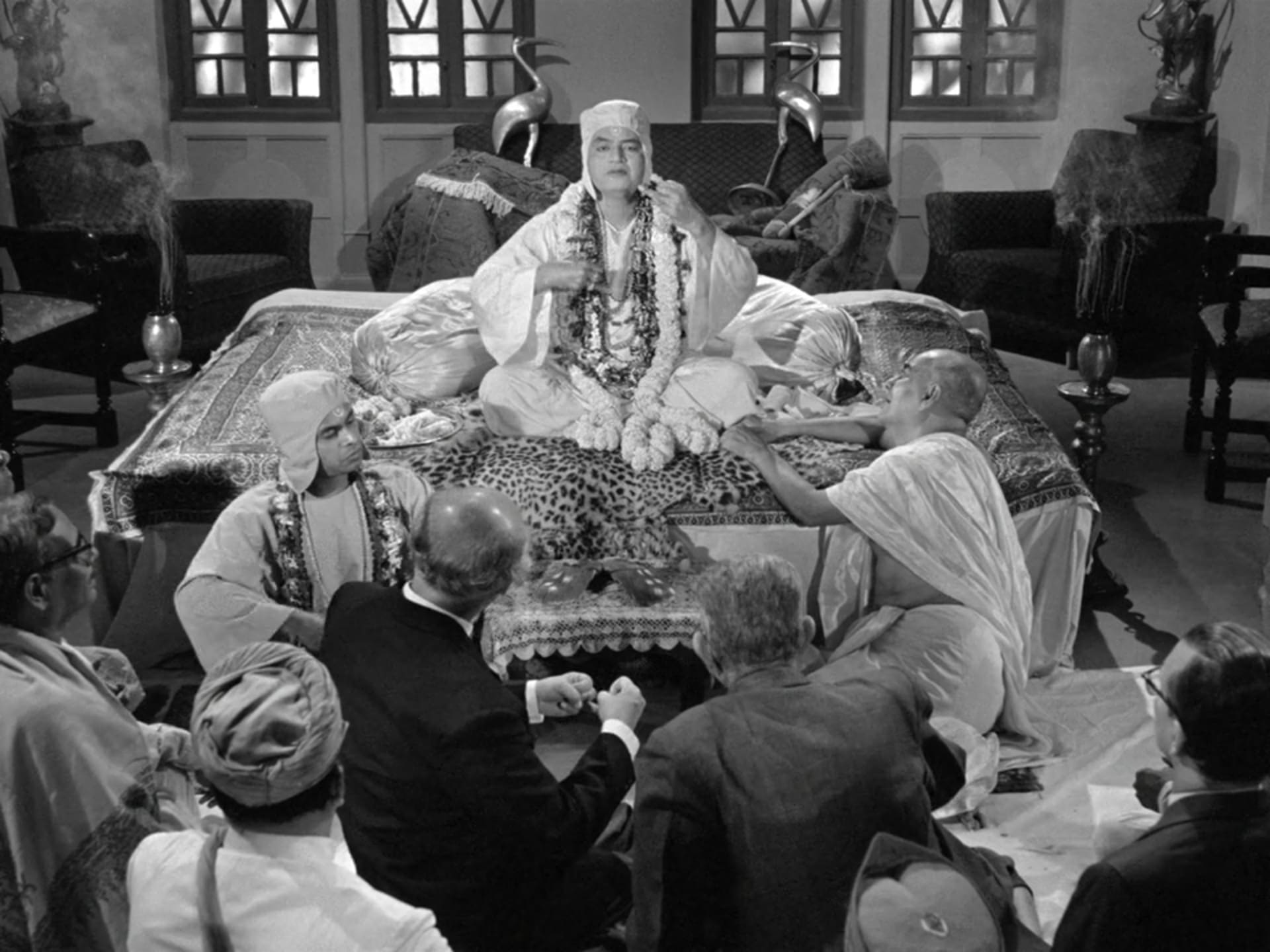
Based on a short story, The Holy Man runs just over an hour, forming the second part of a double feature to Ray’s other 1965 film, The Coward. Young love lies at the heart of both, sending a man after a woman whose affections remain ambiguous, and whose choices are constrained by patriarchal expectation. The Holy Man also continues to showcase Ray’s penchant for blocking within deep focus compositions, offering handsomely staged scenes around Birinchi Baba as he envelops himself in garlands, incense smoke, and an aura of smugness. Still, the visual step back from The Coward’s elegant camerawork is notable. Where that reverie of nostalgia casts us under a mesmerising haze, The Holy Man opts for pragmatic restraint, predominantly unfolding its dramatic tension through social observation rather than stylistic flourish.
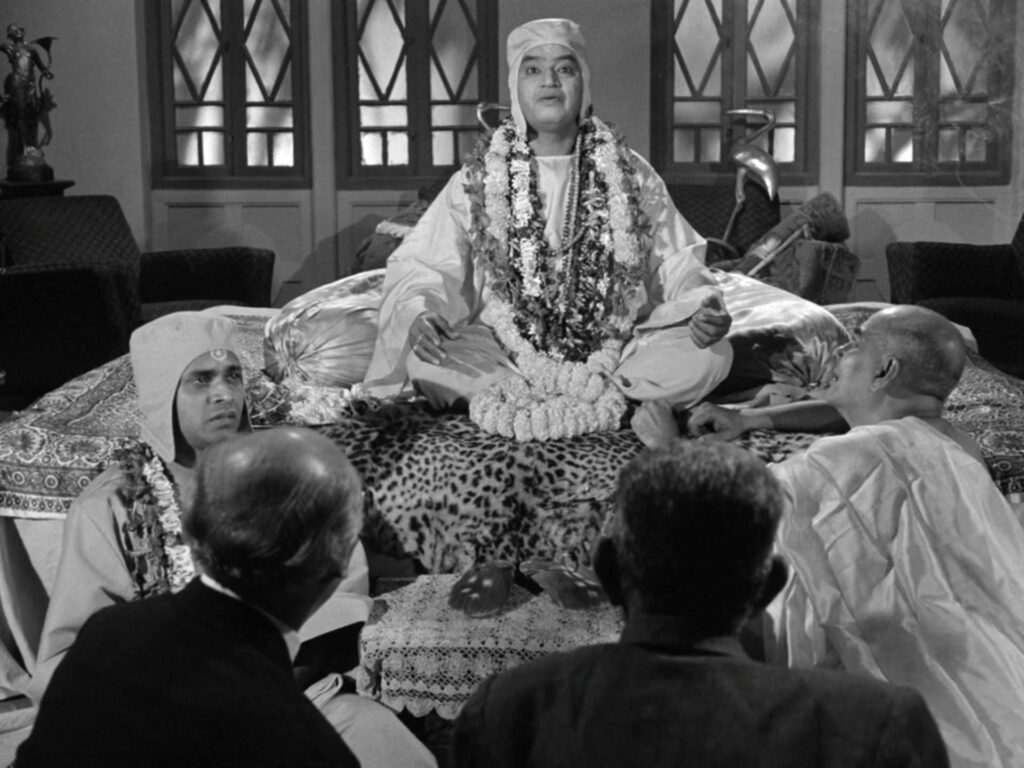
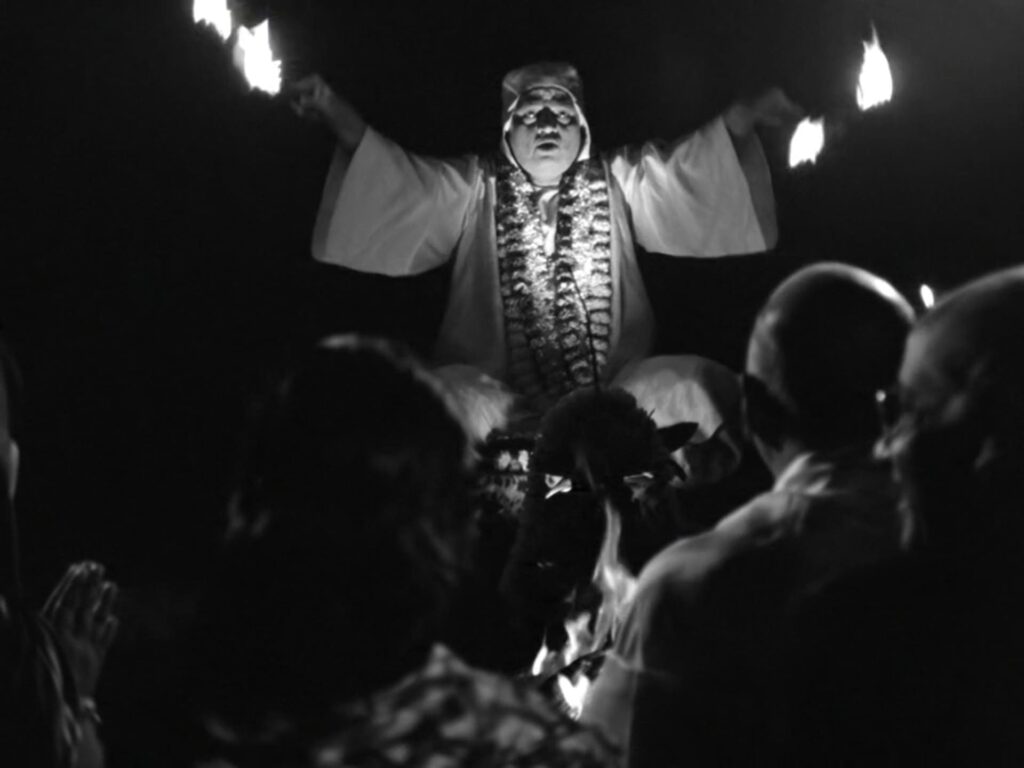
Fortunately, the eccentric, bombastic comedy that Charuprakash Ghosh embodies as Birinchi Baba never wears thin. His lively facial expressions and large physical presence dominate every shot he occupies, lending exaggerated weight to his lies that he taught Albert Einstein, witnessed Jesus Christ’s crucifixion, and knew Buddha in his infancy. Anyone with the slightest discernment can see that he is a raving madman, yet even the cynical find themselves entranced by his pseudo-philosophical party trick, rotating two fingers in opposite directions to represent the past and future. When Satya sneaks into the house one night and delivers a secret note to Buckhi, Ray’s cinematography even grows hypnotically expressionistic, revealing one of Birinchi Baba’s nocturnal rituals starkly lit by flaming torches swung in rhythmic arcs. This holy man may be a charlatan, yet his charisma burns brightly, entirely overwhelming rational though.
At the very least, his grip is not as unshakable as it initially seems, as revealed by Buckhi’s response to Satya’s secret message: “I know and understand everything, but I have no option. I will be free if the Babaji leaves.” With confirmation of her desire to escape her father’s rigid control, Satya and his friends thus seize the opportunity to expose the holy fraud.
“He is a high-class actor. He understands mass psychology,” Niberan ponders, seeking to understand the enemy’s methods before launching a counterattack. If these men serve truth as their highest ideal, then the blind faith of Birinchi Baba’s followers must be shattered in one decisive stroke, tearing through the veil of sanctity that cloaks his deception.
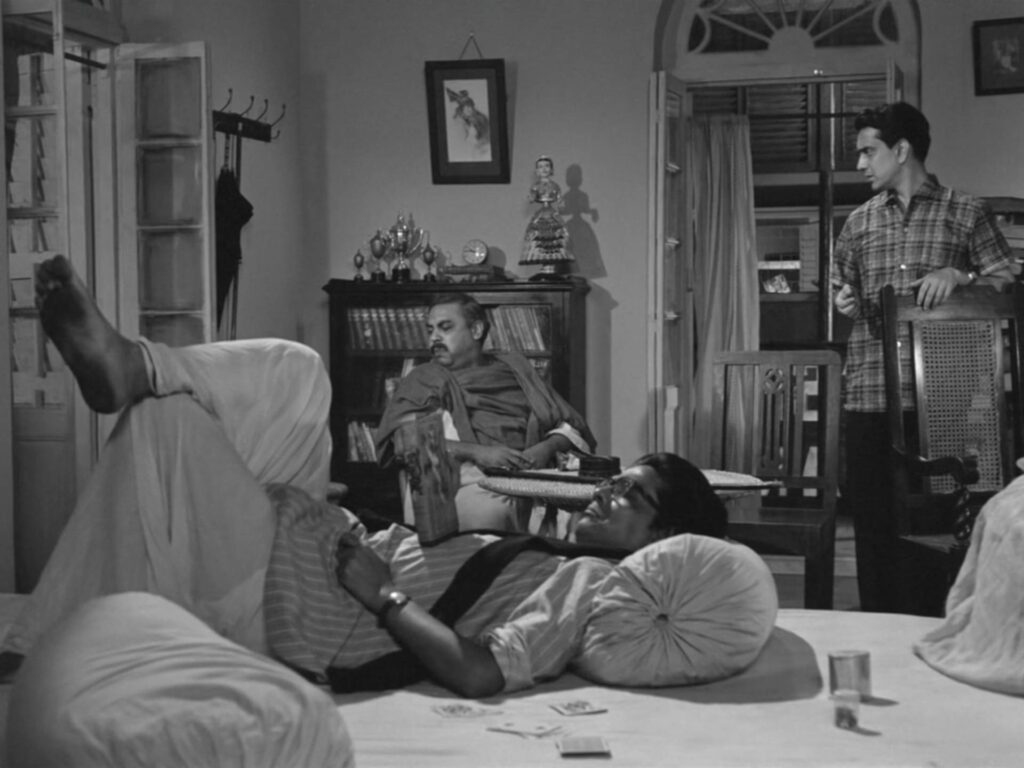
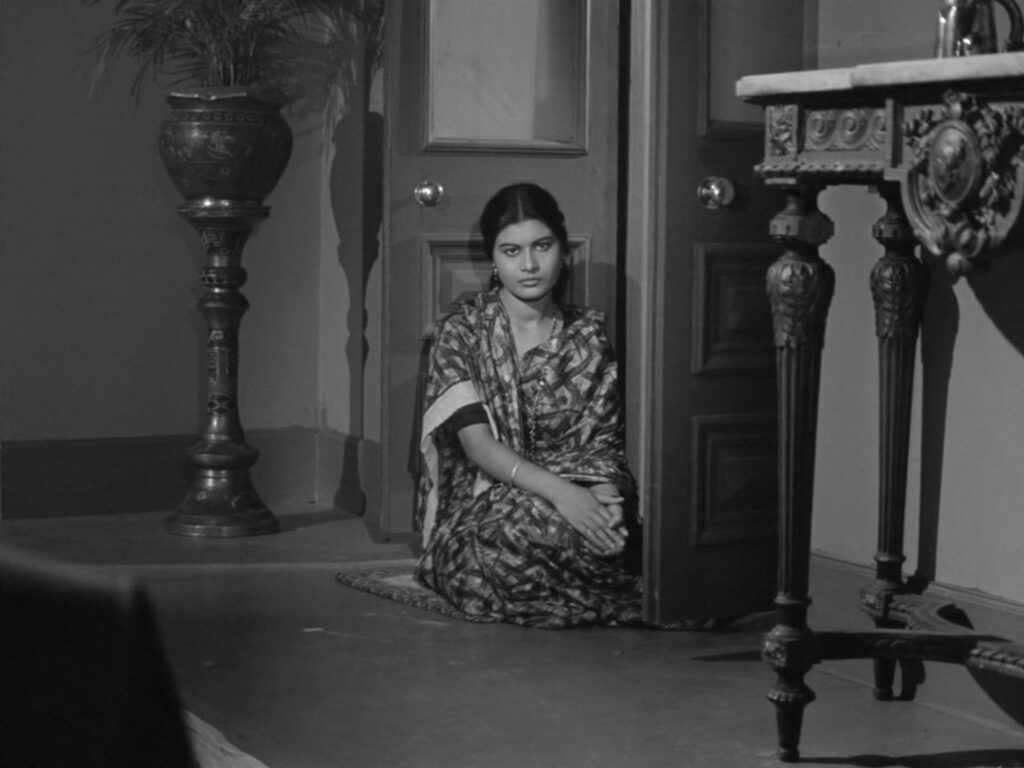
The strategy is plotted with methodical precision. As the men reiterate their plans in the car to the Mitra house, Ray’s camera gazes through the windscreen, subtly reframing in pans that follow the movement of their conversation. In the room of worship too, a careful tracking shot glides across their focused expressions – save for Satya, who can’t help letting his gaze drift toward Bukhi. Ray’s tension builds through repeated cuts back to the clock nearing seven, while Birinchi Baba’s sonorous chants fill the air, until finally the chimes begin and the fire is lit.
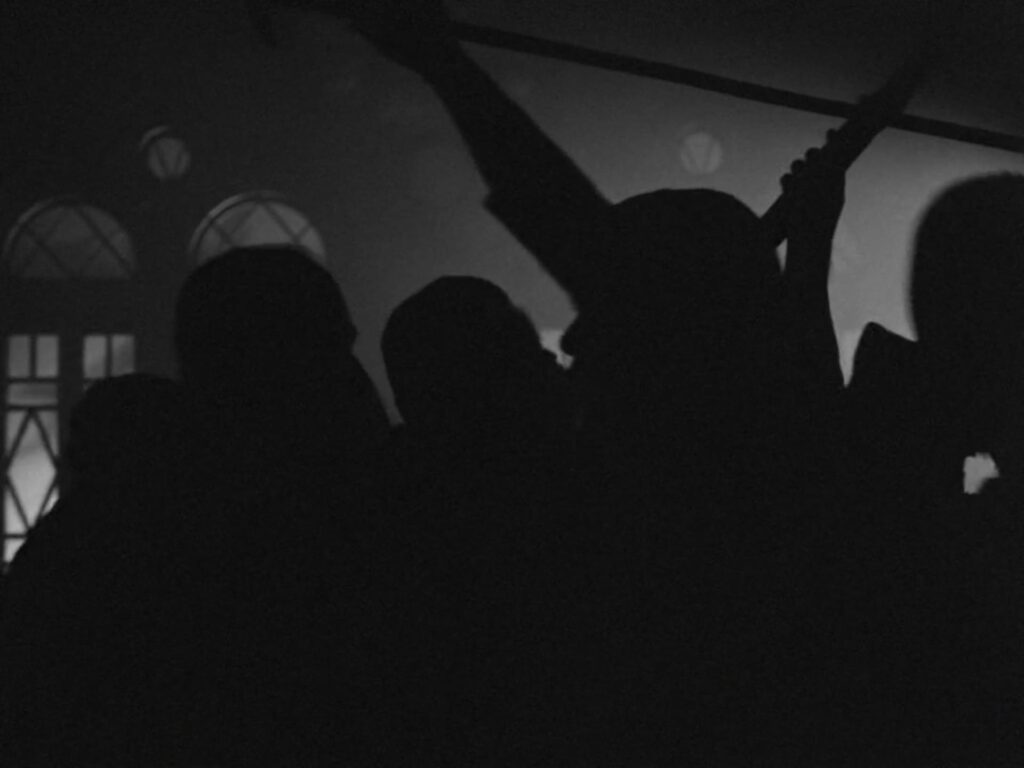
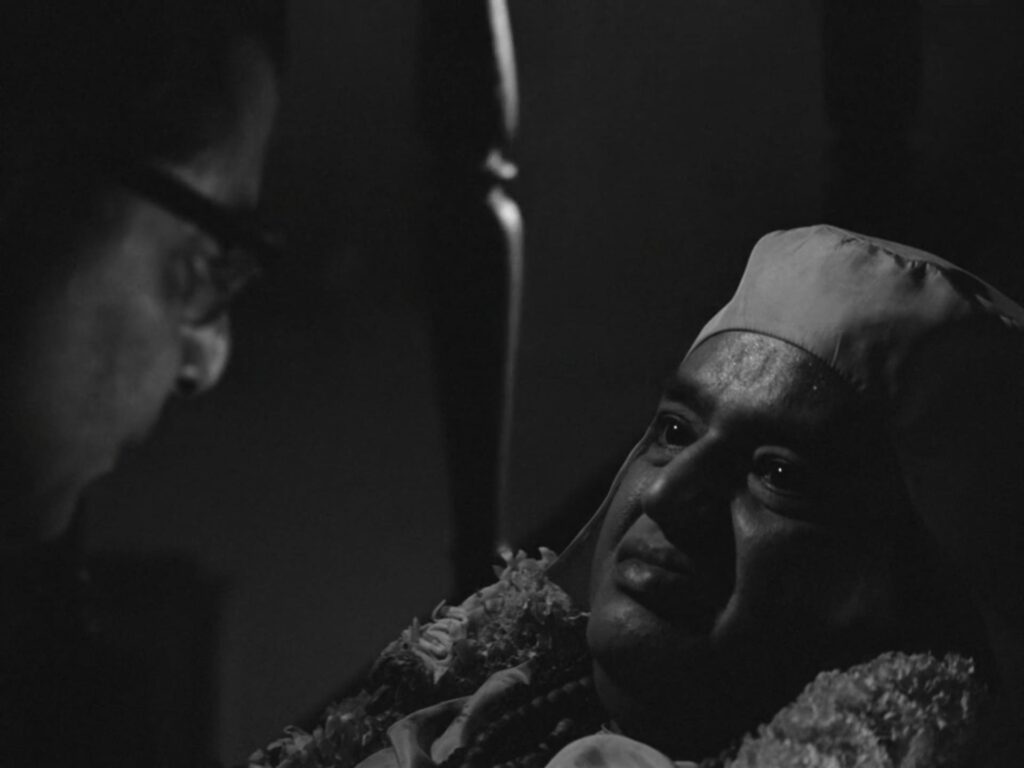
With smoke engulfing the house and the lights cut, chaos erupts, and Birinchi Baba’s trance is broken. Ray’s brisk editing accelerates too as silhouettes rush through the darkness, though at the height of confusion, Niberan grips the struggling conman’s ankles. “Don’t you know the Fire Sciences, master?” he grins, leaning over his terrified face.
“Now leave, Babaji! No more of this!”
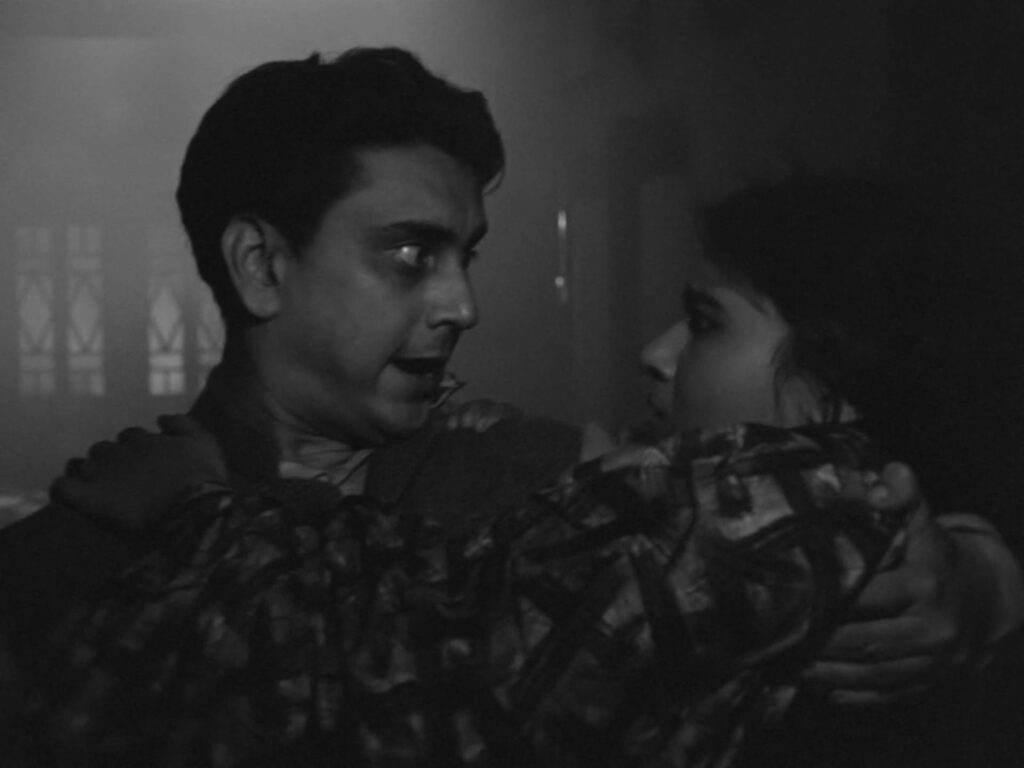
Satya, meanwhile, is preoccupied with rescuing his beloved from the pandemonium. “Will you marry me?” he proposes on a whim, oblivious to her bewilderment. “No!” she insists – though that hardly stops him from claiming victory with a smile.
“That’s a yes!”
Ray speeds towards his ending, sacrificing finesse for energy, but not without acknowledging the endurance of human folly. Running away with the guests’ bags, Birinchi Baba’s assistant catches up with his master. “Towards the future we go,” he declares before joining his flight into the darkness, stolen goods in hand. Such is the nature of opportunists in a superstitious society after all, and as Ray draws the curtain on his spry social comedy, The Holy Man concedes the stubborn, adaptable resilience of charlatanry.

The Holy Man is currently streaming on The Criterion Channel.