Olivia Wilde | 1hr 47min

Many working professionals would be proud to own a luxurious apartment in San Francisco, complete with high ceilings and tasteful finishings. For music teacher Joe however, it is an inheritance from his parents that he never really earned, reminding him daily of everything he hasn’t accomplished. Still, that doesn’t keep his wife Angela from taking pride in her recent renovations, eager to present a façade of domestic bliss that will win over their effortlessly cool neighbours. Their marriage may have fallen into disrepair, yet smiling through the cracks, she is determined to preserve this perfect illusion throughout her carefully staged dinner party.
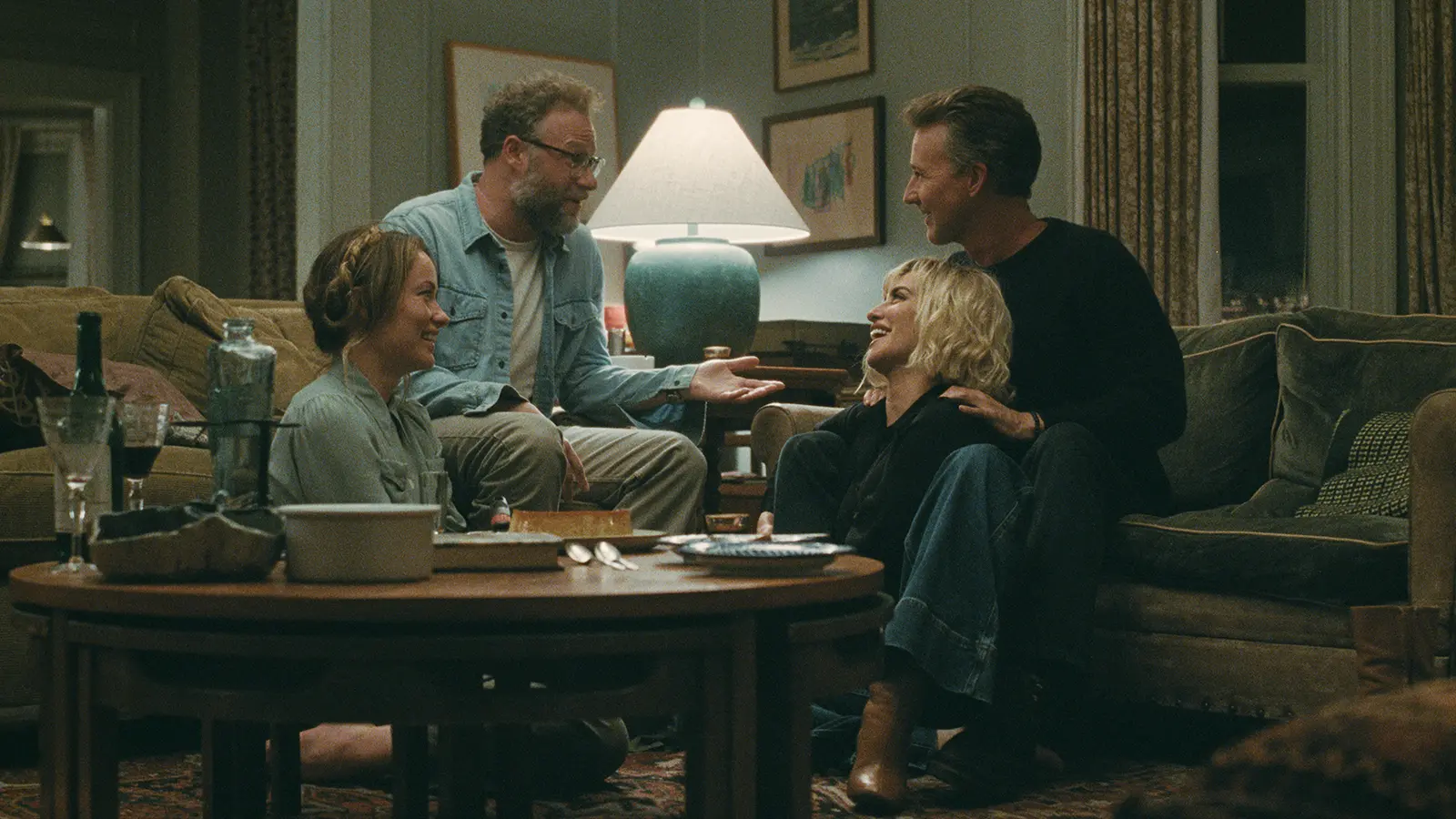
“One should always be in love. That’s the reason one should never marry,” Olivia Wilde quotes in her epigraph, invoking the wit of Oscar Wilde. Unfolding in real time the moment Joe returns home from work, The Invite quickly reveals its finely tuned comic sensibility, with Joe and Angela’s combative verbal sparring contrasting against Hawk and Pina’s playful synchronicity. Olivia Wilde evidently owes a great deal to marital portraits such as Scenes from a Marriage, though Mike Nichols’ chamber dramas provide the greatest influence of all, as the darkly bitter theatrics of Who’s Afraid of Virginia Woolf? echo throughout. Where cynical, middle-aged couple George and Martha once sought to corrupt their young guests though, Joe and Angela’s visitors turn the tables entirely, offering an invitation of their own that leaves their hosts thoroughly exposed.
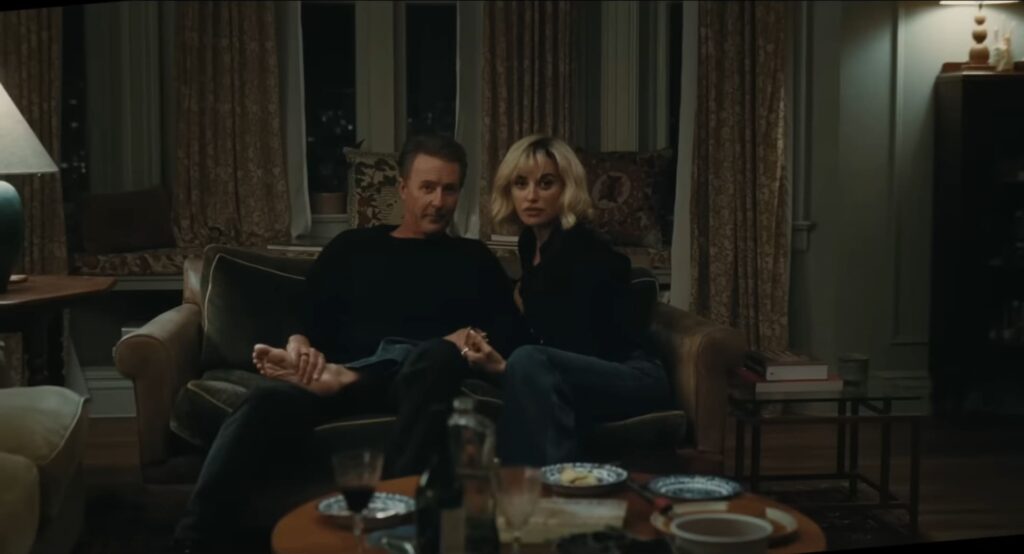
All four actors play to their strengths here, with Penélope Cruz’s vivacious charisma and Edward Norton’s easy-going affability setting an impossible standard of secure, self-possessed contentment. Even against these all-time great actors though, Seth Rogen and Wilde herself deliver some of their strongest work as Joe and Angela, effortlessly swinging between barbed comedy and wounded vulnerability in lockstep with the screenplay’s rapid tonal shifts. Their trust is inherently broken, and it is plain to see why – while Angela frequently lies to keep up appearances, Joe’s total disinterest in their guests lands as insensitivity, verging on outright rude. That Hawk and Pina meet such behaviour with emotional maturity only deepens their hosts’ insecurities too, particularly once the neighbours’ freewheeling, polyamorous sex life becomes the evening’s unlikely topic of conversation.
Like awkward, horny teenagers discovering sex for the first time, Joe and Angela listen with wide-eyed curiosity to their guests’ uninhibited confessions, and however briefly, The Invite’s hostile tension drops away. There is clearly something vital missing from this marriage to inspire such a desperate response, and although Wilde mines the comedy of Will McCormack and Rashida Jones’s tightly wound screenplay, she proves equally skilled in staging its humour and drama.
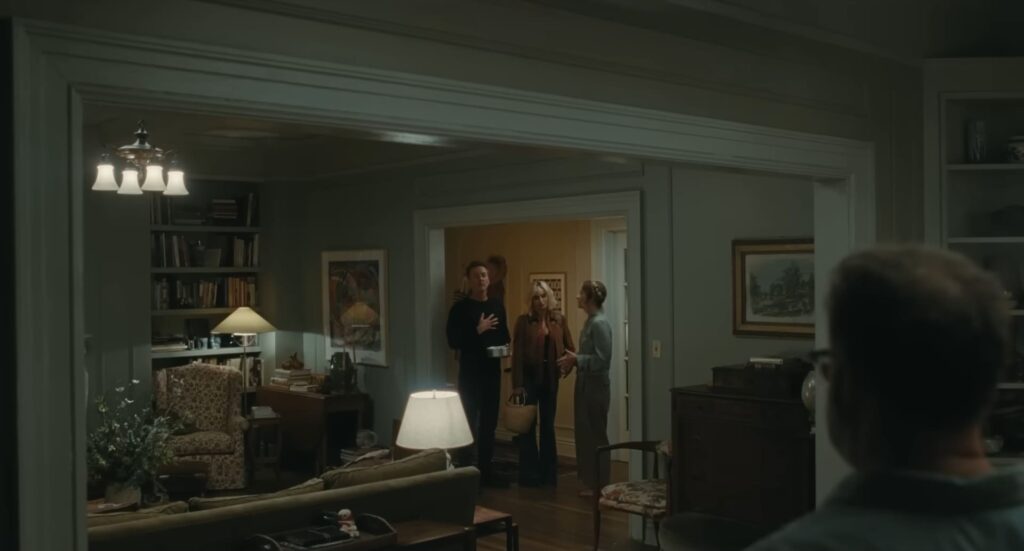
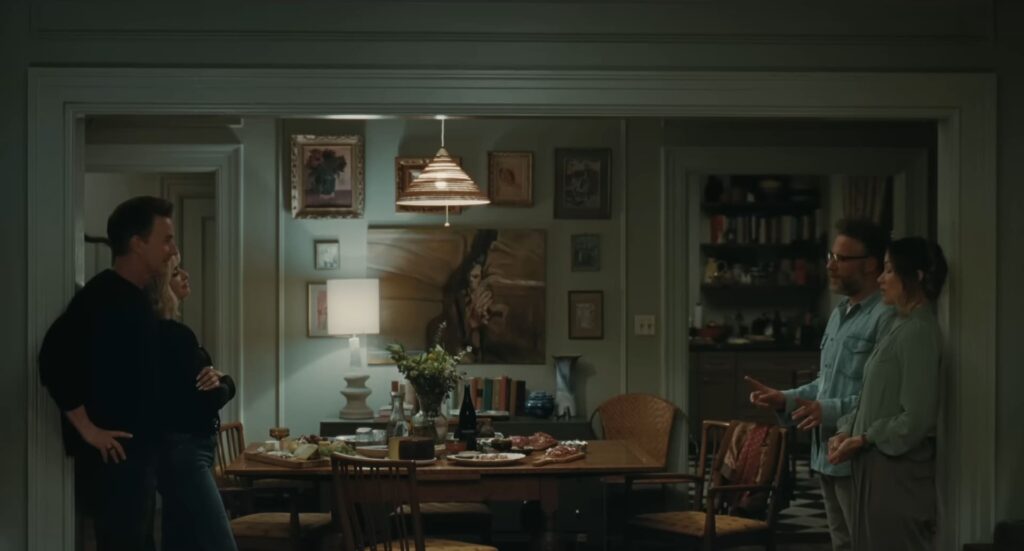
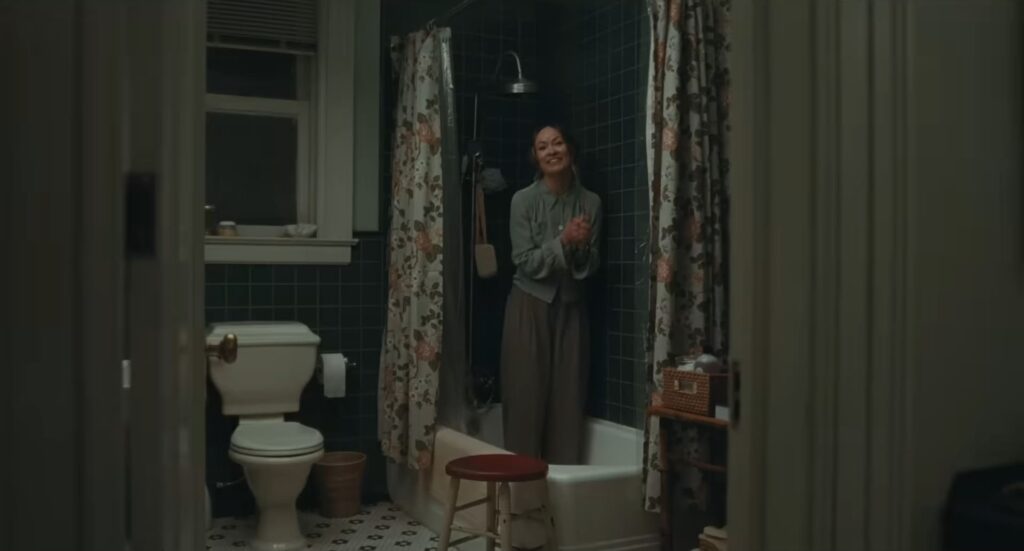
Lavish as this apartment may be, we never stop feeling its walls pressing in, as shots are layered through doorways that allow little room to move. From high vantage points, Wilde’s camera often crushes her actors beneath the room’s architecture, or otherwise uses that negative space to isolate them on either side of the frame. Mirrors similarly serve to fragment her blocking here, while in one of Joe’s particularly fiery rants, a well-placed lamp comically casts his face in a harsh underlight. More than simply orienting us within this apartment, Wilde’s careful attention to spatial geography also crucially establishes the relative position of its bedroom and study through a pair of windows, carving out a dark, lonely gulf between Joe and Angela’s respective domains.
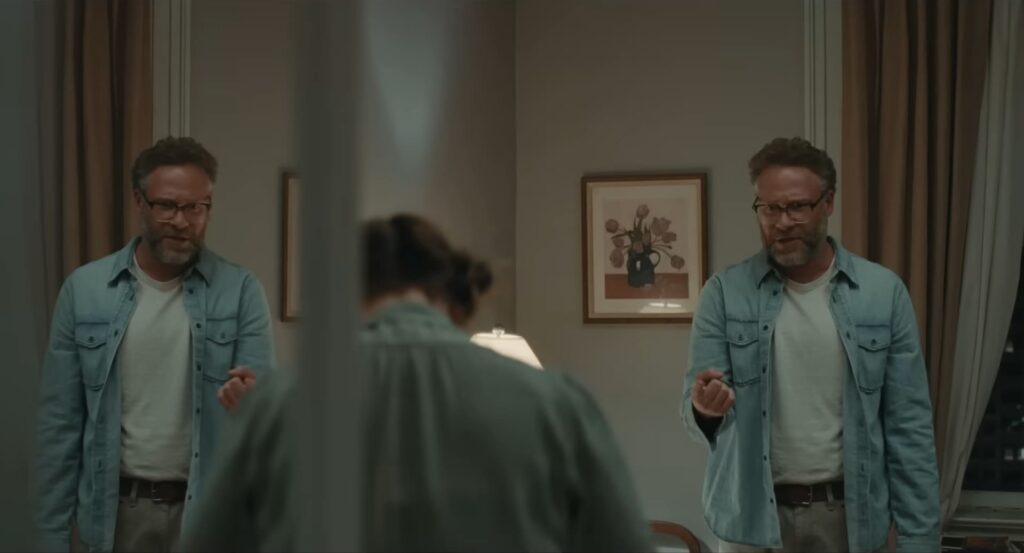
The editing no doubt does just as much heavy lifting, carrying the conversation’s brisk, overlapping flow through side glances and interjections, and even maintaining that momentum when the ensemble splits into separate rooms. Still, through The Invite’s score of anxious, intrusive cellos, we often feel as though there is a fifth voice present, actively responding to dialogue in plucked strings, staccato jabs, and persistent, circular motifs. Verbal and musical rhythms fall into uneasy sync, and as the evening goes places that no party could have anticipated, Wilde’s meticulously constructed chaos drives them toward a seemingly inevitable reckoning.
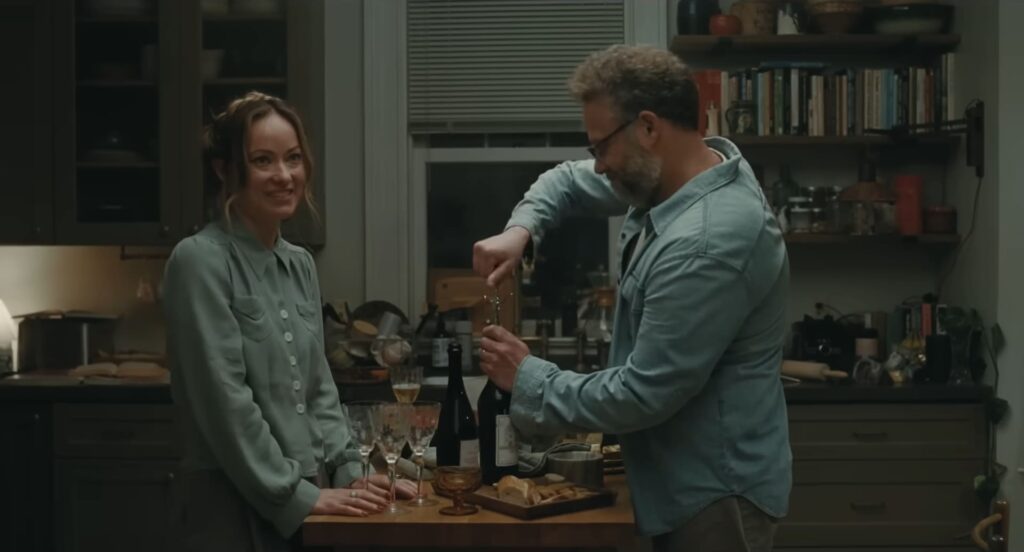
Her narrative economy is extraordinarily efficient here, and may very well be The Invite’s greatest virtue, planting details early on that consistently return to wreak havoc later. Angela has spared no effort to entertain her guests, though whether it’s her brand-new rug, charcuterie board, or soufflé, each serves its purpose in pushing the evening deeper into humiliating dismay. Even the window which provides a direct view to Hawk and Pina’s apartment becomes a source of conflict too, growing out of Joe’s earlier remark about its lack of curtains, and ultimately paying off in the evening’s most revealing confrontation.
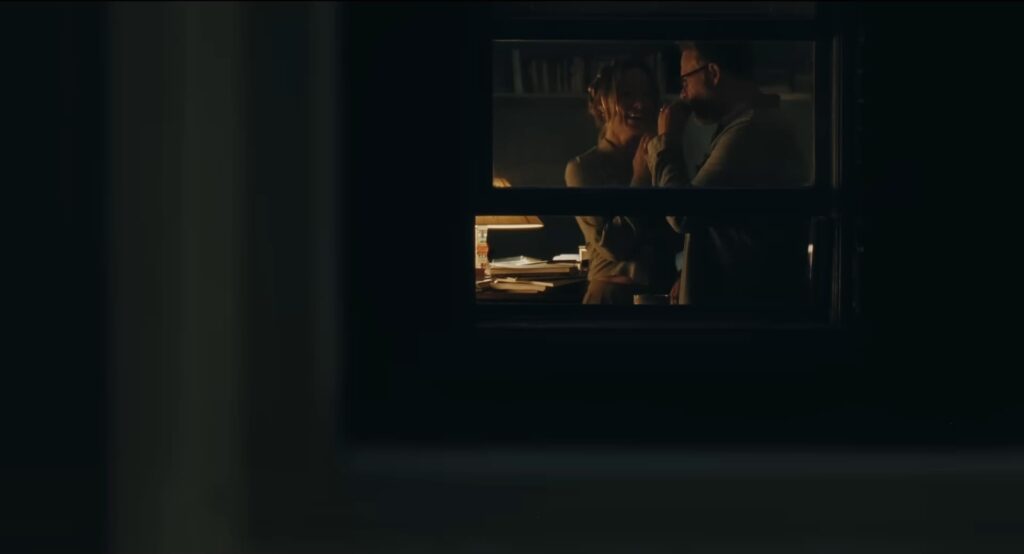
It is also through this attention to detail that Wilde builds toward genuine catharsis by the end, steering away from dialogue altogether, and letting a simple action planted from the beginning to communicate everything left unsaid. Just as The Invite strings us along its escalating waves of tension, so too does it earn its eventual release, tying up most loose ends while leaving just enough frayed for Joe and Angela to mend on their own. Their neighbours may live worlds apart from their own guarded relationship, yet this invitation into bitterly honest self-reflection offers a therapeutic purge, tentatively addressing their ongoing estrangement through humility, confession, and a necessary dose of shame.
The Invite is currently playing in cinemas.