

Luis Buñuel | 1hr 35min

It is clear from the outset of Edmundo and Lucía Nóbile’s lavish dinner party that reality seems to have broken, and The Exterminating Angel evidently delights in slyly dismantling its continuity. “That’s odd, Lucas isn’t here,” Edmundo remarks as they enter the main hall, puzzled by the doorman’s sudden disappearance – only for Luis Buñuel to instantly replay the scene as if it had never occurred. Gathering around the table, Edmundo toasts to the opera singer Silvia and her recent theatrical triumph, then repeats the gesture a minute later with a confused pause. Even the relationships among his guests succumb to this breach of narrative logic, as Buñuel ambiguously introduces a pair of men on three separate occasions as strangers, old friends, and lastly inexplicably hostile acquaintances.
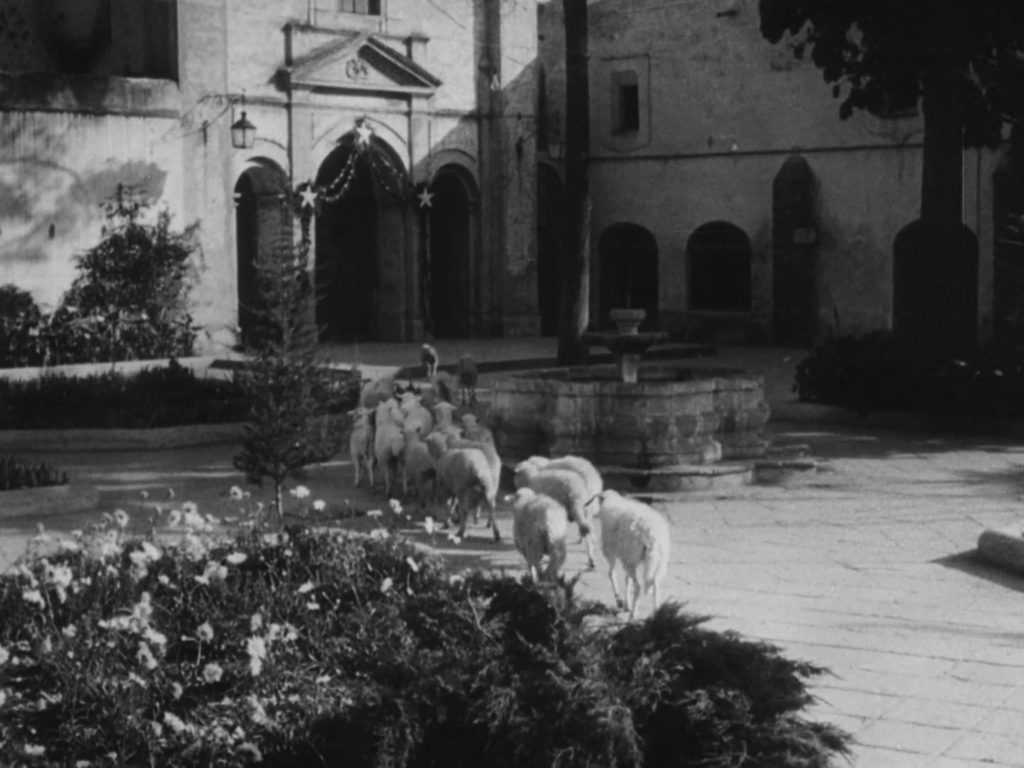
That Lucía has apparently been hiding three sheep and a bear in the kitchen as a surprise is the least of evening’s peculiarities. Far stranger is the chain of servants who follow Lucas’ stealthy exit, leaving the manor one by one until all that remains is Julio, the head of staff. None can explain why they are compelled to retreat, though given their position outside the aristocracy’s self-conceited illusions, perhaps they are instinctively more attuned to the curse that will soon settle over the party. Despite their initial denial, it is only inevitable that these wealthy guests recognise the invisible constraint that keeps them from leaving as well, but by the time they have settled down to listen to Blanca’s piano recital, it is already too late. Unable to cross the living room’s threshold, they linger in confusion, and from there The Exterminating Angel escalates the irony of their predicament with subversive, sardonic wit.
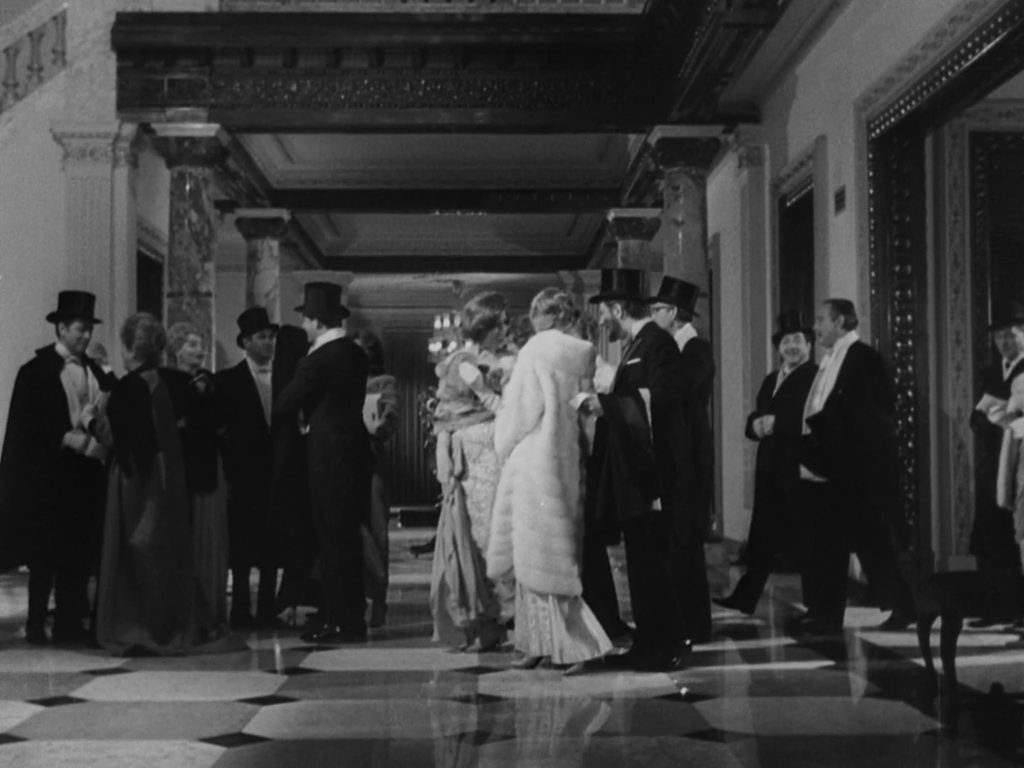
Although Buñuel is working firmly within his distinctive realm of surrealism, his class satire somewhat echoes Jean-Paul Sartre’s absurdist play No Exit, trapping a cast of deluded souls within a cramped, liminal space. Where Sartre’s hell is other people however, Buñuel’s is etiquette, vanity, and the self-imposed prison of privilege. There is no physical obstacle stopping these guests from exiting the Nóbile’s living room in The Exterminating Angel, but once the boundary is set, God forbid anyone take the first step towards escape.
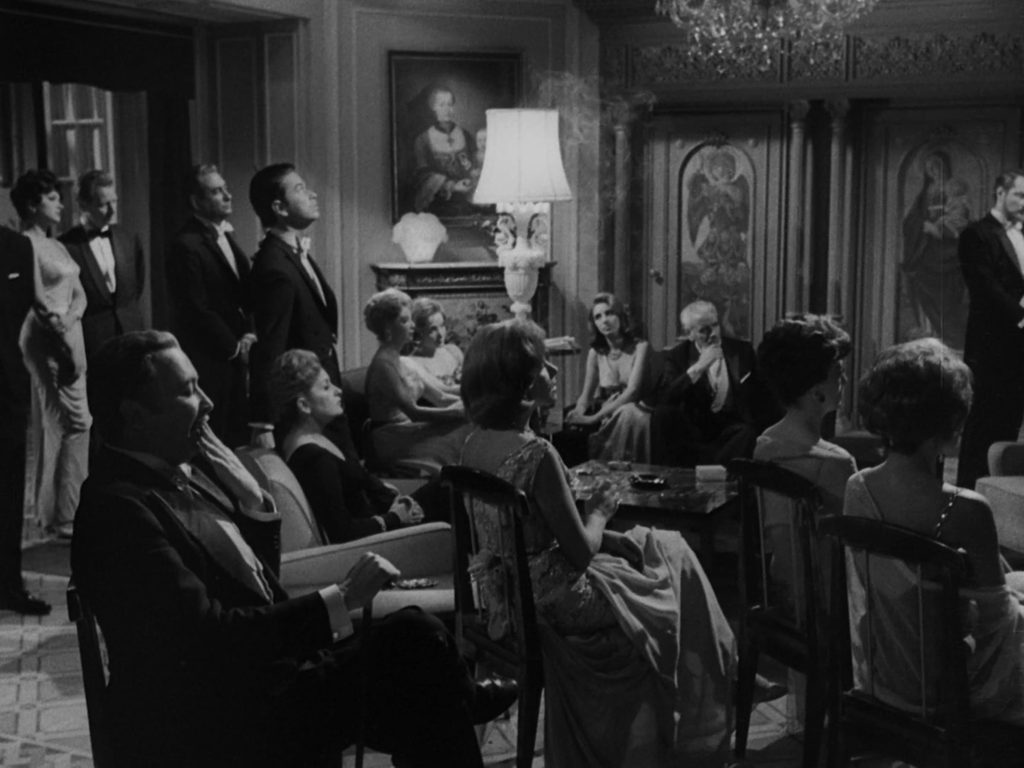
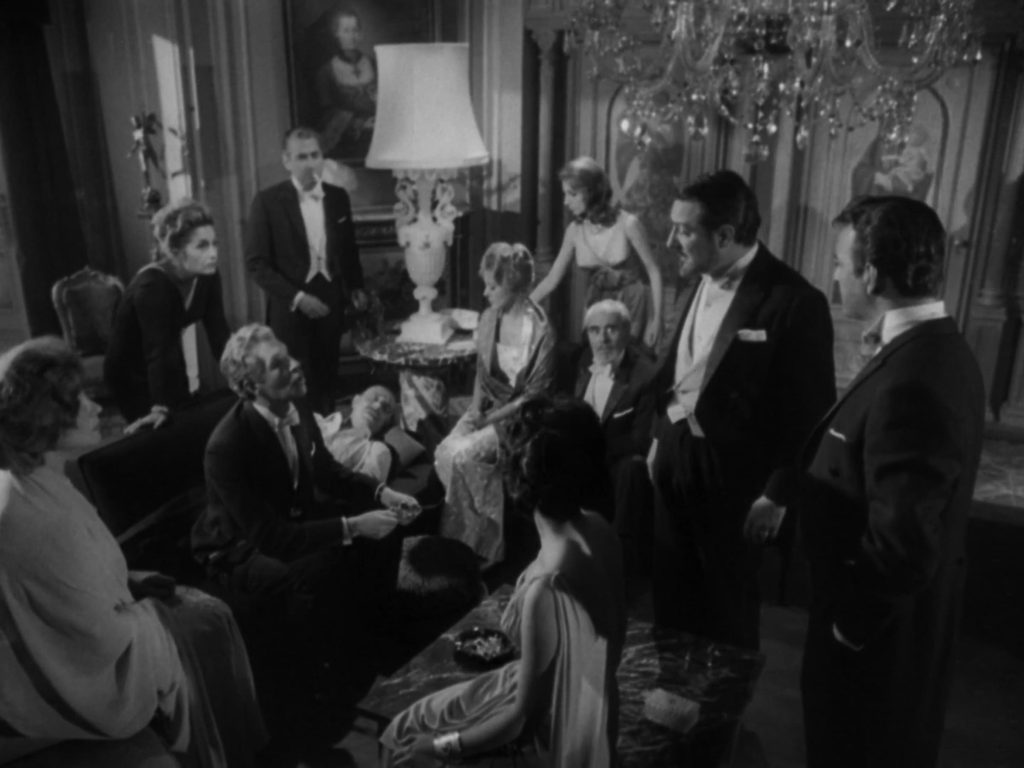
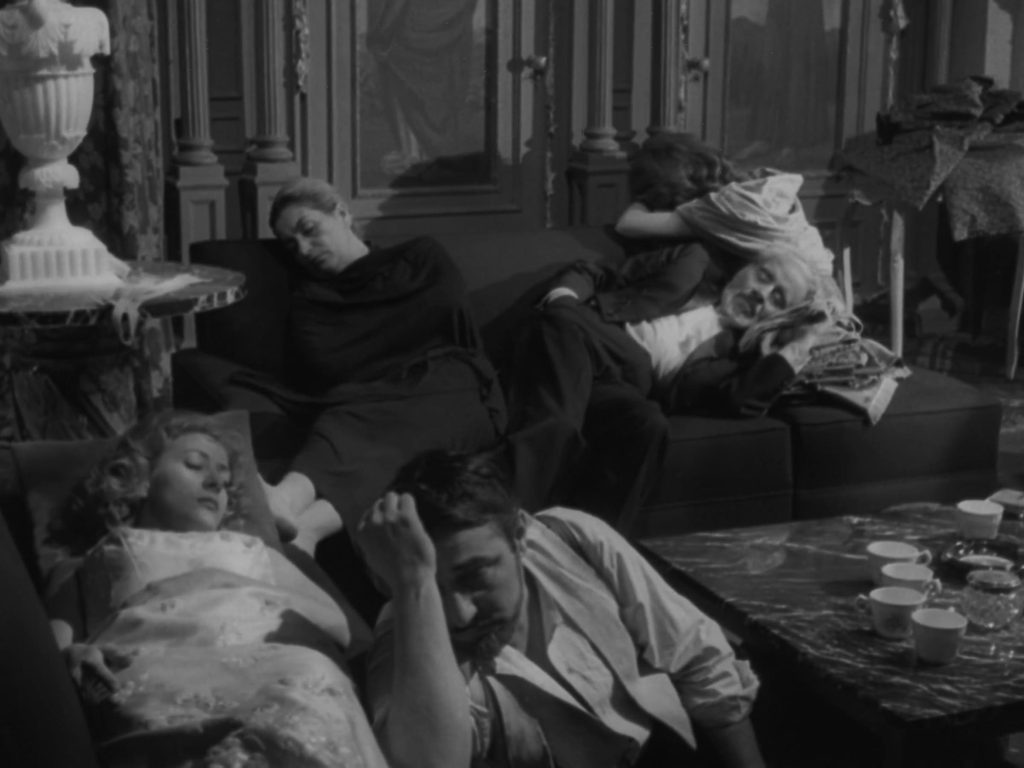
With guests constantly faltering at the living room doorway and making excuses to turn back on the verge of exiting, their hosts grow increasingly frustrated, and the night wears painfully on. Many claim to have appointments to attend and children to care for, yet they nevertheless fall asleep, sprawling across the furniture like stranded castaways. “I find it very original. I love when things deviate from the routine,” the superstitious Ana whimsically remarks when the topic is finally addressed in the morning, while Silvia admits she only kept quiet out of courtesy. Even when their attempts to leave grow more desperate, still these aristocrats find themselves entirely incapable of taking collective action. Instead, it becomes much for them easier to pin their self-imposed paralysis on supernatural forces, transforming their failure of will into a metaphysical nightmare.
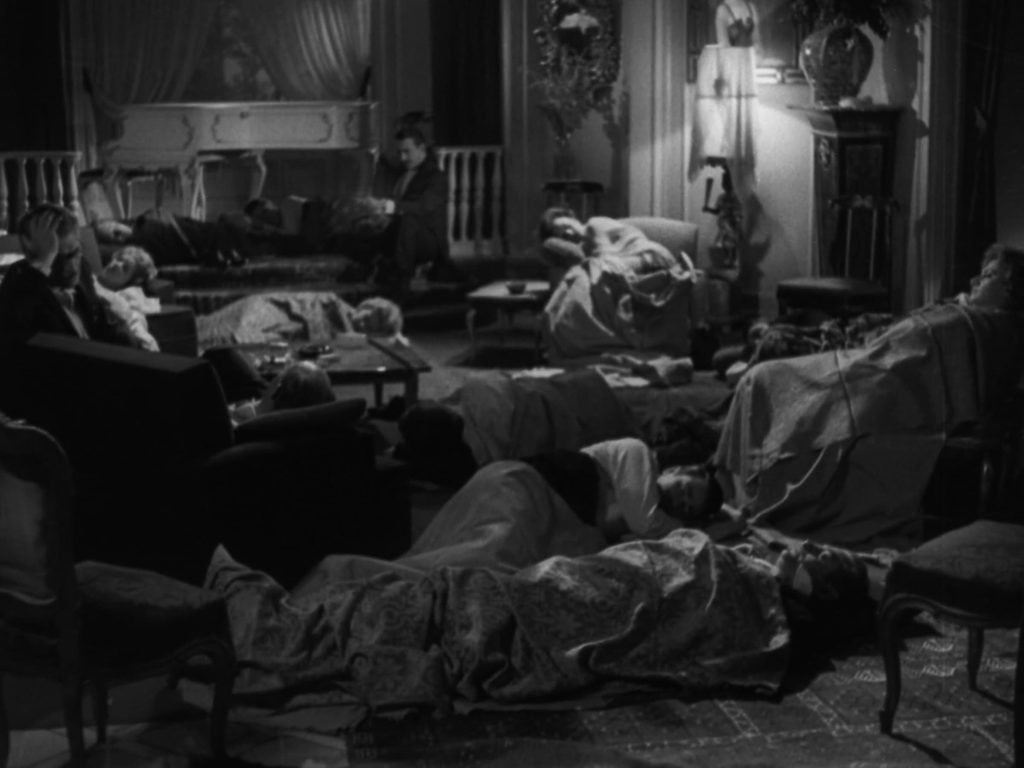
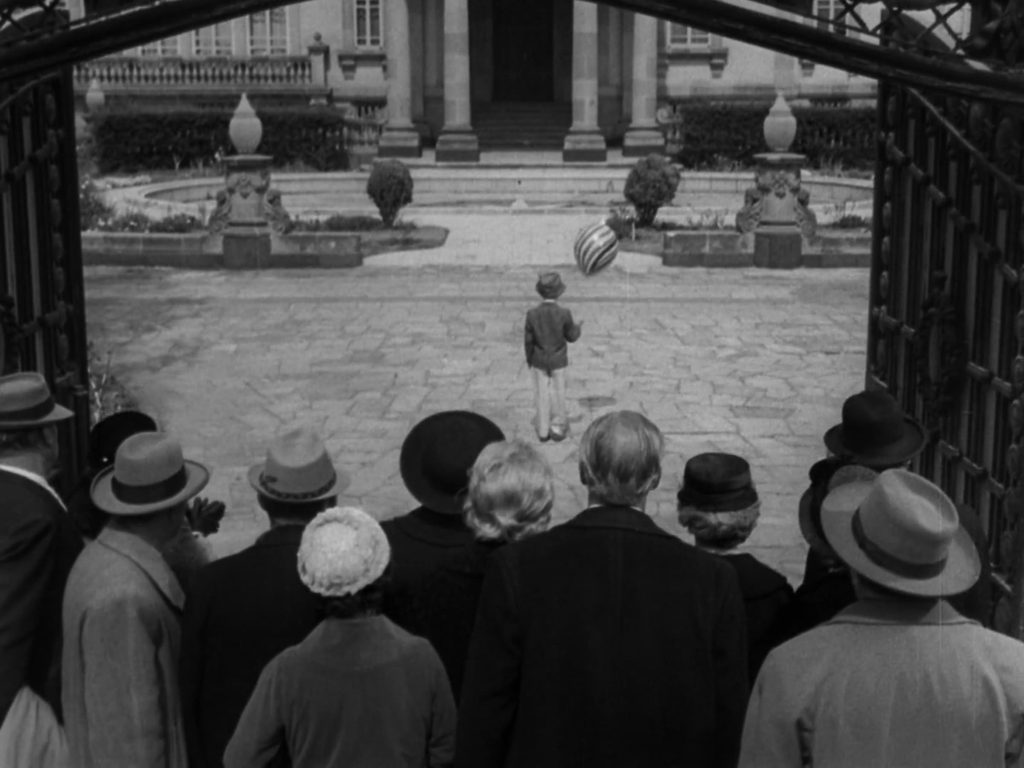
By pursuing this paranormal logic as metaphor, Buñuel sharpens his scathing critique, absorbing us into an absurdist allegory that supplants reason with arbitrary ritual. Where the biblical Angel of Death once destroyed life, here it exterminates social order, exposing those pretensions which override the most basic survival instincts. One need only look to the baffled crowds gathering outside to understand the universality of this curse – just as the party guests cannot exit, so too are police, soldiers, and rioters compelled to halt before entering the property. Unburdened by society’s arbitrary boundaries, it is a child who ventures further than anyone else, but even he too is eventually repelled from the manor by the apparent spell cast around its perimeter.
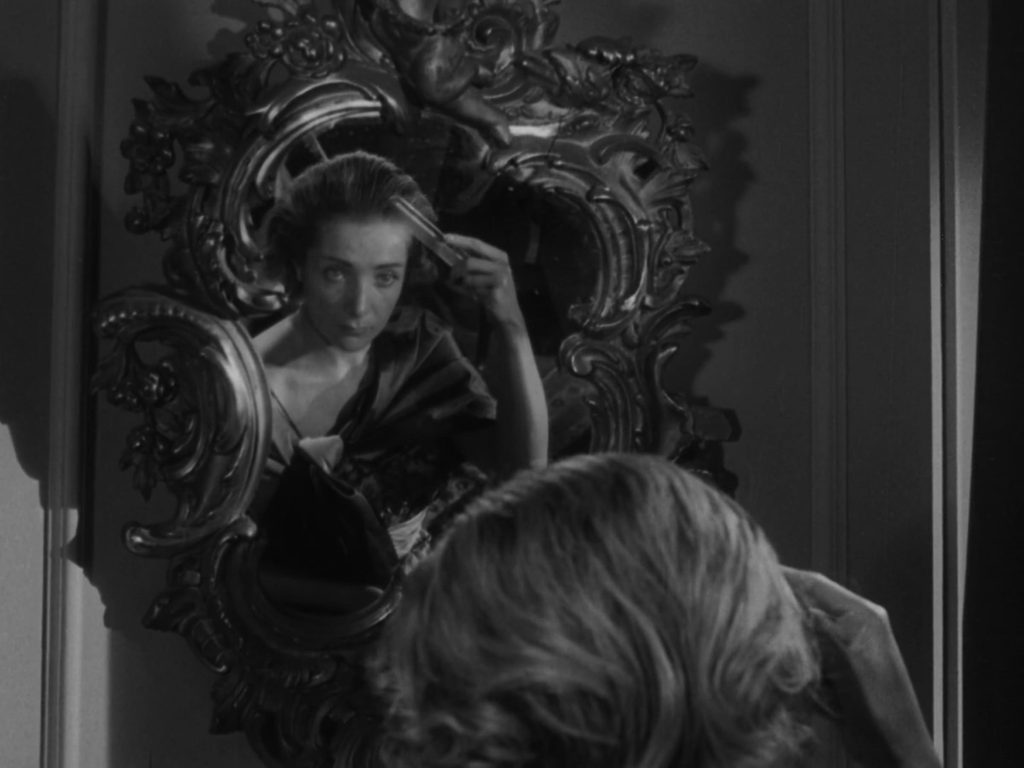
The rigid authoritarianism and internalised repression of Francoist Spain may be Buñuel’s primary target, yet his intricate array of characters broadens his indictment, each serving as pointed caricatures without individually taking centre stage. Julio may standard apart from the aristocracy as the manor’s head servant, but he too remains trapped in this living room by passive compliance, complicit in a hierarchical system that breeds a misplaced sense of loyalty among the oppressed. Meanwhile, those who have never known struggle inevitably cling to familiar pretences – while Silvia vainly combs her hair in the mirror to pass time, Ana resorts to empty pagan rituals, and Dr. Conde fruitlessly calls for reason amid violence. Even Edmundo and Lucía prayerfully vow to hold a solemn mass if they are delivered by divine providence, and through their desperate turn to faith, Buñuel turns his irreverent wit toward the hollow promise of religious order.
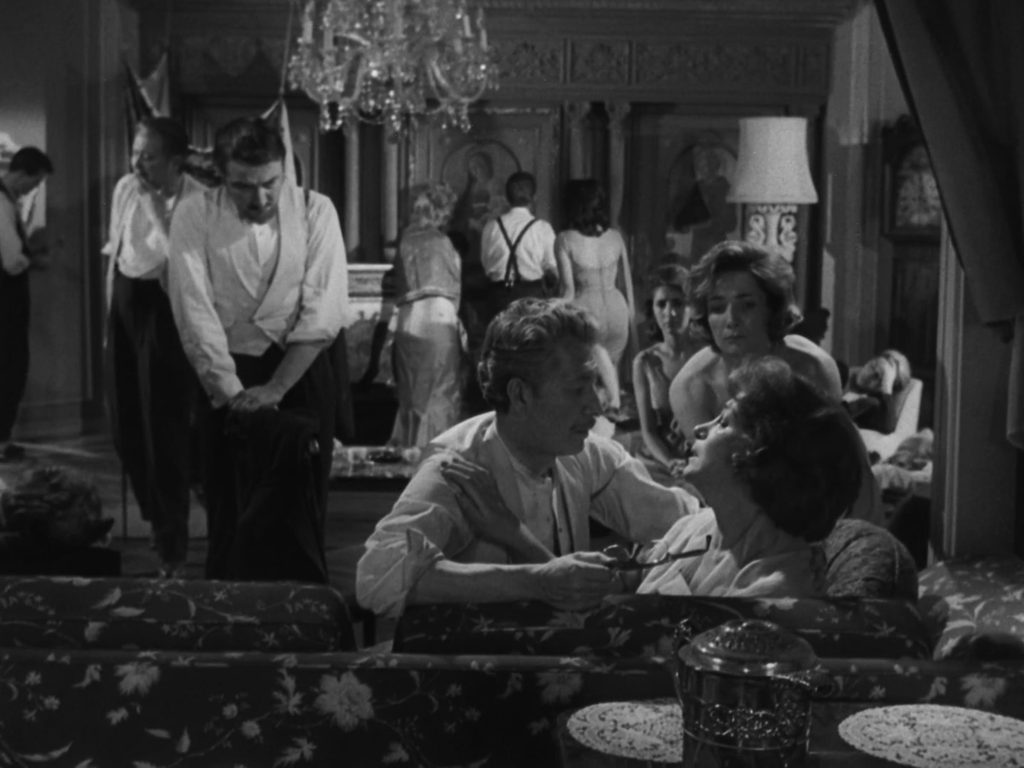
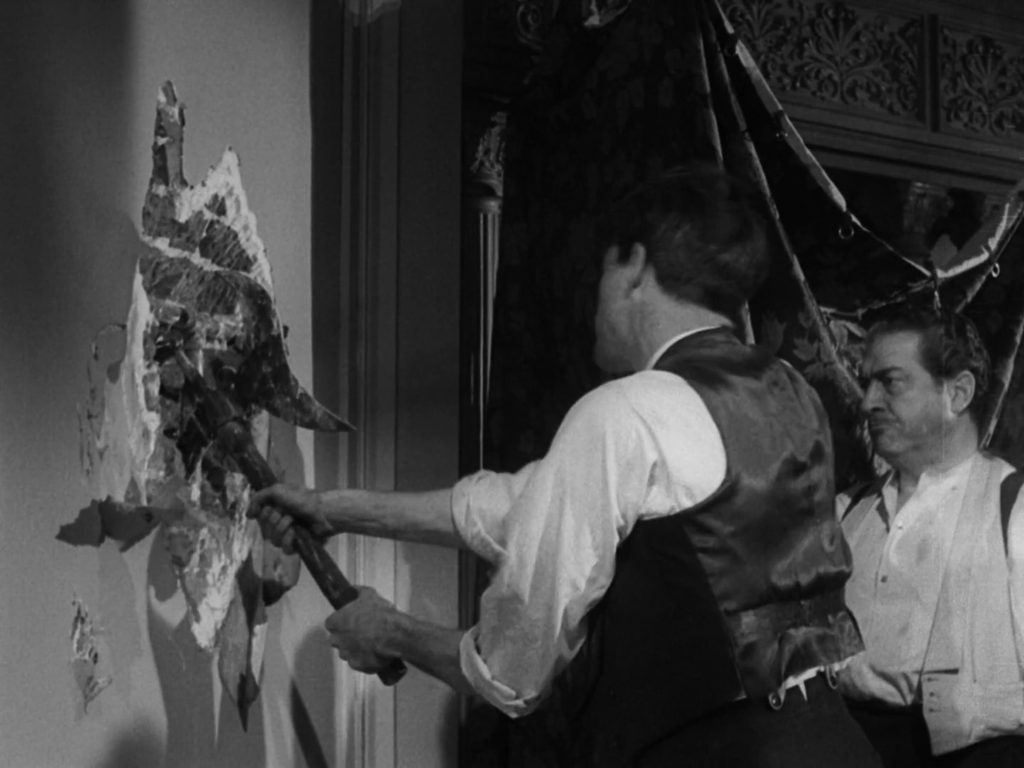
Especially when mild inconvenience becomes an existential quest for survival, these prisoners are driven to extreme measures, hacking into water pipes, eating paper, and turning to opiates to dull the pain. Where Buñuel once basked in the elegant order of this swanky, ornamental manor, blocking his ensemble through rigorous, magisterial high angles, his mise-en-scène now crumbles into slovenly chaos. Bodies lie strewn across the living room, their dishevelled tuxedos and evening gowns rumpled, and tensions rise between guests seeking a scapegoat. When Lucía’s sheep and bear wander towards the chamber, it is darkly comical just how quickly the bourgeoisie fall back on their feral instincts, smashing furniture for firewood and roasting the animals beneath chandeliers. As smoke fills the stuffy air, the chamber begins to look more than ever like hell, silhouetting these finely clothed creatures against a backdrop of primal chaos.
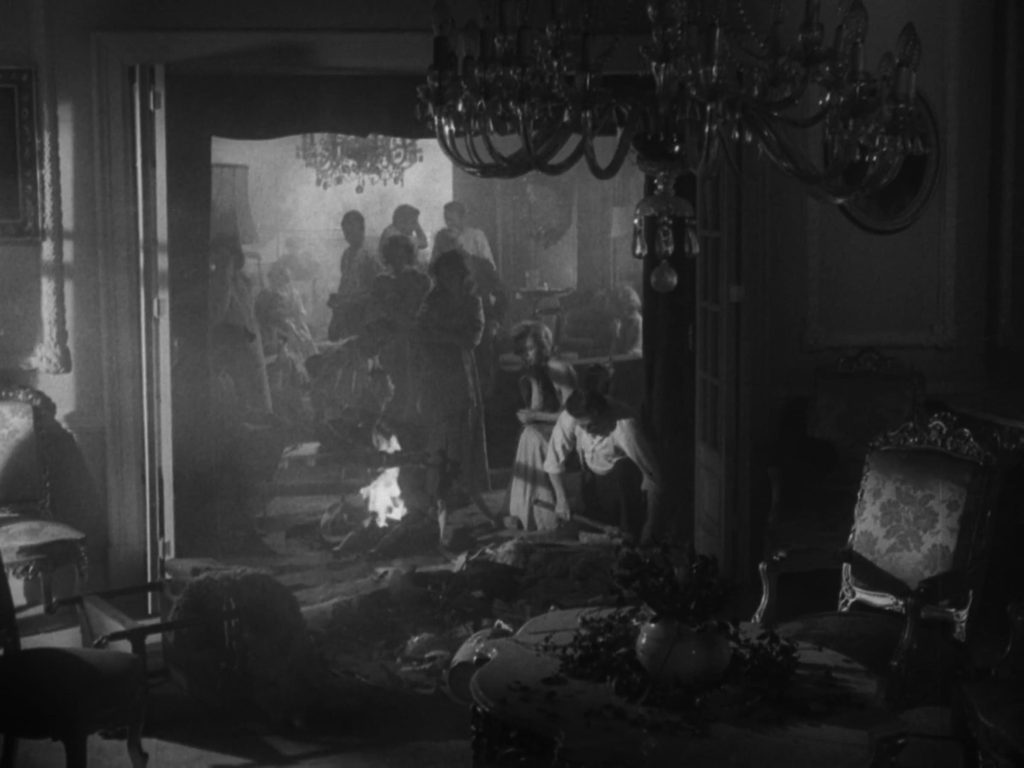
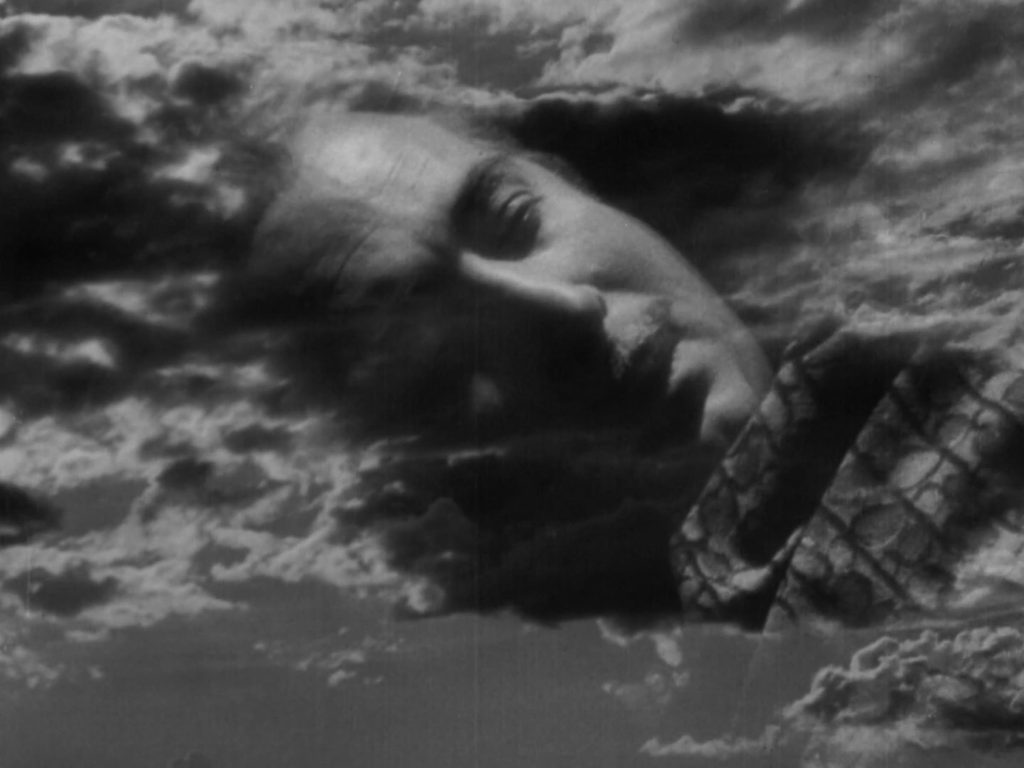
True to Buñuel’s hallucinatory surrealism, the party soon finds the boundary between their subconscious dreams and waking nightmare collapsing as well, especially terrorising Ana when a severed hand emerges from the darkness and crawls toward her. The Exterminating Angel veers fully into horror here as it wraps around her neck, provoking a frenzied stabbing – only for Buñuel to snap us back to reality when Alicia screams and retracts her hand from Ana’s misguided attack. Eventually, this delirium seems to encompass the entire chamber as the camera drifts past half-sleeping faces, drawing out screams, chants, and echoes of their inner thoughts. Transparent faces are imposed against stormy skies, snowy mountains loom over alpine landscapes, and a saw cuts through a cello’s strings in the following montage, splintering whatever rationality remains in this gilded cage.
“Death is preferable to this anarchy,” Edmundo laments, and as the deaths accumulate, a small closet off to the side becomes a makeshift mortuary. The elderly Sergio falls ill early on, and despite calls to take him to a hospital, the bourgeoisie’s inertia seals his fate. “I’m happy that I won’t see the extermination,” he murmurs, expressing thanks that he will die before the final collapse of civility, and incidentally inspiring young lovers Eduardo and Beatriz to take their own lives. Within Buñuel’s cruel paradox, escape only exists through self-annihilation, revealing a class whose codes of courtesy disintegrate the moment they are called to action.
Then again, perhaps there is another way out of this arbitrary puzzle, the singer Leticia muses – one which demands an equally arbitrary solution. Just as Edmundo prepares to submit to Raúl’s vicious demands and sacrifice himself, she realises that everybody is seated in precisely the same positions they occupied when Blanca performed her piano recital. Perhaps the spell will be broken if they re-enact that tableau, she considers, freeing from this collective hysteria. There is no logic to this imaginary loophole, but within the elaborate theatre of the bourgeoisie, ritual is truly the only key to an imagined lock.
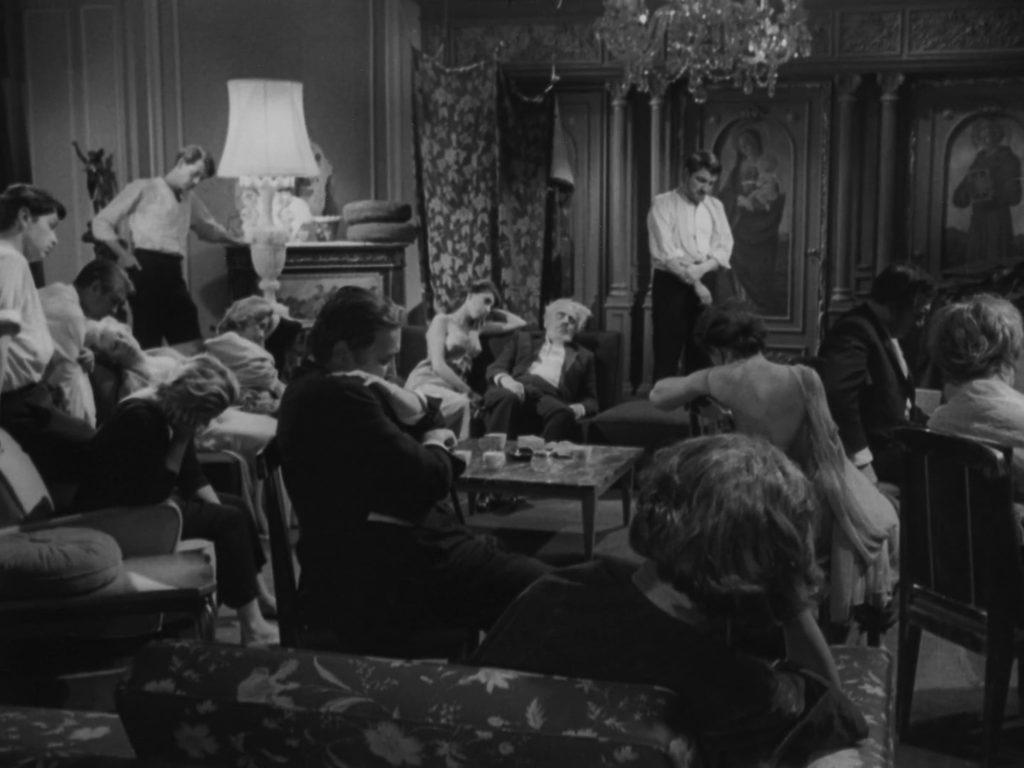
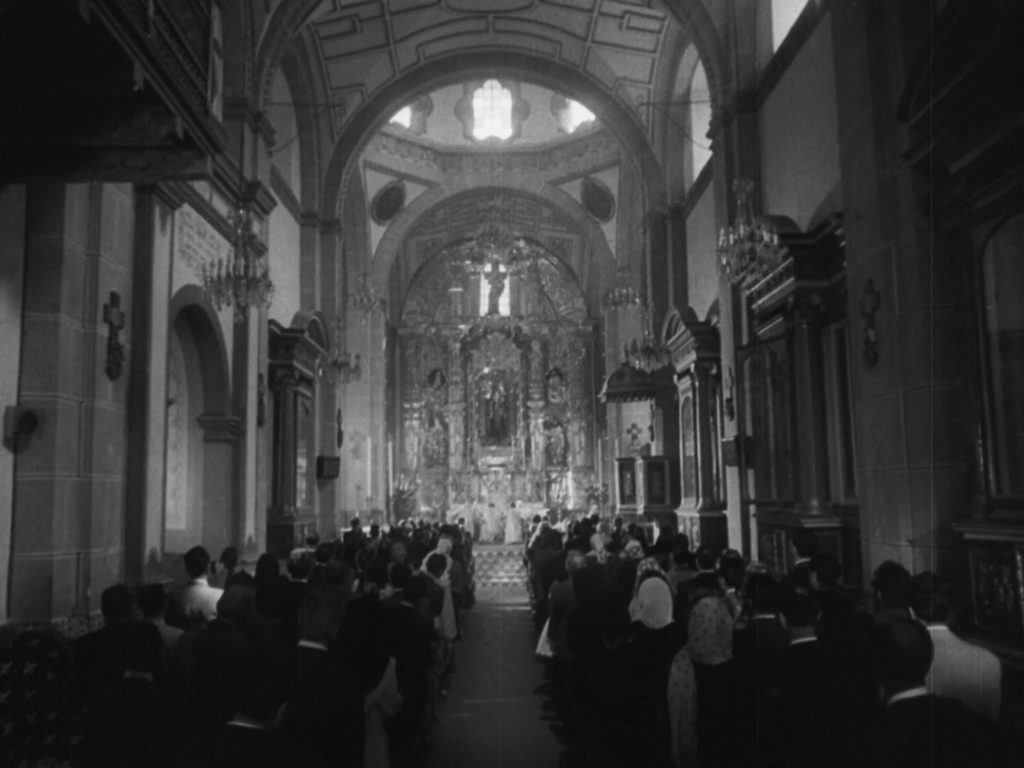
For these captives of privilege, however, the joy of freedom is only ever fleeting. Buñuel may release them from the manor, but within the Catholic church where they gather in solemn gratitude, he closes the loop with another prison – this time draped in piety. Harmony and order are restored to The Exterminating Angel’s austere visuals as the camera glides down the aisle, symmetrically framing the vaulted architecture, yet the serenity almost immediately dissolves. “Why don’t we wait until are the faithful have left?” the priest suggests at the threshold, only to be followed a chorus of deferential voices, each insisting someone else take the first step outside. Whether gilded by etiquette or sanctified by faith, the prisons we build for ourselves are all the same to Buñuel, every single one locked by the collective, ornamental illusions we dare not break.
The Exterminating Angel is currently streaming on The Criterion Channel.