
Yimou Zhang | 1hr 31min

The ancestral fable of Jiu’er and the man who fathered her child may belong to an unreachable past, yet the unnamed narrator who guides us through its third-hand recollections intimately bridges this historical distance. His is a story passed down from grandfather to father, who enters the tale only as a child in its final moments, before subsequently passing it on to his own unborn son through oral tradition. Time has eroded its clarity, yet through the lens of cultural memory, Red Sorghum is no less tactile in its searing, elemental beauty.
For Zhang Yimou, this step back into modern Chinese history deserves the same poetic treatment as the folk epics of old, painting the Second Sino-Japanese War in lush, expressive brushstrokes. Here, rural vitality and resistance emerge from labouring communities, and together are celebrated as a foundational myth of national identity. Rather than internally dissecting the narrator’s grandparents, Red Sorghum frames them as subjects of reverent contemplation, framed against stunning natural backdrops that emphasise passion over individual psychology. As such, Zhang’s minimalist observation gracefully advances his mythic fable, revealing those stimulating romances and tensions between characters which become inseparable from the fabric of history.
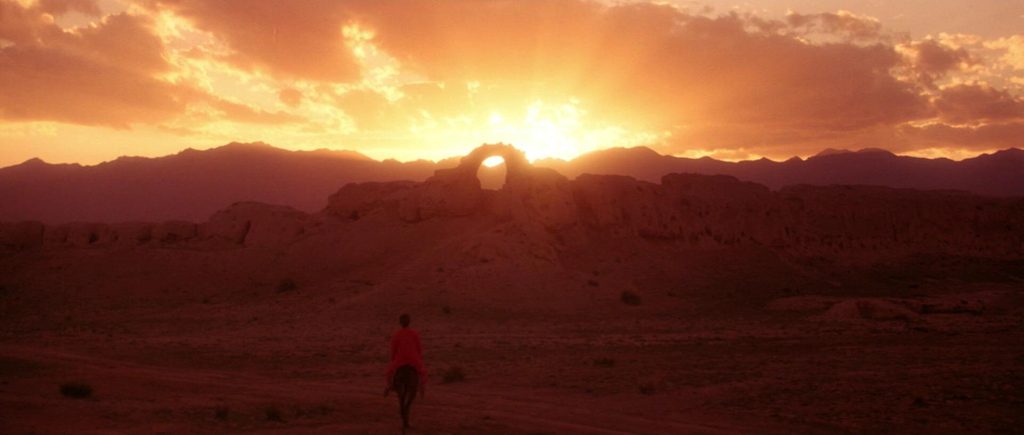
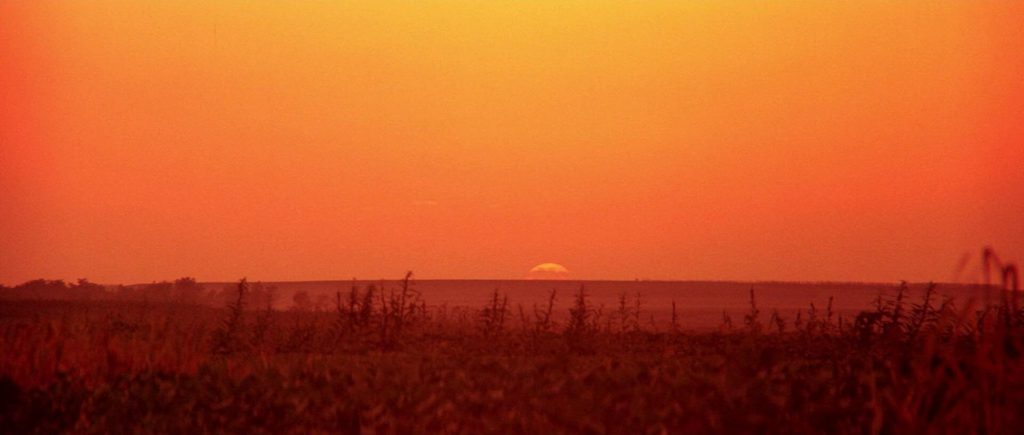
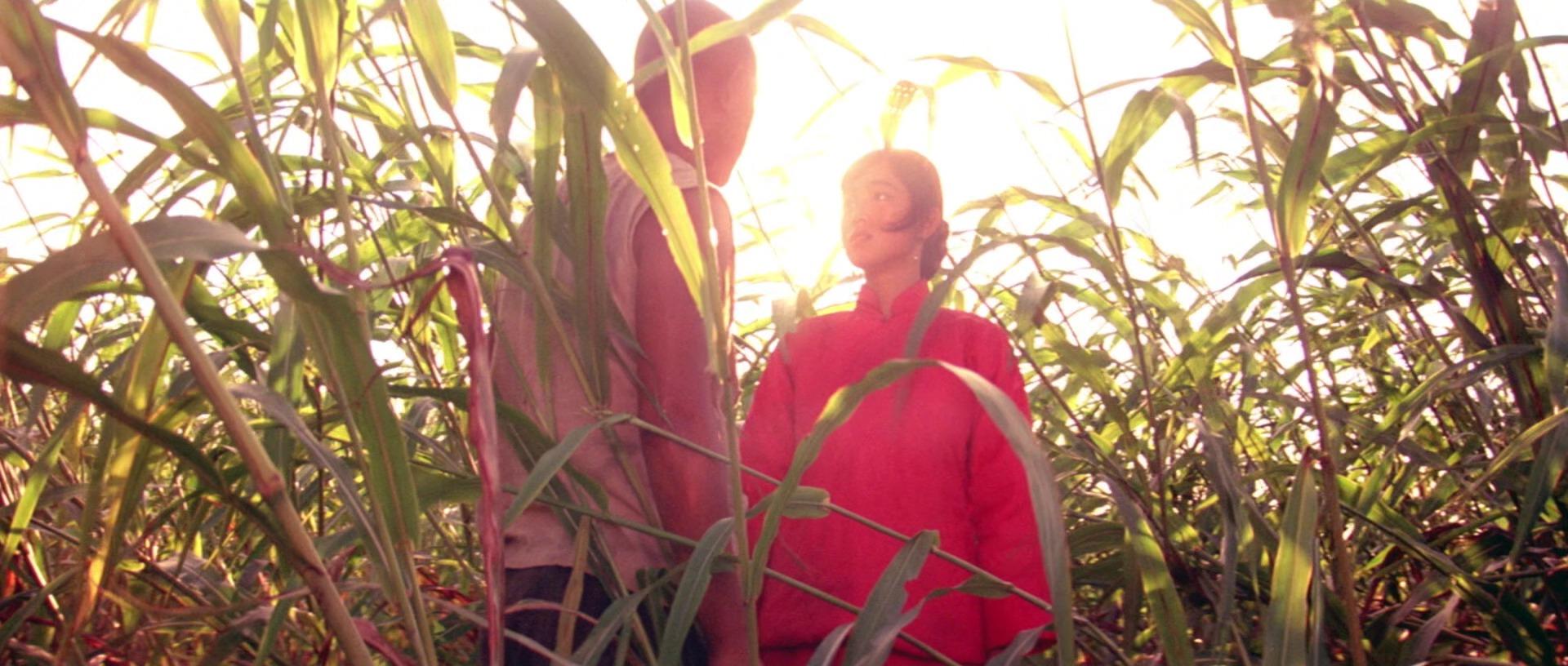
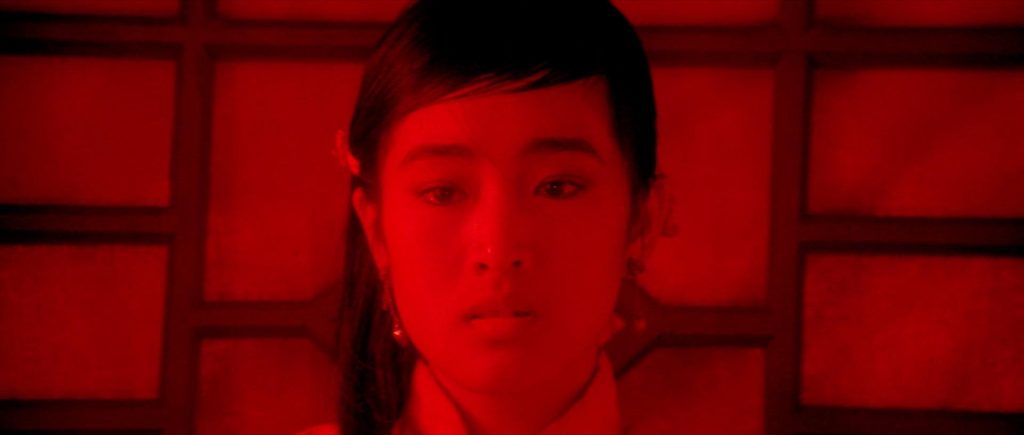
With bold red hues saturating the film’s palette as well, it seems as though the storyteller can’t help letting his own imagination bleed into its reconstruction either, filtering the past through this chromatic symbol of desire, fertility, and violence. The burning crimson of the setting sun washes landscapes in a fiery light, setting a dramatic contrast against Zhang’s blue day-for-night lighting, while elsewhere Jiu’er’s ruby dress glows within swaying, green fields. This visual motif is announced at the start when this peasant girl is transported between villages in a sedan chair, its dyed fabric enveloping her in a blood-red luminescence, while the band of muscular men carrying her sing and dance in ritual celebration. She is to marry the elderly owner of the sorghum wine distillery where they work, though a secret, romantic encounter with one of these labourers will inevitably leave a much deeper mark on generations to come.
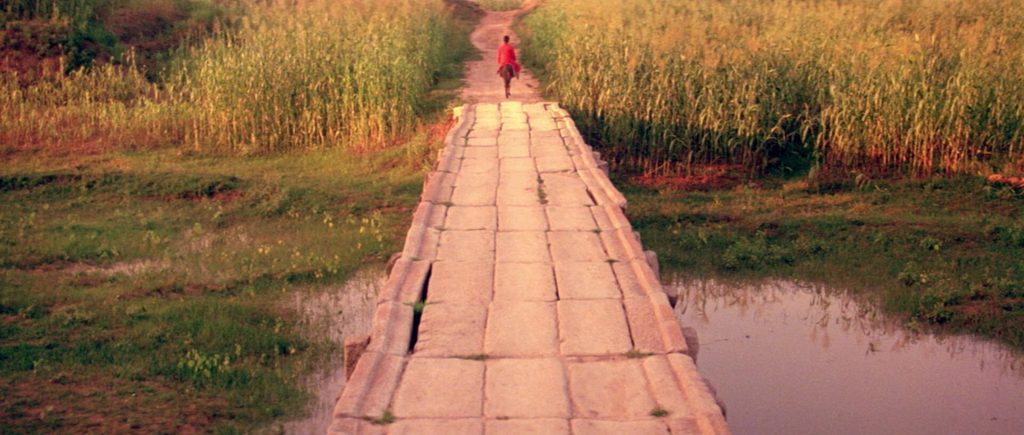
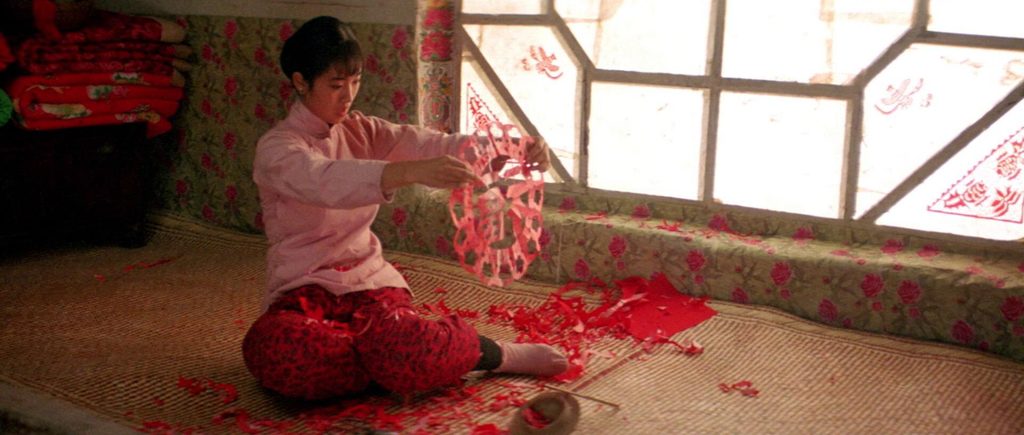
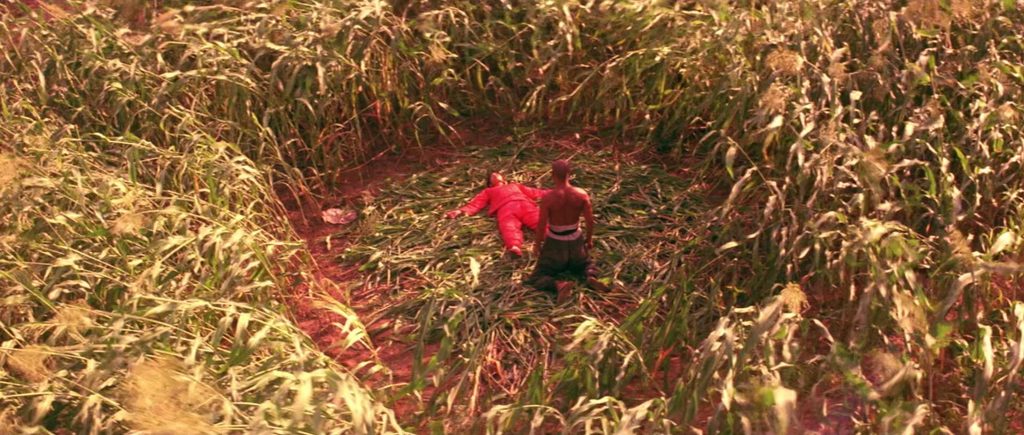
Having helped save Jiu’er from a bandit on her journey to the distillery, the young worker later confronts her in the same sorghum fields, and the two make love – but their story is not one of unadulterated passion. Her ailing, widely unpopular husband is soon killed by a mysterious assailant, and although they are never explicitly identified, we can’t help but wonder whether this family has buried some guilty secrets. When she inherits the distillery, she immediately prioritises professional stewardship over any fanciful flights of romance, and thus revives the industry of China’s red sorghum fields.
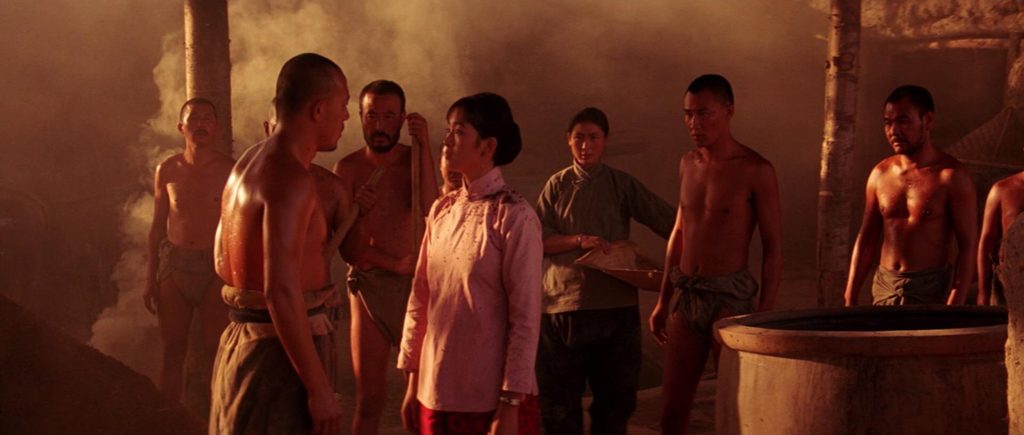
Under her leadership, the workers are freshly inspired, though she does not entertain disorderly conduct. When the narrator’s grandfather drunkenly brags to his coworkers about sleeping with the boss, Jiu’er orders him placed him in a wine vat where he is to stay for three days as punishment. Later when she is kidnapped by bandits, he redeems himself by seeking retribution, and amusingly even unlocks the key to a richer, more potent wine when he urinates in it as a prank. Against all odds, he manages to endear himself to her once again, and her crimson wardrobe mirrors their renewed intimacy as it softens to soft pinks.
Nine years pass, the winery’s business continues to boom, and Jiu’er even welcomes a son into the world – the narrator’s father. This small community has grown busy with children, yet just beyond its borders, Japanese forces steadily advance across the countryside. The narrative scope widens with the epic visuals, corrupting the pastoral peace that Jiu’er has fostered and abruptly flooding it with wartime horror. Their cruelty is relentless, forcing the Chinese to flay their own men alive, trample their own sorghum fields, and methodically driving them mad with despair. The red of Jiu’er’s vibrant textiles begins to manifest through blood, and when her most loyal worker Luohan is killed, she furiously rallies her men into a bold, collective resistance.
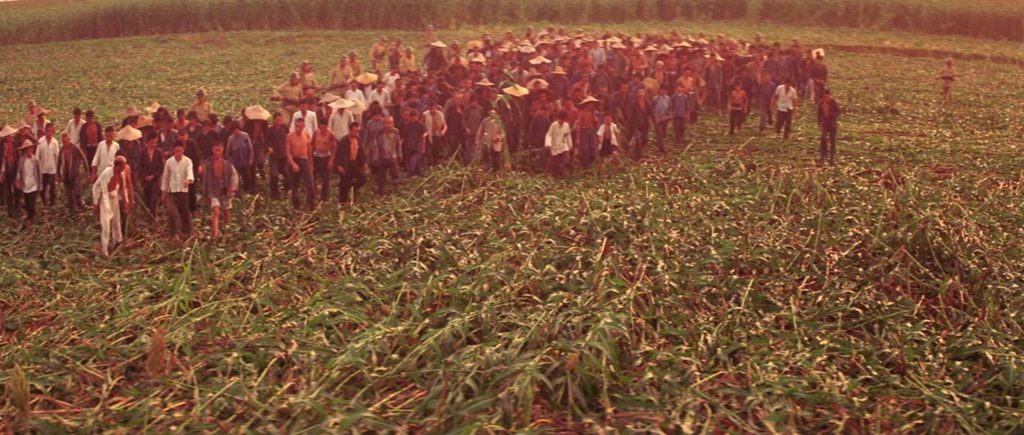
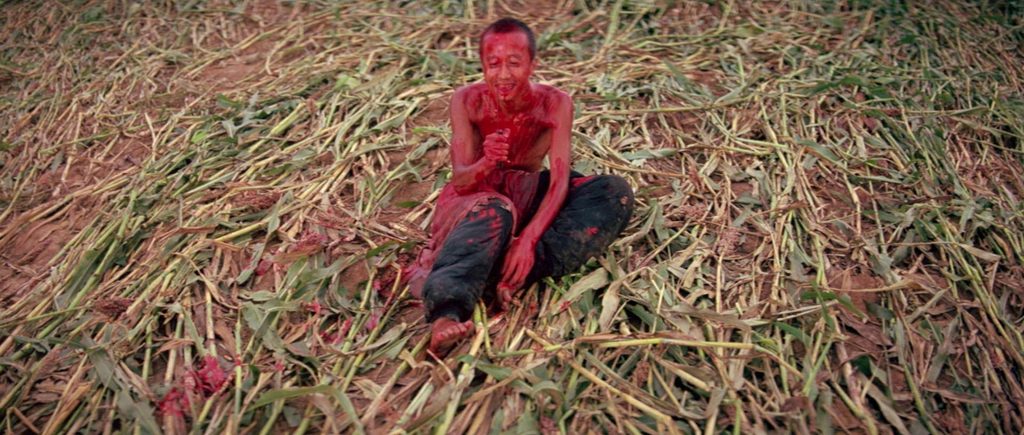
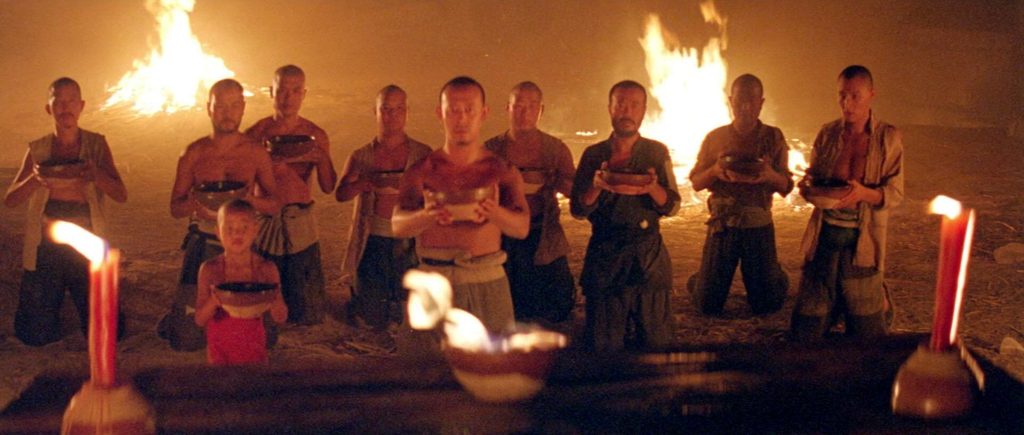
Atop a dusty hill outside the winery, Zhang’s camera often lingers upon a stone archway, and here it marks an especially mythical gateway between secluded utopia and encroaching violence. While Jiu’er conducts a martial ritual bathed in orange fire and smoke, the ancient monument silently watches from high above, ominously cutting a blackened silhouette against the blue moonlight. This is not a story which ends well for Jiu’er – her plan for the men to hide in the sorghum crops and ambush the Japanese descends into brutal tragedy, leaving only two traumatised survivors in its wake.

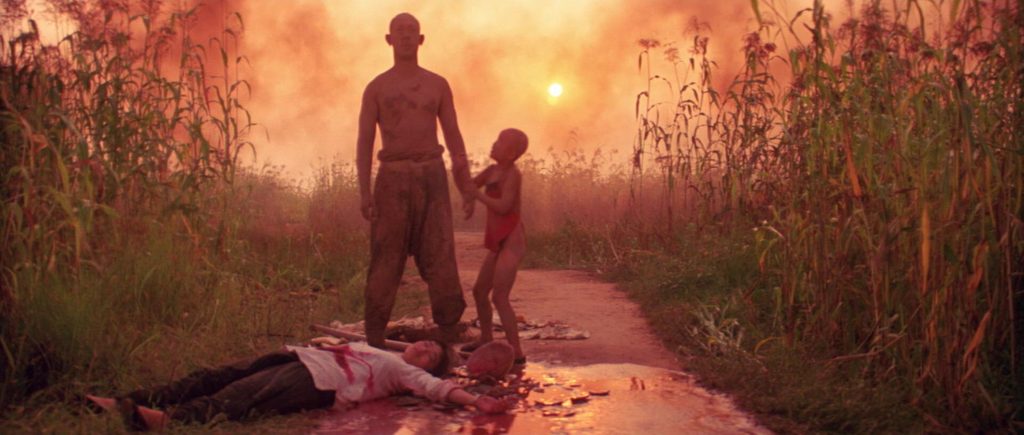
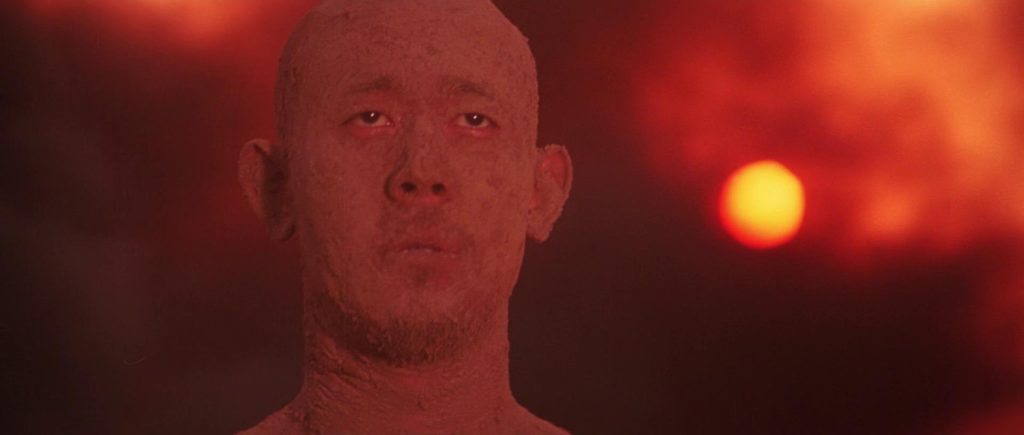
“My father told me that after he looked at the sun that day, his eyes got worse and worse. Everything was red,” our narrator reflects, and as his grandfather and father stand among the barbaric, smoky carnage, the sky indeed burns crimson once more. This time however, it arrives through a solar eclipse, totally blocking the sun while Zhang artificially tints his frame the colour of war and death. It is at once devastatingly gorgeous and apocalyptic, cloaking this family in a trauma which deepens with each retelling, and gradually turning history into legend. Behind a scarlet sea of slanted, waving crops, the sun hangs low, and in Zhang’s closing shot, he consecrates Red Sorghum’s fable of violence and resilience with a haunting, mythical radiance.
Red Sorghum is not currently streaming in Australia.