
Shūji Terayama | 1hr 41min
This review was requested by Ravshan. Find out how to commission review of a film of your choice here.

On a basic level, the boy who lives at the base of Mount Osore is a perfectly relatable teenager. Besides the lingering trauma of postwar Japan and his father’s death weighing upon his rural life, he is a fifteen-year-old like any other, struggling against an overbearing mother while dreaming of exploring the world beyond. The circus that visits town offers a reprieve, teasing him with grotesque visions of freedom and reinvention, and the mature woman who lives next-door is no doubt a key figure in his sexual awakening. In this sense, Shūji Terayama’s younger surrogate is defined in relatively ordinary terms, yet Pastoral: To Die in the Country does not so easily preserve him as a stable, historical subject.
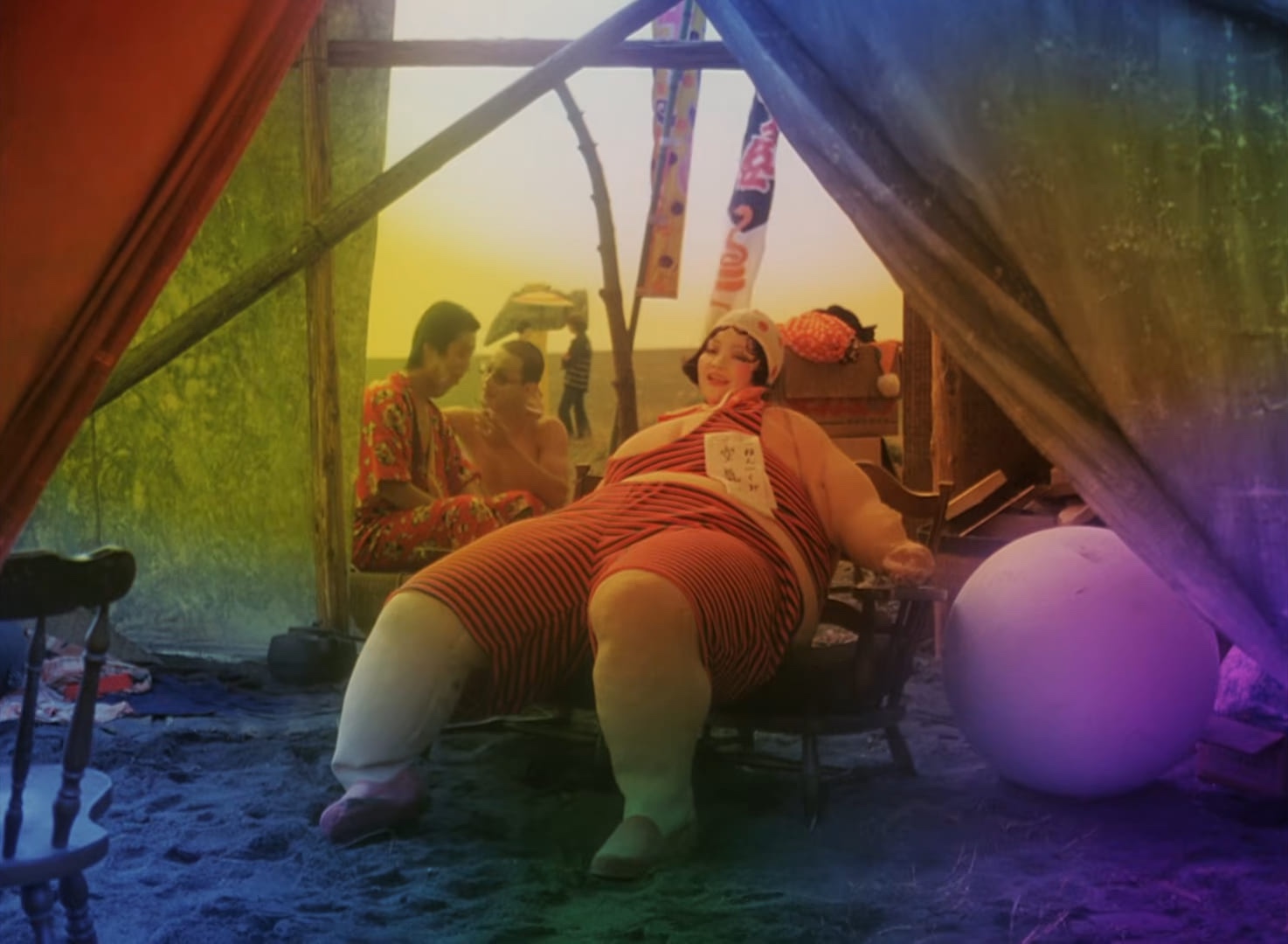
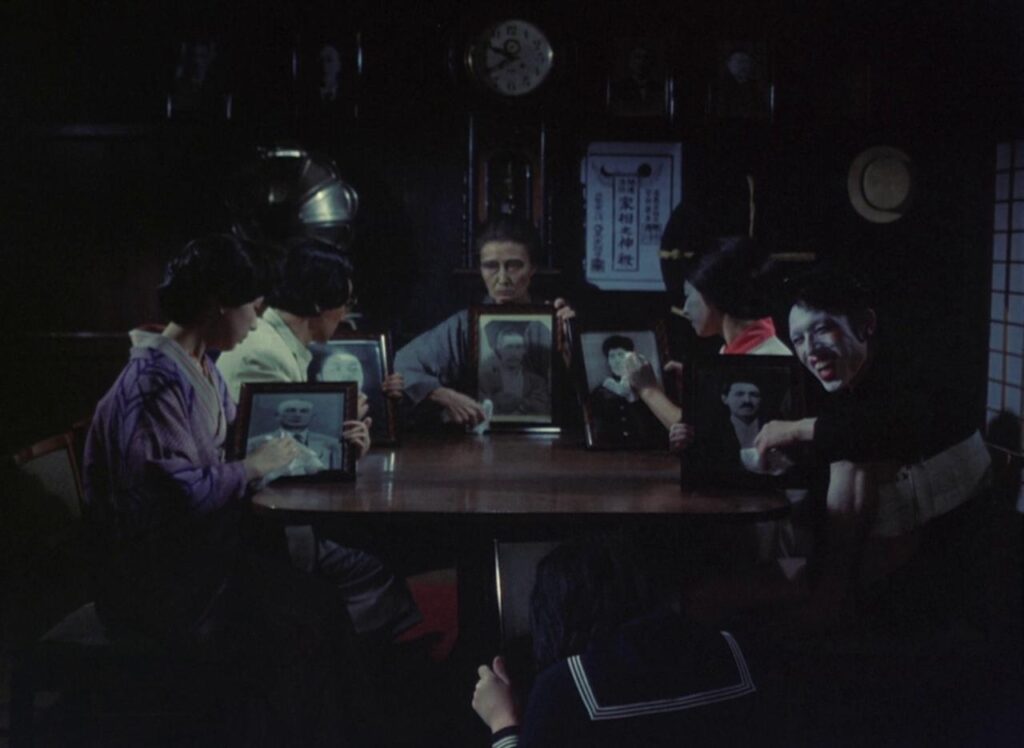
Memory is a fluid process of self-understanding after all, prone to lies, omissions, and revisions which ensnare us in an assortment of fabrications. This village is a bizarre menagerie of characters, including a family who endlessly polishes framed photos of ancestors, a coven of black-robed, eye-patched crones, and a shaman who channels the spirits of the dead atop the nearby mountain. Perhaps the most absurd of them all though is the circus performer who sits around in her inflatable fat suit, constantly looking for men to blow it up, and seemingly deriving pleasure from the suggestive act. Although she invites the boy to inflate the costume, he is unable pump hard enough to fill it with air, thus reducing his sexual inexperience to a comically absurd metaphor.
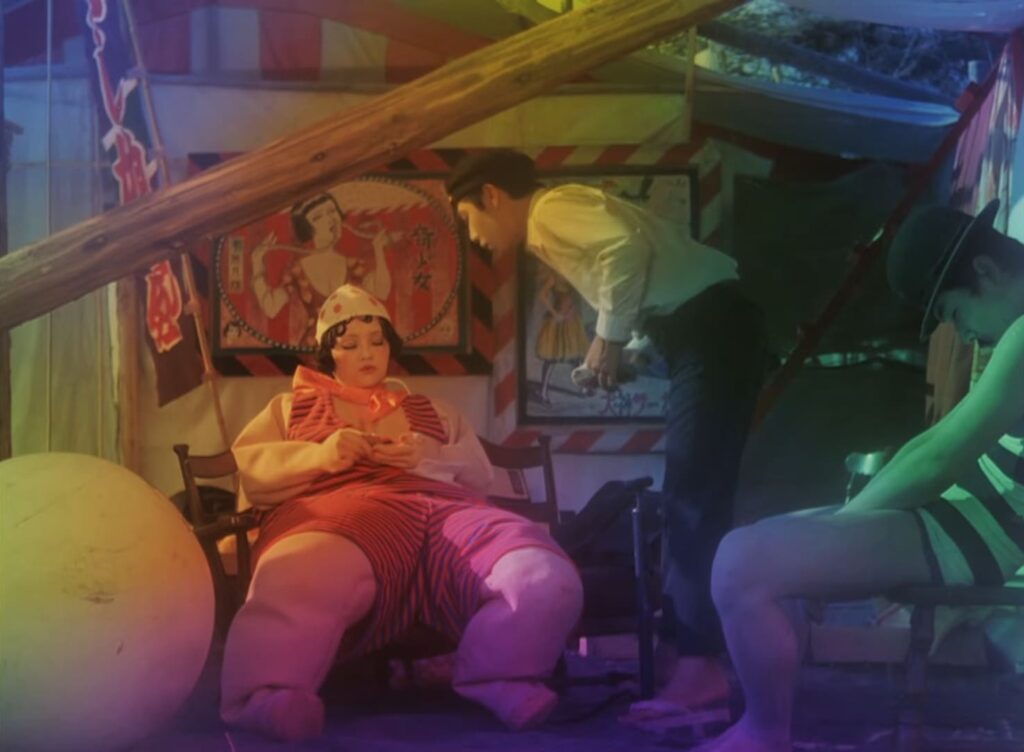
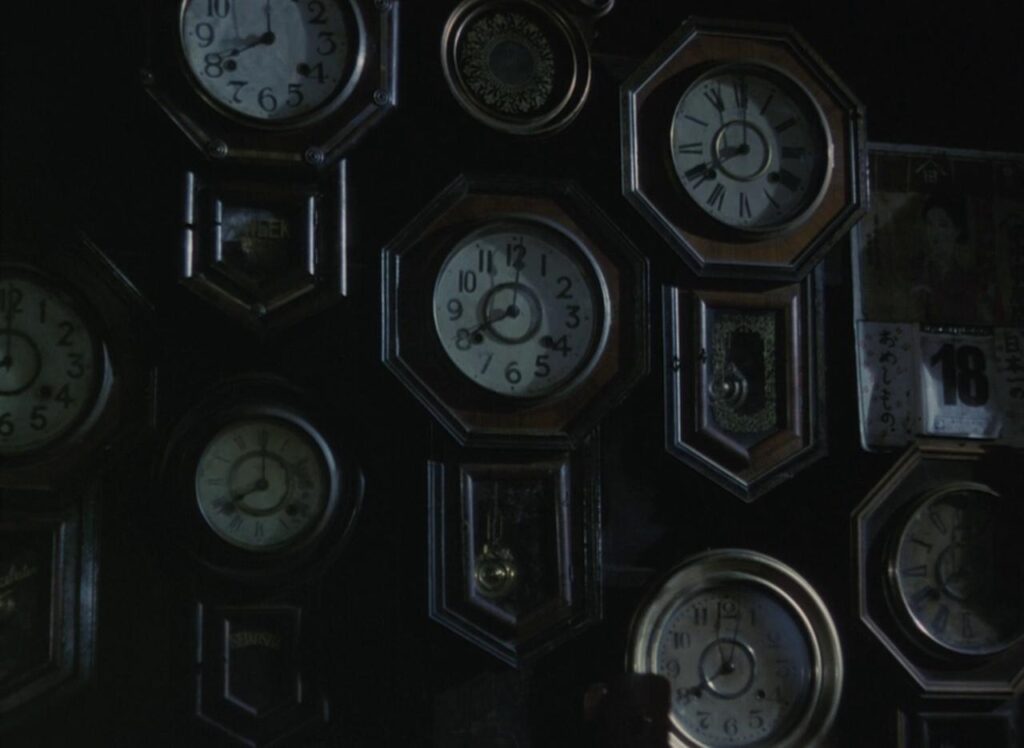
Still, the watch that this woman wears catches the boy’s eye. Although his mother rules that he may not own one until he is older, barring him from time’s forward march, she unintentionally elevates its acquisition into a rite of passage. “The time is meant to be kept inside the home, in a big clock,” she dictates, paying no mind to the fact that it broke a long time ago. Despite its unreliability however, still its heavy ticks and chimes pervade Terayama’s eerie soundscape, suspending the boy in a perpetual adolescence.
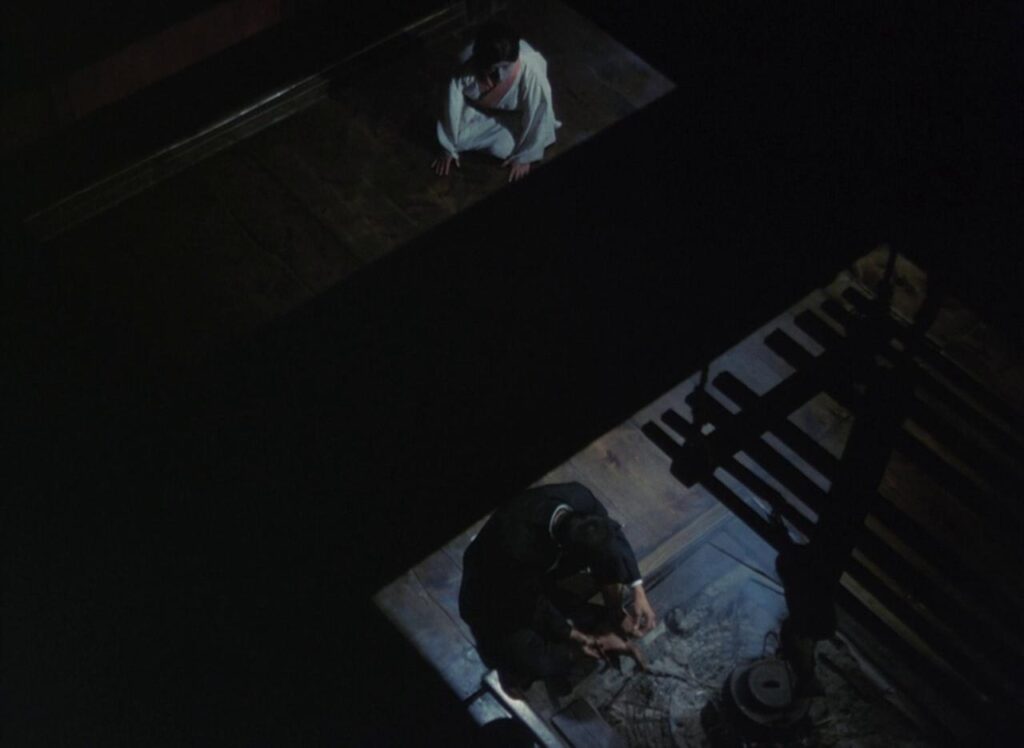
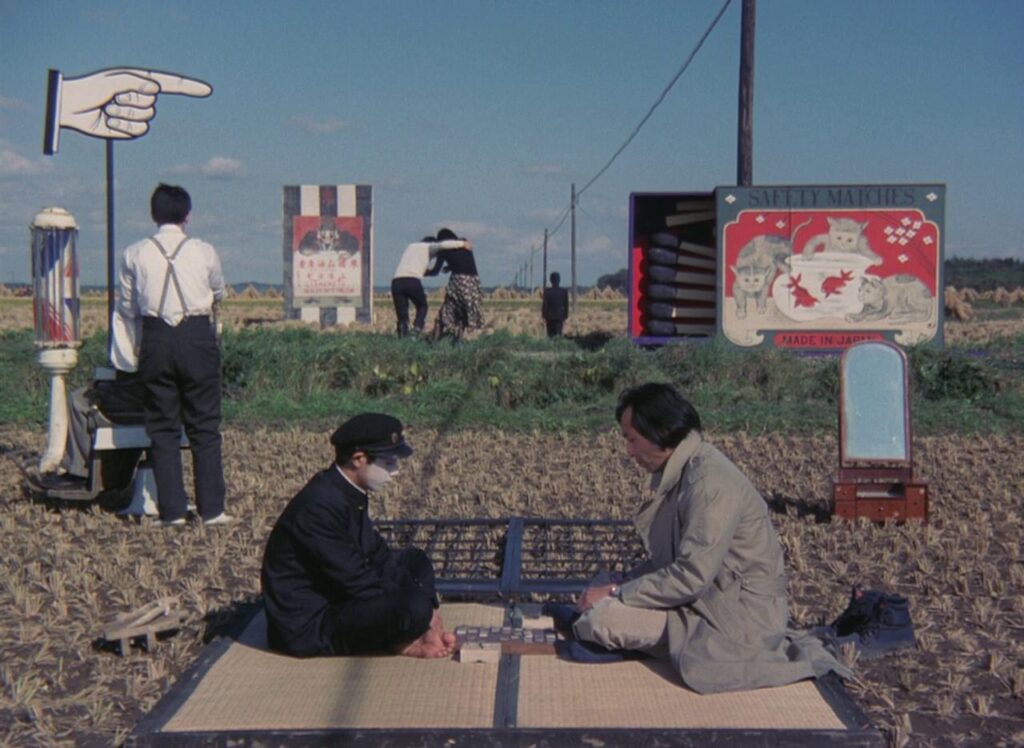
Pastoral: To Die in the Country evidently operates as a scattered constellation of dreams more than anything else, channelling a Felliniesque surrealism that revels in the outlandish, flamboyant chaos of the subconscious. A strange portal in the family home opens to volcanic wastelands, dissolving spatial boundaries altogether, while incongruous tableaux of barbers, giant matchboxes, and nationalist processions often occupy a single frame as though forcibly stitching memories together. Narrative coherence is of little concern here, and the unnamed adolescent is a tenuous anchor for the sensory fragments surrounding him – not only conjured by Terayama’s baroque imagination, but also by the director whose existence within the film renders it a profoundly self-aware piece of metafiction.
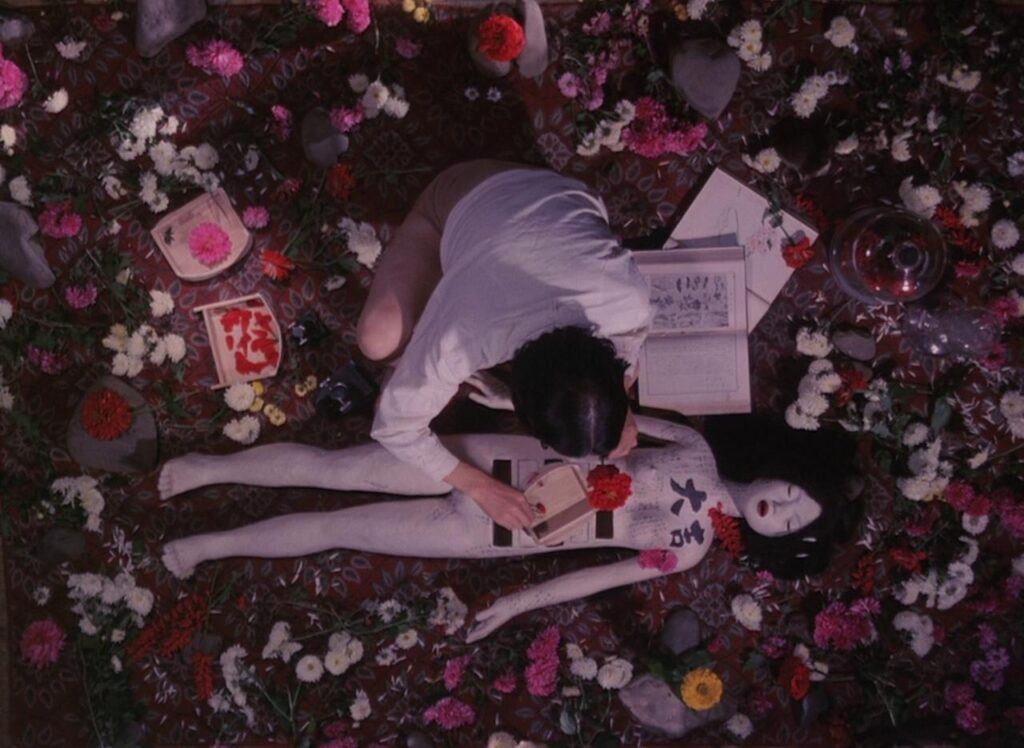
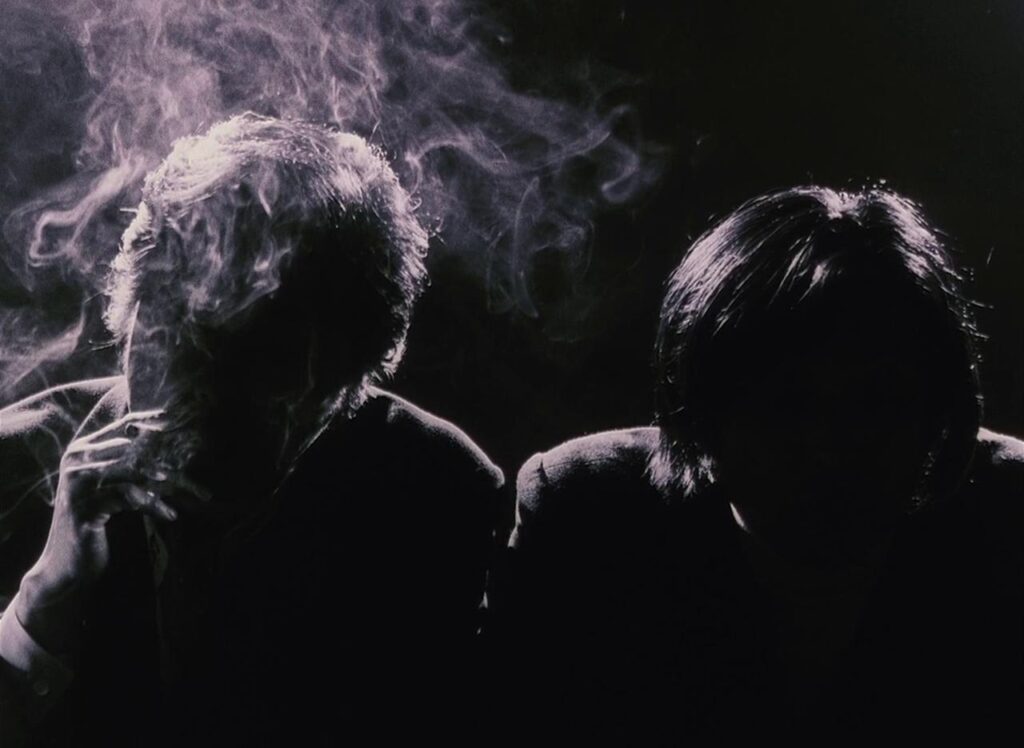
At approximately the 40-minute mark, just as the boy finally escapes the village with his attractive older neighbour, this secondary character is finally introduced. The onscreen director remains unnamed, yet his credit of ‘Me’ leaves little ambiguity as to whom he represents. As the film reel that we are watching runs out and we find ourselves in a private screening room, the director discusses his work with a film critic, ashamed of the “cheap spectacle” he has made of his childhood. No longer is Terayama’s world saturated in psychedelic colours or filtered through kaleidoscopic lenses – the urban landscape of modern Tokyo is rendered in stark black-and-white, distinct from the rural whimsy of the past.
“If one isn’t freed from one’s own memory, then one isn’t really free,” the silhouetted critic ponders in a shroud of smoke, and indeed, Pastoral: To Die in the Country paints an evocative portrait indeed of identity as a self-imposed restriction. We are the directors of our own histories, Terayama posits through his surrogate, constantly rewriting ourselves as heroes and victims. There is nothing wrong with curating the past – in fact, it is through the continual reworking of memory that deeper truths become accessible – yet nostalgia tends to corrupt this process when it is mistaken for truth.
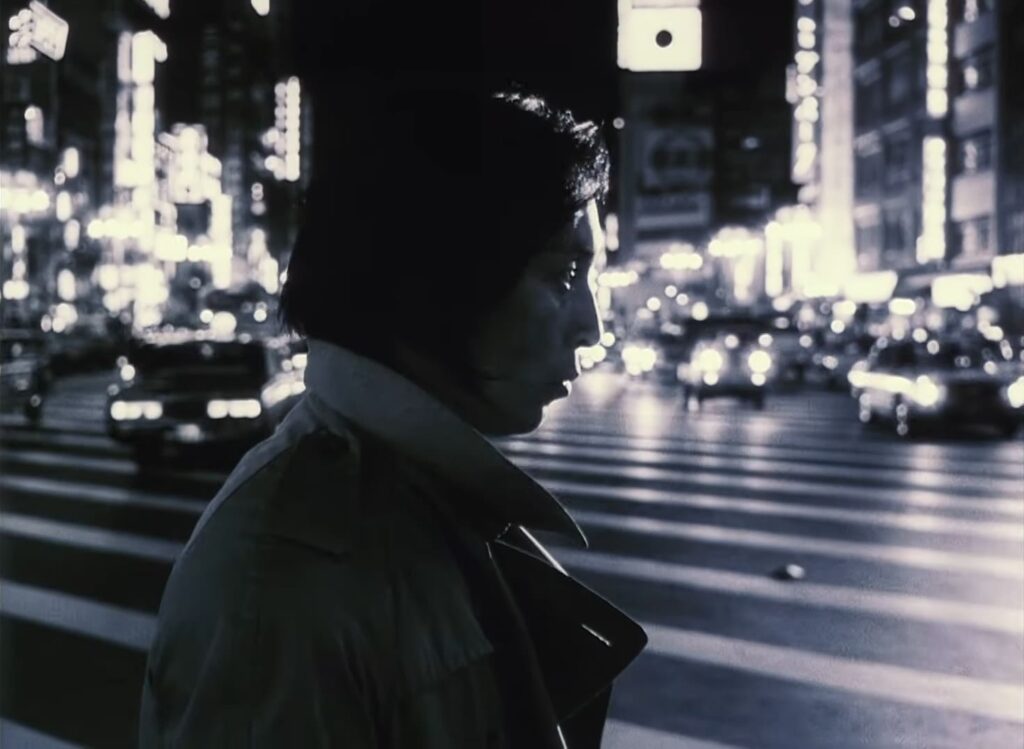
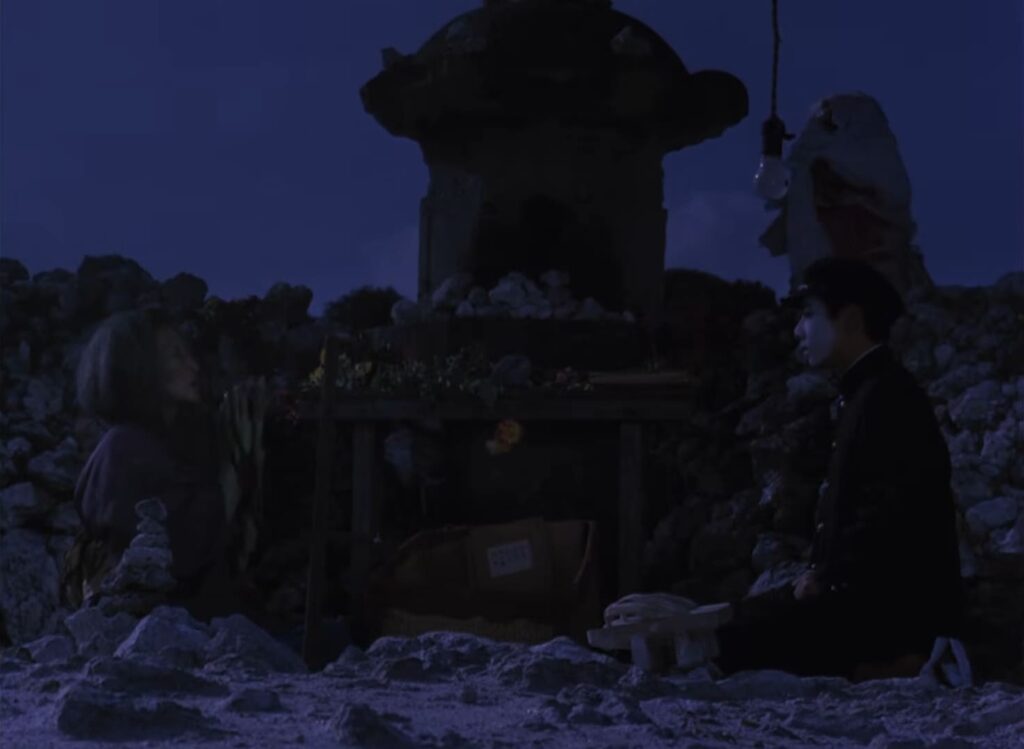
Perhaps then to properly deconstruct the sentimental fabrications that have infiltrated his film, the director must step into it himself. Of course, Terayama has already foreshadowed this development from the opening scene, where children play hide and seek in a cemetery and emerge as grown-ups. Youth disappears in an instant, leaving adults to haunt their childhood playgrounds, and this director is no exception among them. Just as Ingmar Bergman once composed the iconic image of man playing chess against Death, here Terayama pits man against his younger self in a game of Shogi, both displaced in an open field where disjointed memories drift through the background. Further recalling the Swedish filmmaker’s intimate, austere style, his close-ups in this scene half-obscure one’s face with the other’s head, undermining the stability of individual identity through the mutual collapse of past and present.
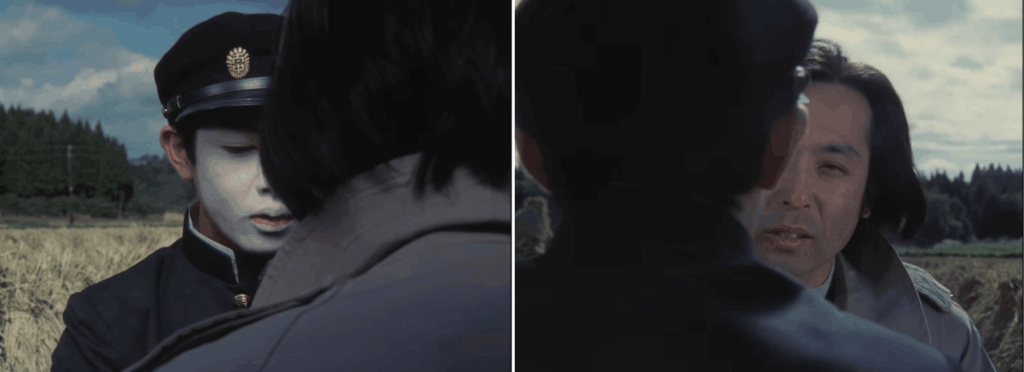
“I know everything about you, but you know nothing about me,” the older filmmaker contemplates, reflecting on the asymmetric nature of this relationship, though it soon becomes apparent that both remain somewhat of a mystery to the other. The boy is full of questions about when he will finally ride a train and sleep with a woman, yet in turn, the filmmaker finds his own memories difficult to retrieve. Perhaps his younger self might remember where he misplaced some lost items, he speculates, only to be informed that he is a few years too early. After reminiscing on the night his house burnt down, the boy calls out his account as a total invention, and we soon begin to realise just how many of these childhood stories were distorted within the director’s autobiographical film.
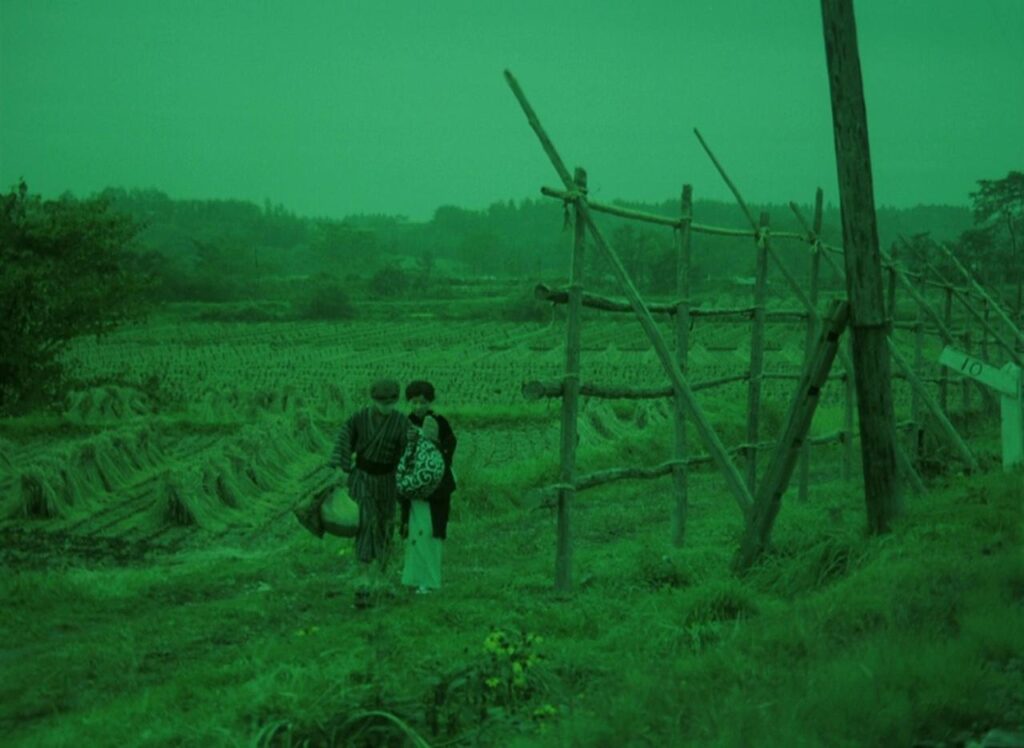
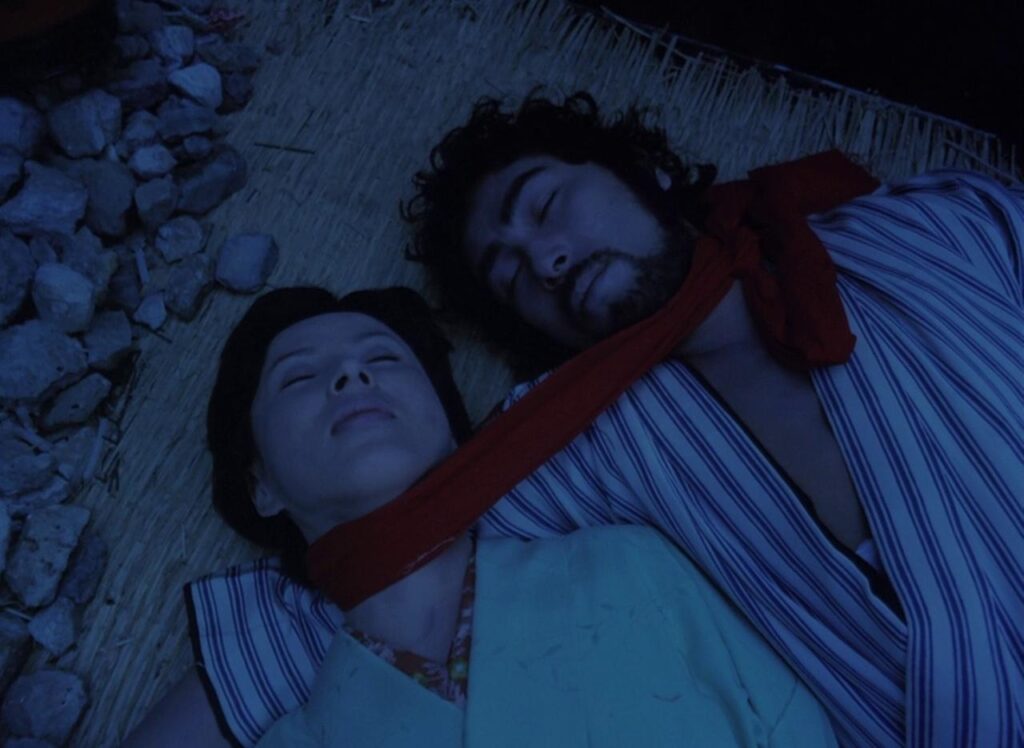
There was never a secret affair with the older neighbour, Terayama reveals, and the green haze which hung thick in the atmosphere during their escape is notably absent as the boy leaves town alone. She is a far more complicated figure than she was ever given credit for, scarred by war and eventually taking her life next to her real lover. It is not insignificant that the sash wrapped around their necks is crimson – through blood moons and flowers alike, red hues express a lingering, psychological anguish, and are most prominently worn by the young local mother who births a bastard child. The village crones’ judgement is far more insidious than before too, threatening to hunt down and kill the “cursed” child, and thoroughly dispelling the rural romanticism traditionally upheld by the pastoral genre.
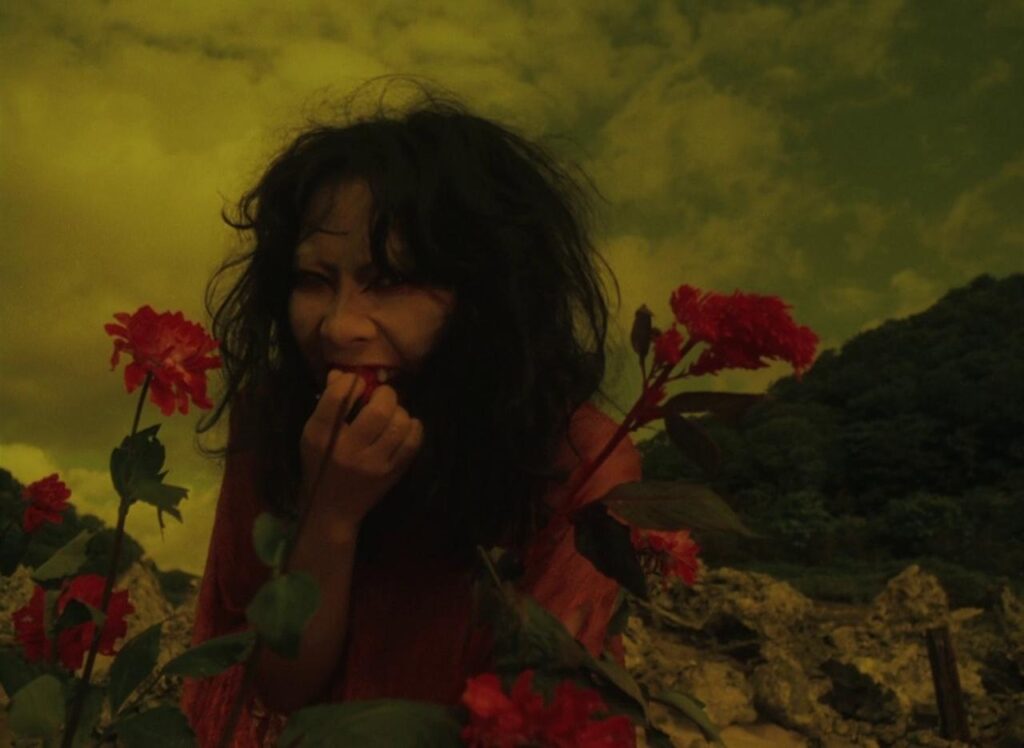
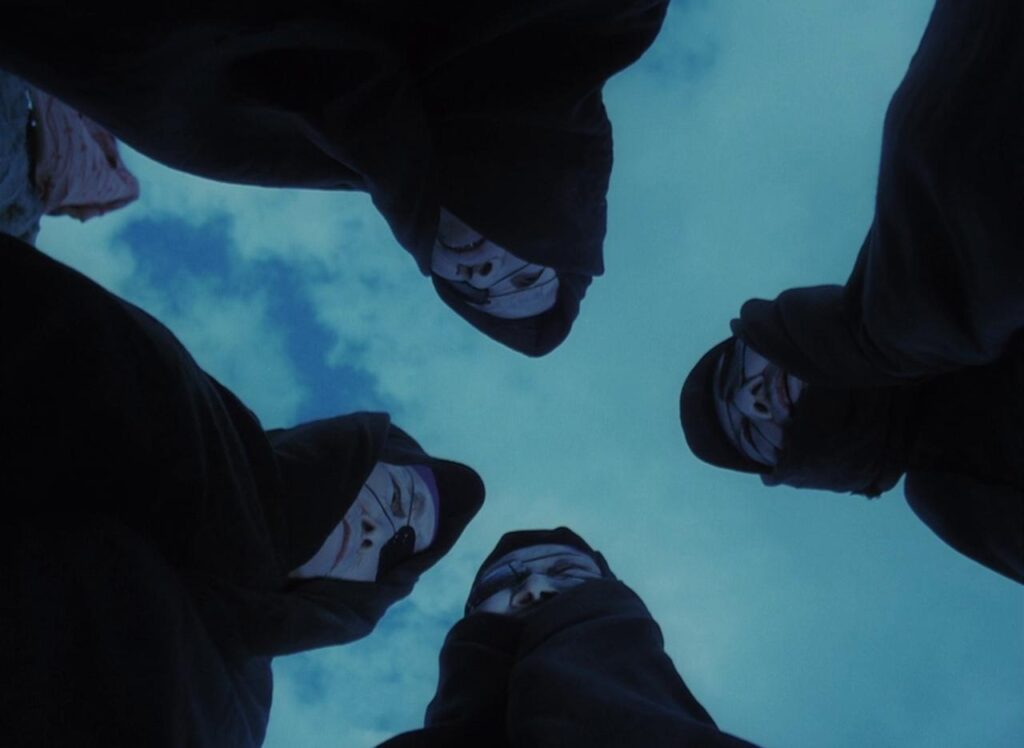
Nostalgia is little more than a shield to hide from trauma, so in entering his own past, the director must finally face that which has been repressed. This does not mean explicitly replicating reality, as Pastoral: To Die in the Country remains firmly in the metaphysical realm of metaphor, yet Terayama nevertheless pursues truth through the deliberate exposure of buried pain. In Japanese mythology, Mount Osore is considered a gate to the underworld, and the shaman who dwells here especially gives voice to the boy’s grief by communing with his dead father. Its sombre aura clearly extends down to the village as well, where residents wear pale, spectral makeup, and wander like ghosts condemned to haunt their own unresolved memories.
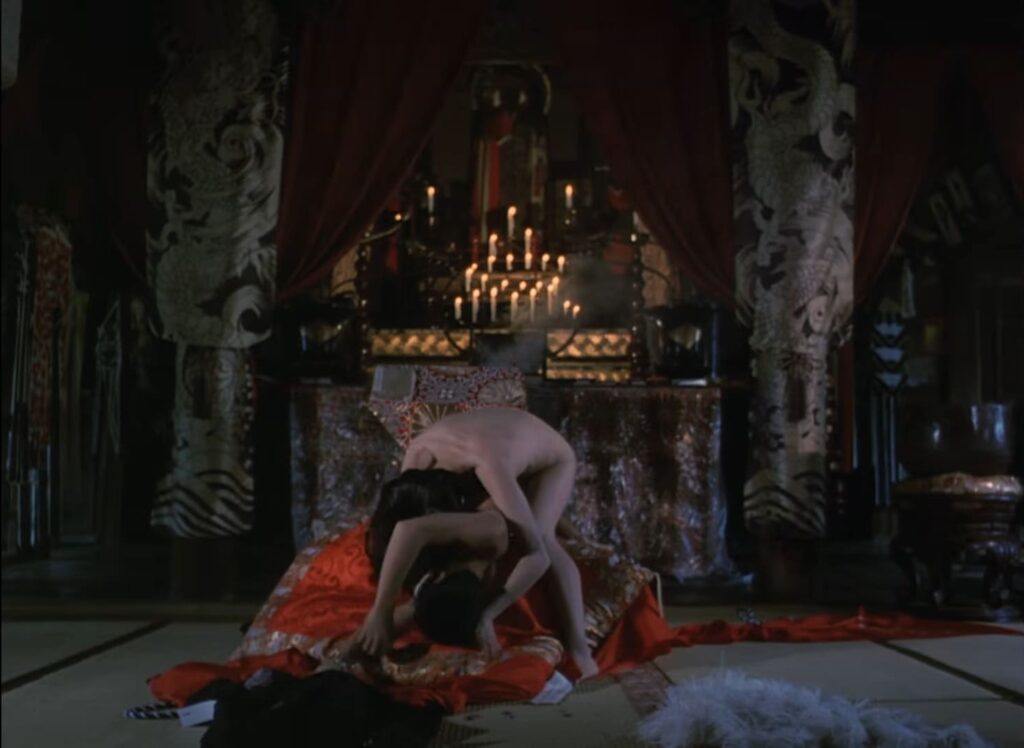
When the mother of the bastard eventually confesses to drowning her baby, Terayama cuts even deeper into the boy’s psyche, complicating his relationship with those maternal figures who claim to have their child’s best interests at heart. She now wears a white boa in place of her red dress, and with this weight lifted from her shoulders, she takes the boy inside a hut, pins him to the floor, and rapes him in front of a candlelit shrine. Whether this sexual violation is truly part of the director’s past or merely a sublimation, it projects an uneasy, Freudian apprehension towards his own mother, whose smothering care ironically exacerbated his loss of innocence rather than preventing it.
Whether through circus performers, neighbours, or crones, women assume a greater prominence in Pastoral: To Die in the Country than men, and its final scenes indeed see the director draw them all back to the one who raised him. He has become preoccupied with the grandfather paradox, and as he steps back into his past, he actively considers the possibility of healing his trauma by killing his mother – of course, with the risk of erasing his own existence, or at least become an entirely different person. Memory is malleable after all, so why should the self remain fixed when its history does not? As he sits down to dine with his mother, the broken family clock continues to tick, and his inner monologue responds to this question by replacing it with another.
“There could be other ways of telling all this. My mother and I are merely characters that I’ve invented. Because it’s only a film. Yet I couldn’t make my own self from inside the movie kill my mother from inside the movie. Who am I then?”
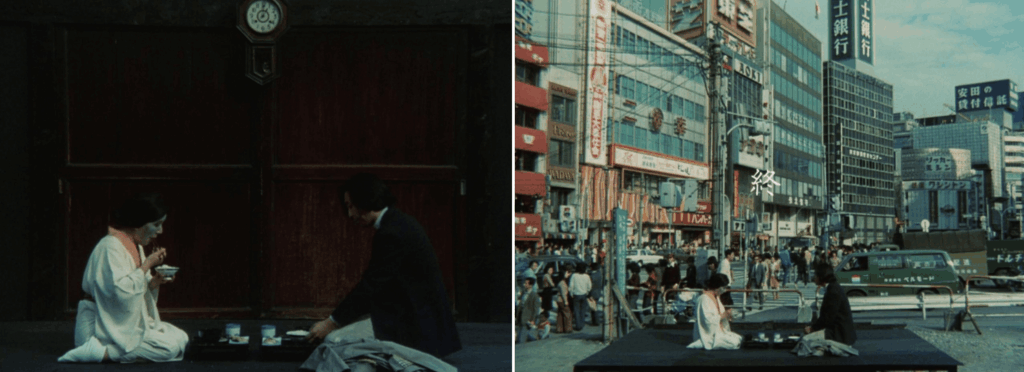
Mother and son barely react as the walls collapse, and continue to eat as the busy, modern streets of Tokyo replace the director’s childhood home. Pale-faced figures from his past briefly reappear before dissolving into the crowd, folding two timelines into one, and Pastoral: To Die in the Country abandons all narrative illusion in its brazenly self-reflexive conclusion. Terayama may cast his life in an anarchic array of surreal motifs, yet to totally rewrite one’s origins through either nostalgia or repression – that alone would betray the fractured nature of identity, and the unsettling, evocative power of the art it produces.
Pastoral: To Die in the Country is not currently streaming in Australia.
Have a film you’d like me to write about next? Request a review here.