
Roberto Rossellini | 2hr 6min

There is no direct translation for the Italian word ‘paisan’ in English. According to mid-century Italian-American slang, it means ‘buddy’, while the root word ‘paese’ is closer to ‘village’. As Roberto Rossellini uses it in his neorealist anthology however, it affectionately refers to countrymen – though not in the patriotic, homogenous sense the word typically implies. Across Paisan’s six vignettes of soldiers and civilians navigating the brutal frontlines of World War II, ‘countrymen’ becomes a loose category, stretched across languages, cultures, and traumas. Italians and Americans alike are bound by a sense of provisional fellowship here, forming transient bonds of romance, brotherhood, and solidarity, yet Rossellini recognises the impossibility of any surviving the chaos which brought them together. Human connection is simply not built to outlast the relentless carnage of war, and within these ruined landscapes, is consistently undermined by death and disillusionment.
As the middle entry in Rossellini’s War trilogy, Paisan also offers his broadest consideration of Italy’s fractured national identity, tracing its jagged topography from the bomb-scarred port of Naples to the rugged Apennine Mountains. Shooting on location in the immediate wake of World War II, his camera is attuned equally to rural and urban spaces, lending a grim authenticity to these harsh textures. The voiceover speaks with the detached authority of a documentary, introducing each chapter as it recounts the Liberation of Italy, and accompanying meticulous recreations of its most significant developments. By following this chronological progression, we too advance northwards alongside the invading American forces, yet the personal stories threaded through each Allied victory expose the tragedies and sacrifices buried beneath every gain.
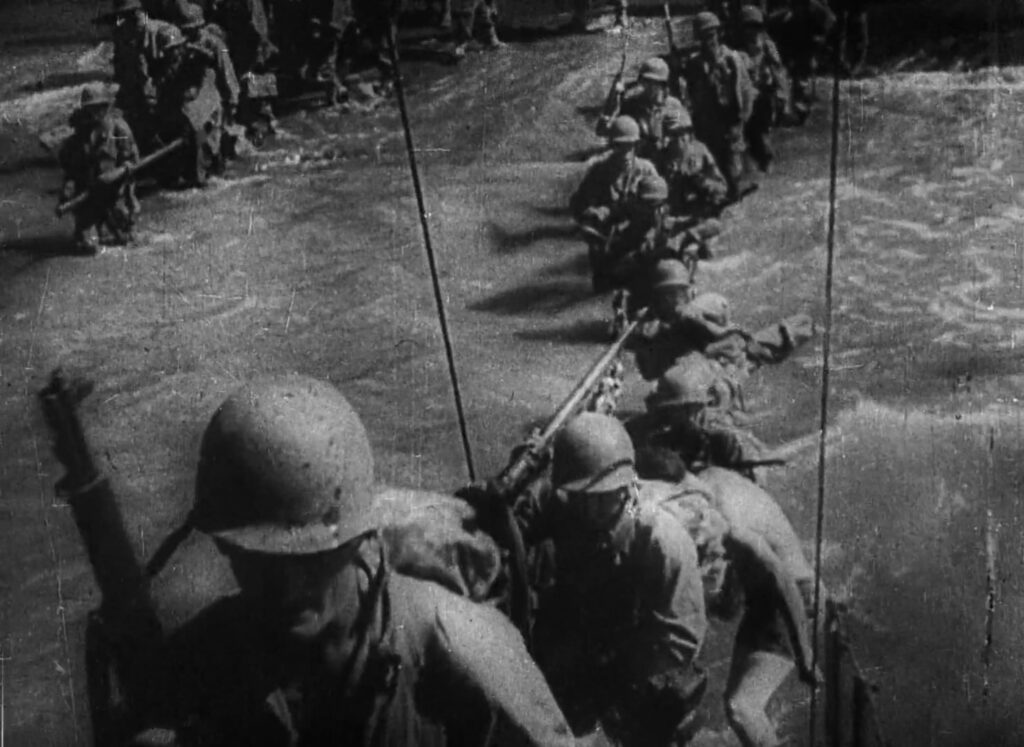
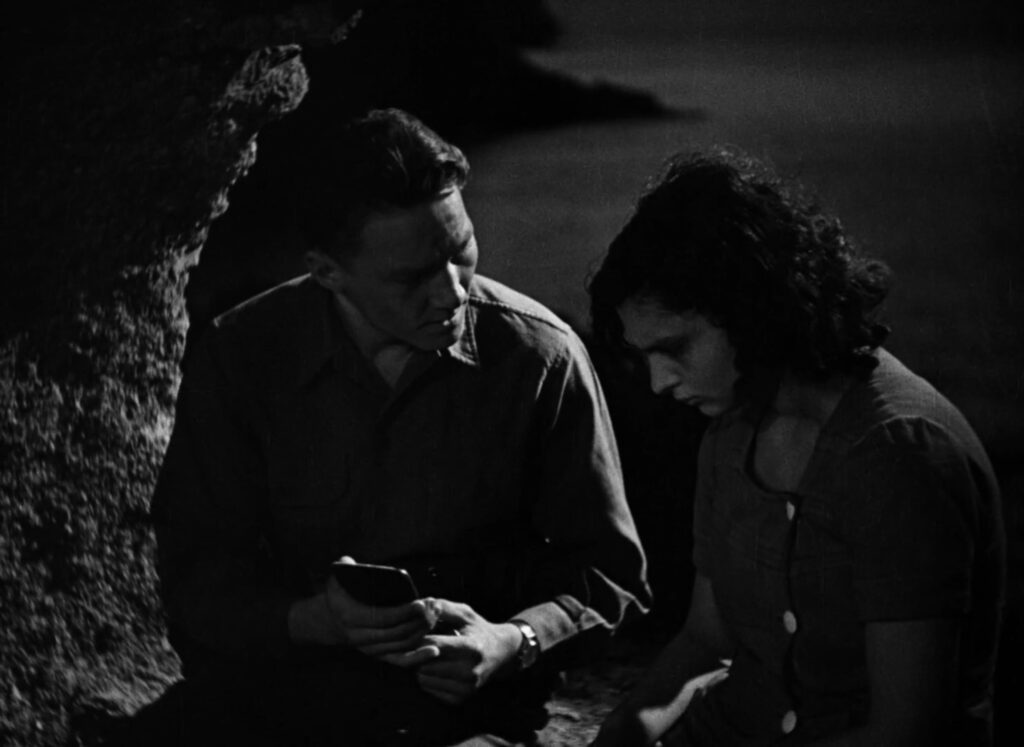
This is perhaps the great strength of Rossellini’s six-part anthology structure – by dedicating roughly twenty minutes to each chapter, its ground-level stories of prostitutes, monks, and urchins are given equal weight, yet ultimately overwhelmed by its sprawling historic scope. Beginning with the Allied invasion of Sicily on 10th July 1943, Paisan introduces us to one of the first patrols to make landfall, and the fleeting, affectionate relationship between American soldier Joe and young villager Carmela. Though their language barrier initially fuels mistrust, they tentatively bond within the craggy husk of an abandoned castle, while the rocky coastline and crashing waves offer a bleak backdrop. His sincere efforts to comfort her end abruptly when he is struck down by a German sniper, and although she tries to fight back, she too meets the same merciless fate. Upon finding their bodies, the rest of the American patrol can only assume that Carmela killed their comrade, and the memory of this shared humanity dissolves into violence and confusion.
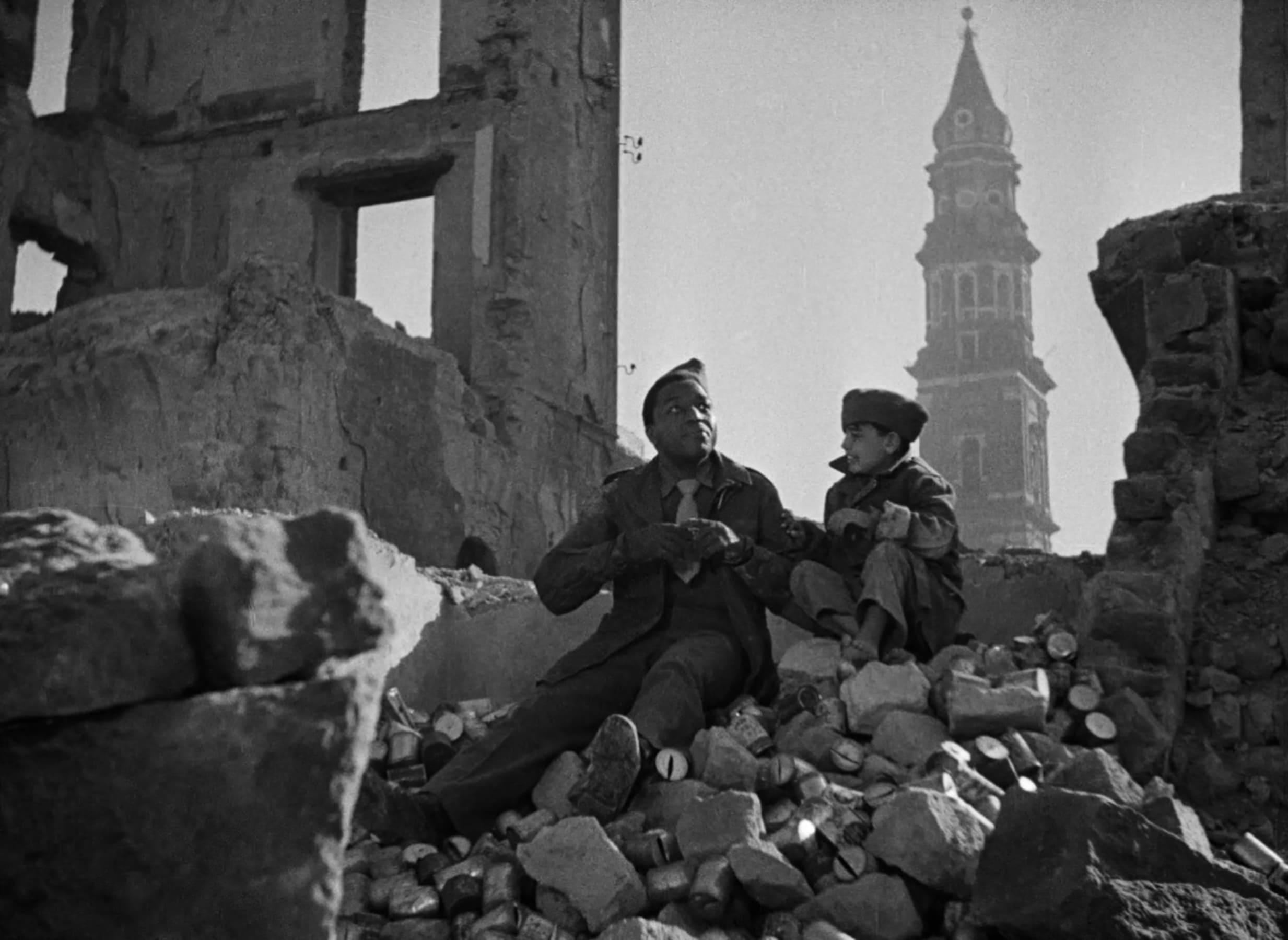
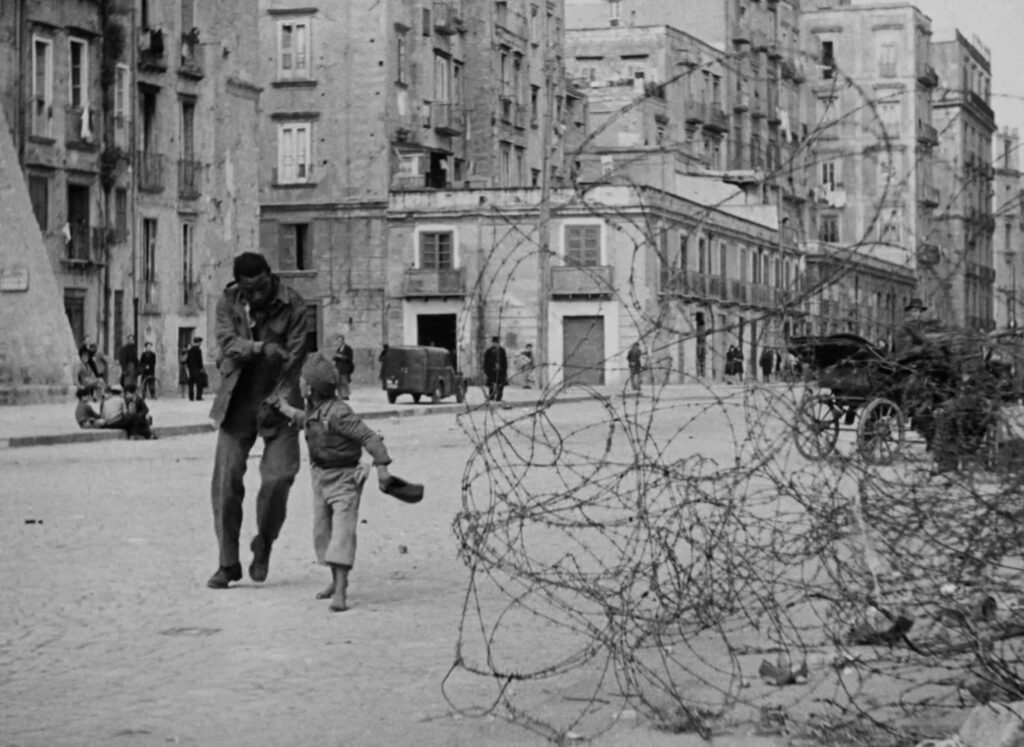
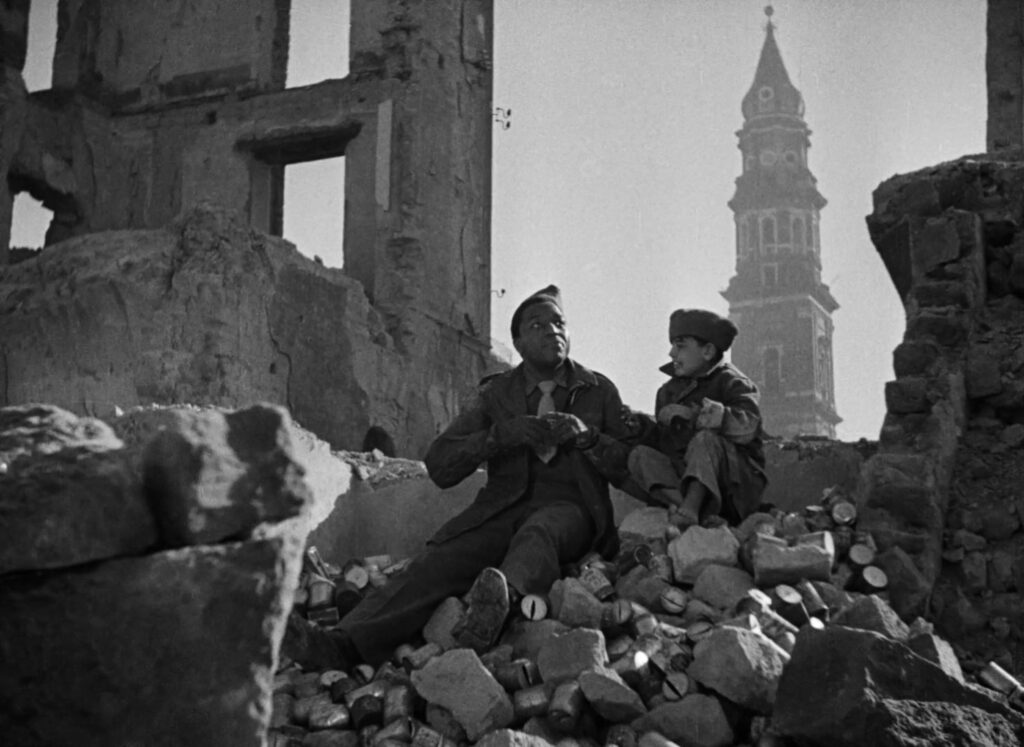
Escaping the smothering darkness of the Sicilian coastline, Paisan forges ahead to the liberation of Naples, and visually deepens as its neorealist world widens. Merchants and street performers draw bustling crowds back to this port, and within their midst, homeless children scrounge up whatever coins they can. The arrival of the Military Police interrupts their attempt to rob drunken African American soldier Joe, though in the aftermath, he develops an unlikely, paternal relationship with the orphaned Pasquale.
Wandering through squares littered with barbed wire and eventually resting atop a mountain of rubble, the two play music and make-believe games, while a majestic belltower rises behind them. In a single low angle, Rossellini captures both the proud history and war-torn ruins of this Italian city, struggling to reconcile its past and shattered present – though a few days later, a more intimate sorrow emerges when a sober Joe seeks to recover his stolen shoes from the boy. He is steadfast in his duty as a military policeman, yet when he recognises the absurdity of imposing such black-and-white justice upon this child’s meagre survival, he can only walk away in melancholy guilt.
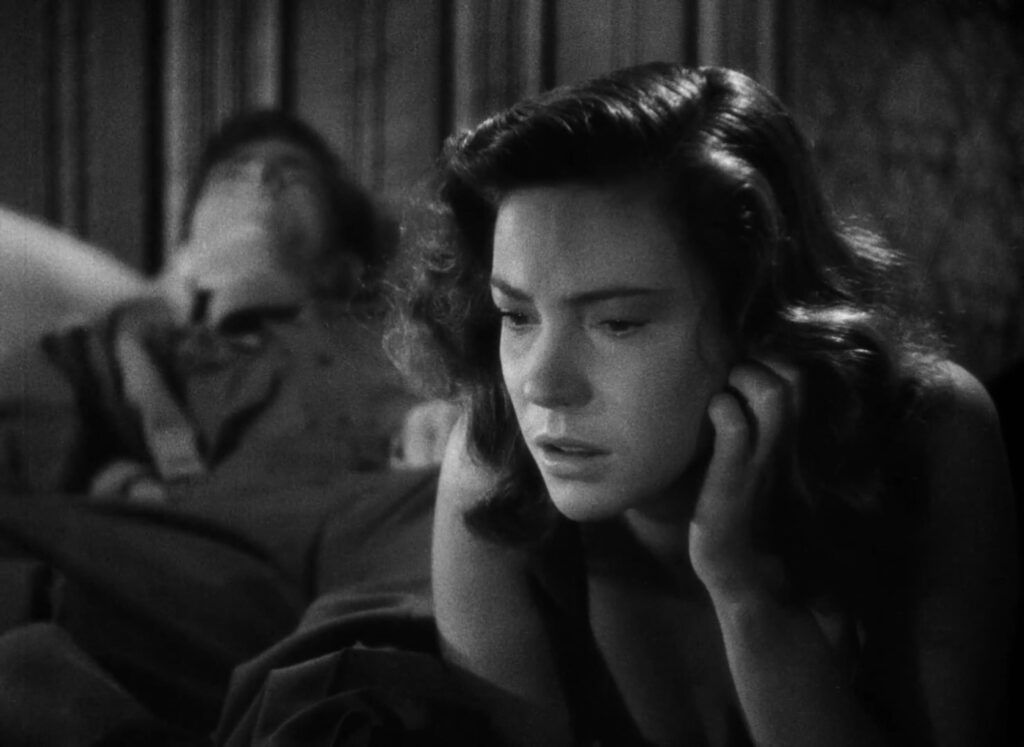
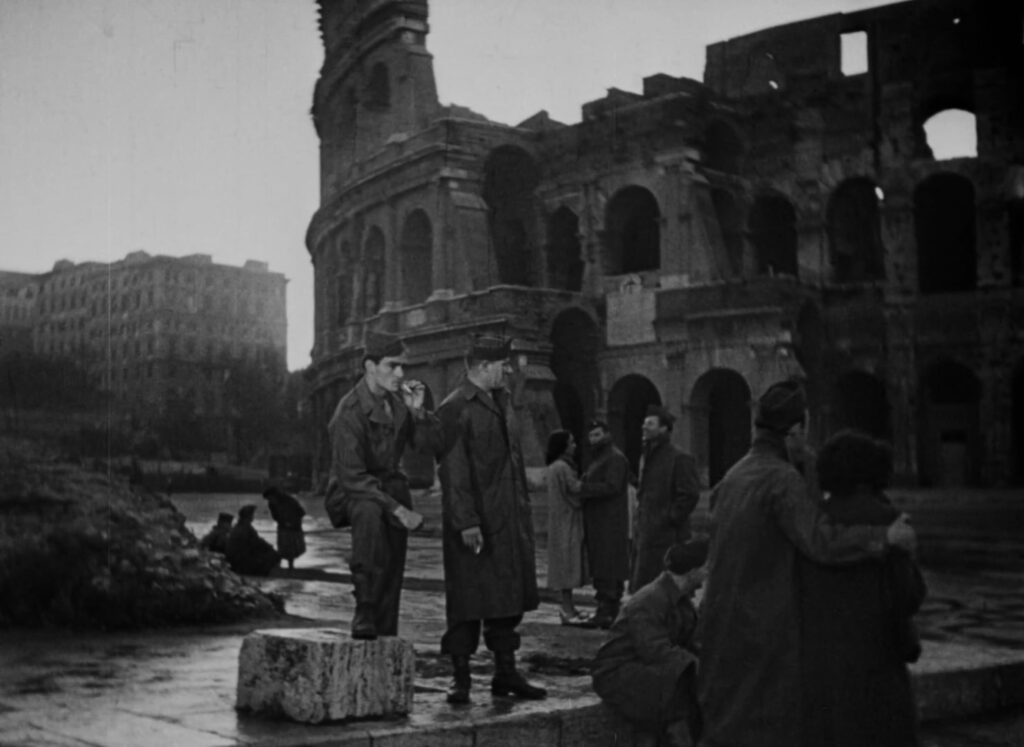
Squalor continues to infest Italy’s ravaged cityscapes as Paisan turns its gaze to a newly freed Rome, where jubilant crowds welcome their Allied liberators. 4th June 1944 is the date, the dispassionate narrator dryly notes – but after skipping six months forward in time, Rossellini reveals a very different Rome that has slipped back into economic hardship. From sweeping shots of the capital city’s classical architecture, Paisan narrows its focus to a rundown bar, where prostitute Francesca meets American soldier Fred and takes him back to her room. “Rome is full of girls like you,” he cynically laments, though when he recalls a brief romance from half a year earlier, Rossellini cuts to a far brighter flashback.
As it turns out, Francesca and Fred’s younger, more optimistic selves had met and fallen in love once before – yet so ruthless have the intervening months been, both are now unrecognisable to each other. As Fred winds up his story, the camera lingers on Francesca’s dawning recognition, though her attempts to rekindle their earlier spark sputter out against the bleakness of what both have endured. Neither are the same people they were when the city was liberated, so while she waits for him alone in the rain the following day, he tears up the address left in his pocket and departs Rome for good.
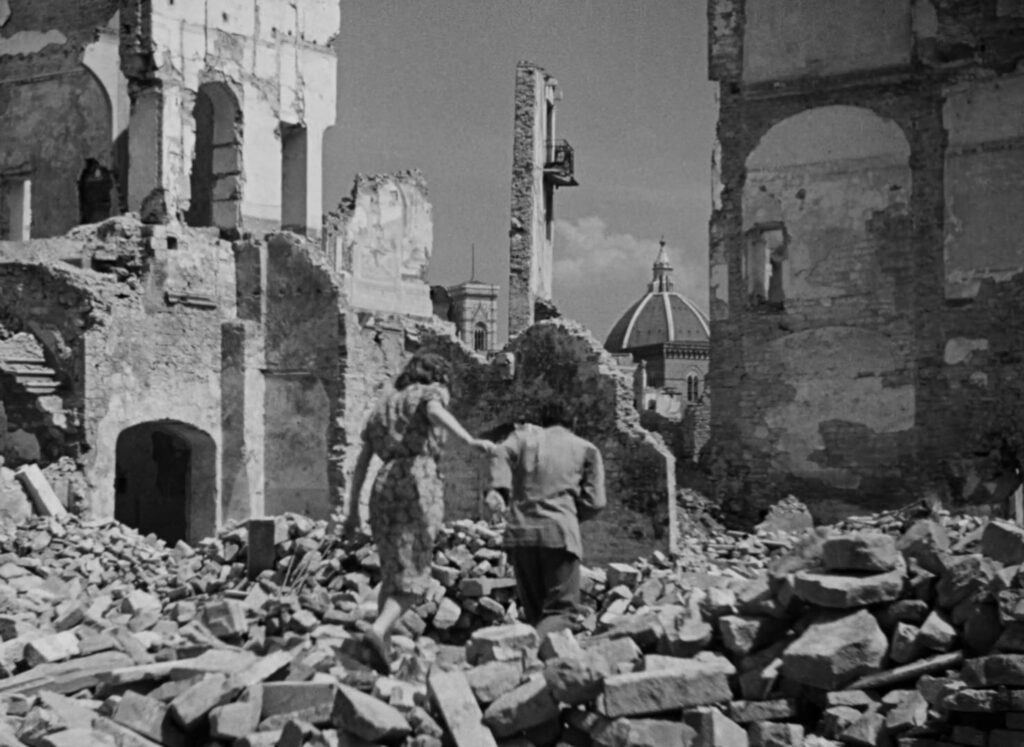
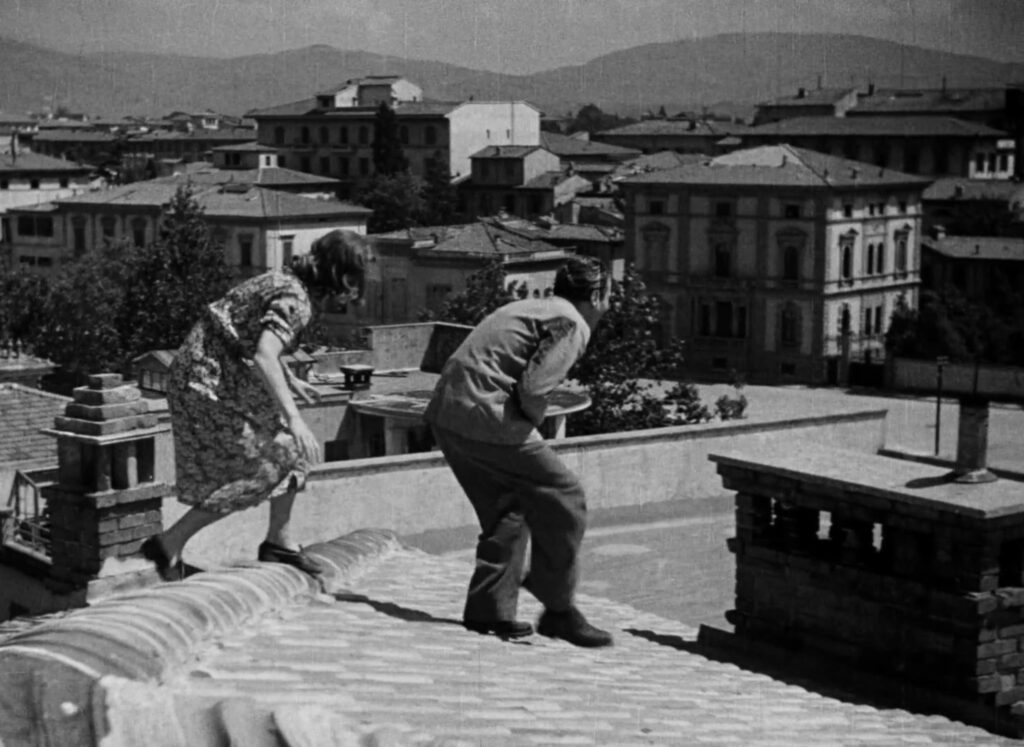
About 300 kilometres north of the capital, Rossellini’s fourth chapter witnesses a city split in two, and delivers the film’s most visually expansive sequence as American nurse Harriet and Italian partisan Massimo courageously venture into enemy territory. Where she is desperate to find old friend and partisan leader Lupo, Massimo seeks news of his family, prompting the two to navigate Florence’s perilous network of streets, rooftops, and squares. The imposing, weathered architecture is once again the highlight here, though as these companions stealthily slip between battered shelters and encounter fellow resisters, Rossellini also orchestrates remarkable suspense. The strings score carries a propulsive, frantic melody over an ominous bassline, driving their expedition towards a risky split-up that leaves Massimo’s fate painfully unresolved and steers Harriet’s toward a heartbreaking discovery. Lupo has died, she devastatingly learns from a dying soldier, consequently submitting to despair even as the Allies continue their path to victory.
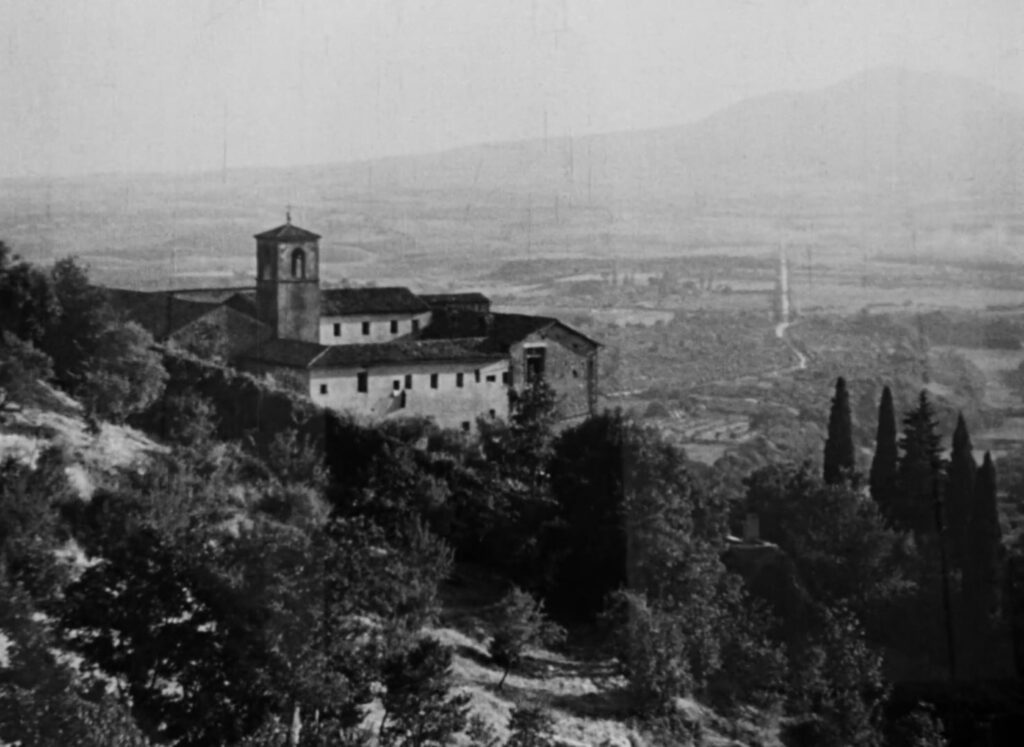
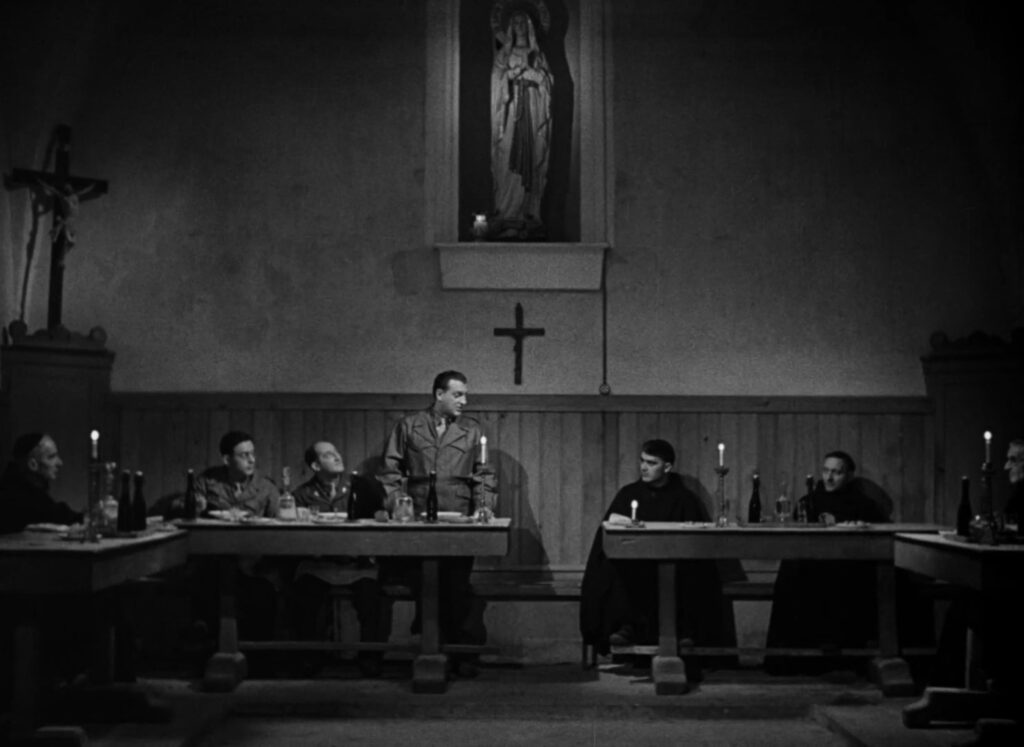
Retreating to the pastoral scenery of Italy’s Apennine Mountains, Paisan ushers in a far quieter meditation on faith and coexistence with its fifth chapter, welcoming three military chaplains into a remote Roman Catholic monastery. This is a holy sanctuary that has been relatively untouched by the war, and after years of hardship, even their garden has miraculously bloomed into sudden abundance. Though the chaplains offer canned food as thanks, concern quickly spreads among the monks upon learning that one of their guests is Protestant, and another Jewish – a revelation which compels them to fast and pray for their souls. If there is a weak link in this anthology, then it is the formally uneven ending to this chapter, veering from the monks’ mission of conversion to the chaplains’ expression of gratitude. Perhaps Rossellini was aiming for a more hopeful story here, yet by choosing not to follow this cross-cultural relationship through to its end, he disrupts the anthology’s established pattern and offers little in the way of resolution.
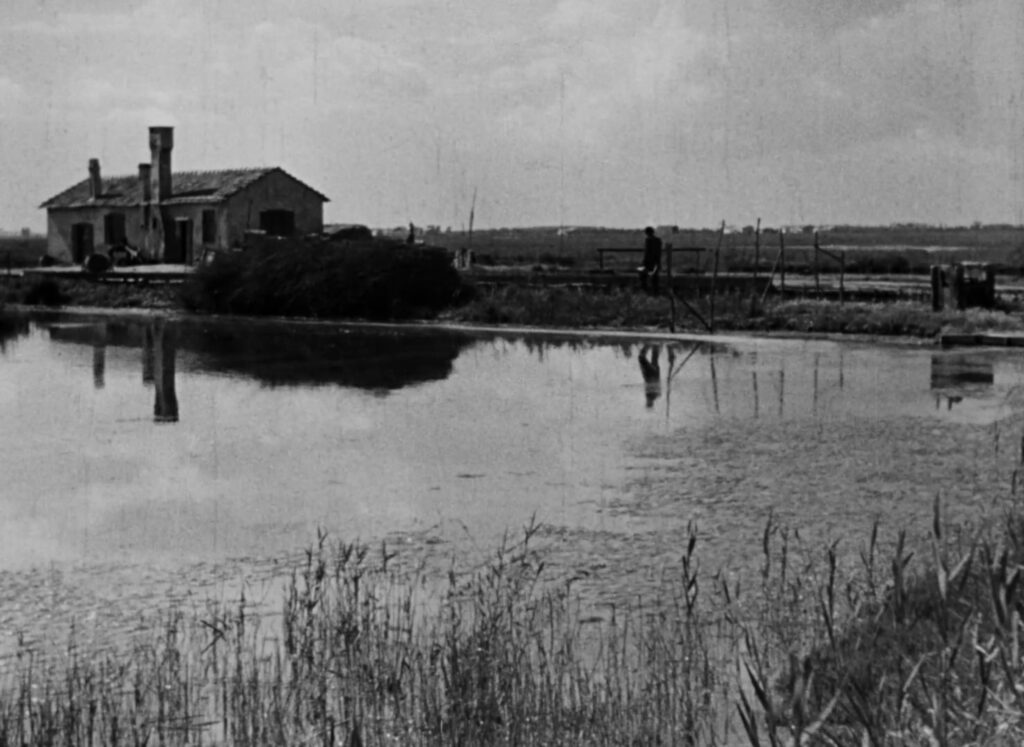
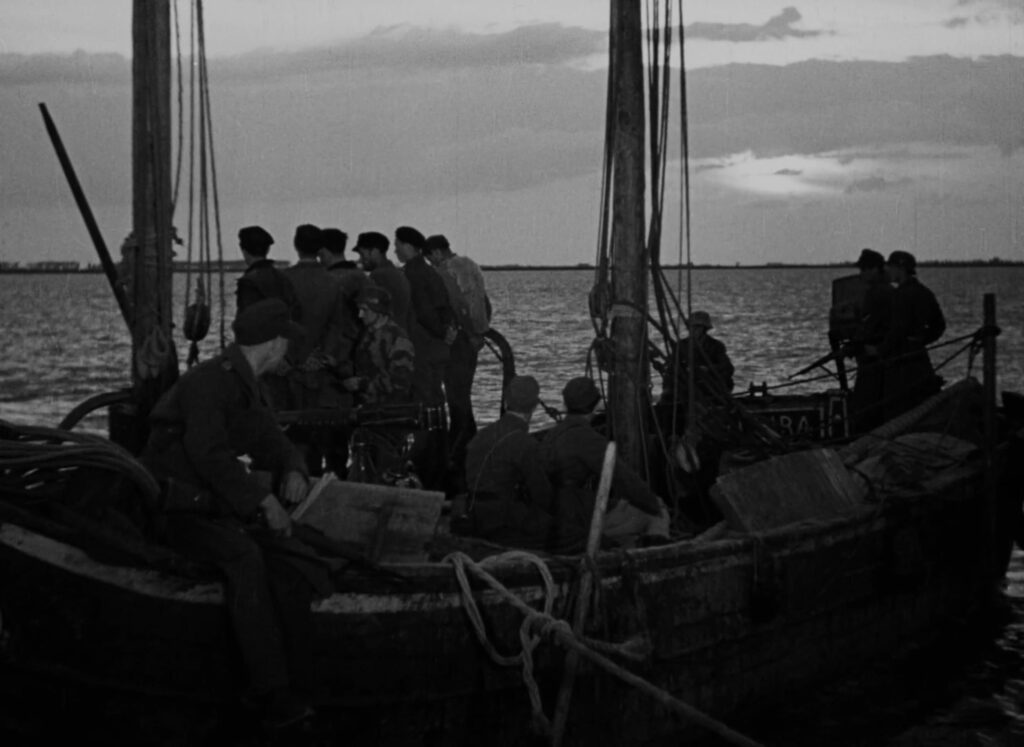
As Paisan moves into its final chapter, we find ourselves further north than ever, behind German lines in the Po delta. American soldiers team up with Italian partisans as they rage against the enemy and rescue both downed pilots from the water, though against the flat horizon of reeds and interlocking rivers, this swampy terrain offers the film’s loneliest, bleakest landscape. The depth of field in Rossellini’s blocking excels here as one group discusses orders to retreat while another digs a grave behind them, and when Nazi forces open fire from their boats, Rossellini executes a tense, crisply staged skirmish between both sides. Before the cornered Allied survivors get a chance to take their own lives however, they are captured, and ultimately sentenced to death.
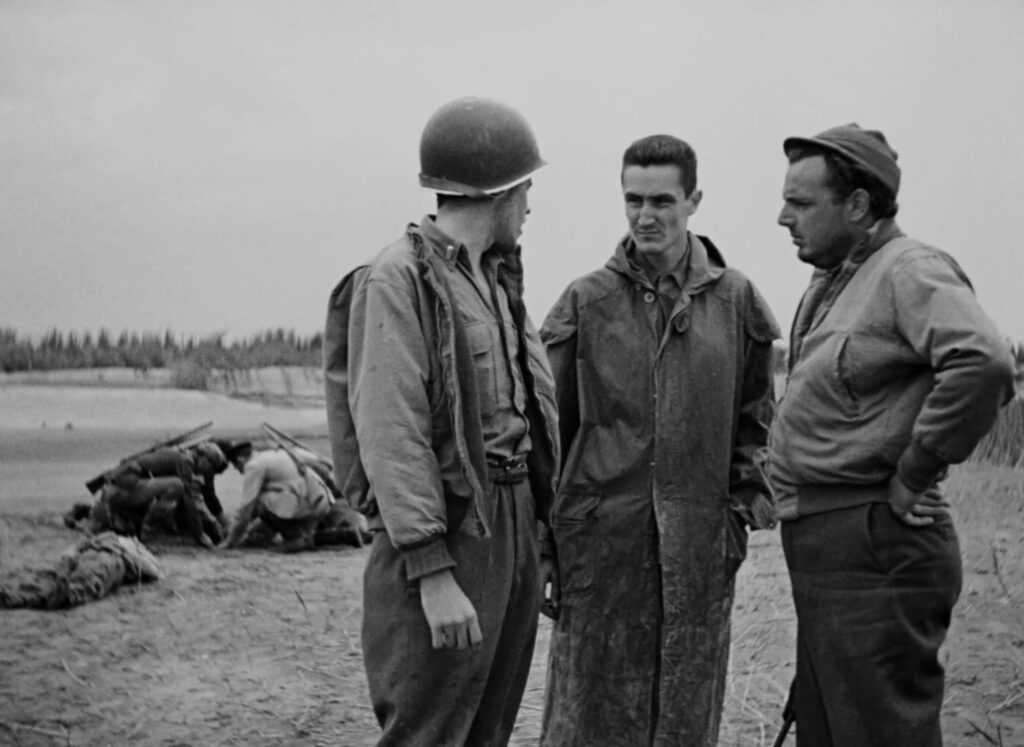
“My folks will never know what happened to me,” one Italian fighter mourns, recognising their sealed fate. Such is the emotional cost of this war that even those back home are left to bear an unresolved grief, though when the captives are drowned and shot the following day, Rossellini’s impassive narrator immediately undercuts the tragedy. “This happened in the winter of 1944. By early spring, the war was over,” it reports, unceremoniously reducing their deaths to a historical footnote. Perhaps this neutral detachment is the only way we can process the sheer magnitude of World War II’s inhumanity, yet by framing each vignette around unlikely, fleeting connections, Rossellini ensures we never forget the faces swallowed by that brutal immensity. Countrymen are evidently bound by shared values rather than borders in Paisan, and despite the forces pulling them apart, driven to seek kinship in dangerous spaces where survival, hope, and compassion might briefly intersect.
Paisan is currently streaming on The Criterion Channel.