

Zhang Yimou | 2hr 5min

Wandering among the sloping rooflines and tiled ridges of Master Chen’s manor, his Fourth Mistress, Songlian, finds a small room sealed off with a heavy chain. It is best not to talk about it, warns Zhuoyun, his Second Mistress – woman have previously died in that “house of death.” For now, at least, she accepts that advice without question. She is the most recent of the Master’s four concubines to join him at his estate after all, and within this rigid domestic hierarchy, there are more complex matters at hand. Each evening, a red lantern is hung above the door of whomever he chooses for the night, and competition is fierce to be the one pampered, massaged, and granted his favour.
As distant observers peering into Zhang Yimou’s reconstruction of 1920s China, we are not so blind to the grim purpose of this small, stone room. No matter how many concubines a feudal lord may have, their fidelity to him is hypocritically demanded, and Raise the Red Lantern exposes the brutal means by which it is enforced. Songlian’s innocence may slowly erode as she learns to navigate the betrayals, false alliances, and subtle power plays between the four mistresses, yet a far greater terror awaits her behind that chained door. In the meantime however, she willingly joins the other mistresses’ vicious game for the Master’s attention, blind to their collective subjugation beneath this patriarchal order.
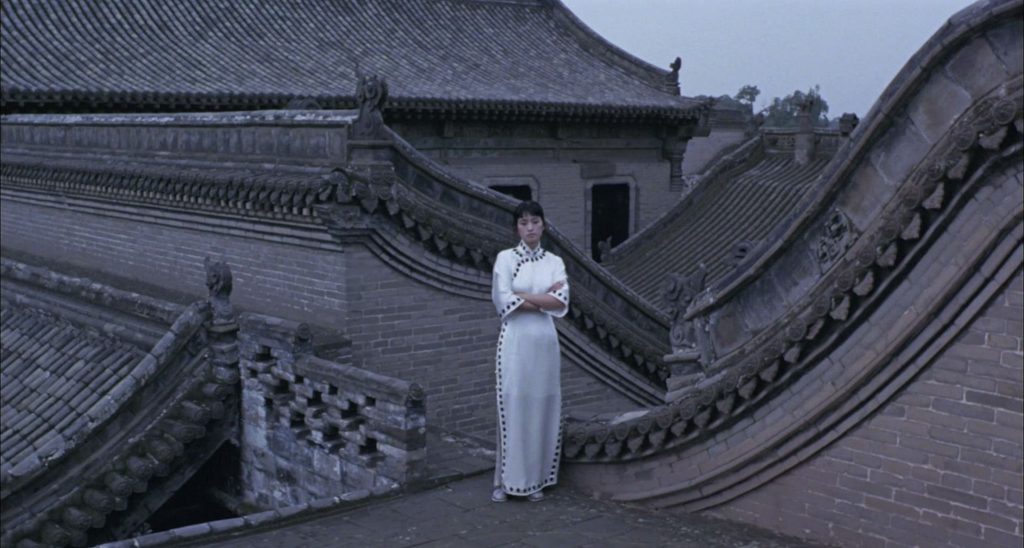
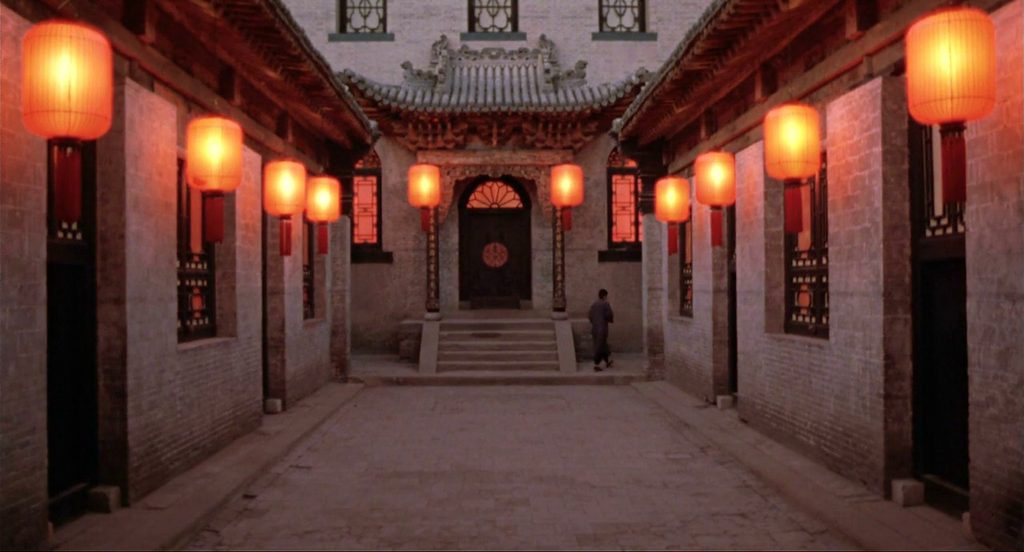
Zhang’s political metaphor is subtle but pointed. In this household’s microcosm of authoritarian control, he exposes China’s enduring structures of power that demand conformity, discourage dissent, and coerce individuals into complicity. Those who have internalised the rules do not even consider the possibility of revolution, and instead claw at each other to rise within the system rather than challenge it.
Especially with the First Mistress, Yuru, wielding a stern authority among the women, it seems that survival depends just as much on composure as on favour. As the eldest, she most explicitly embodies the domestic hierarchy, revealing a resistance to change in her icy reception of Songlian. She is not the one to worry about though, this nineteen-year-old newcomer soon learns from the much kinder Zhuoyun. The Third Mistress, Meishan, is a spoiled and ill-tempered opera singer, Zhuoyun warns. Her temperamental disposition soon becomes apparent in her refusal to meet her newest sister, and later as she performs from atop the roofs in sumptuous scarlet gowns, she stakes a social dominance through her commanding presence and voice.
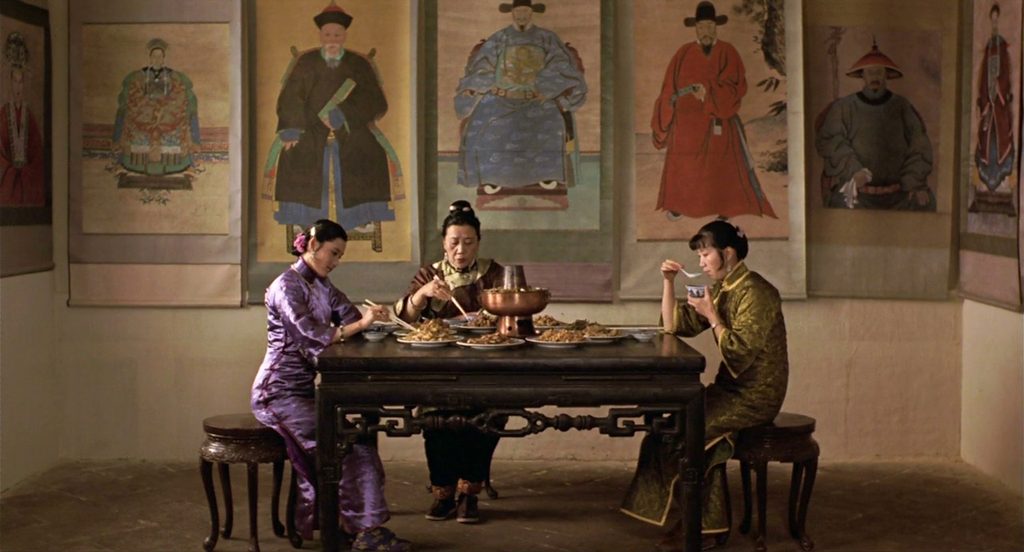
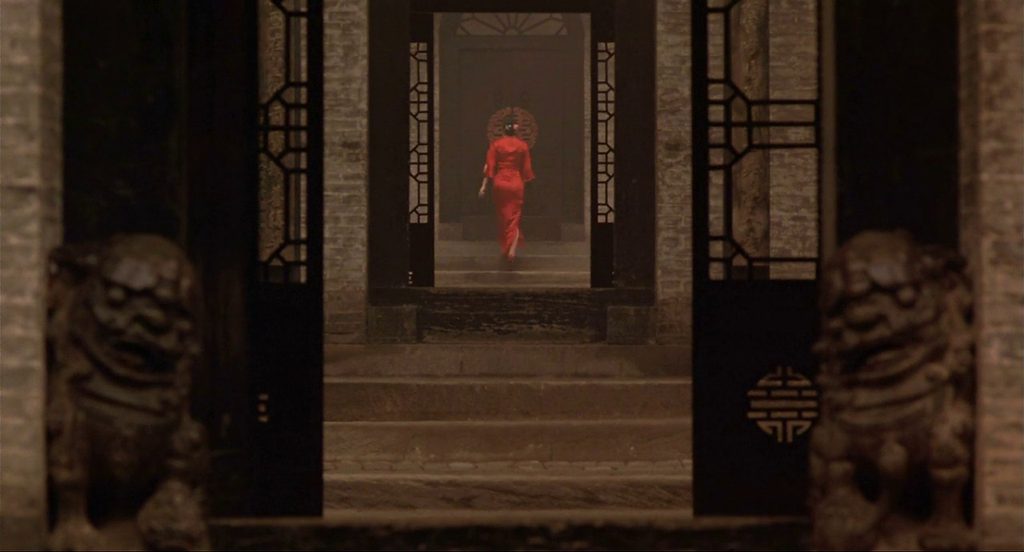
Beyond the four mistresses of the Master’s estate, there is another woman who bides her time with malice in Raise the Red Lantern. The maid Yan’er regards Songlian with hostility from the moment she is assigned to her service, and when we learn of her feelings towards the Master, it becomes apparent why. Songlian is shocked to find her maid in bed with the Master, carelessly breaking his own rules, though just as unsettling are the red lanterns she improperly keeps in her room along with a pin-riddled doll. Given Yan’er’s illiteracy, it is clear there is someone else in the manor who helped her write Songlian’s name on the curse charm, and when her accomplice is revealed, masks begin to fall away.
“Zhuoyun has a Buddha’s face and a scorpion’s heart,” Meishan incisively quips after Songlian exacts petty revenge against the Second Mistress, snipping her ear during a haircut. So malicious is this woman that when she and Meishan fell pregnant at the same time, Zhuoyun tried to induce a miscarriage in her rival and took expensive injections to give birth first – yet failed on both counts. Far from the petulant diva Songlian first imagined, Meishan emerges as her closest ally within the manor, and both recognise each other as equals in their shared captivity.
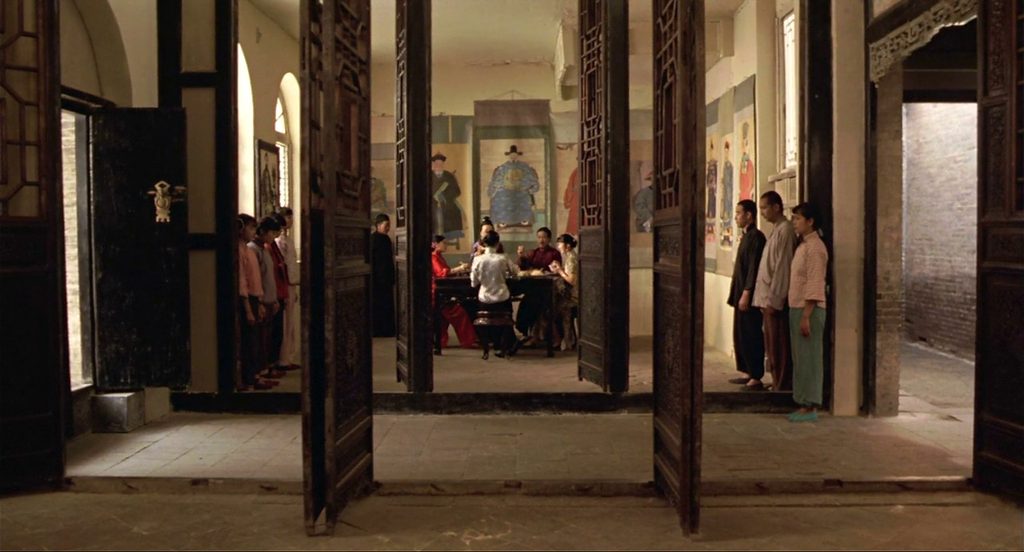
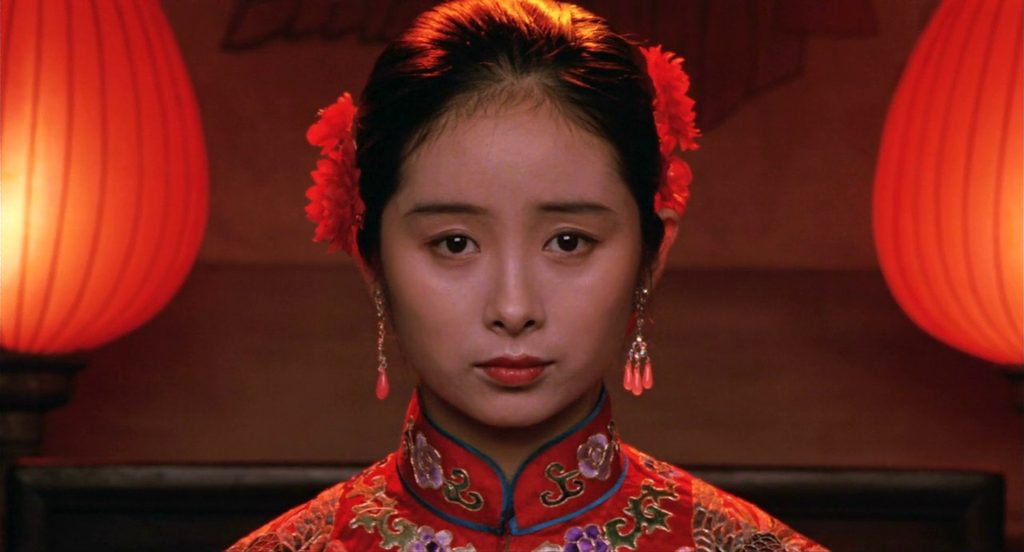
Enveloped by this mansion’s geometry of layered doorways and latticed wooden panels, these women are thoroughly imprisoned in Zhang’s visual architecture too, even as they are staged like living ornaments upon pedestals. His majestic symmetry only further reinforces their self-conscious status, isolating Gong Li’s controlled distress within meticulously framed chambers, though it is the striking intrusion of bold, red hues through textiles and lighting fixtures which establishes the film’s most arresting aesthetic signature. This is not merely decorative flair – Zhang’s vibrant compositions in Raise the Red Lantern stand alongside Krzysztof Kieslowski’s Three Colours trilogy as landmarks in cinematic colour design, casting his vulnerable protagonist as both privileged and imperilled within the Master’s historic manor.
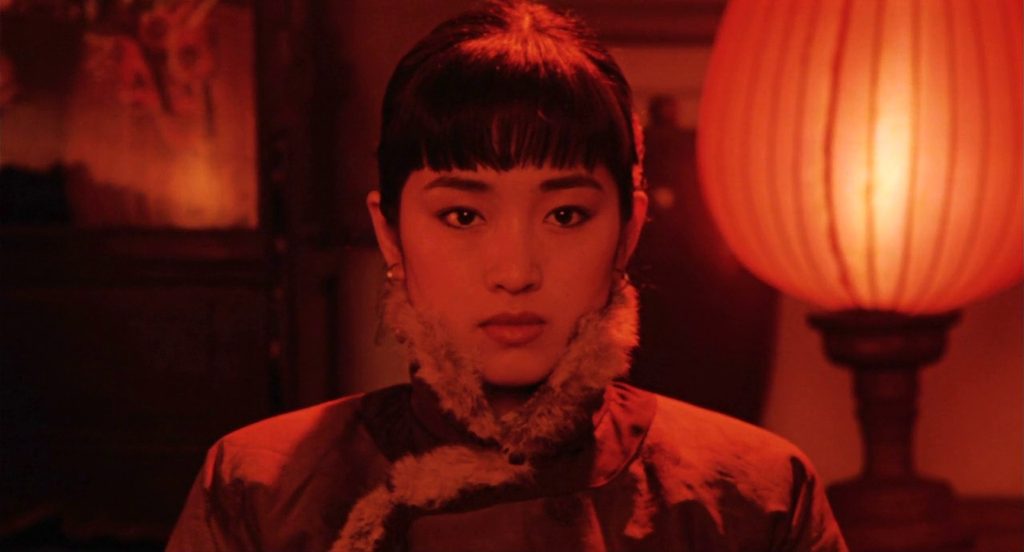
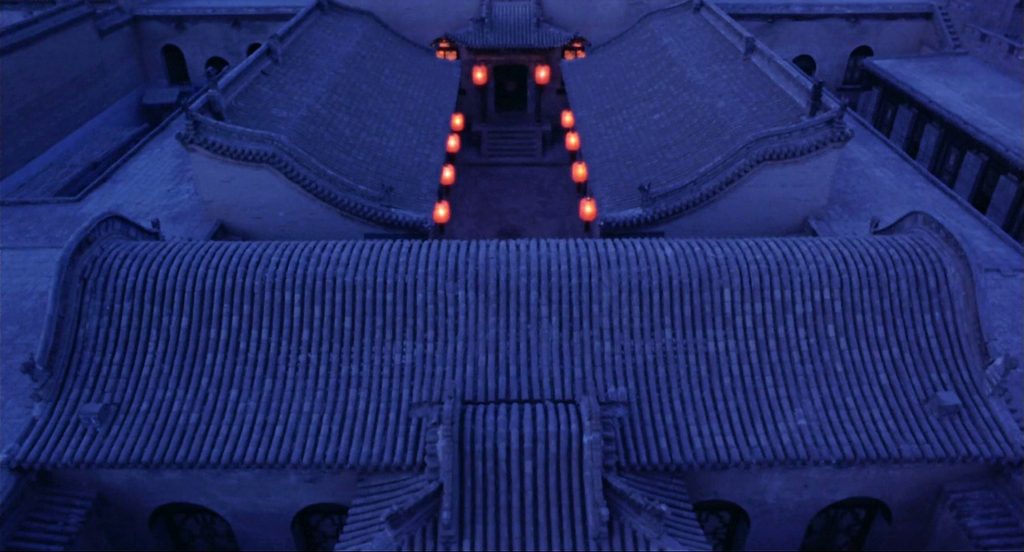
Of course, much of this may be attributed to the soft, burning glow of the lanterns themselves, their cylindrical and elliptical shapes adorning his mise-en-scène like floating jewels. From the high angle above the courtyard, they pierce the soothing blue wash of the early evening, while inside they frequently drench entire rooms in an intoxicating crimson light. Li’s expressions are composed on the surface, yet illuminated by this radiance in long, lingering shots, her calm veneer subtly cracks beneath its suffocating haze.
By devoting such painstaking attention to Songlian and her fellow mistresses, Raise the Red Lantern subtly draws our gaze away from a conspicuous absence in its representation of patriarchal authority. Zhang’s camera is evidently far more interested in the women’s faces than the Master’s, often obscuring it through careful blocking and framing, or otherwise leaving his features barely discernible through wide shots. His identity does not matter in this political fable – instead, it is embodied in the ritualistic structures that govern his mistresses’ lives, existing more as a systemic force than a single, accountable figure.
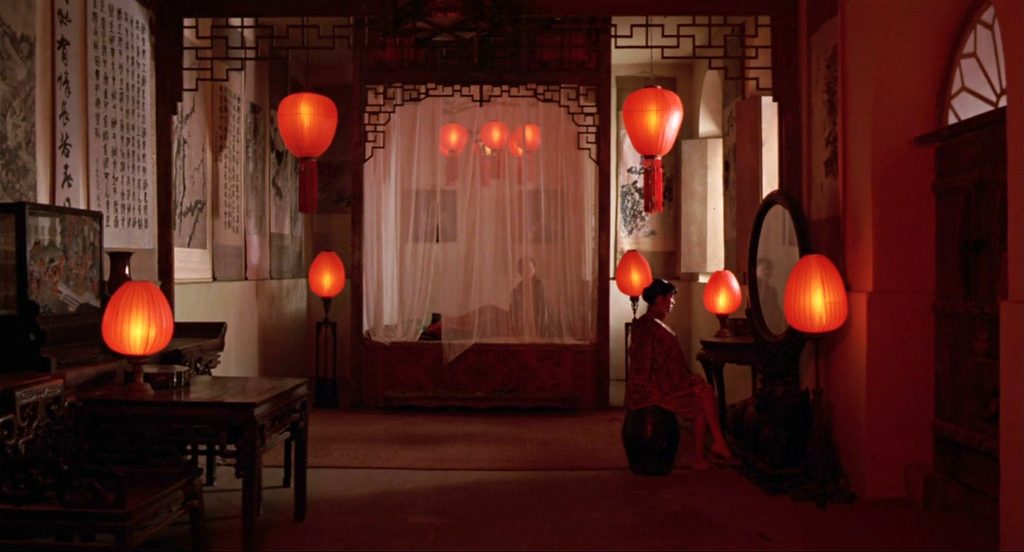
As such an abstract representation of authority, it is difficult for any individual to exert meaningful influence over the Master himself. The most a mistress can hope to control is her own status within his game, so when Songlian fakes a pregnancy, she effectively manipulates the rules to ensure the Master’s favour for several months. No longer must she wait every day to see whether her lanterns will be lit – their glow becomes a permanent fixture in her chamber, guaranteeing royal treatment with uninterrupted privilege.
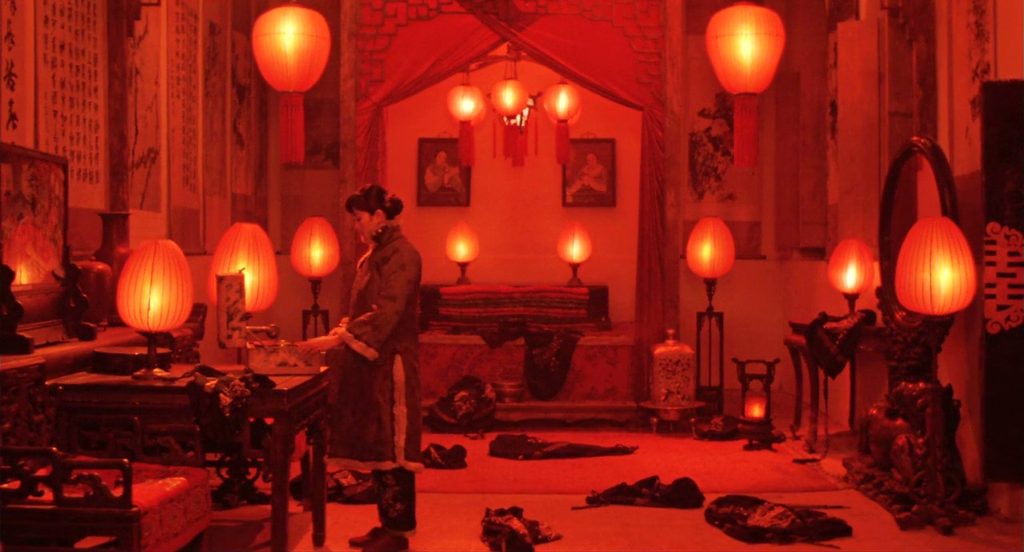
Of course, Yan’er is quick to undo this arrangement. Finding a spot of period blood on the mistress’ sheets, she immediately informs Zhuoyun, and Songlian’s privileges are swiftly revoked. With her lanterns covered by black canvas bags, Zhang’s red flourishes drain into monochrome, and the blankets of snow which engulf the manor only further set in a chilling desolation. At least some of that warmth is restored in Songlian’s retribution though – setting fire to Yan’er’s secret lanterns in courtyard, she forces the maid to kneel in the freezing cold until she apologises, yet underestimates her stubborn defiance that ultimately proves fatal.
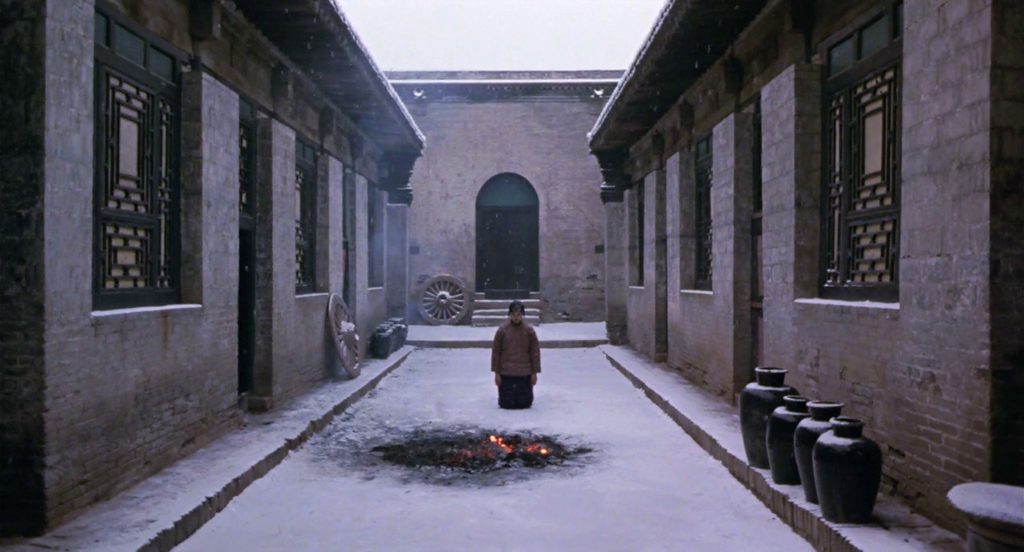
For Songlian, there is no vindication to be found in this bitter triumph. “What do people amount to in this house?” she despairingly wonders aloud to Meishen. “They’re like dogs, cats, or rats. But certainly not people. Here I’m thinking, isn’t it better to hang yourself in that room?” At least her friend has her affair with the Doctor to sustain a fragile distraction, though Songlian is quick to regret her drunken betrayal of this secret to a scheming Zhuoyun.
Witnessing the servants carry Meishen to the small room upon the roof, she finally recognises the fate that befalls any woman who strays from the Master’s merciless rules. “Murderers!” she cries in frenzied horror as Zhang’s camera lurches into handheld motion, and with the remaining fragments of her sanity, she carries out one final act of rebellion. Lighting the Third Mistress’ lanterns and playing her operatic voice from a phonograph, she settles Meishen’s ghost over the estate, haunting the labyrinthine manor that holds them all captive.
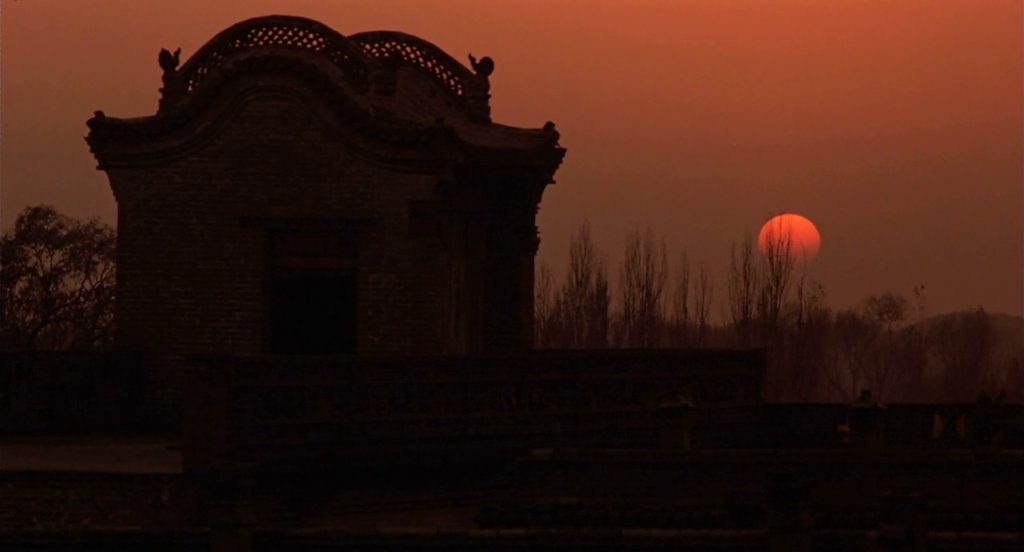
Throughout Raise the Red Lantern, the seasonal chapter titles seem to parallel the intensifying rivalries as winter approaches, yet we can’t help feel the inescapable cycles of this social system as Zhang once again returns to the warm air of summer. A Fifth Mistress has arrived to reignite competition for the Master’s favour, and the Third Mistress has been forgotten by almost everyone, besides the mad woman who wanders the estate in plain clothes. Perhaps though this tragic existence is simply the fate of those who see the Master’s house for what it is – a theatre of systemic, patriarchal cruelty, sustained by the coerced complicity of its own indoctrinated victims.
Raise the Red Lantern is not currently streaming in Australia.