
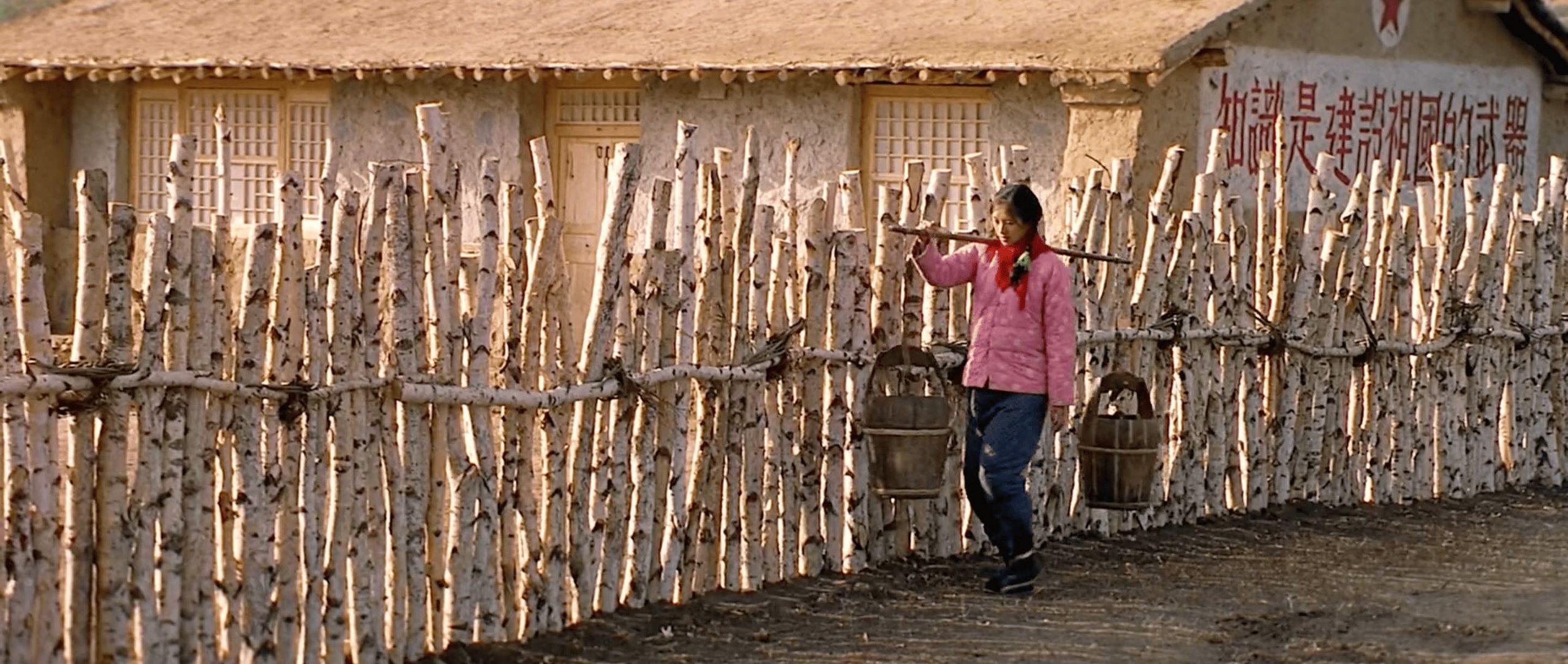
Zhang Yimou | 1hr 29min

When Luo Yusheng’s recently widowed mother Zhao insists that her husband’s body be carried from the hospital back to their village on foot, it initially appears as a stubborn, impractical demand. They must help his spirit remember the way home, she maintains, indifferent to the shortage of able-bodied men in a village depleted by the exodus of its younger generations. This is an outdated tradition that has not been followed since the Cultural Revolution, yet as Zhang Yimou recounts in the following flashback, theirs was a love that was first forged along that very road. This path is inseparable from the memory of their courtship, and through Luo’s pensive reflection, The Road Home submerges us into a distant memory that burns brighter than the faded, emptied landscapes of the modern world.
As we study a framed photograph of a much younger Zhao and Changyu standing upon that road, the shot dissolves from the monochrome present into the same stretch of countryside decades earlier, now saturated in the warm, earthy tones of autumn. Golden waves of grass wash across the rural valley as Changyu makes his way through it by horse and cart, approaching the village where he is to be employed as its new teacher, and sunlight diffuses in the dusty air as a lovestruck Zhao first lays eyes on him. From there, Yimou unfolds this family history through Yusheng’s fond recollections of a tale he has heard many times, reflecting upon a marriage that began long ago in lands of fertile, pastoral abundance.
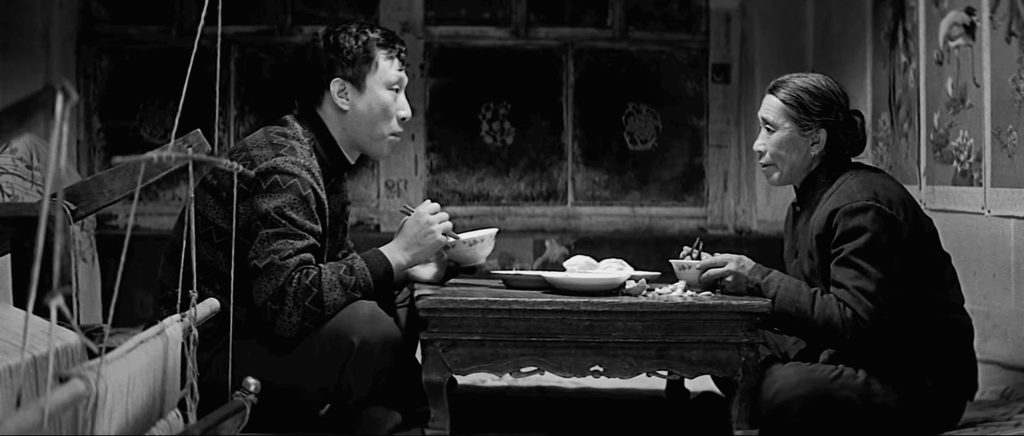

Although The Road Home possesses a far simpler narrative than Red Sorghum or Ju Dou, its lyrical romanticism distinctly echoes Yimou’s early work, reconstructing memories of older generations who laid enduring family foundations. Seasons become both markers of time and formal mirrors to Zhao and Changyu’s relationship, fading from sun-drenched hues to the white austerity of winter during their separation, yet all throughout he maintains the colour red as a recurring motif of their bond. The scarlet banner she makes for his classroom is intended to bring good fortune, and according to Yusheng’s voiceover, it would often draw his father’s gaze in the middle of classes. Perhaps even more significantly, the red jacket that Zhao wore during their first meeting becomes Changyu’s favourite, and later functions as an emotional anchor in his absence.
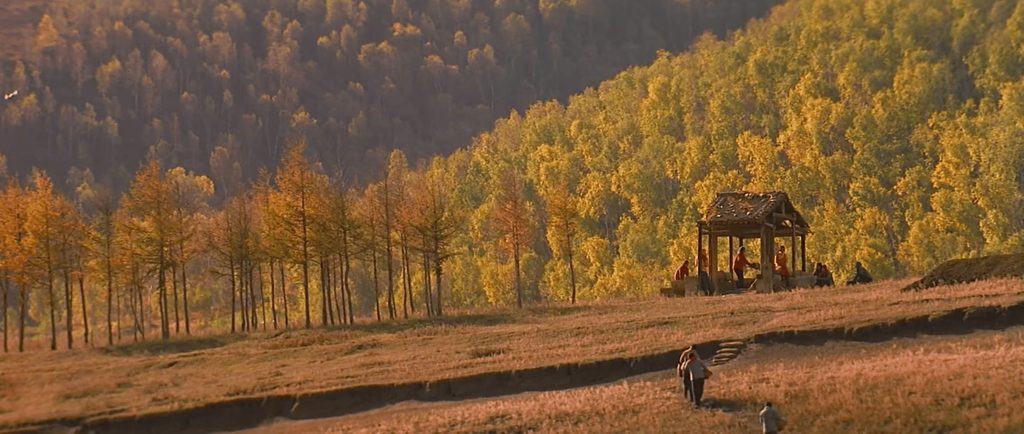
At 19 years old, Zhang Ziyi emerges as a radiant talent here, her innocent face carrying all the hope and idealism of a young love. Zhao places great significance in small rituals, and so as she attentively watches whether Changyu chooses her dish from among shared offerings, lingers outside the school to hear his voice, and waits by the road to see him walk to work, her devotion accumulates in small acts of devotion. Even within this sentimental nostalgia though, politics creeps in from the margins, censuring Changyu for his disobedience to the state. The teacher must return to the city, she learns, and thus she begins her dedicated wait for his return.
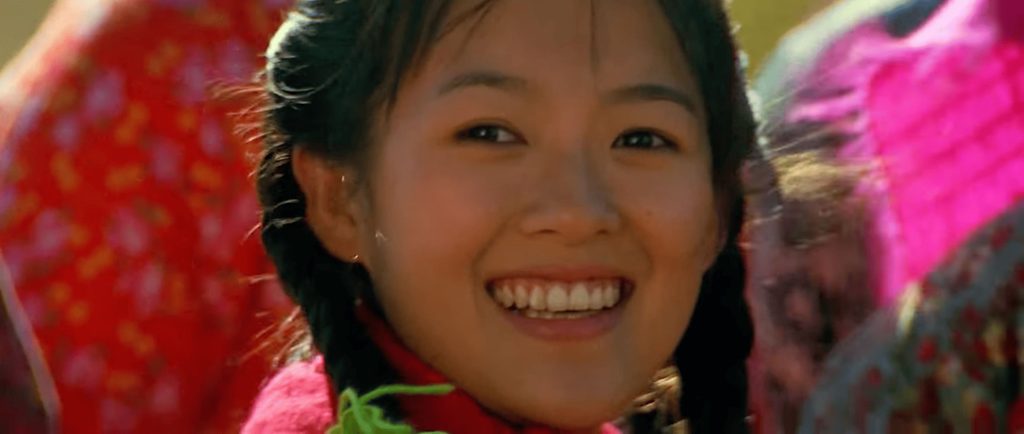
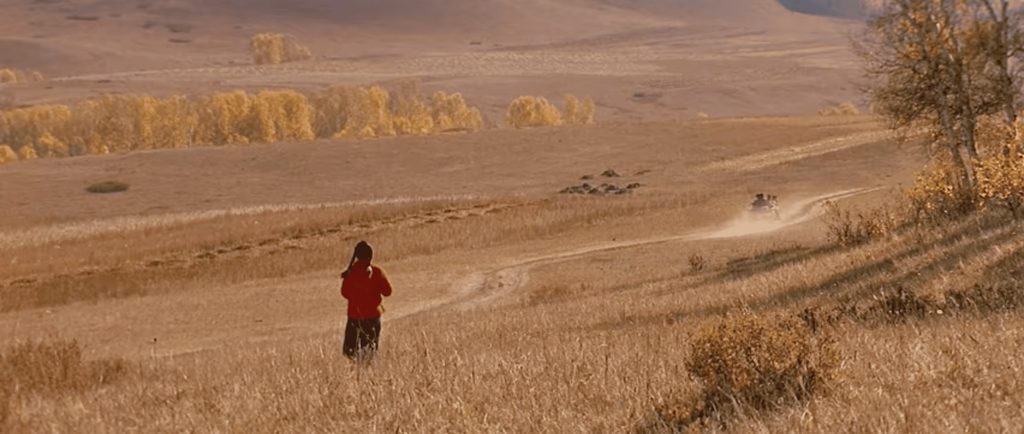
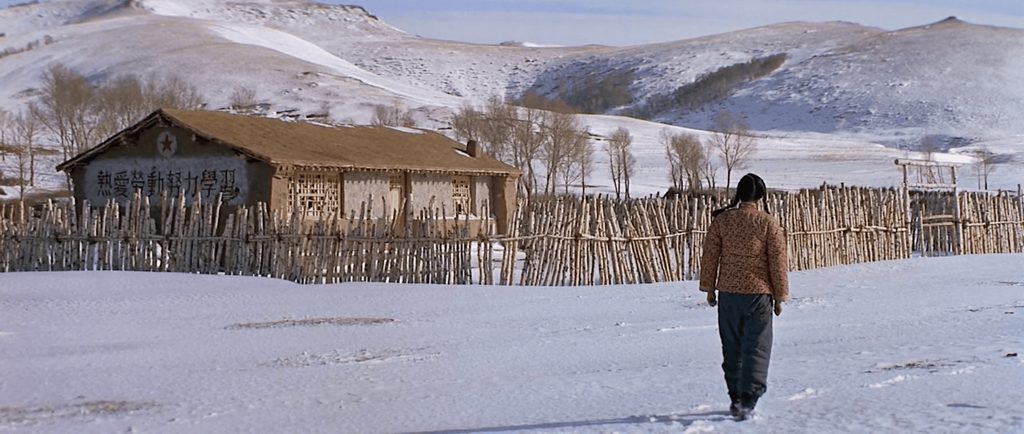
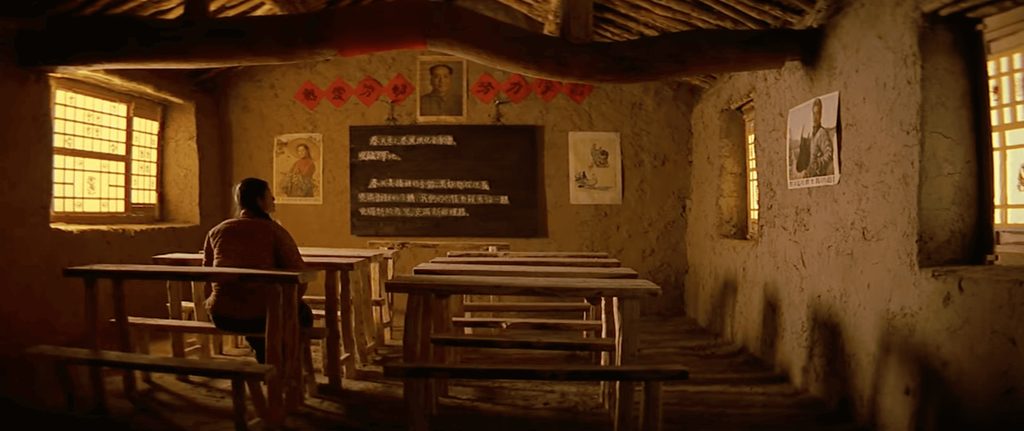
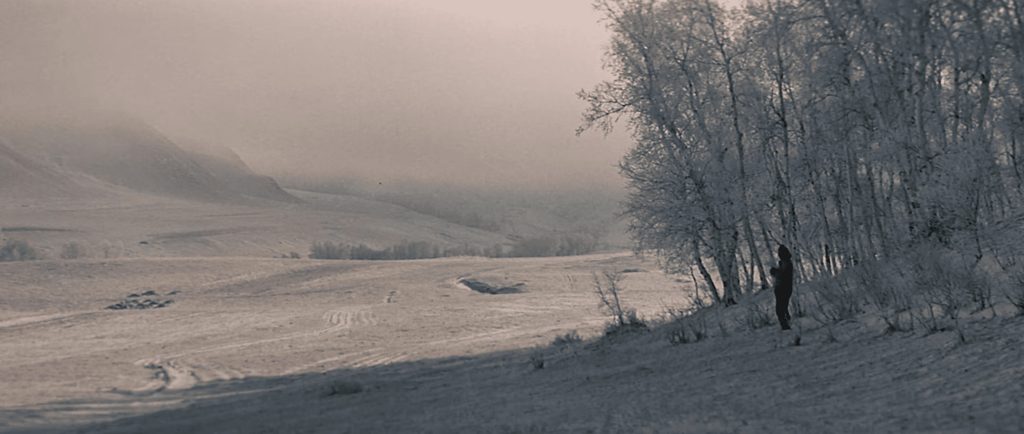
Months drift by in long dissolves as snow blankets the village’s golden fields, and still Zhao keeps vigil by the roadside in her red jacket, only ever leaving the post when she hallucinates Changyu’s voice and tidies his empty classroom. A bamboo flute rises above orchestral swells like a lone, fragile voice, and when she comes down with a fever, her mother insists she rest inside – yet not even illness can keep her from marching into a snowstorm, determined to follow the road to the city. Only when she physically faints is she brought to a halt, fortunately rescued by a passerby who finds her unconscious in the snow.
At least, that is the story that her son would learn in years to come. Yimou carefully balances what is shown onscreen and what is reserved for voiceover, treating the real-life fable as a recollection grounded primarily in his mother’s perspective, and supplemented by the memories of those who bore witness. Just as Yusheng draws upon his father’s fond recollection of the first time he came over for dinner, his narration also weaves in the village chief’s own stray observations, introducing dimensions that complicate and enrich the tale. The Road Home may be a second-hand account of one family’s history, yet in the act of assembling these fragmented testimonies, Yimou reveals its significance beyond private remembrance. It is clear that over the years, the legend of the girl who nearly died waiting for her future husband has been indelibly embedded within the community’s memory.
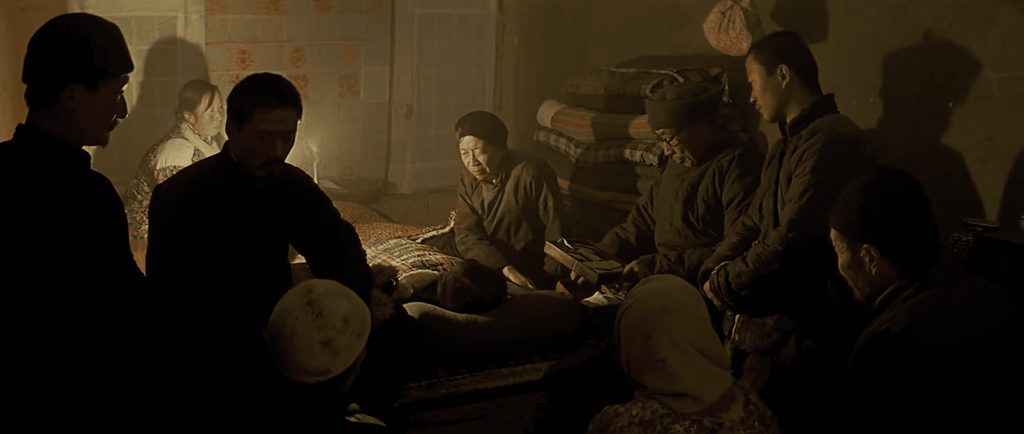
When news of Zhao’s illness reaches Changyu and draws him back to the village, their romance is almost brought to a happy close. Leaving his job in the city for love came at great cost, separating them for another few years, though Yusheng’s narration lightly brushes over such adversities that lie beyond the scope of their courtship. As Yimou dissolves from the icy village road back to the black-and-white of the present day, we find a newly invigorated Yusheng agreeing to his mother’s request, and organising the logistics of carrying his father’s coffin down that long, isolated road. Quite unexpectedly, however, it proves easier than expected to muster enough men for the journey.
“That day, over 100 people came to the ceremony. The mayor told me they were my father’s students. They heard about his death, and they all came back. Many came from other towns. Some drove from the city. The mayor said some came from as far as Guangzhou. Some tried but didn’t make it in time because of the snowstorm.”
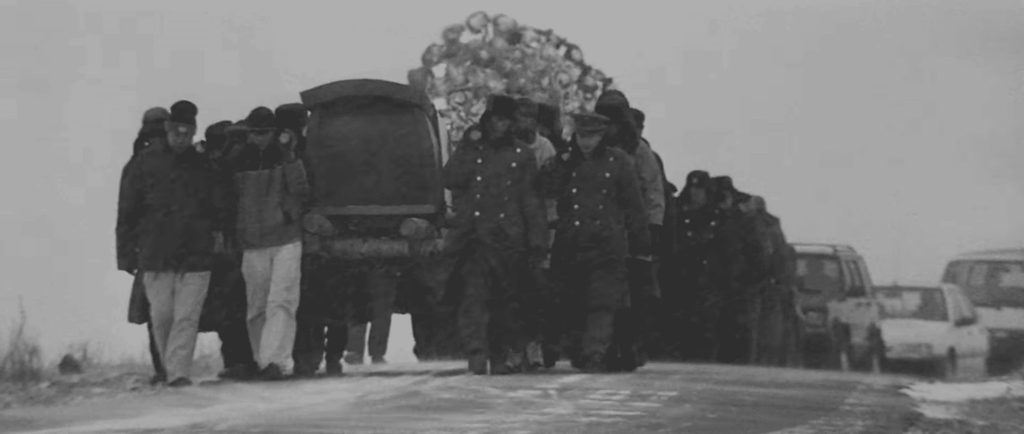
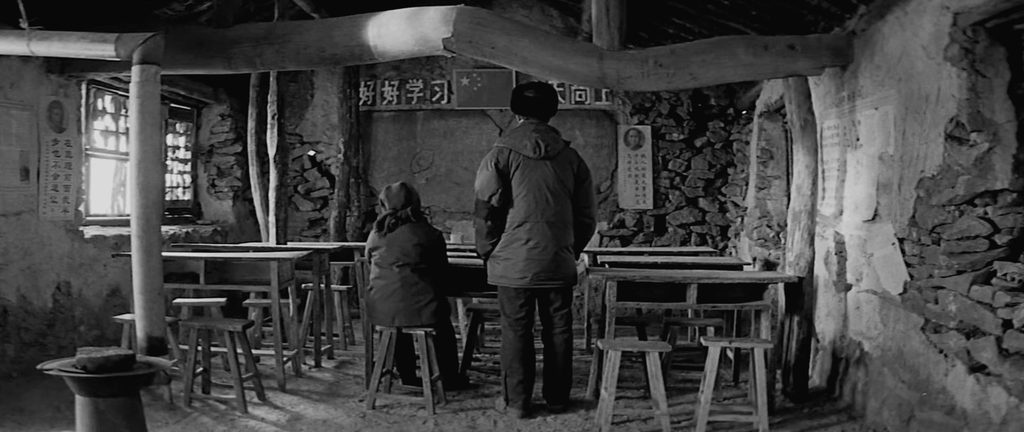
The Road Home’s once-golden landscape may be stripped of colour, yet the image of one hundred men accompanying their teacher’s remains down the road where he fell in love carries a solemn, dignified reverence. His was a life that touched many, testifying to the breadth of his influence as well as the enduring legend of his romance. Burying his father on a hill with a clear view of the schoolhouse, Yusheng thus decides to pay a final tribute, picking up Changyu’s old textbook and teaching a class in that same room Zhao would often linger by. Through one last montage of nostalgic dissolves, Yimou thus binds father, son, and a mother’s lifelong devotion across time, preserving their melancholic love within a tender, familial warmth.
The Road Home is currently available to rent or buy on the Apple TV Store and Amazon Video.