
Satyajit Ray

The Chess Players (1977)

Although Satyajit Ray treats the history of the British Raj with humane detachment in The Chess Players, it is not without a wry, bitter irony, symbolically framing the colonial conquest of Awadh as a lopsided game between calculating bureaucrats and self-absorbed nobles.

Distant Thunder (1973)

Satyajit Ray’s return to the pastoral settings of his early career in Distant Thunder does not usher in spiritual peace, but rather the indignity of desperate survival, uniting the individual tragedies and horrifying scale of the Bengal Famine of 1943 in a stark portrait of social collapse.

The Holy Man (1965)

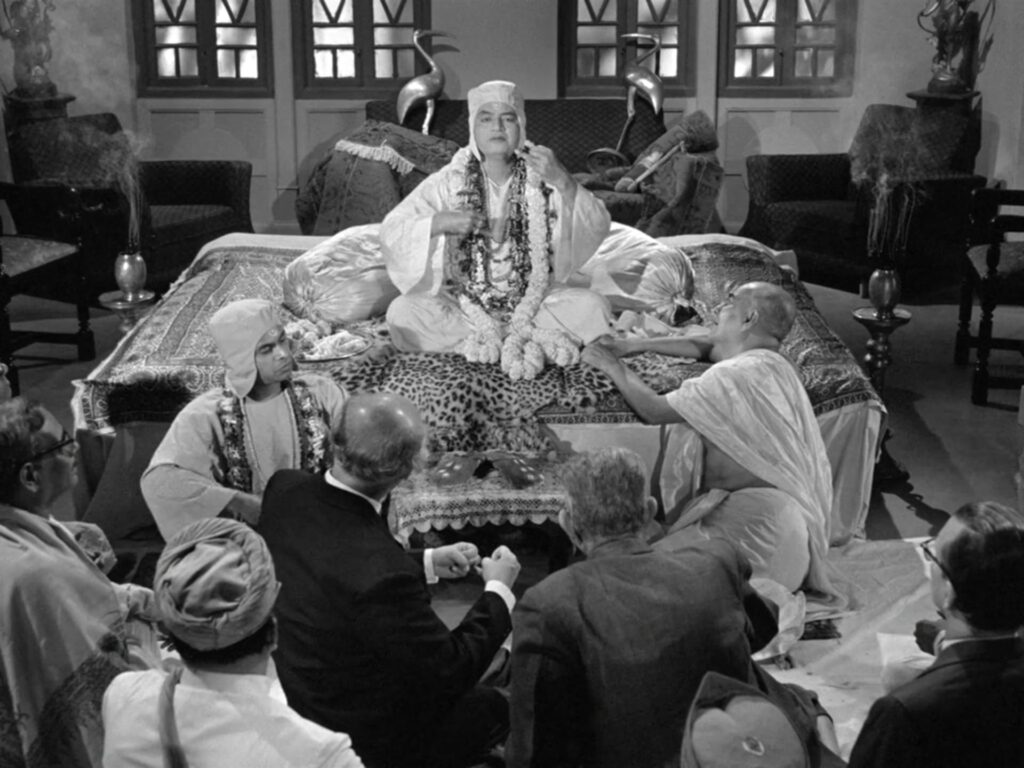
When a religious conman preys on a grieving family in The Holy Man, Satyajit Ray sets the stage for a battle of reason and delusion, threatening to unravel a young couple’s hopes of romance with a wry, comical edge.

The Coward (1965)

Time instantly dissipates when one young scriptwriter runs into his former lover in The Coward, yet Satyajit Ray keeps emotional closure at a tentative distance as this old flame resists rekindling, choreographing a dance of glances and hesitations that ambiguously withholds the truth.

Scroll to Top