
Satyajit Ray | 1hr 41min

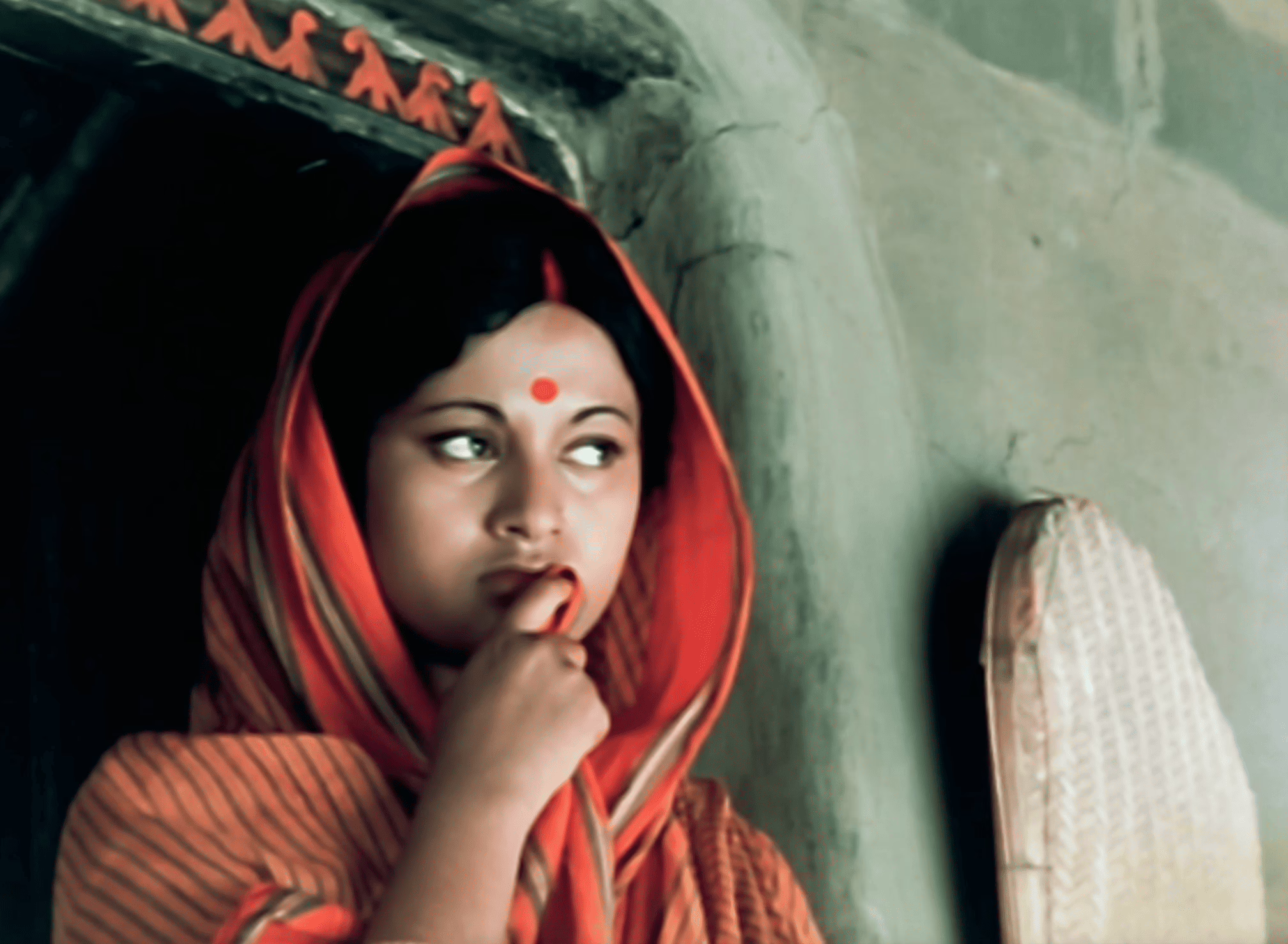
High above the Bengali village where Gangacharan tends to his community as a doctor, teacher, and priest, the rumble of jet planes draws eyes upwards. “It looks so beautiful. Just like cranes flying in the sky,” his wife Angana marvels, innocently assimilating these machines of war into the pastoral world she knows best. As far as she is concerned, this fleeting spectacle is the only intrusion of World War II into their modest life – a distant thunder rumbling on the horizon, yet one which nevertheless heralds the storm of upheaval soon to engulf them all.
The Bengal Famine of 1943 approaches at a creeping, steady pace towards these unsuspecting families, striking at neighbouring communities before it reaches their doorstep. “I don’t even have one grain of rice at home,” an elderly stranger from the next village over laments to Gangacharan, beseeching his generosity. Thanks to the Japanese’s occupation of Singapore and Burma, as well as the government conserving food for the military, the price of rice has risen. Unfortunately, this is only the beginning of what’s to come. Satyajit Ray’s return to the natural settings of his early career in Distant Thunder does not usher in spiritual peace, but rather the indignity of desperate survival, corroding morality and shattering customs through a pitiless, gnawing hunger.


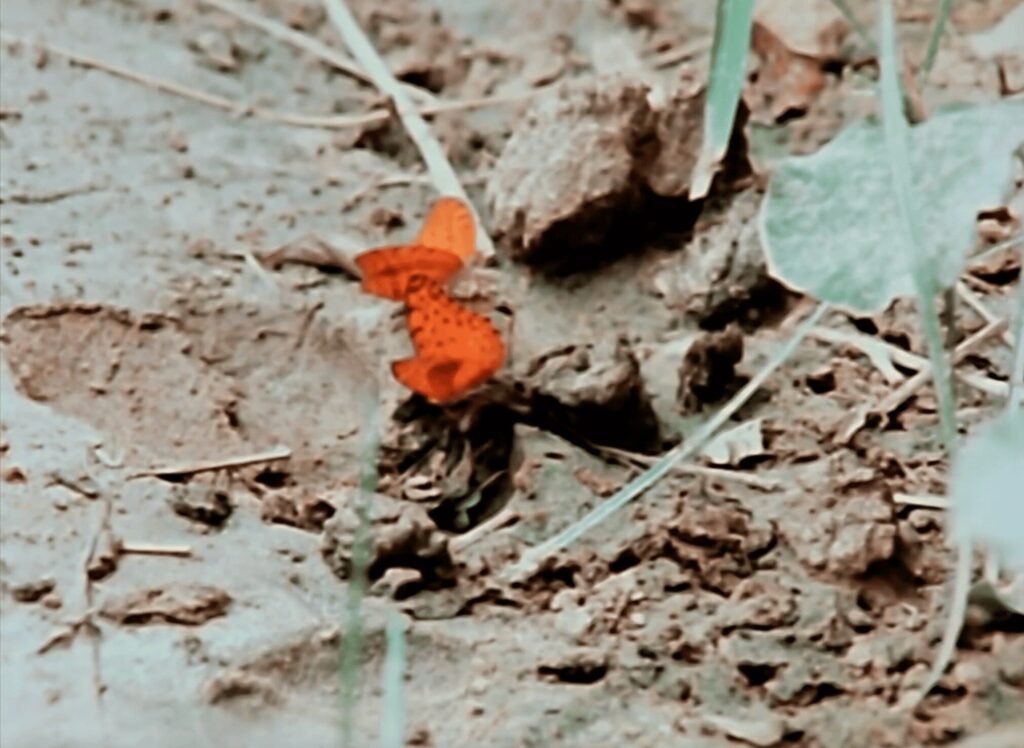
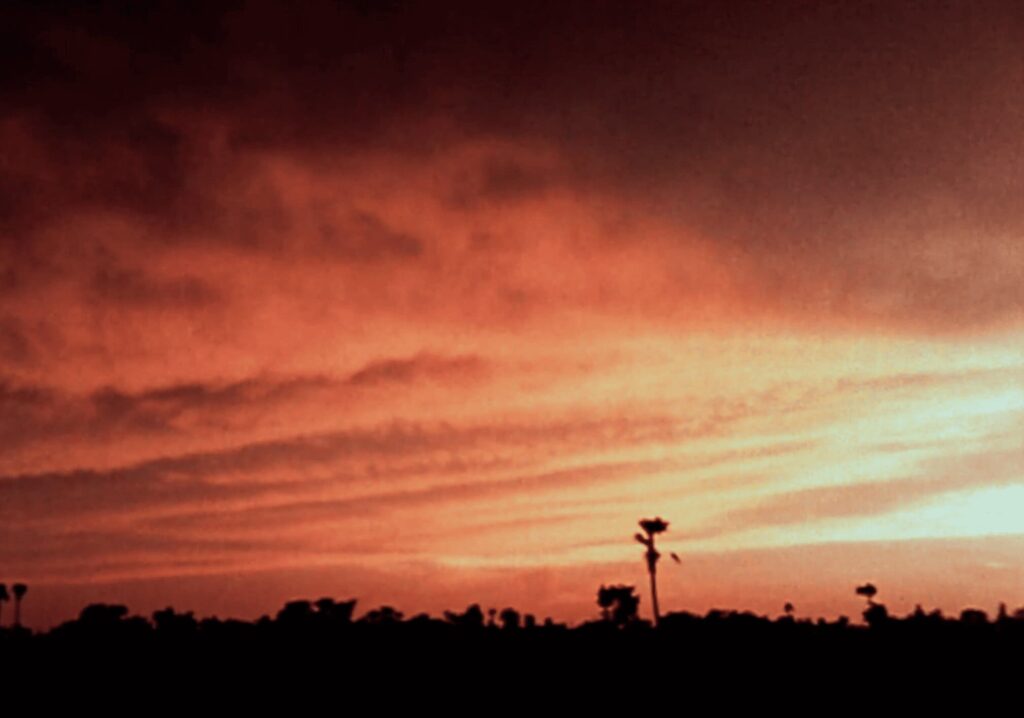
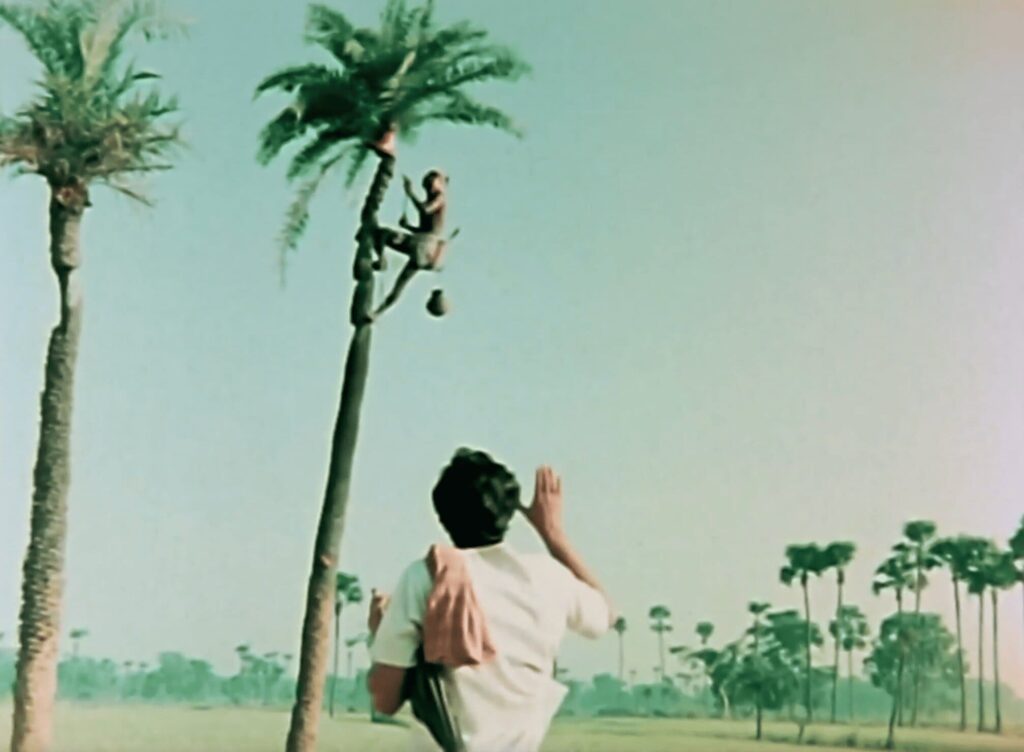
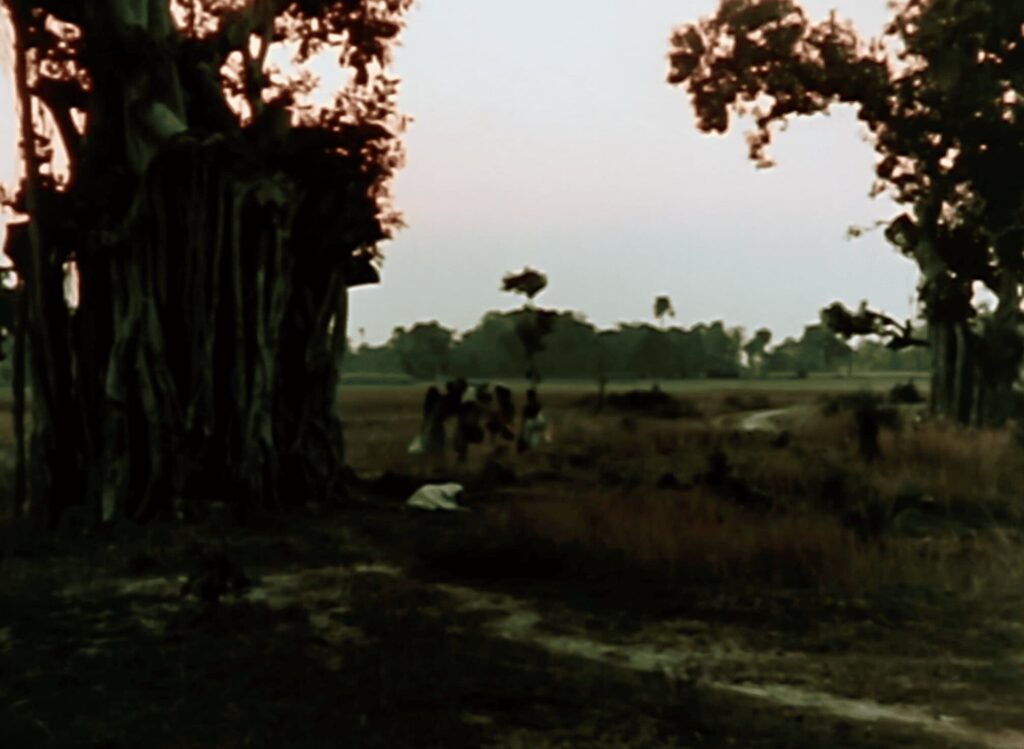
Still, the visual splendour of his location shooting at least preserves a vestige of pastoral serenity, enriched by his rejuvenating shift to colour cinematography. Vast, flat landscapes bathe in the natural light of magic hour during the opening credits, drawing us through a mesmerising montage that silhouettes trees against the setting sun and reflects clouds in lakes. Throughout the film too, Ray’s long shots continue to linger on the sky’s pink and orange hues, reasserting the enduring, elemental beauty of a troubled land. It is also revealing that on three separate occasions he returns to orange butterflies gently flapping their wings in the breeze, offering a delicate counterpoint to the shadow of death that has gripped the village. Life is fragile in Distant Thunder, and so its glow naturally feels all the more precious against the encroaching despair.

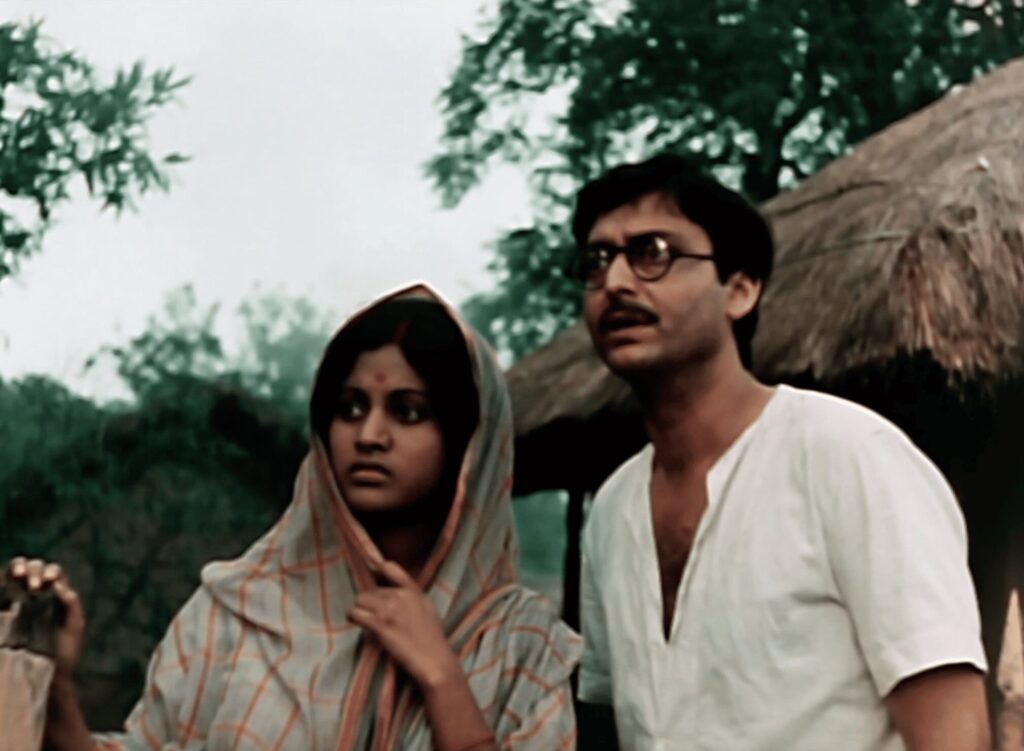
The respect that Gangacharan earns from his neighbours as a high-caste Brahmin is cemented early on when he seeks to educate their children and agrees to bless the village. As the moral centre of Distant Thunder, it is through his eyes that we witness the slow erosion of social order. Although we can understand his frustration with the stranger who ravenously indulges in his food, Angana counters with compassion, chastising her husband for demanding payment from their guest. She is the epitome of graceful resilience here, willingly taking on the burden of manual labour, and even serving as a reminder of his obligations when faced with temptation. Especially after Gangacharan fails to purchase rice in a neighbouring village, the farmer’s offer to instead cook him a meal out of respect for his Brahmin status incites guilt, knowing that his wife remains hungry back home.

As if to sink his shame in even further, Ray intercuts this scene with another of Angana and her peasant friends digging for potatoes in the forest, before developing this narrative thread into a warning of an entirely different kind. For the women of this village, there is a danger beyond famine, preying on them when they are momentarily distracted by the planes overhead. That distant rumbling drowns out Angana’s screams as an assailant attempts to rape her, but when her friends realise what is happening, they are quick to intervene with brutal, lethal force. This murder is their secret, they decide, though still Angana cannot help crying into Gangacharan’s chest when she arrives home.
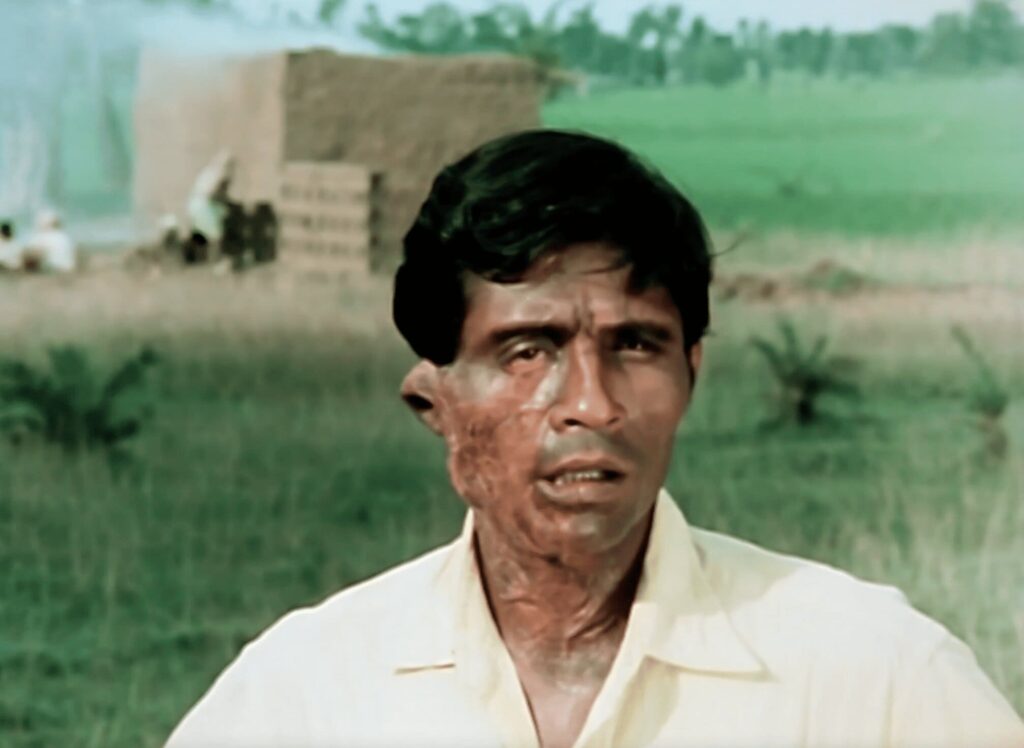
Ray’s editing tends to veer toward choppiness in these fast-paced sequences, exposing a less refined technique than his earlier films, though his craft is often more assured in the nuanced development of his character-driven drama. For Chutki, one of Angana’s protective friends, starvation pushes her into a harrowing predicament when she begins negotiating sexual favours for rice with the town’s brick manufacturer – a severely disfigured man whose facial burns have made him an outcast. Degradation is the cost of survival for Chutki, yet Ray offers no sensationalism in this subplot, instead framing her surrender to necessity with compassionate sensitivity.
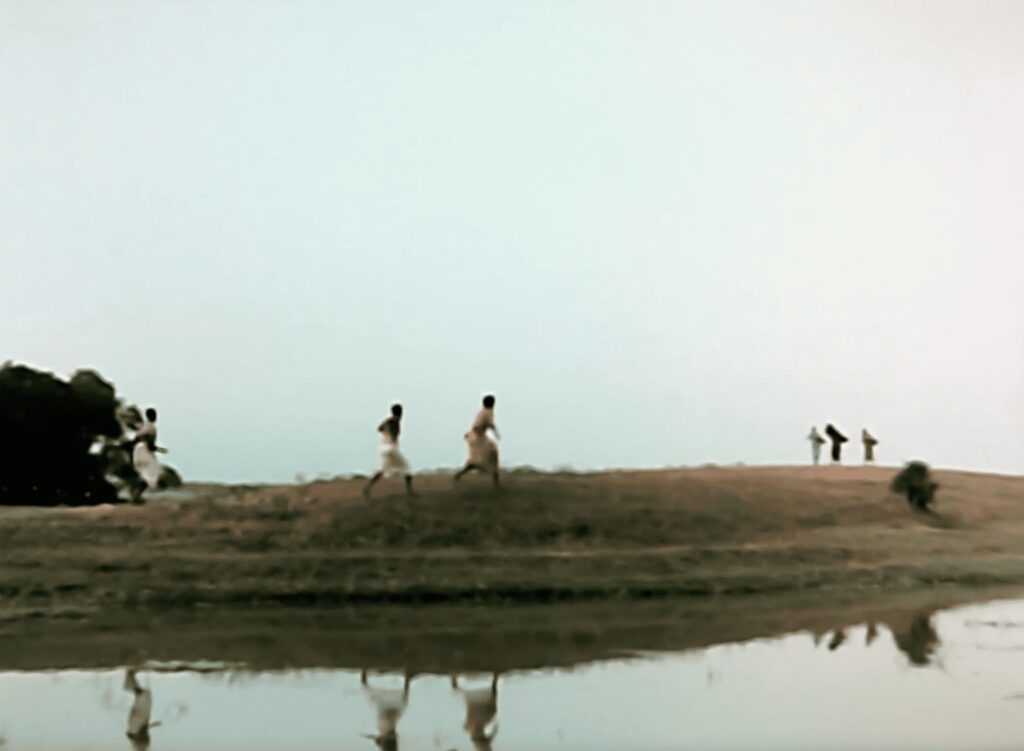
Bit by bit, the tapestry of characters that Ray weaves through Distant Thunder grows more layered, particularly expanding in scope as we observe the village’s growing resentment towards their elder, Biswas. There is no need to worry about the famine reaching their community, he assures them early on – his granary is full of rice. When rations grow scarce though and tensions boil over, chaos inevitably erupts between neighbours, and the violent mob turns against Biswas for hoarding the grain. Individual corruption and systemic failure are evidently responsible for this cataclysmic breakdown of trust in Distant Thunder, ultimately forcing civilians to turn on another in the face of scarcity.
If this tragedy offers any mercy, then it is perhaps in the humility that cuts across caste divisions, if only for a moment. A woman found lying on the roadside is the last survivor of a colony that starved to death, and now she too is on the brink of succumbing to the same fate, asking for fish curry and rice in her final moments. As a low-caste woman, Brahminical purity codes forbid physical contact with her, yet such taboos are rendered meaningless in times of collective desperation. An extreme close-up settles on her glazed-over eyes as life leaves her body, and holding her limp wrist, Gangacharan feels her pulse in a sombre silhouette.


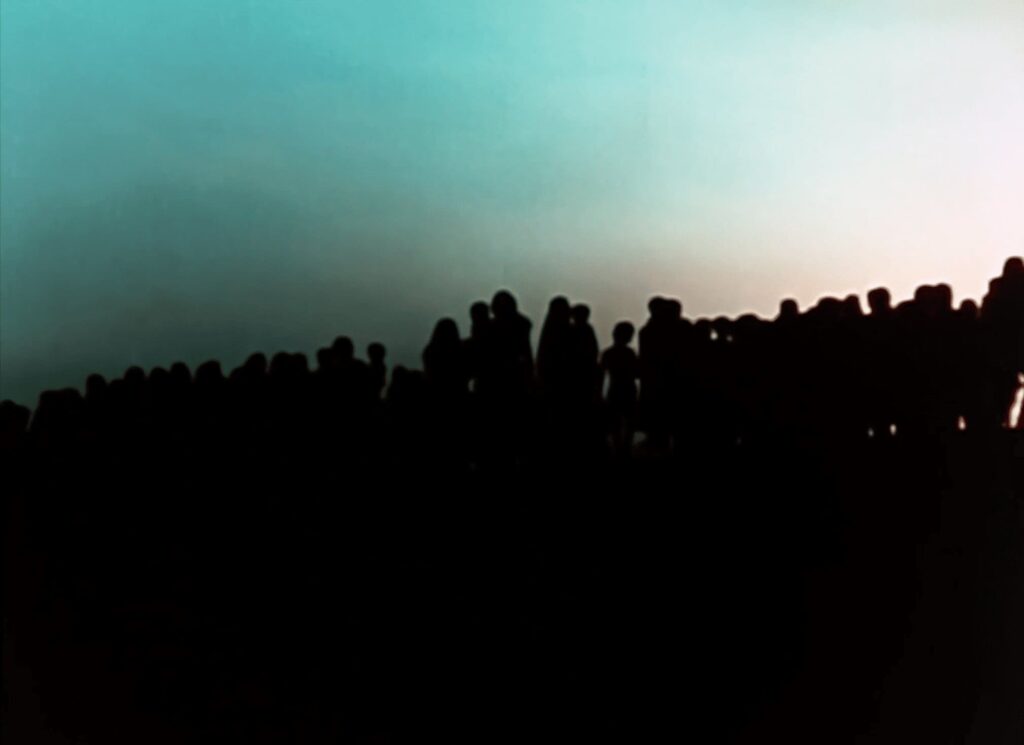
Despite her low social standing, she is to be cremated, the Brahmin decides. The value of a person is not determined by one’s birth after all, he recognises, but inherent in one’s humanity – though this principle is soon to be tested in the closing shots as a cluster of dark figures gathers in the distance. The same stranger who appealed to Gangacharan’s mercy earlier in the film now returns with his entire family, seeking one last chance at survival, and there is no turning them away. Imprinted against the pale, blue sky, they steadily advance toward the camera, while the widening frame gradually reveals the sheer numbers of lives swept up in the relentless tide of starvation. No detail of despair is left untouched by Ray’s haunted gaze in Distant Thunder, and as its final procession broadens into an overwhelming panorama, both the individual tragedies and the horrifying scale of this historic suffering collide in the same ominous, unrelenting frame.
Distant Thunder (Ashani Sanket) is currently streaming on Prime Video.