
Sergei Bondarchuk | 7hr 11min
This review was requested by Ravshan. Find out how to commission review of a film of your choice here.

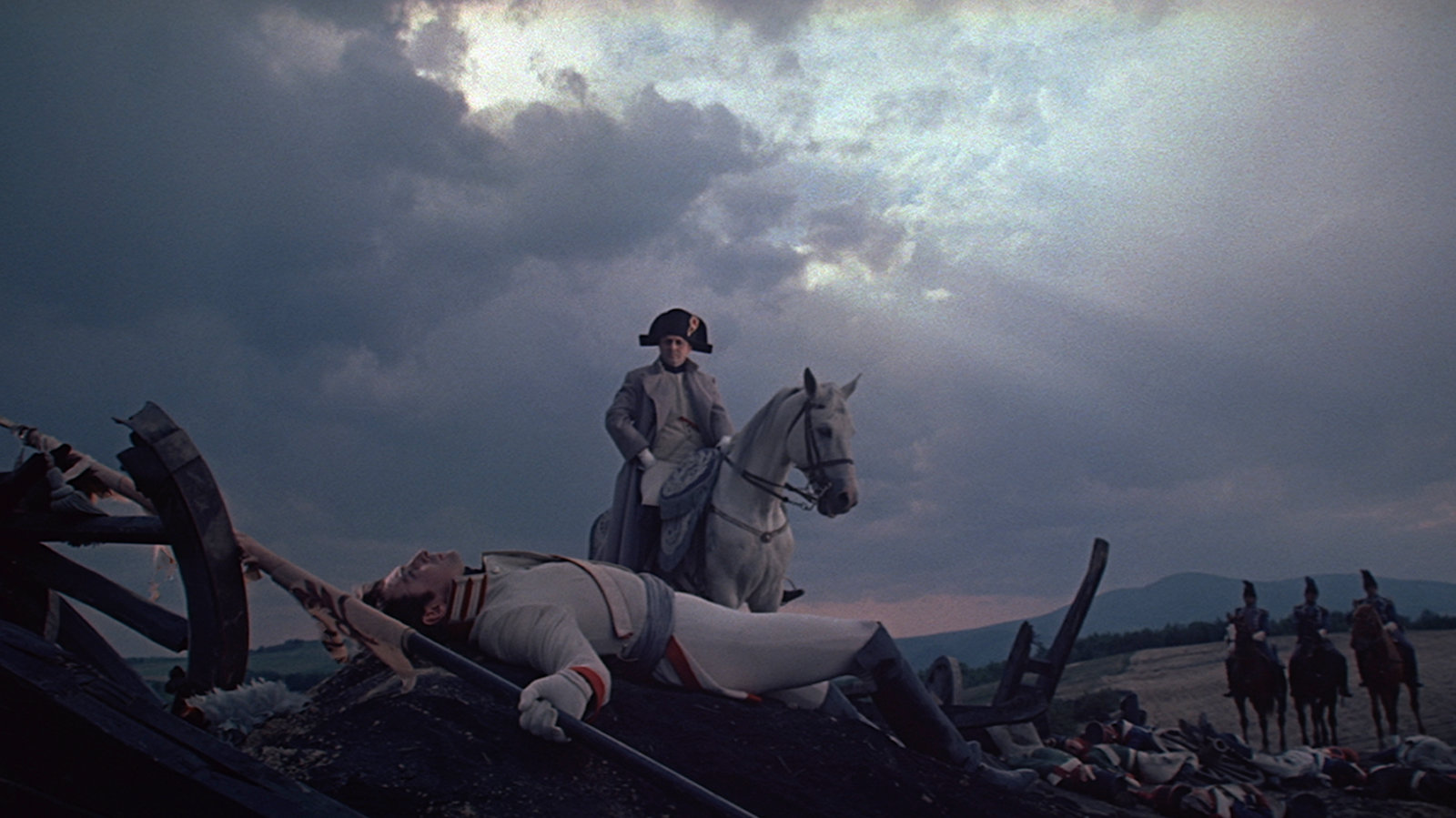
As the sun breaks across the charred aftermath of the Battle of Austerlitz, Prince Andrei Bolkonsky lies sprawled and broken, clutching the tattered remains of a Russian flag. Above him, Napoleon Bonaparte sits proudly atop his horse, striking the image of a victorious hero – though across all seven hours of War and Peace, his presence on these battlefields is frequently belated. While voices on both sides proclaim him either a “great man” or the Antichrist himself, he is far more often found removed from the actual fighting, delivering orders from a distance as he peers through his spyglass. Next to General Kutuzov, who trusts the will of his exhausted men, he is historical vanity made mortal. The idea that a single individual possesses the ability to change the world was preposterous to Leo Tolstoy, and in that rejection of the Great Man theory, Sergei Bondarchuk similarly reduces Napoleon to a tiny, inconsequential figure within the vast scope of history.
After all, the French emperor is not our protagonist in War and Peace. Far away in Saint Petersburg, Andrei and his friend Pierre Bezukhov seek greatness in their own ways, each convinced that meaning lies beyond the life they’ve inherited. For Andrei, weary of the aristocracy’s pageantry and performative virtue, the prospect of military glory appears to offer his life purpose. Russia’s high society is “a vicious circle from which I cannot free myself,” he laments, even as the illegitimate Pierre finds himself unexpectedly entering those elite ranks upon inheriting his father’s fortune and title. Immediately disillusioned by a loveless, arranged marriage, he subsequently turns inwards, seeking salvation in moral philosophy as he wanders lavish cities and muddy battlefields. Eventually resolving that destiny has singled him out to assassinate Napoleon, he thus holds a mirror to the conqueror himself – and in these shared delusions, Bondarchuk undermines the folly of such grandiose mythologies.
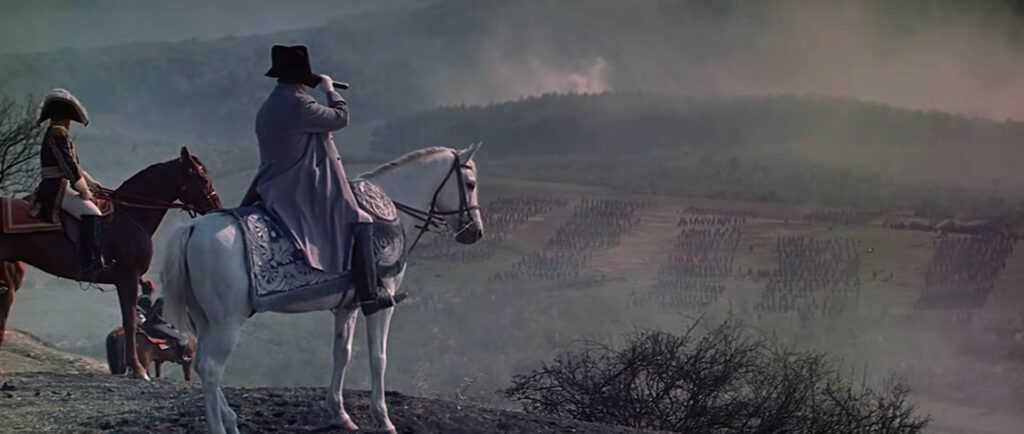
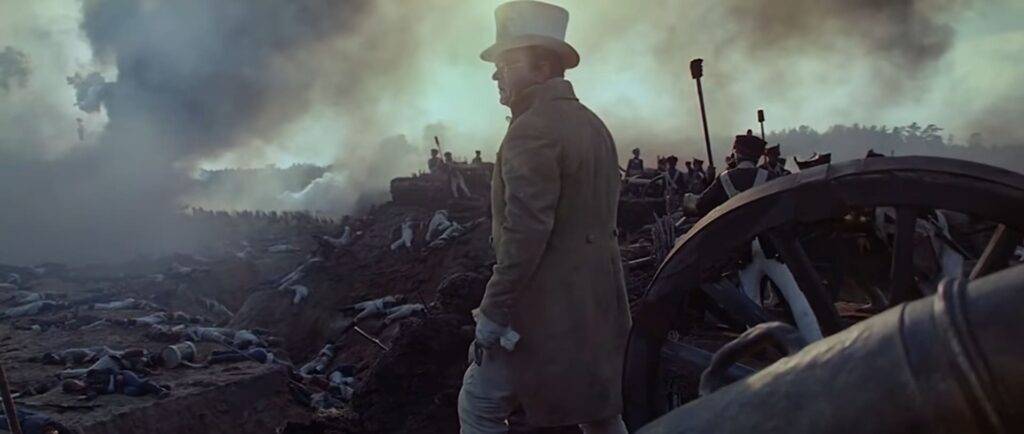
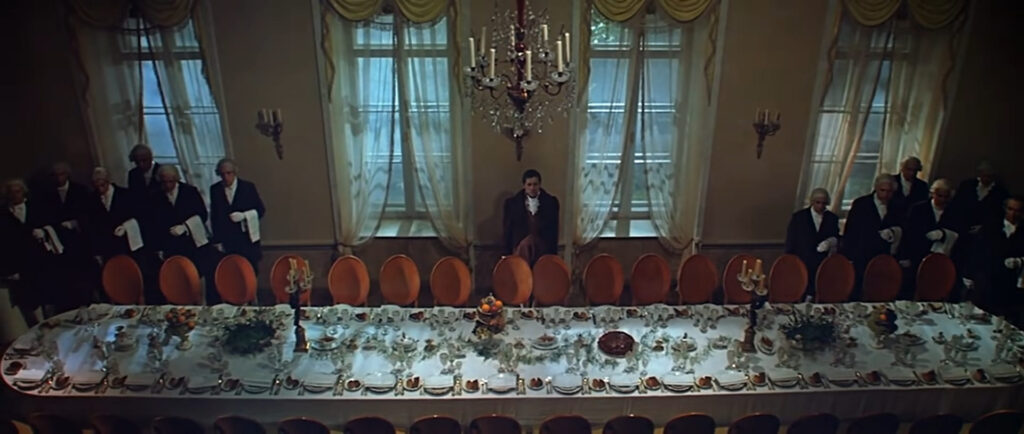
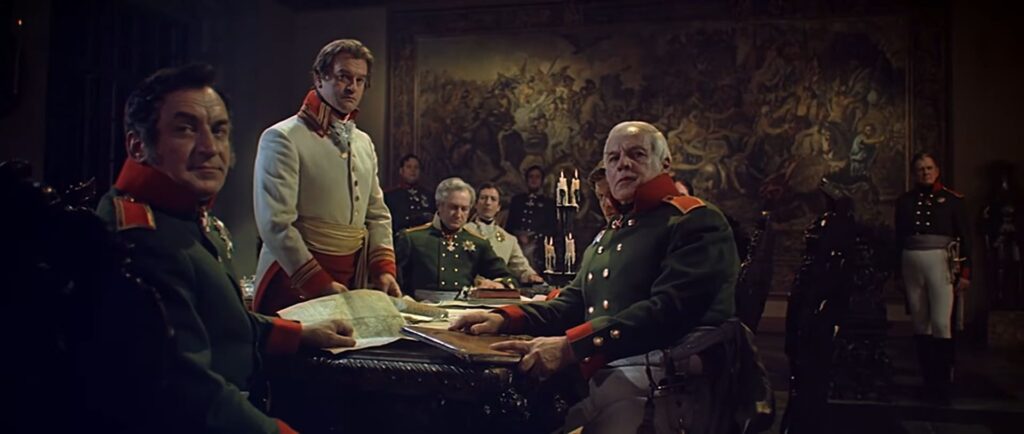
With a nation’s full resources mobilised behind its greatest literary treasure, the sheer visual scale of War and Peace makes for an astonishing cinematic translation of Tolstoy’s philosophy, dwarfing any single figure within the boundless sprawl of history. While audiences adored the 1956 Hollywood adaption, the Soviet government despised its feeble grasp of Russian culture, and consequently threw their full backing behind Bondarchuk’s colossal rebuttal. Dozens of museums contributed authentic 19th century artefacts to the production, from chandeliers to silverware, while over 15,000 Red Army soldiers were used to recreate famous battles. Rather than directing thousands of individual performances however, Bondarchuk used the military chain of command to relay orders down the ranks, making for an extraordinary feat of coordination to rival the very wars that Tolstoy chronicled.
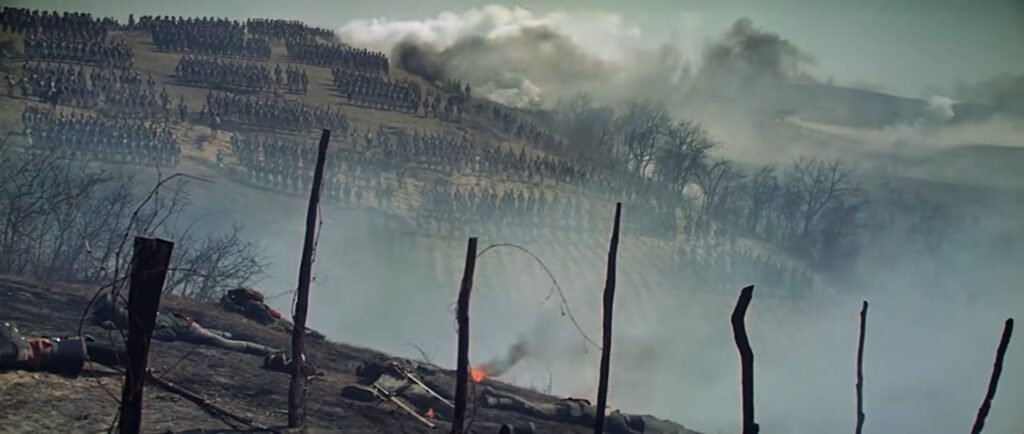
Nowhere is this philosophical argument more evident than in his sweeping long shots either, often stationed atop hills overlooking the movement of armies below. The wide frame serves the broad, horizontal expanse beautifully here, though it is the sheer depth of his staging which truly reveals its monumental ambition, stretching soldiers from the mud and smoke of the foreground to the distant horizon.
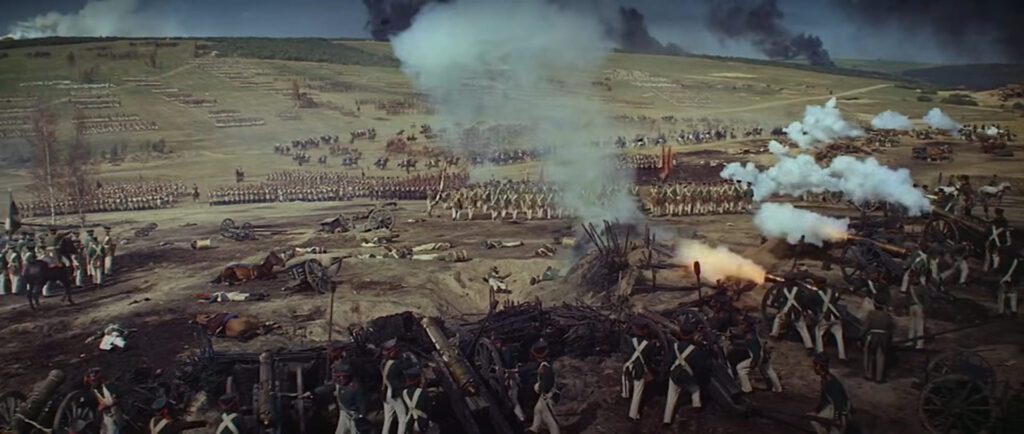
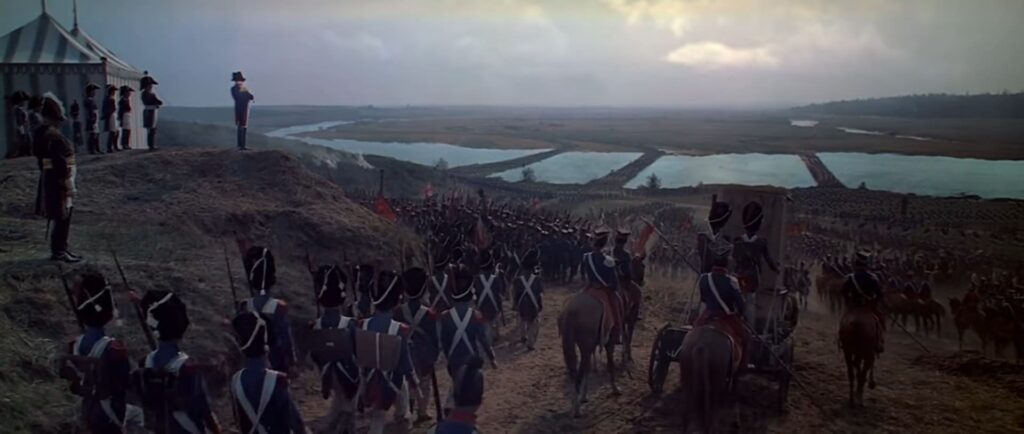
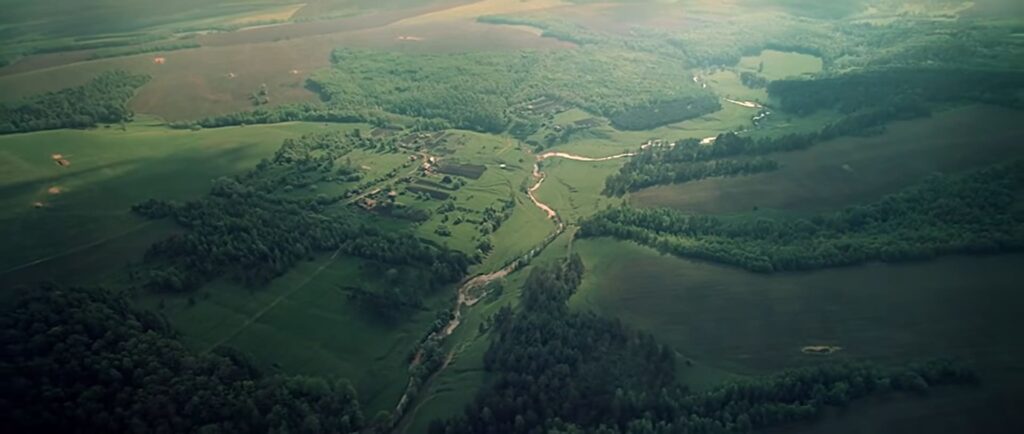
Given the extraordinary resemblance to Romantic oil paintings of sublime landscapes, one might easily mistake these vistas for matte backdrops, reducing humans to ants beneath storm-lit skies and across washed-out fields. When Bondarchuk seamlessly lifts his camera from ground-level close-ups into Gods-eye helicopter shots however, he animates them with kinetic force, surveying rigid military formations and chaotic battle scenes from far above. In these fluid, unbroken motions, War and Peace bridges its intimate and epic scales, achieving breathtaking aerial views of warfare that seem almost impossible for a film of its era.
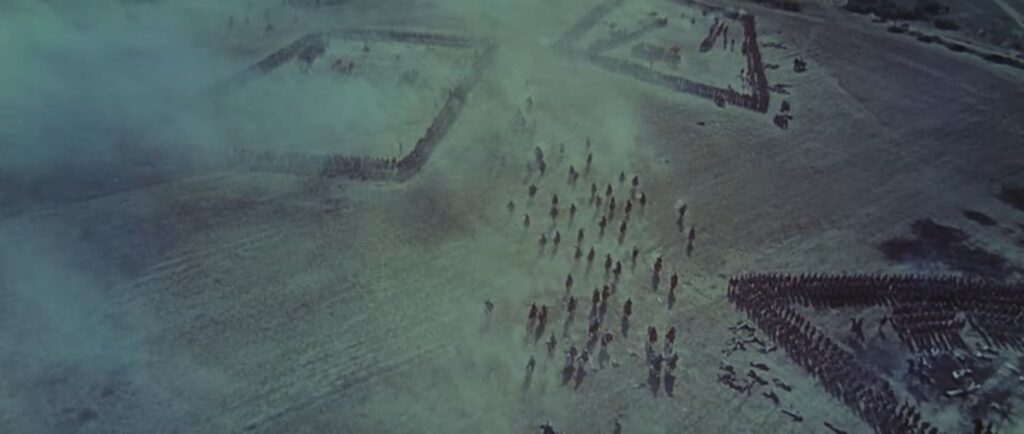
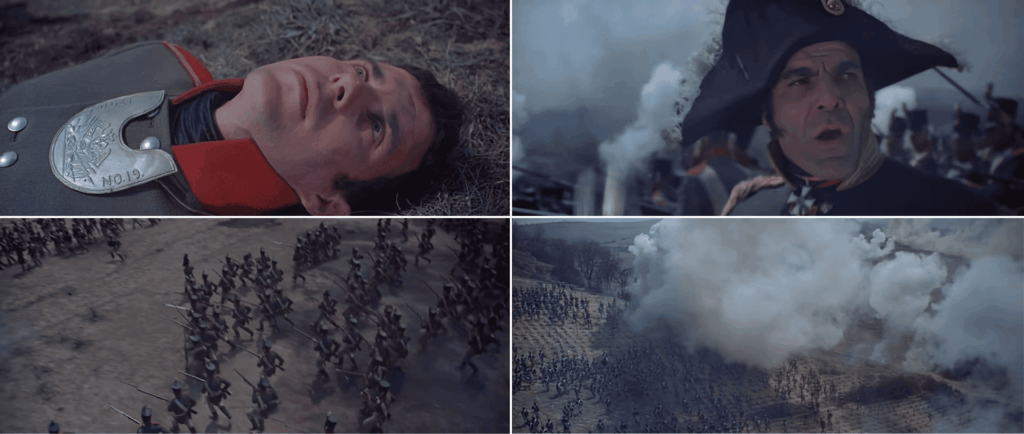
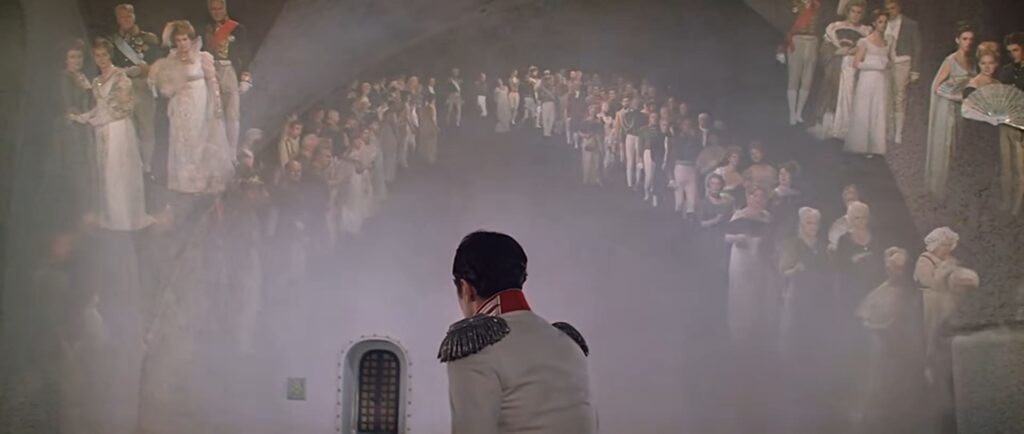
Bondarchuk’s brisk camera movements are not limited to vertiginous heights either, but also skim in straight, rigid lines above rigidly choreographed crowds. The battlefields and ballrooms of War and Peace are vastly different stages, yet as we examine both from the same restless, elevated perspective, they equally become arenas of collective ritual – one defined by violence, the other by ceremony.
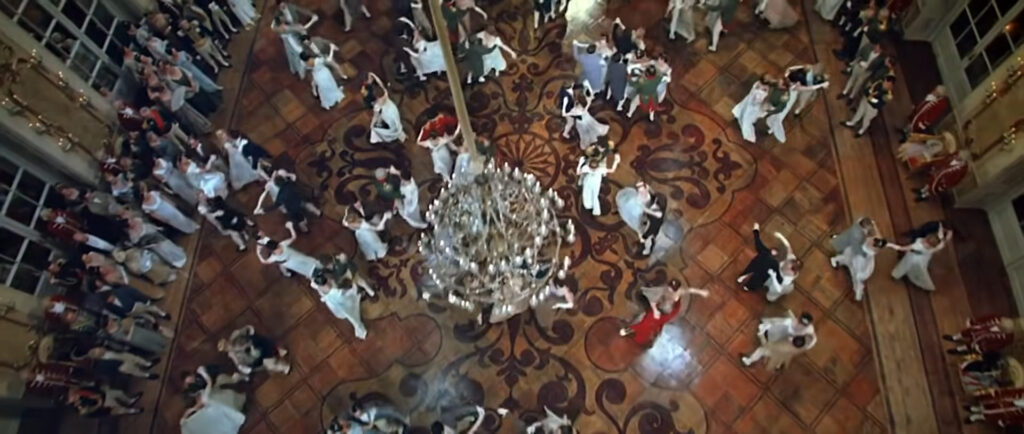
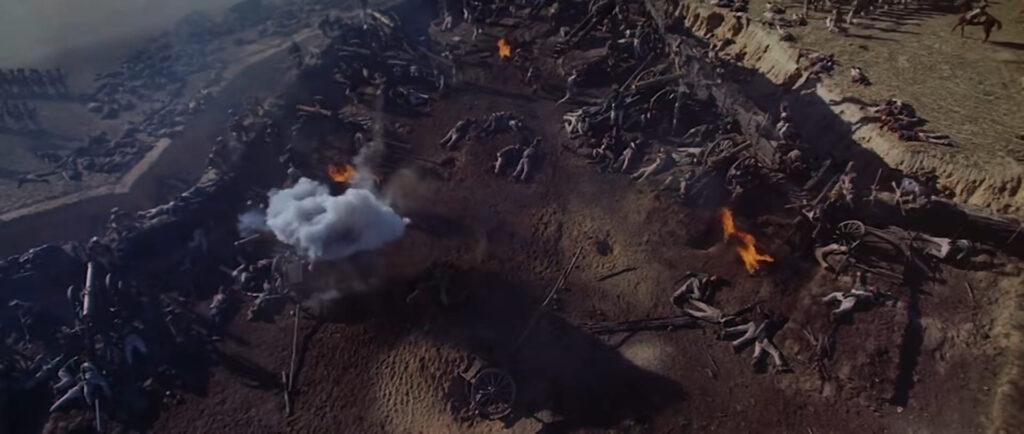
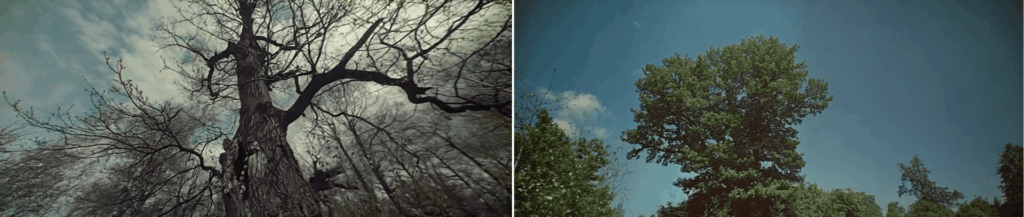
Whenever the camera escapes into the natural world however, Bondarchuk’s camerawork loosens, almost granting the young countess Natasha’s wish as she admires the moon and confesses her impossible desire to “fly away” into the night sky. The Earth is far more ancient than any recorded history after all, transcending the vanity of human affairs, and even Andrei’s spiritual journey is reflected in his changing relationship with it. “Spring. And happiness. Haven’t you grown weary of this foolish, senseless illusion?” his voiceover mourns, embittered by his experiences of war and the loss of his wife in childbirth. Although Bondarchuk’s handheld camera gazes up in awe at a barren oak tree, studying every shoot and groove in its aged bark, Andrei regards its promise of renewal with outright contempt.
“There is no spring, no sun, no happiness. I don’t believe in your hopes and illusions.”
Still, with time comes growth and healing. Upon the Prince’s return to these woods some time later, he is drawn back to the oak tree he once disdained. Now lush with the fullness of summer, its verdant foliage glows beneath dappled sunlight, and the camera again drifts by in a reverent low angle. War may continue spilling innocent blood across Russia and Andrei’s grief may never subside, yet the world turns on regardless, spurring him towards new beginnings through sincere, loving connection.
“I want everyone to know me, so that my life is not to be lived for myself alone. It must cast its reflection upon the lives of others, so that we may live in harmony.”
Andrei is not alone in his ruminations either, as throughout all four parts of this monumental adaptation, Bondarchuk honours the inner monologues and lengthy digressions of Tolstoy’s original text. We freely penetrate the minds of his main characters, whose thoughts echo beyond the confines of their scenes, while an omniscient narrator drifts between individual perspectives and historical judgement. Beyond simply casting himself as Pierre, Bondarchuk also assumes this voice, and thus adopts the additional role of Tolstoy’s intermediary.
As much as our narrator reasons like a philosopher however, delivering clinical moral verdicts, knowledge alone cannot bend the course of events. Just as Napoleon is powerless to command the chaos around him, there is also a profound impotence in observing history from the outside, reducing this all-seeing perspective to a desperate, unheard plea during the devastating Battle of Borodino.
“Enough. Enough, mankind. Stop. Come to your senses. What are you doing?”
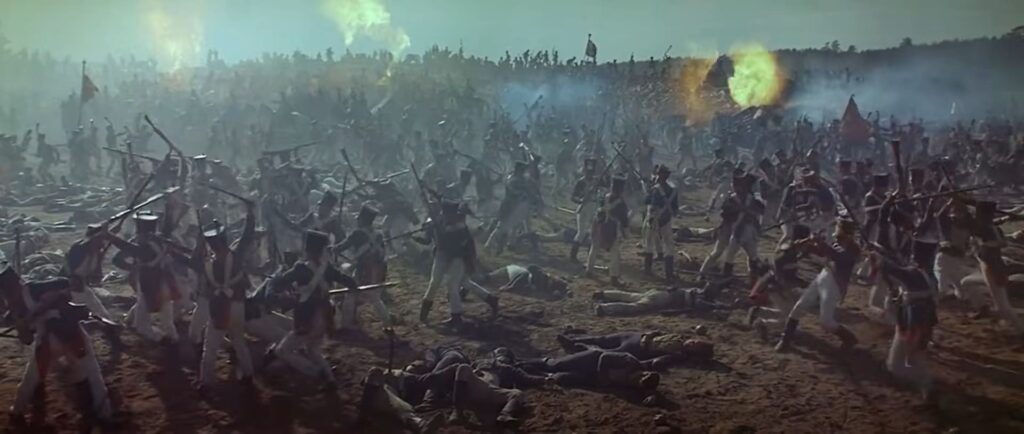
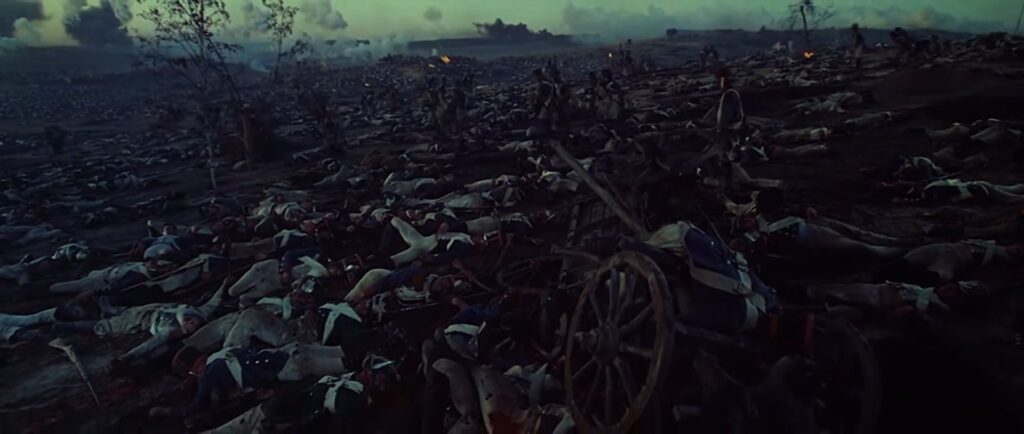
By this point in War and Peace, Andrei’s faith in martial glory has similarly collapsed. Though he is bound by duty to lay down his life for Russia, his outright disgust mirrors Tolstoy’s own, distilling seven hours of philosophical meditation in one furious cry of despair before he and Pierre part ways for good.
“War is not about decency. It is the lowest thing men stoop to. One must realise this and not make a game out of war. War is a dreadful necessity. Cast off the lies and see war as war. It is no game. Men come together, like they will tomorrow, to murder one another. They will kill each other, maim thousands upon thousands and then hold sacred services and offer up their prayers for having killed so many human beings. And they’ll exaggerate it in the retelling and embellish the victory. The side that kills the most people wins the most honors. Whoever succeeds in killing the most people gets the greatest rewards. How can God bear to witness such things?”
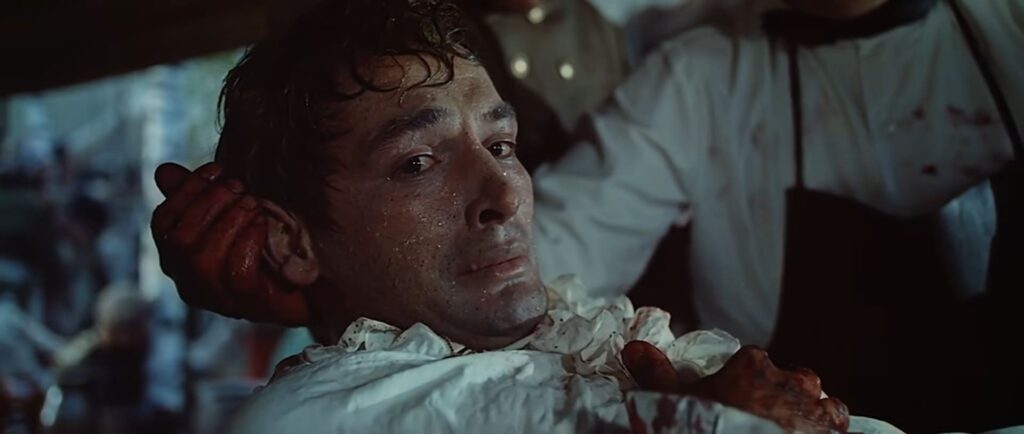
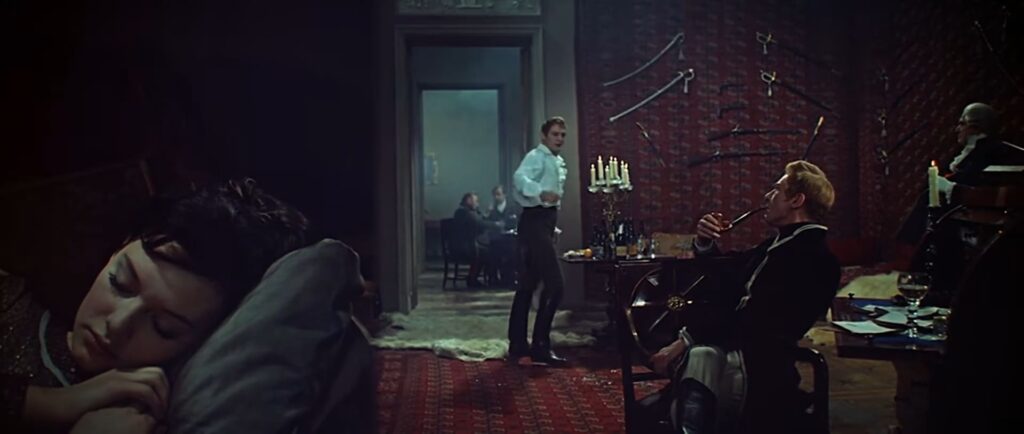
Though far less urgent than the horrors of war, the shallow pretensions of Russia’s 19th century aristocracy receive no less scrutiny under Bondarchuk’s lens, walking a narrow line between genuine beauty and decadent excess. Where whip pans, canted angles, and handheld camerawork carry a frantic energy through battlefields, every scene staged within four walls is immaculately composed, filling the widescreen frame with intricate detail in both production design and blocking. Rather than cutting during conversations, Bondarchuk much prefers to let his staging support the story, particularly through long takes and deep-focus compositions that allow simultaneous actions to play out within the same space.
The finest demonstration of this aesthetic discipline arrives early in War and Peace, not long after Pierre has inherited his father’s fortune and fallen into an arranged courtship with the beautiful Hélène, Prince Kuragin’s daughter. Within her family’s manor, Kuragin awkwardly hovers over the pair before leaving them alone, and following his movement, Bondarchuk’s camera pulls back into a wide shot. Framing their antechamber and the neighbouring sitting room side-by-side, the composition virtually becomes a split screen, separating the silent couple from her impatient, gossiping parents. While Hélène’s mother approaches the door to eavesdrop, she finds little to report, leaving Kuragin to eventually burst in and declare them engaged.
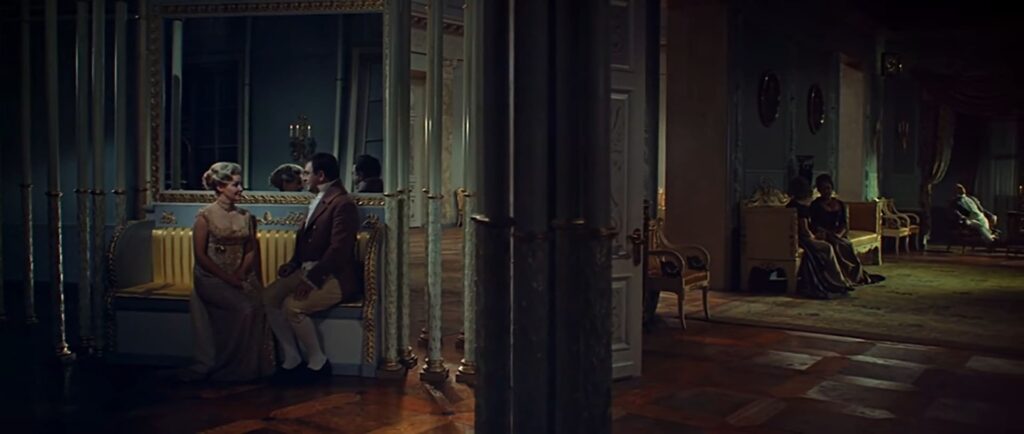
Bondarchuk’s staging is both pragmatic and elegant, essentially forcing Pierre’s formal entry into high society through social coercion. This is clearly no environment for a man of such earnest, philosophical resolve, and after learning of Hélène’s infidelity and challenging her lover to a duel, he too recognises just how compromised he has become. He is one of the few truly authentic individuals among the aristocracy, and perhaps this is why he finds himself drawn to Natasha, whose joy and vitality cut through the artificiality around them.
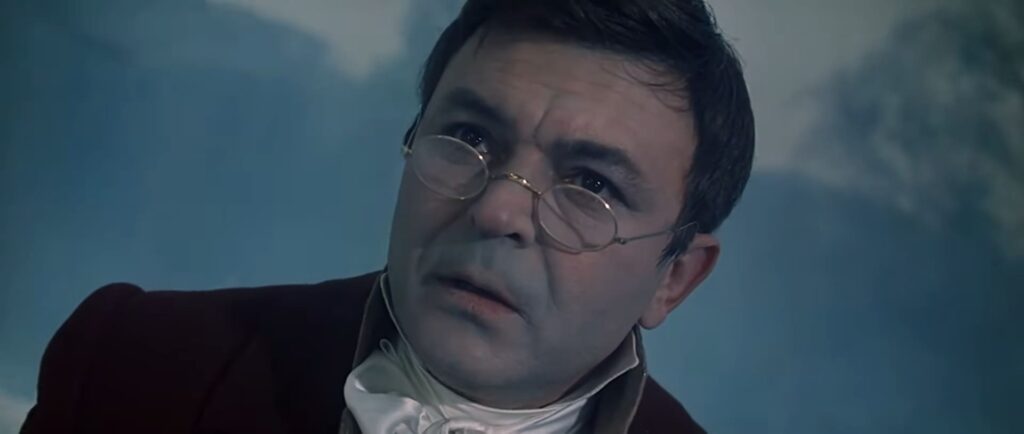
Broken into four chapters respectively anchored to a specific focus, War and Peace gives each principal character their time in the spotlight, though its second part is notably the most intimate in its study of the Russian countess. This is where Natasha steps into womanhood, attending her first ball with nervous anticipation before falling in love with Andrei. Thanks to her father’s arbitrary interference however, their courtship soon falters, driving her into the arms of Hélène’s brother, Anatole – a “scoundrel” who seduces her through clandestine letters while concealing his marriage to another. As her trusted friend, Pierre regards Anatole with contempt and urges Natasha to reconcile with Andrei, though his counsel arrives too late to arrest her infatuation.
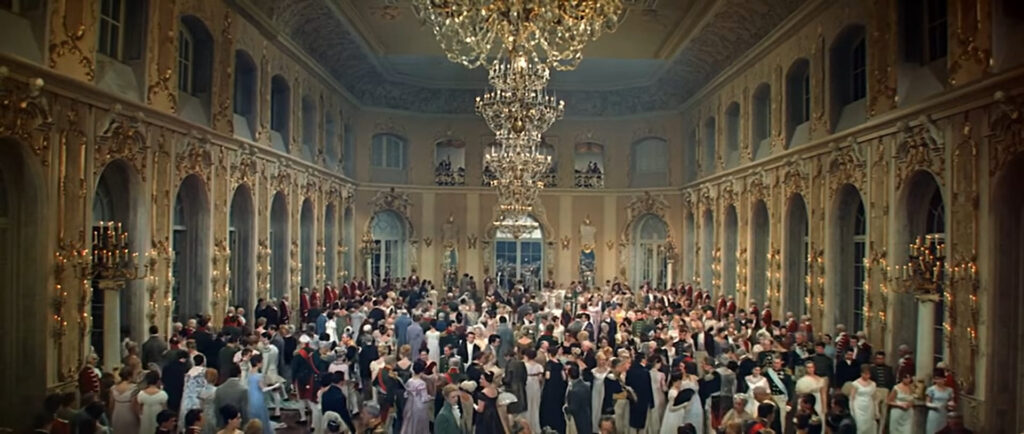
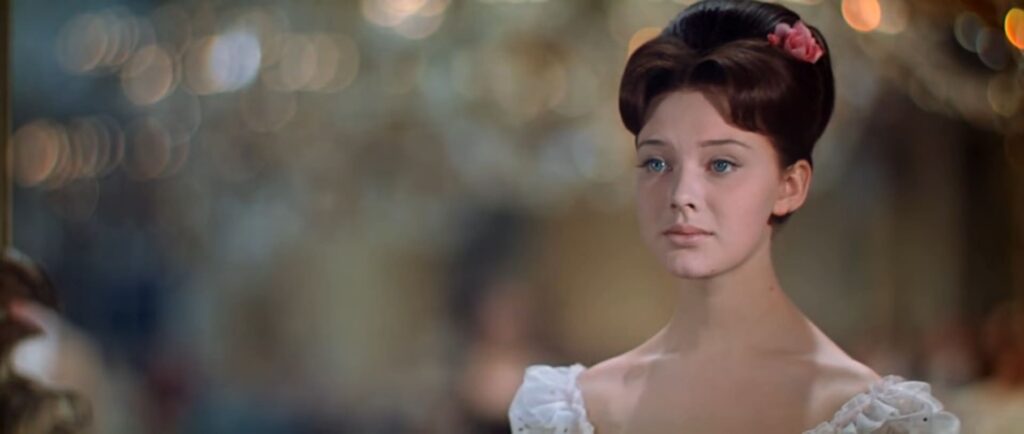
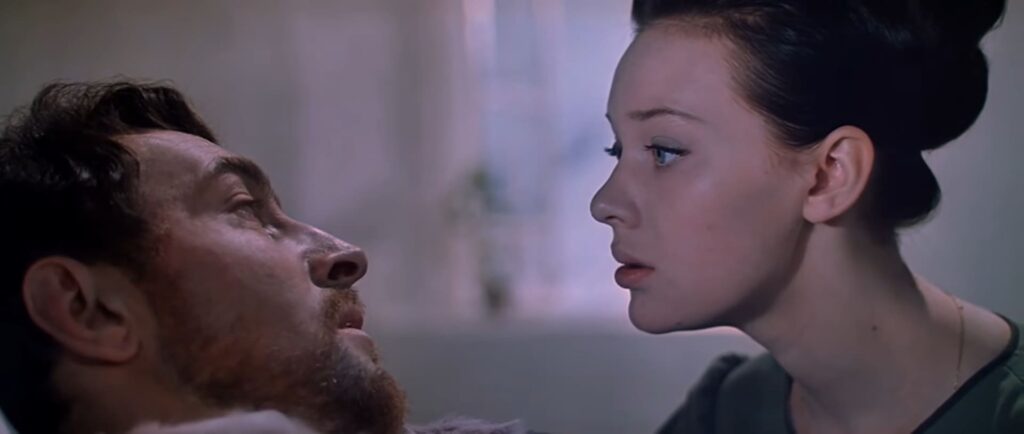
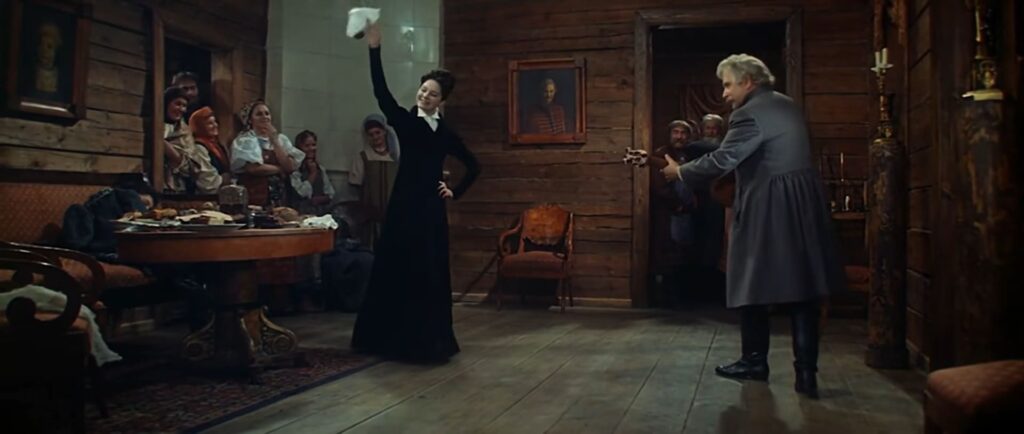
A woman with a truly open heart makes an easy target within this self-serving aristocratic culture, and unlike the deeply cerebral Pierre, she embodies an authenticity that instinctively finds meaning in the most ordinary of human experiences. Though Natasha is briefly swept into scandal and suffers great shame for it, Tolstoy withholds moral judgement, allowing her instead to grow with greater compassion and maturity from the incident. When she dances alone to Russian folk music, even the narrator can’t help but watch in awed admiration, beholding living proof of a national soul that no education or imitation could ever manufacture.
“Where, how, and when did she imbibe this Russian spirit – this young countess, educated by a French governess? From the air she breathed? Where did she learn those tricks?”
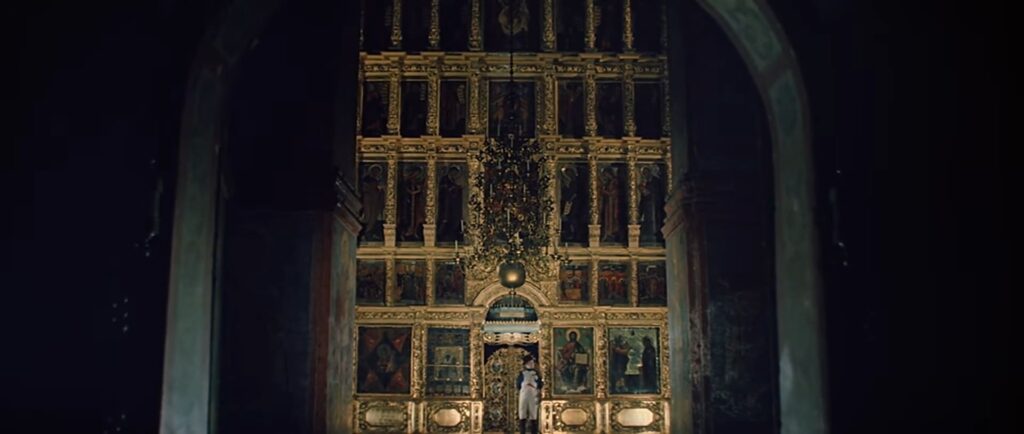
Bondarchuk’s experimental stylings flourish in Natasha’s story, dreamily filtering her romantic entanglements through glittering crystal prisms, while split screens bridge the physical distance between this lonely countess and the men she loves. War and Peace may possess a composed, painterly discipline after all, yet Bondarchuk’s taste for the avant-garde passionately breaks from this classical restraint in moments of unruly emotional fervour. Abel Gance’s own tribute to the French conqueror clearly informs Bondarchuk’s formal ambitions too, recalling the revolutionary triptychs of Napoleon, while a delirious collage of clambering crowds, religious iconography, and crumbling architecture visually fragments the cataclysmic Fire of Moscow.
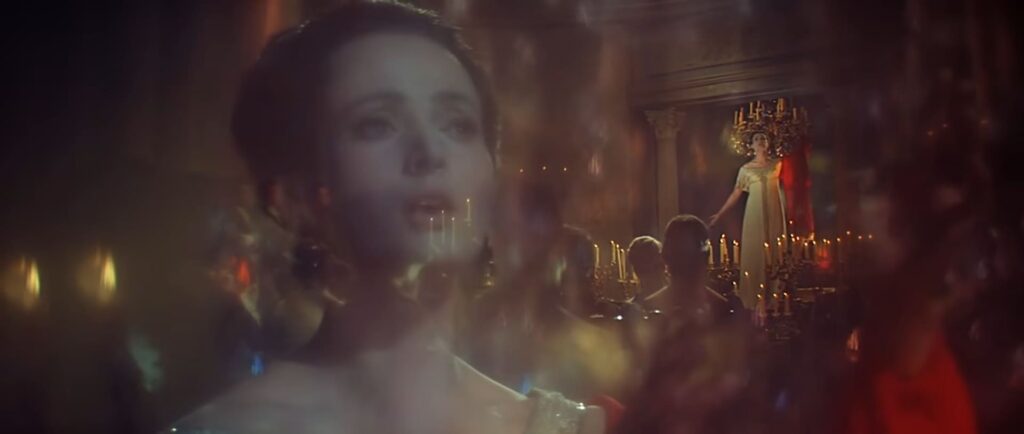
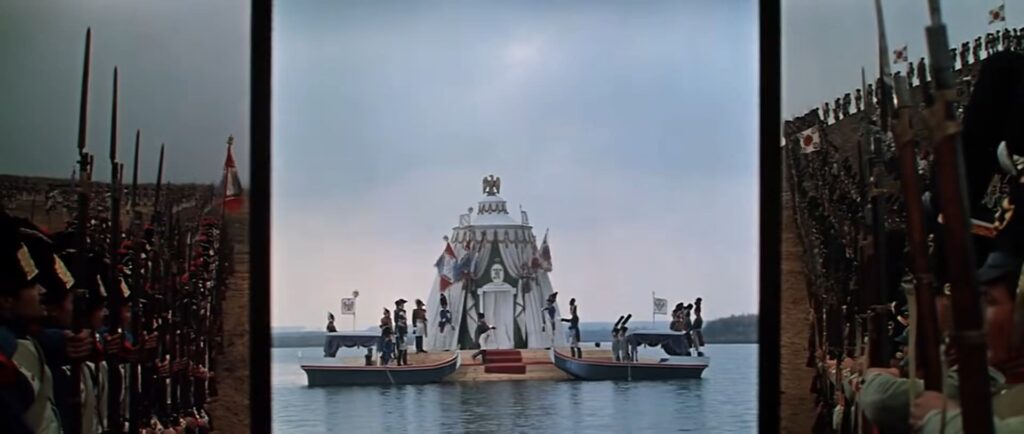
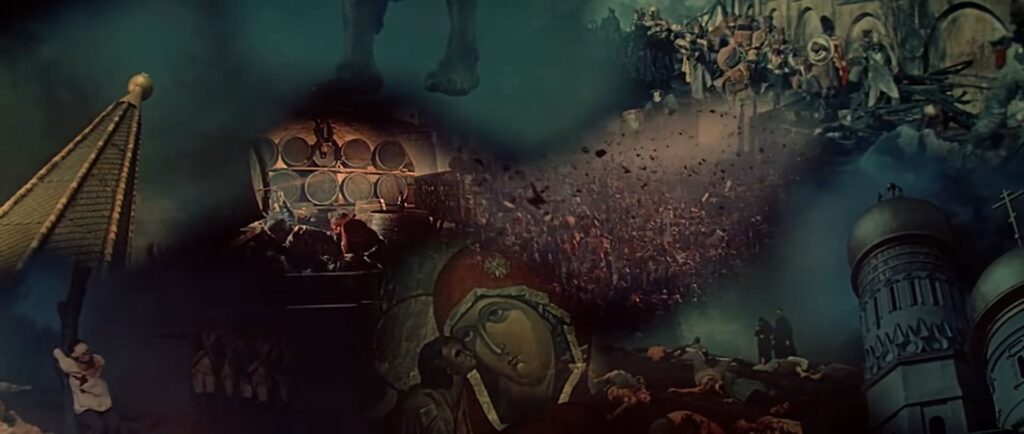
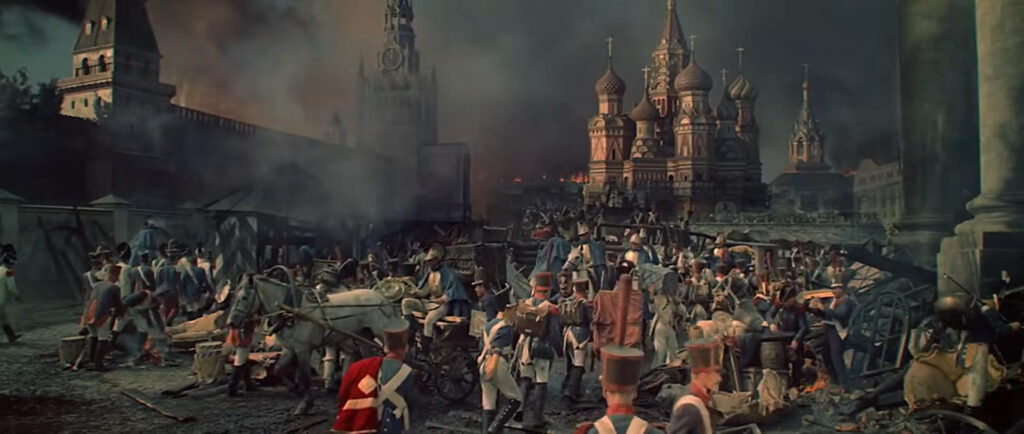
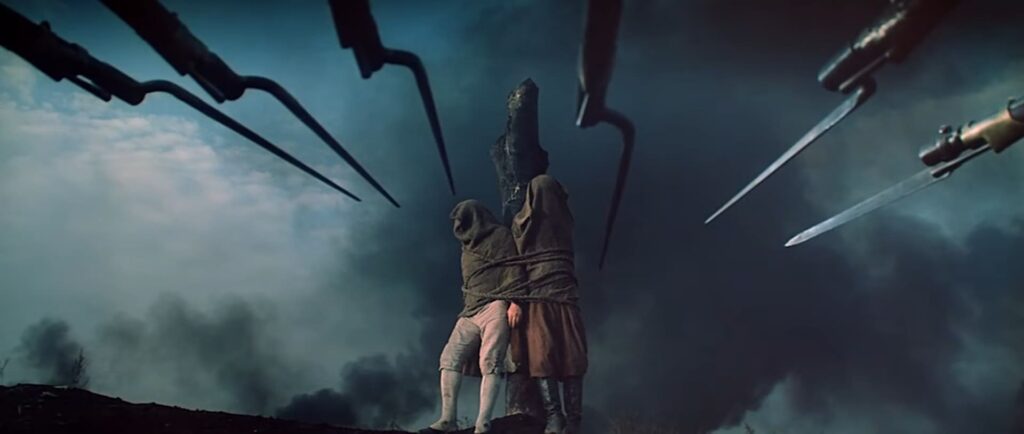
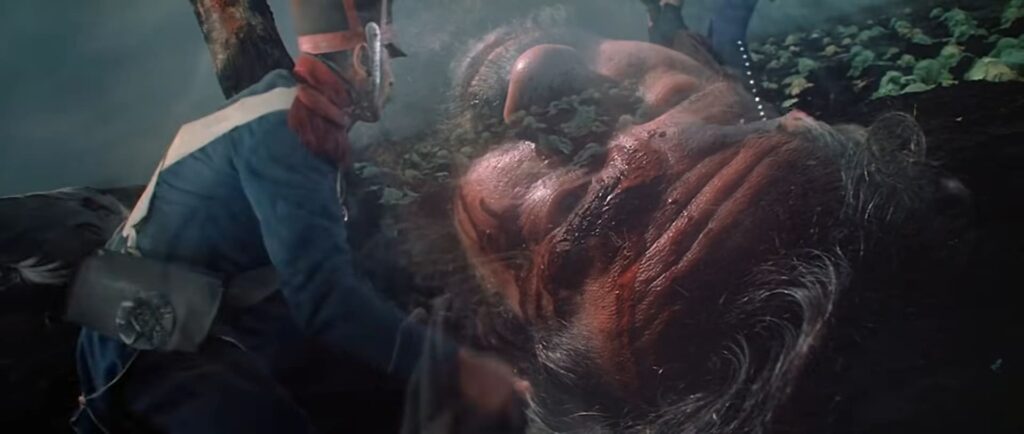
Here, as the French army seizes the religious heart of Russia, Bondarchuk fully dedicates his camera to the trauma of war and occupation. Double exposure effects superimpose tortured and lifeless faces over the surrounding devastation, while elsewhere bayonets line the top of a deep focus composition, converging on teenagers awaiting execution. Freeze frames especially serve as visual fragments of memory, recalling battles as jarring intrusions on the present, yet so too do they eventually evoke romantic longing as Pierre tenderly reminisces on his cherished, longstanding friendship with Natasha.
More than ambition or achievement, this ordinary human intimacy is what truly makes life worth living, Tolstoy proposes. Having failed to assassinate Napoleon, endured a harsh winter as a French prisoner, and finally regained his freedom after the conqueror’s disgraceful retreat to Paris, Pierre finally emerges from a profound spiritual ordeal with this long-sought truth – discovered “not with his intellect,” as he has often relied upon, “but with his whole being and his life.” While Andrei finds peace with Natasha on his deathbed, she and Pierre turn towards each other in their grief, and begin to build a new kind of love on patient, stable foundations.
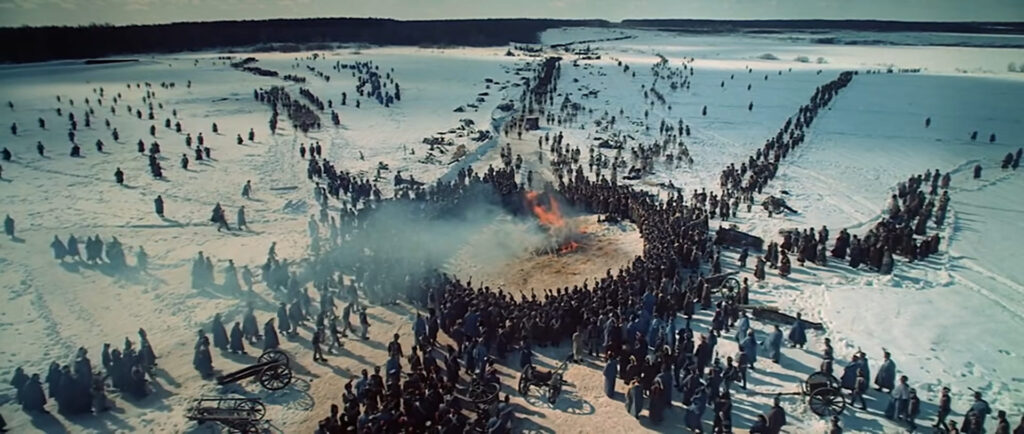
“Let us take one another’s hand, all people who cherish goodness, and let there be only one banner – that of active virtue,” our narrator implores, as the camera flies high above the clouds one last time. The protagonists of War and Peace are not special by any measure, yet by the very nature of their union, they achieve a greater good in companionship than Napoleon ever did through conquest and command. No single man shapes history, Tolstoy argues – only a collective will, setting aside petty divisions of birth and status to stand united against evil. Bondarchuk may be the visionary behind this towering achievement, though it is only fitting that in adapting a novel about the limits of genius, it took a creative collaboration of immense, national scale to achieve what no single artist could have conceived alone.
War and Peace is currently available to watch for free on YouTube.
Have a film you’d like me to write about next? Request a review here.
This looks like a behemoth masterpiece just based on these selected images. I can’t wait to find 7 hours of time to watch it. Do you feel like it will it find itself very high on your list ?
It certainly helps that it’s in four parts, so I was able to break it up into four sittings. It’s an easy lock for my top 100.