Recommend

The Elephant God (1979)

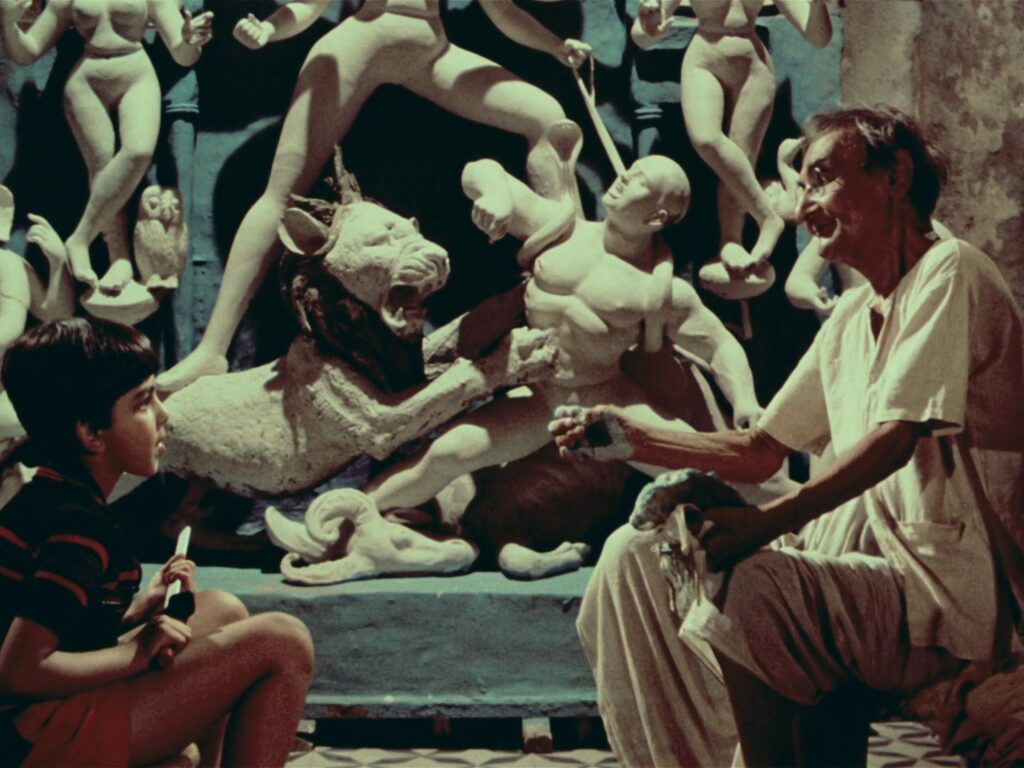
If The Elephant God lacks the taut precision of Satyajit Ray’s finest works, it compensates with its noir-inflected intrigue, drawing a hardboiled detective into the puzzling case of a stolen idol, a holy fraud, and a trail of shadowy motives.


The Chess Players (1977)

Although Satyajit Ray treats the history of the British Raj with humane detachment in The Chess Players, it is not without a wry, bitter irony, symbolically framing the colonial conquest of Awadh as a lopsided game between calculating bureaucrats and self-absorbed nobles.

Distant Thunder (1973)

Satyajit Ray’s return to the pastoral settings of his early career in Distant Thunder does not usher in spiritual peace, but rather the indignity of desperate survival, uniting the individual tragedies and horrifying scale of the Bengal Famine of 1943 in a stark portrait of social collapse.

The Zoo (1967)

Secrets may lurk beneath the fragile civility of community in The Zoo, though it is the impossibility of knowing one’s neighbour which Satyajit Ray suspensefully foregrounds even more, unravelling a web of betrayals, mysteries, and multiple murders within a colony of social outcasts.

The Invite (2026)

A simple dinner party serves as the canvas for Olivia Wilde’s viciously funny chamber piece in The Invite, mining the bitter verbal sparring between two mismatched couples, and gleefully tipping the evening into gloriously calculated dysfunction.

The Holy Man (1965)

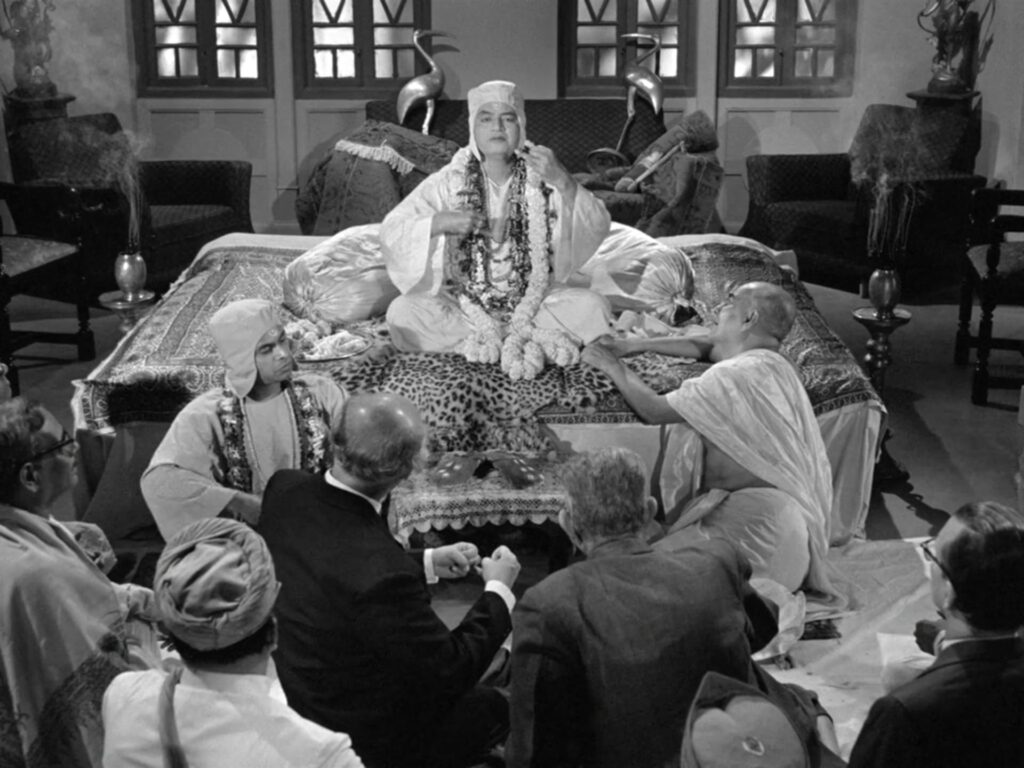
When a religious conman preys on a grieving family in The Holy Man, Satyajit Ray sets the stage for a battle of reason and delusion, threatening to unravel a young couple’s hopes of romance with a wry, comical edge.

The Expedition (1962)

As one taxi driver becomes entangled in a smuggling operation, Satyajit Ray veers The Expedition into crime thriller territory, trading out his usual psychological depth for a spiralling fatalism that pits ancestral codes of honour against deep moral corruption.

Parallel Tales (2026)

When Parallel Tales sees one writer’s work fall into the hands of its unwitting, real-life inspirations, Asghar Farhadi begins to blur the lines between observer and participant, unravelling a web of misconstrued identities shaped by the very act of interpretation.

Eternity (2025)

Forced to decide whether she will spend her afterlife with her first husband who died young or her long-term second husband, Joan confronts a romantic dilemma of existential proportions, as Eternity guides her through a whimsical, post-mortem plane of bureaucratic order and commodified paradises.

Ne Zha 2 (2025)

More than simply rendering Chinese folklore as large-scale spectacle, Ne Zha 2 fully internalises the philosophical traditions underpinning that ancient, metaphysical mythology, observing transcendence emerge through self-realisation rather than moral division.

Scroll to Top